• Fri frakt över 249 kr
  • •
  • Snabba leveranser
  • •
  • Billiga böcker
Kundservice

Du är på sajten för privatpersoner.

Företag, bibliotek eller offentlig verksamhet?

Du handlar på classic.bokus.com, där alla dina funktioner finns intakta.
Till classic.bokus.com
Bokus logotyp. Gå till startsidan.
  • Erbjudanden
  • Nyheter
  • Student
  • Topplistor
  • Barn & ungdom
  • Bokus Play
  • E-böcker
  • Pocketböcker
  • Spel & pussel

10% rabatt på allt med kod: NYSTART10 →

Sidfot

Mina sidor

    Hjälp

    • Kundservice
    • Vanliga frågor och svar
    • Frakt och leverans
    • Retur vid ångerrätt
    • Reklamera vara
    • Betalning
    • Köpvillkor
    • Allmänna villkor
    • Information om webbplatsens tillgänglighet

    Om Bokus

    • Om oss
    • Pressrum
    • För studenter
    • För företag
    • För bibliotek och offentlig verksamhet
    • För leverantörer
    • Hållbarhet

    Populärt

    • Aktuella erbjudanden
    • Presentkort
    • Studentlitteratur
    • Nya böcker
    • Topplistor
    • Signerade böcker
    • Engelska böcker

    Inspiration

    • Boktips
    • BookTok
    • Populära bokserier
    • Barnbokskaraktärer
    • Populära författare
    Logotyp för Bokus
    Följ oss på Facebook (extern länk)Följ oss på Instagram (extern länk)Följ oss på YouTube (extern länk)Följ oss på TikTok (extern länk)
    bokus @ CookiesAnpassa cookiesIntegritetspolicyKöpvillkor
    Till Citymail hemsida (extern länk)Till Budbee hemsida (extern länk)Till Postnord hemsida (extern länk)Till Schenker hemsida (extern länk)Till Early Bird hemsida (extern länk)Till Walleys hemsida (extern länk)
    1. Samhälle och politik
    2. Samhälle och kultur
    3. Sociala grupper och identitet
    4. Etnicitet

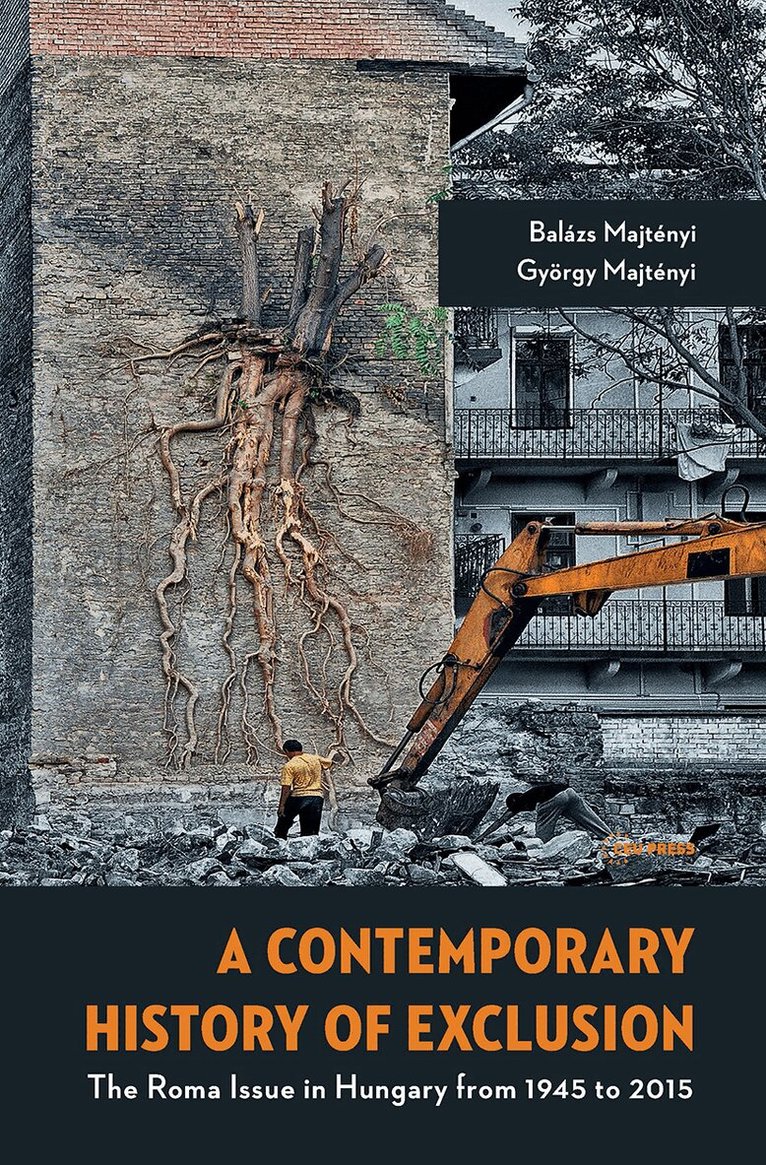
    Contemporary History of Exclusion

    The Roma Issue in Hungary from 1945 to 2015

    AvBalázs Majtényi,György Majtényi

    Inbunden, Engelska, 2016

    1 565 kr

    Beställningsvara. Skickas inom 10-15 vardagar. Fri frakt över 249 kr.

    Beskrivning

    The volume presents the changing situation of the Roma in the second half of the 20th century and examines the politics of the Hungarian state regarding minorities by analyzing legal regulations, policy documents, archival sources and sociological surveys. In the first phase analyzed (1945-61), the authors show the efforts of forced assimilation by the communist state. The second phase (1961-89) began with the party resolution denying nationality status to the Roma. Gypsy culture was equivalent with culture of poverty that must be eliminated. Forced assimilation through labor activities continued. The Roma adapted to new conditions and yet kept their distinct identity. From the 1970s, Roma intellectuals began an emancipatory movement, and its legacy is felt until this day. Although the third phase (1989-2010) brought about freedoms and rights for the Roma, with large sums spent on various Roma-related programs, the situation on the ground nevertheless did not improve. Segregation and marginalization continues, and it is rampant. The authors powerfully conclude: while Roma became part of the political community, they are still not part of the national one. Subjects: Romanies—Hungary. Romanies—Hungary—Social conditions. Marginality, Social—Hungary. Romanies—Legal status, laws, etc.—Hungary. Minorities—Government policy—Hungary. Hungary—Ethnic relations. Hungary—Social policy.

    Produktinformation

    • Utgivningsdatum:2016-01-01
    • Mått:152 x 229 x 20 mm
    • Vikt:620 g
    • Format:Inbunden
    • Språk:Engelska
    • Antal sidor:250
    • Förlag:Central European University Press
    • ISBN:9789633861226

    Utforska kategorier

    • Etnicitet inom Samhälle och politik
    • Sociologi inom Samhälle och politik

    Mer om författaren

    Balázs Majtényi is Researcher, Hungarian Academy of Sciences, Centre for Social Sciences, Institute for Legal Studies, and Associate Professor, Eötvös Loránd University, Faculty of Social Sciences.György Majtényi is a historian and professor at Eszterházy Károly University of Applied Sciences. His research interests include history of the dominant elite in Hungary during state socialism and Roma social history.

    Recensioner i media

    "Amid reignited identity struggles the book serves as a needed antidote to the essentialist and antagonizing public discourse that not only distorts the concept of a nation but also threatens the very rights and well-being of the Hungarian Roma minority. It is hence a useful tool for all those engaged in the field of human rights and Romani studies, but also serves as a helpful guide to anyone interested in modern Hungary and its exciting history. The well-established Hungarian scholars, Balázs Majtényi and György Majtényi, combine their extensive legal and historical expertise to examine the formation, interpretation, and implementation of inclusion policies and the management of minorities in the country."

    Innehållsförteckning

    • Acknowledgments, Introduction, Contexts of Gypsy/Roma identity and history, On the sources of Gypsy/Roma history Who (what) is (was) Hungarian or Gypsy/Roma? “Comrades, If You Have a Heart…” The History of the Gypsy Issue, 1945–1961 The construction and spread of the state socialist system Policy and Gypsies Modernization and Gypsy communities Disciplinary state The impossibility of self-organization Minority issue Discourses on social policy and equality “Life Goes On…” The Hungarian Party-State and Assimilation Social policy and the Gypsies: Wage work - Housing - Social system - Education Scientific approaches Gypsy images The transformation of discourse Disciplinary power, disciplinary society: Police and agents - Health supervisors The national minority issue National movement The “ethnic interpretation” of history Roma Policy after the Regime Change Minority issue Prospects for multiculturalism Minority (self-)government? Divide at impera — The opportunities and impossibilities of self-organization Civic movement National minority culture — national culture Questions of equal treatment and equal opportunity: Anti-discrimination - Equal opportunity Roma programs: Education - Employment Social policy and the Roma: Aid - Segregation Disciplinary society, The transformation of discourses Research methods Panopticon: Roma Policy, 2010–2015 The Hungarian National Cooperation System The anti-egalitarian character of the system Changing minority legislation New social policy? Violence The shift Summary: Decades of Exclusion, Bibliography, List of Photographs, Index