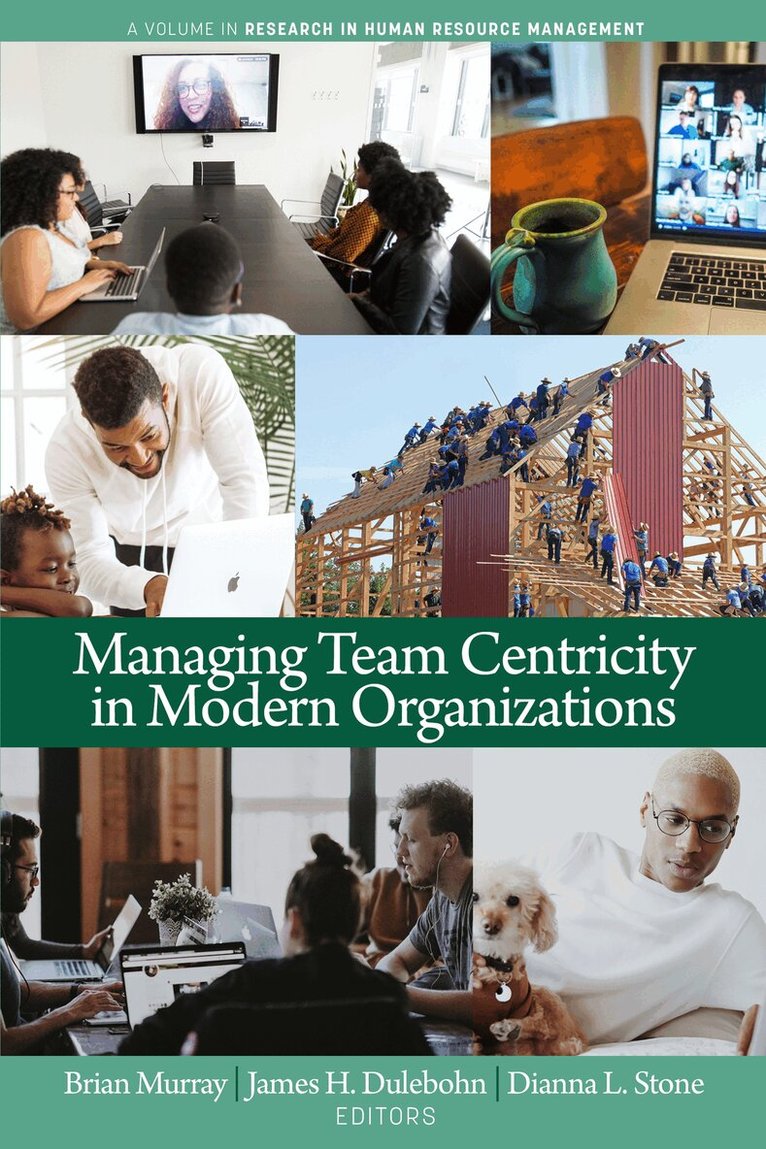
Häftad, Engelska, 2022
Managing Team Centricity in Modern Organizations
Av Brian Murray, James H. Dulebohn, Dianna L. Stone
621 kr
Beställningsvara. Skickas inom 5-8 vardagar. Fri frakt över 249 kr.
Beskrivning
Managers are increasingly employing teams as a primary work unit in organizations, but they are struggling with how to effectively lead the emerging team structures. Intensifying the challenges that they are facing, work restrictions due to the Covid-19 pandemic hastened the move to remote work, flexible work arrangements, and virtual teams. The current volume of Research in Human Resource Management presents literature reviews, conceptual development, and original research evidence to inform the management of teams and spotlight new directions and approaches for team research in this evolving, complex, and dynamic environment.This ten article volume includes an outstanding roster of established and emerging team scholars who define the future of team management research. The volume is presented in four parts. PART ONE introduces perspectives on the science of team research. Joshua Strauss and James Grand present the systems thinking perspective as an alternative to more traditional IPO and multi-level covariation models. Patrick Rosopa introduces a machine learning approach to inductive team research for complex networks and dynamic variable relationships. PART TWO includes three articles that address team performance. Gabe Dickey and colleagues present a model of performance management, leadership, and engagement. Akvile Mockevic iu te and colleagues systematically review the feedback literature for teams and present a model of performance enhancement. John Austin provides a qualitative study that steers transactive memory research in a new direction for teams accessing external expertise. PART THREE offers two articles on individualized flexible work arrangements among team members and their effect on team outcomes. Miriam Baumga rtner and Martina Hartner-Tiefenthaler offer script development and a reflexivity process to address the negative impact of uncoordinated team member job crafting. Chenwei Liao presents empirical evidence about the team efficacy and performance outcomes from servant leadership in managing the i-deals process for team members. PART FOUR includes two articles that address the rising presence of virtual teams by looking at electronic communication and its implications for diverse team members. Julio Canedo and colleagues review literature regarding diversity and virtual teams to inform the development of a model that links measures of diversity and the intervening experience of diversity, types of electronic communication, virtual team processes, and team outcomes. Bill Bommer and James Schmidtke present an empirical study addressing the question of whether team member behavior is different in virtual meetings than face-to-face and whether there is a gender implication for the change to videoconferencing.The volume is designed primarily for scholars in the fields of human resource management, organizational behavior, and industrial-organizational psychology. It also serves the needs of instructors and students in master's and doctoral courses in industrial-organizational psychology, human resource management, or organizational behavior. Each article is grounded in managerial context that will appeal to practitioners in the field.
Produktinformation
- Utgivningsdatum: 2022-08-05
- Mått: 156 x 234 x 18 mm
- Vikt: 476 g
- Format: Häftad
- Språk: Engelska
- Serie: Research in Human Resource Management
- Antal sidor: 338
- Förlag: Emerald Publishing Inc
- ISBN: 9798887300245
Utforska kategorier
Betyg & recensioner
0 recensioner
Inga recensioner tillgängliga.