Visar resultat för..."Kriget Ove"
Sökningen "Kriget Ove Ekelund" gav inga träffar.236 kr
99 kr
Skickas
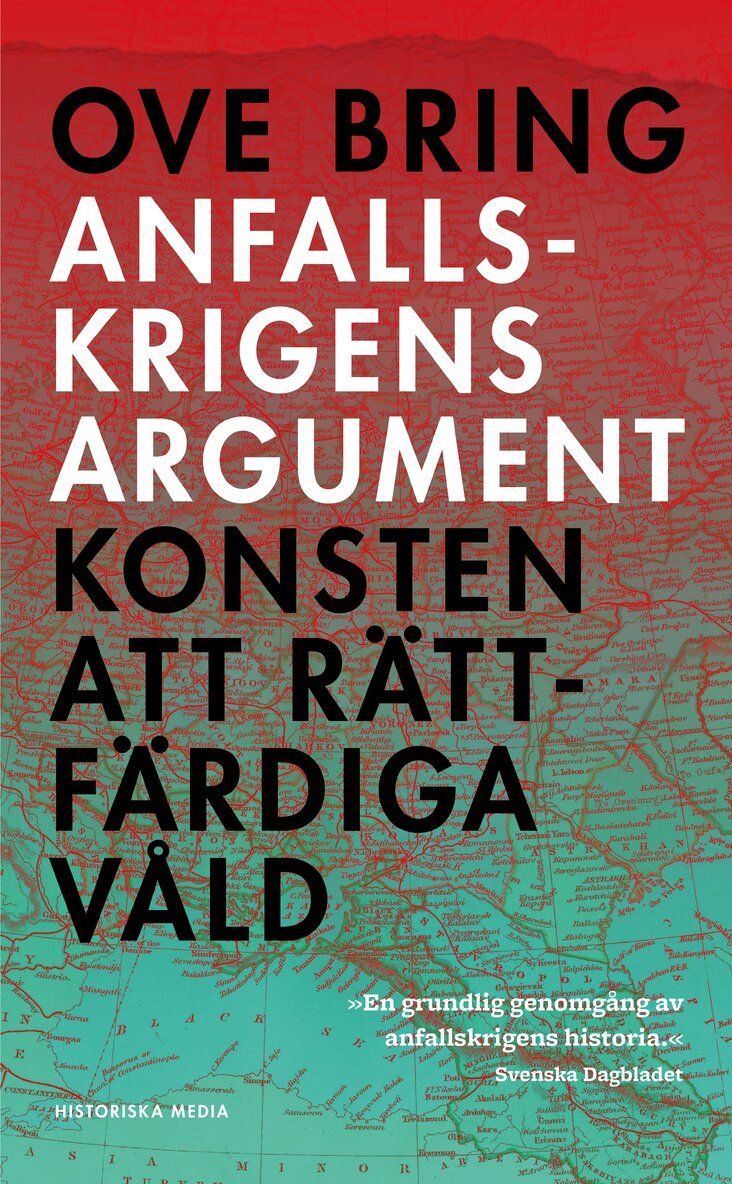
»En grundlig genomgång av anfallskrigens historia.« Svenska Dagbladet
»Övertygande och högaktuell« Sydsvenskan
Det är en konst att få anfall att se ut som försvar. Sällan har den strategin fått så hög relevans som den 24 februari 2022, då Ryssland under Vladimir Putins ledning invaderade Ukraina.
Fenomenet är inte nytt, historien är full av exempel på falska förevändningar och svepskäl som klassiska drag i det säkerhetspolitiska och diplomatiska spelet. Stater som vill starta krig söker skäl som kan rättfärdiga deras handlingar. Det gäller att övertyga den egna nationen, eller en skeptisk omvärld, om det rimliga i ett väpnat agerande eller ett hot om våld i den situation som uppstått.
Oberoende av tidsålder och regim visar folkrättsexperten Ove Bring i Anfallskrigens argument hur de styrande har resonerat och agerat genom historien och ger exempel från bland annat trettioåriga kriget, de båda världskrigen, finska vinterkriget, sexdagarskriget, Kuwaitkriget och kriget i Georgien.
236 kr
Skickas
»En grundlig genomgång av anfallskrigens historia« Svenska Dagbladet
»Övertygande och högaktuell«Sydsvenskan
Det är en konst att få anfall att se ut som försvar. Sällan har den strategin fått så hög relevans som den 24 februari 2022, då Ryssland under Vladimir Putins ledning invaderade Ukraina.
Fenomenet är inte nytt, historien är full av exempel på falska förevändningar och svepskäl som klassiska drag i det säkerhetspolitiska och diplomatiska spelet. Stater som vill starta krig söker skäl som kan rättfärdiga deras handlingar. Det gäller att övertyga den egna nationen, eller en skeptisk omvärld, om det rimliga i ett väpnat agerande eller ett hot om våld i den situation som uppstått.
Oberoende av tidsålder och regim visar folkrättsexperten Ove Bring i Anfallskrigens argument hur de styrande har resonerat och agerat genom historien och ger exempel från bland annat trettioåriga kriget, de båda världskrigen, finska vinterkriget, sexdagarskriget, Kuwaitkriget och kriget i Georgien.
Ove Bring är folkrättsjurist och har i sitt yrkesliv samlat erfarenheter från UD, FN och den akademiska världen, bland annat som professor i folkrätt vid Uppsala universitet, Stockholms universitet och Försvarshögskolan. Mellan 1999 och 2017 var Ove Bring ledamot av Permanenta skiljedomstolen i Haag.
94 kr
Skickas inom 5-8 vardagar
396 kr
Läs direkt efter köp
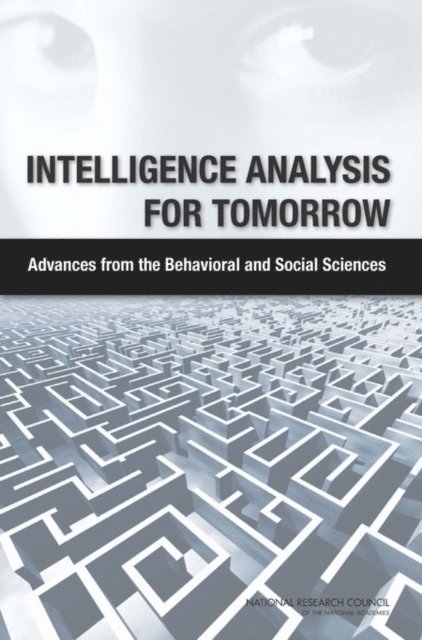
The intelligence community (IC) plays an essential role in the national security of the United States. Decision makers rely on IC analyses and predictions to reduce uncertainty and to provide warnings about everything from international diplomatic relations to overseas conflicts. In today''s complex and rapidly changing world, it is more important than ever that analytic products be accurate and timely. Recognizing that need, the IC has been actively seeking ways to improve its performance and expand its capabilities.In 2008, the Office of the Director of National Intelligence (ODNI) asked the National Research Council (NRC) to establish a committee to synthesize and assess evidence from the behavioral and social sciences relevant to analytic methods and their potential application for the U.S. intelligence community. In Intelligence Analysis for Tomorrow: Advances from the Behavioral and Social Sciences, the NRC offers the Director of National Intelligence (DNI) recommendations to address many of the IC''s challenges.Intelligence Analysis for Tomorrow asserts that one of the most important things that the IC can learn from the behavioral and social sciences is how to characterize and evaluate its analytic assumptions, methods, technologies, and management practices. Behavioral and social scientific knowledge can help the IC to understand and improve all phases of the analytic cycle: how to recruit, select, train, and motivate analysts; how to master and deploy the most suitable analytic methods; how to organize the day-to-day work of analysts, as individuals and teams; and how to communicate with its customers. The report makes five broad recommendations which offer practical ways to apply the behavioral and social sciences, which will bring the IC substantial immediate and longer-term benefits with modest costs and minimal disruption.
636 kr
Skickas
908 kr
Läs direkt efter köp
The U.S. intelligence community (IC) is a complex human enterprise whose success depends on how well the people in it perform their work. Although often aided by sophisticated technologies, these people ultimately rely on their own intellect to identify, synthesize, and communicate the information on which the nation''s security depends. The IC''s success depends on having trained, motivated, and thoughtful people working within organizations able to understand, value, and coordinate their capabilities.Intelligence Analysis provides up-to-date scientific guidance for the intelligence community (IC) so that it might improve individual and group judgments, communication between analysts, and analytic processes. The papers in this volume provide the detailed evidentiary base for the National Research Council''s report, Intelligence Analysis for Tomorrow: Advances from the Behavioral and Social Sciences. The opening chapter focuses on the structure, missions, operations, and characteristics of the IC while the following 12 papers provide in-depth reviews of key topics in three areas: analytic methods, analysts, and organizations.Informed by the IC''s unique missions and constraints, each paper documents the latest advancements of the relevant science and is a stand-alone resource for the IC''s leadership and workforce. The collection allows readers to focus on one area of interest (analytic methods, analysts, or organizations) or even one particular aspect of a category. As a collection, the volume provides a broad perspective of the issues involved in making difficult decisions, which is at the heart of intelligence analysis.
925 kr
Läs direkt efter köp
The U.S. intelligence community (IC) is a complex human enterprise whose success depends on how well the people in it perform their work. Although often aided by sophisticated technologies, these people ultimately rely on their own intellect to identify, synthesize, and communicate the information on which the nation''s security depends. The IC''s success depends on having trained, motivated, and thoughtful people working within organizations able to understand, value, and coordinate their capabilities.Intelligence Analysis provides up-to-date scientific guidance for the intelligence community (IC) so that it might improve individual and group judgments, communication between analysts, and analytic processes. The papers in this volume provide the detailed evidentiary base for the National Research Council''s report, Intelligence Analysis for Tomorrow: Advances from the Behavioral and Social Sciences. The opening chapter focuses on the structure, missions, operations, and characteristics of the IC while the following 12 papers provide in-depth reviews of key topics in three areas: analytic methods, analysts, and organizations.Informed by the IC''s unique missions and constraints, each paper documents the latest advancements of the relevant science and is a stand-alone resource for the IC''s leadership and workforce. The collection allows readers to focus on one area of interest (analytic methods, analysts, or organizations) or even one particular aspect of a category. As a collection, the volume provides a broad perspective of the issues involved in making difficult decisions, which is at the heart of intelligence analysis.
555 kr
Läs direkt efter köp
The intelligence community (IC) plays an essential role in the national security of the United States. Decision makers rely on IC analyses and predictions to reduce uncertainty and to provide warnings about everything from international diplomatic relations to overseas conflicts. In today''s complex and rapidly changing world, it is more important than ever that analytic products be accurate and timely. Recognizing that need, the IC has been actively seeking ways to improve its performance and expand its capabilities.In 2008, the Office of the Director of National Intelligence (ODNI) asked the National Research Council (NRC) to establish a committee to synthesize and assess evidence from the behavioral and social sciences relevant to analytic methods and their potential application for the U.S. intelligence community. In Intelligence Analysis for Tomorrow: Advances from the Behavioral and Social Sciences, the NRC offers the Director of National Intelligence (DNI) recommendations to address many of the IC''s challenges.Intelligence Analysis for Tomorrow asserts that one of the most important things that the IC can learn from the behavioral and social sciences is how to characterize and evaluate its analytic assumptions, methods, technologies, and management practices. Behavioral and social scientific knowledge can help the IC to understand and improve all phases of the analytic cycle: how to recruit, select, train, and motivate analysts; how to master and deploy the most suitable analytic methods; how to organize the day-to-day work of analysts, as individuals and teams; and how to communicate with its customers. The report makes five broad recommendations which offer practical ways to apply the behavioral and social sciences, which will bring the IC substantial immediate and longer-term benefits with modest costs and minimal disruption.
295 kr
Skickas inom 3-6 vardagar
262 kr
Skickas inom 3-6 vardagar
458 kr
Skickas inom 5-8 vardagar
200 kr
Skickas inom 5-8 vardagar
357 kr
Skickas inom 5-8 vardagar
345 kr
Skickas inom 5-8 vardagar
186 kr
Skickas inom 5-8 vardagar
357 kr
Skickas inom 5-8 vardagar
186 kr
Skickas inom 5-8 vardagar
171 kr
Skickas inom 5-8 vardagar
122 kr
Läs direkt efter köp
111 kr
Läs direkt efter köp
427 kr
Skickas inom 3-6 vardagar
543 kr
Skickas inom 10-15 vardagar
712 kr
Läs direkt efter köp
315 kr
Kommande
99 kr
Läs direkt efter köp
149 kr
Lyssna direkt efter köp
230 kr
Skickas
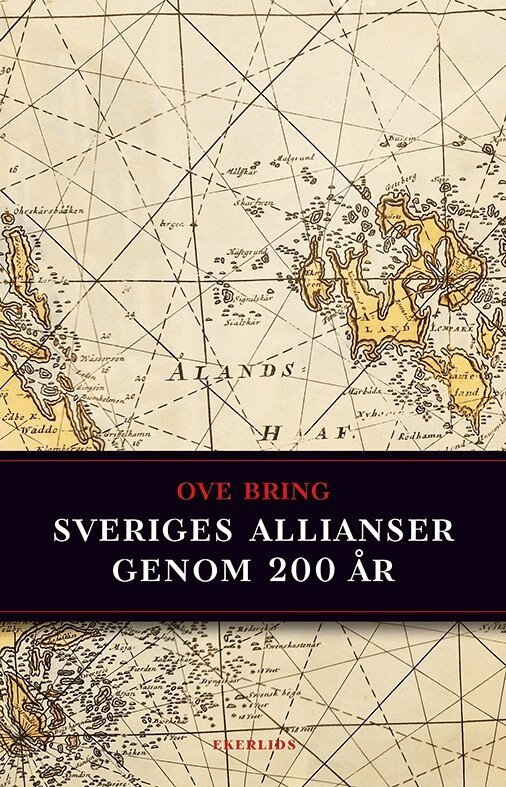
I samband med Sveriges anslutning till Nato sägs det ofta, ibland med viss nostalgi, att vi lämnat bakom oss en period på över 200 år av alliansfrihet. Denna uppfattning är emellertid förenklad och inte helt korrekt. Sanningen är att Sverige vid ett flertal tillfällen, alltsedan Karl XIV Johans dagar, engagerat sig i allianser, även om de oftast varit kortvariga.
Karl Johan anslöt sig till alliansen mot Napoleon och perioden runt mitten av 1800-talet uppvisar flera exempel på frivillig alliansbundenhet och medveten icke-neutralitet. Skandinavismens strömningar bidrog till att först Oscar I och därefter Karl XV prioriterade svensk-norsk solidaritet med det söderifrån hotade Danmark.
När krig utbröt 1848 och 1863 var en skandinavisk allians ett faktum. Om neutralitet var det inte tal. Oscar I ingick 1855 en allians med Storbritannien och Frankrike, riktad mot Ryssland, som formellt gällde till 1908. Mellan 1920 36 skulle Sverige betrakta sig som alliansbundet inom ramen för Nationernas Förbund.
Under Finlands vinterkrig 1939 40 valde Sverige bort neutraliteten för att visa solidaritet med det angripna grannlandet. Under Kuwaitkriget 1990 91 ingick Sverige i FN-alliansen mot Saddam Husseins Irak.
Folkrättsexperten Ove Bring visar i boken hur alliansfrihetens utanförskap undantagsvis, men ändå inte sällan, fått ge vika för gemensam säkerhet och solidaritet med andra.
Sveriges allianser under 200 år är en utmärkt redovisning av det aktuella forskningsläget fram till Sveriges anslutning till Nato. Boken är en sammanfattande, rak och lättillgänglig beskrivning av hur Sverige har manövrerat i ett konfliktfyllt Europa. Myten om alliansfriheten punkteras.
Olof Ehrenkrona i Svenska Dagbladet
Boken om Sveriges allianser rekommenderas till läsning för alla med intresse för svensk utrikespolitik. Välskriven, kunnig och självständig. Läsningen stimuleras av ett rikligt, ofta fyndigt bildval från avgörande händelser under de 200 åren.
Olof Kleberg i Västerbottens-Kuriren
Det är en lättillgänglig och mycket spänstigt skriven berättelse om Sverige och konflikterna som berört oss. Bring har en enastående förmåga att koncentrerat framställa komplexa händelseförlopp och göra dem förståeliga för läsaren.
Mats KG Johansson i Bibliotekstjänsts tidning
331 kr
Tillfälligt slut
363 kr
Tillfälligt slut