Anja-Silvia Goeing - Böcker
Visar alla böcker från författaren Anja-Silvia Goeing. Handla med fri frakt och snabb leverans.
7 produkter
7 produkter
518 kr
Skickas inom 7-10 vardagar
A landmark history that traces the creation, management, and sharing of information through six centuriesThanks to modern technological advances, we now enjoy seemingly unlimited access to information. Yet how did information become so central to our everyday lives, and how did its processing and storage make our data-driven era possible? This volume is the first to consider these questions in comprehensive detail, tracing the global emergence of information practices, technologies, and more, from the premodern era to the present. With entries spanning archivists to algorithms and scribes to surveilling, this is the ultimate reference on how information has shaped and been shaped by societies.Written by an international team of experts, the book's inspired and original long- and short-form contributions reconstruct the rise of human approaches to creating, managing, and sharing facts and knowledge. Thirteen full-length chapters discuss the role of information in pivotal epochs and regions, with chief emphasis on Europe and North America, but also substantive treatment of other parts of the world as well as current global interconnections. More than 100 alphabetical entries follow, focusing on specific tools, methods, and concepts—from ancient coins to the office memo, and censorship to plagiarism. The result is a wide-ranging, deeply immersive collection that will appeal to anyone drawn to the story behind our modern mania for an informed existence.Tells the story of information’s rise from 1450 through to todayCovers a range of eras and regions, including the medieval Islamic world, late imperial East Asia, early modern and modern Europe, and modern North AmericaIncludes 100 concise articles on wide-ranging topics:Concepts: data, intellectual property, privacyFormats and genres: books, databases, maps, newspapers, scrolls and rolls, social mediaPeople: archivists, diplomats and spies, readers, secretaries, teachersPractices: censorship, forecasting, learning, political reporting, translatingProcesses: digitization, quantification, storage and searchSystems: bureaucracy, platforms, telecommunicationsTechnologies: cameras, computers, lithographyProvides an informative glossary, suggested further reading (a short bibliography accompanies each entry), and a detailed indexWritten by an international team of notable contributors, including Jeremy Adelman, Lorraine Daston, Devin Fitzgerald, John-Paul Ghobrial, Lisa Gitelman, Earle Havens, Randolph C. Head, Niv Horesh, Sarah Igo, Richard R. John, Lauren Kassell, Pamela Long, Erin McGuirl, David McKitterick, Elias Muhanna, Thomas S. Mullaney, Carla Nappi, Craig Robertson, Daniel Rosenberg, Neil Safier, Haun Saussy, Will Slauter, Jacob Soll, Heidi Tworek, Siva Vaidhyanathan, Alexandra Walsham, and many more.
203 kr
Skickas inom 7-10 vardagar
An essential guide to the ways information has shaped and been shaped by societiesThanks to recent advances, we now enjoy seemingly unlimited access to information. How did information become so central to our everyday lives? This book traces the global emergence of information practices and technologies across pivotal epochs and regions, providing invaluable historical perspectives on the ways information has shaped and been shaped by societies. Featuring the core articles from the ultimate reference book Information: A Historical Companion, this short history will appeal to anyone seeking to understand our modern mania for an informed existence. The book:Tells the story of information’s rise from the premodern era to today, exploring how diverse cultures have created, managed, and shared facts and knowledgeTakes readers from the medieval Islamic world to late imperial East Asia, and from early modern and modern Europe to contemporary North AmericaCovers a broad range of topics, such as networks, bureaucracy, publicity, propaganda, censorship, privacy, intellectual property, digitization, telecommunications, storage and search, and much moreIncludes a new introduction, suggested further readings, and a glossary of key termsBrings together an international team of experts, including Jeremy Adelman, Devin Fitzgerald, John-Paul Ghobrial, Lisa Gitelman, Randolph C. Head, Richard R. John, Elias Muhanna, Thomas S. Mullaney, Carla Nappi, Craig Robertson, Daniel Rosenberg, Will Slauter, and Heidi Tworek
543 kr
Skickas inom 11-20 vardagar
Del 227 - Brill's Studies in Intellectual History
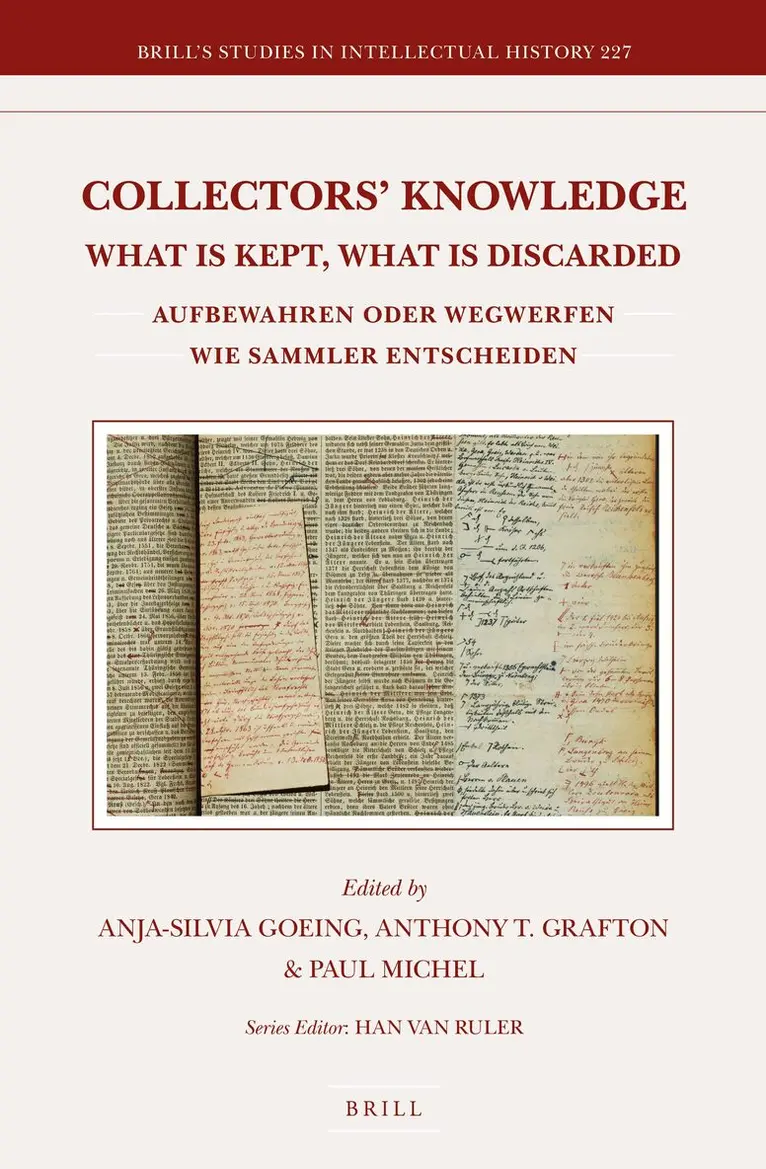
Collectors’ Knowledge: What Is Kept, What Is Discarded / Aufbewahren oder wegwerfen: wie Sammler entscheiden
Inbunden, Engelska, 2013
2 759 kr
Skickas inom 5-8 vardagar
Drawing on case studies from the thirteenth to the twentieth centuries, covering Europe and beyond, Collectors’ Knowledge: What is Kept, What is Discarded investigates how knowledge was acquired, organized and sometimes lost. It examines collections of texts and objects—libraries, textbooks, miscellanies, commonplace books, data collections pertaining to historical events, encyclopedias, royal and ducal treasures, curiosity cabinets, galleries and museums—to uncover the processes of accumulation, organization, selection and rejection that have shaped learning. The essays emphasize the complex relationship between the intentions of collectors and the limitations they encountered—issues of format, presentation, display and storage—as well as outside forces that disrupted their aims, including pillage and natural disasters.Contributors include: Stephen Bann, Laurence Brockliss, François de Capitani, Livia Cárdenas, Steven Conn, Anja-Silvia Goeing, Anthony T. Grafton, Janet Grau, Jürgen Leonhardt, Ulrich Marzolph, Paul Michel, Jürgen Oelkers, Wilhelm Schmidt-Biggemann, Nicola Schneider, Gerald Schwedler, Iolanda Ventura, Monika Wicki, and Marc Winter.Achtzehn europäische und aussereuropäische Fallstudien vom dreizehnten bis zwanzigsten Jahrhundert fragen in “Collectors’ Knowledge: What Is Kept, What Is Discarded – Aufbewahren oder wegwerfen – wie Sammler entscheiden”, wie Wissen erworben und organisiert wurde und weshalb es verloren ging. Die Autoren untersuchen Sammlungen von Texten und Objekten – Bibliotheken, Lehrbücher, Sammelbände, Datensammlungen im Zusammenhang mit historischen Ereignissen, Enzyklopädien, herrschaftliche Schätze, Wunderkammern und Museen. Ihr Ziel ist es, Prozesse der Akkumulation, Organisation, Auswahl und Ablehnung aufzudecken, die unser Wissen über die Epochen geprägt haben. Die Aufsätze unterstreichen die komplexen Beziehungen zwischen den Absichten der Sammler und den Zwängen, mit denen sie konfrontiert waren – in Fragen des Formates, der Präsentation oder Speicherung –, sowie den Kräften, die Verluste bewirkten, beispielsweise Plünderung oder ideengeschichtliche Umwälzungen.
Del 31 - Scientific and Learned Cultures and Their Institutions
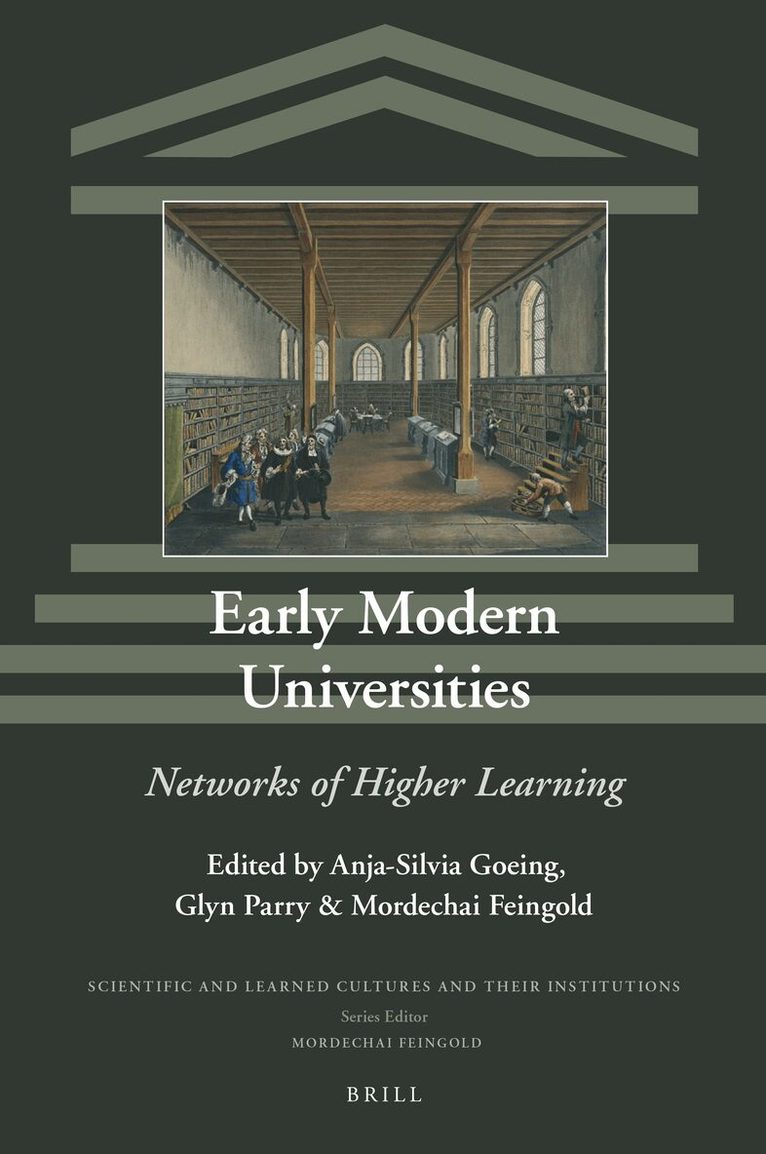
Early Modern Universities
Networks of Higher Learning
Inbunden, Engelska, 2020
2 593 kr
Skickas inom 5-8 vardagar
Early Modern Universities: Networks of Higher Education publishes twenty essays on early modern institutional academic networks and the history of the book. The case studies examine universities, schools, and academies across a wide geographical range throughout Europe, and in Central America. The volume suggests pathways for future research into institutional hierarchies, cultural ties, and how networks of policy makers were embedded in complex scholarly and scientific developments. Topics include institutions and political entanglements; locality and mobility, especially the movement of scholars and scholarship between institutions; communication, collaboration, and the circulation of academic knowledge. The essays use studies of print and book cultures to provide insights into cooperative interregional markets, travel and trade.Contributors: Laurence Brockliss, Liam Chambers, Liam Chambers, Peter Davidson, Mordechai Feingold, Alette Fleischer, Willem Frijhoff, Anja- Silvia Goeing, Martina Hacke, Michael Hunter, Urs B. Leu, David A. Lines, Ian Maclean, Thomas O’Connor, Glyn Parry, Yarí Pérez Marín, Elizabeth Sandis, Andreas Sohn, Jane Stevenson, Iolanda Ventura, and Benjamin Wardhaugh.
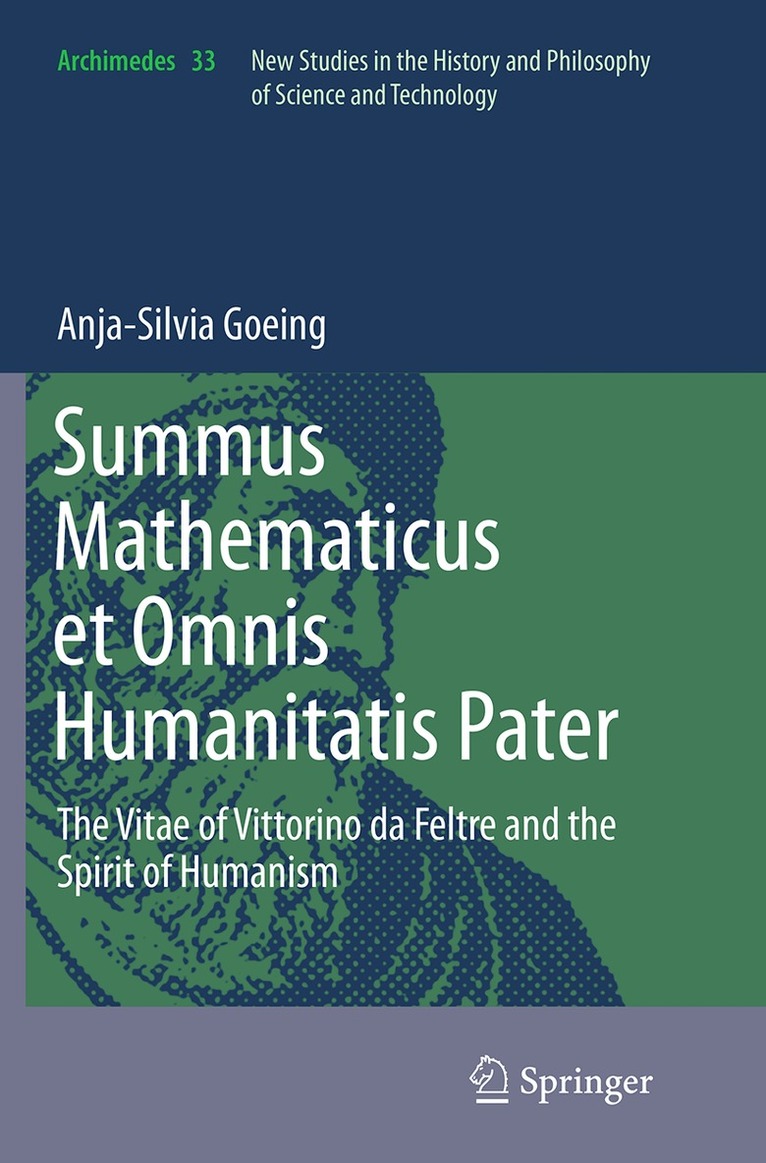
Summus Mathematicus et Omnis Humanitatis Pater
The Vitae of Vittorino da Feltre and the Spirit of Humanism
Inbunden, Engelska, 2013
1 513 kr
Skickas inom 10-15 vardagar
This book revises the picture of the teacher and educator of princes, Vittorino Rambaldoni da Feltre (c. From 1423 to 1446, Vittorino da Feltre was in charge of a school in Mantua, where his students included not only the offspring of Italy’s princes, but also the first generation of authors dealing with books in print.
Summus Mathematicus et Omnis Humanitatis Pater
The Vitae of Vittorino da Feltre and the Spirit of Humanism
Häftad, Engelska, 2016
1 513 kr
Skickas inom 10-15 vardagar
This book revises the picture of the teacher and educator of princes, Vittorino Rambaldoni da Feltre (c. 1378, Feltre -- 1446, Mantua), taking a completely new approach to show his work and life from the individual perspectives created by his students and contemporaries. From 1423 to 1446, Vittorino da Feltre was in charge of a school in Mantua, where his students included not only the offspring of Italy’s princes, but also the first generation of authors dealing with books in print. Among his students were historians like Bartolomeo Sacchi (named Platina), who wrote an extensive history of the popes, and mathematicians like Jacopo Cassiano (Cremonensis), who translated the work of Archimedes from Greek into Latin. Vittorino is still regarded as the educationalist of Italian Renaissance humanism per sé. This work not only contributes to the study of the history of Italian humanist institutions, it also uses available sources to demonstrate the development of a new attitude to education in Italy.