Christopher Chippindale - Böcker
Visar alla böcker från författaren Christopher Chippindale. Handla med fri frakt och snabb leverans.
9 produkter
9 produkter
2 151 kr
Skickas inom 10-15 vardagar
Rock-art - the ancient images which still scatter the rocky landscapes of Europe - is a singular kind of archaeological evidence. Fixed in place, it does not move about as artefacts as trade objects do. Enigmatic in its meaning, it uniquely offers a direct record of how prehistoric Europeans saw and envisioned their own worlds.European Landscapes of Rock-Art provides a number of case studies, covering arange of European locations including Ireland, Italy, Scandinavia, Scotland and Spain, which collectively address the chronology and geography of rock-art as well as providing an essential series of methodologies for future debate. Each author provides a synthesis that focuses on landscape as an essential part of rock-art construction. From the paintings and carved images of prehistoric Scandinavia to Second World War grafitti on the German Reichstag, this volume looks beyond the art to the society that made it.The papers in this volume also challenge the traditional views of how rock-art is recorded. Throughout, there is an emphasis on informal and informed methodologies. The authors skilfully discuss subjectivity and its relationship with landscape since personal experience, from prehistoric times to the present day, plays an essential role in the interpretation of art itself. The emphasis is on location, on the intentionality of the artist, and on the needs of the audience.This exciting volume is a crucial addition to rock-art literature and landscape archaeology. It will provide new material for a lively and greatly debated subject and as such will be essential for academics, non-academics and commentators of rock art in general.
594 kr
Skickas inom 10-15 vardagar
Rock-art - the ancient images which still scatter the rocky landscapes of Europe - is a singular kind of archaeological evidence. Fixed in place, it does not move about as artefacts as trade objects do. Enigmatic in its meaning, it uniquely offers a direct record of how prehistoric Europeans saw and envisioned their own worlds.European Landscapes of Rock-Art provides a number of case studies, covering arange of European locations including Ireland, Italy, Scandinavia, Scotland and Spain, which collectively address the chronology and geography of rock-art as well as providing an essential series of methodologies for future debate. Each author provides a synthesis that focuses on landscape as an essential part of rock-art construction. From the paintings and carved images of prehistoric Scandinavia to Second World War grafitti on the German Reichstag, this volume looks beyond the art to the society that made it.The papers in this volume also challenge the traditional views of how rock-art is recorded. Throughout, there is an emphasis on informal and informed methodologies. The authors skilfully discuss subjectivity and its relationship with landscape since personal experience, from prehistoric times to the present day, plays an essential role in the interpretation of art itself. The emphasis is on location, on the intentionality of the artist, and on the needs of the audience.This exciting volume is a crucial addition to rock-art literature and landscape archaeology. It will provide new material for a lively and greatly debated subject and as such will be essential for academics, non-academics and commentators of rock art in general.
672 kr
Skickas inom 7-10 vardagar
A companion to The Archaeology of Rock-Art (Cambridge, 1998), this new collection edited by Christopher Chippindale and George Nash addresses the most important component around the rock-art panel - its landscape. The Figured Landscapes of Rock-Art draws together the work of many well-known scholars from key regions of the world for rock-art and for rock-art research. It provides a unique, broad and varied insight into the arrangement, location, and structure of rock-art and its place within the landscapes of ancient worlds as ancient people experienced them. Packed with illustrations, as befits a book about images, The Figured Landscapes of Rock-Art offers a visual as well as a literary key to the understanding of this most lovely and alluring of archaeological traces.
422 kr
Skickas inom 7-10 vardagar
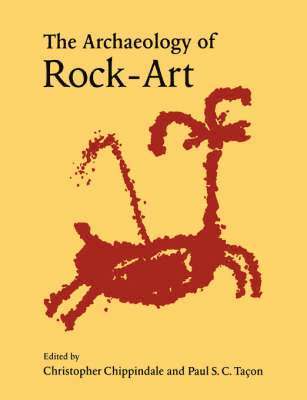
Pictures, painted and carved in caves and on open rock surfaces, are amongst our loveliest relics from prehistory. This pioneering set of sparkling essays goes beyond guesses as to what the pictures mean, instead exploring how we can reliably learn from rock-art as a material record of distant times: in short, rock-art as archaeology. Sometimes contact-period records offer some direct insight about indigenous meaning, so we can learn in that informed way. More often, we have no direct record, and instead have to use formal methods to learn from the evidence of the pictures themselves. The book's eighteen papers range wide in space and time, from the Palaeolithic of Europe to nineteenth-century Australia. Using varied approaches within the consistent framework of informed and proven methods, they make key advances in using the striking and reticent evidence of rock-art to archaeological benefit.
1 485 kr
Skickas inom 7-10 vardagar
A companion to The Archaeology of Rock-Art (Cambridge, 1998), this new collection edited by Christopher Chippindale and George Nash addresses the most important component around the rock-art panel - its landscape. The Figured Landscapes of Rock-Art draws together the work of many well-known scholars from key regions of the world for rock-art and for rock-art research. It provides a unique, broad and varied insight into the arrangement, location, and structure of rock-art and its place within the landscapes of ancient worlds as ancient people experienced them. Packed with illustrations, as befits a book about images, The Figured Landscapes of Rock-Art offers a visual as well as a literary key to the understanding of this most lovely and alluring of archaeological traces.
1 383 kr
Skickas inom 10-15 vardagar
This handbook gathers original, authoritative articles from leading archaeologists to compile the latest thinking about archaeological theory. The authors provide a comprehensive picture of the theoretical foundations by which archaeologists contextualize and analyze their archaeological data. Student readers will also gain a sense of the immense power that theory has for building interpretations of the past, while recognizing the wonderful archaeological traditions that created it. An extensive bibliography is included. This volume is the single most important reference for current information on contemporary archaeological theories.
2 618 kr
Tillfälligt slut
This handbook gathers original, authoritative articles from leading archaeologists to compile in a single place the latest thinking about archaeological methods. Topics range from theoretical models undergirding research to concrete strategies for field work and laboratory analysis. Public archaeology topics such as curation, collaboration, funding, and publication are also included among the 34 chapters in the book. Chapters are authored by well-known scholars on both sides of the Atlantic including Fagan, Hodder, Chippindale, Kvamme, McManamon, and many others. An extensive bibliography accompanies each chapter. As a single reference for current information on contemporary archaeological field methods, this volume is unmatched.
649 kr
Skickas inom 10-15 vardagar
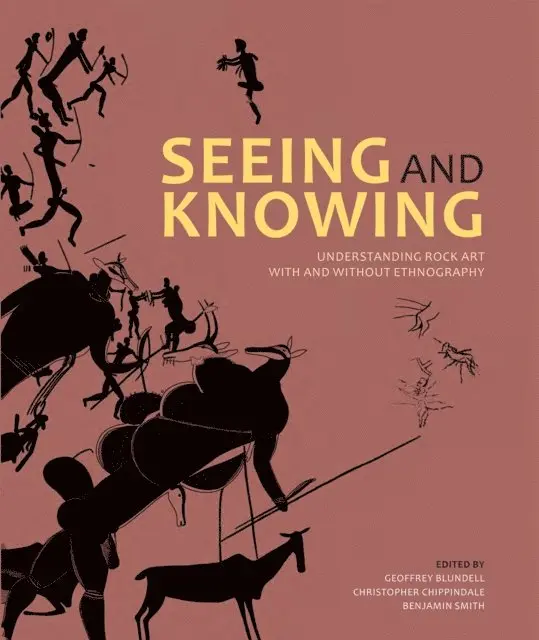
The purpose of Seeing and Knowing is to demonstrate the depth and wide geographical impact of David Lewis-Williams’ contribution to rock art research by emphasizing theory and methodology drawn from ethnography. Contributors explore what it means to understand and learn from rock art, and a contrast is drawn between those sites where it is possible to provide a modern, ethnographic context, and those sites where it is not. This is the definitive guide to the interplay between ethnography and rock art interpretation, and is an ideal resource for students and researchers alike.
409 kr
Skickas inom 11-20 vardagar
The depth and wide geographical impact of David Lewis-Williams. It is largely through the work of David Lewis-Williams that San rock art has come to be understood so well, as a complex symbolic and metaphoric representation of San religious beliefs and practices. The purpose of this volume is to demonstrate the depth and wide geographical impact of Lewis-Williams' contribution, with particular emphasis on the use of theory and methodology drawn from ethnography that he has used with inspirational effect in understanding the meaning and context of rock art in various parts of the world. Seeing and Knowing explores how to understand and learn from rock art with and without ethnography. Because many of the chapters are based on solid fieldwork and ethnographic research, they offer a new body of work that provides the evidence for differentiation between knowing and simply seeing. This volume is unique in that it focuses exclusively on rock art and ethnography, and covers such a wide geographic range of examples on this topic, from southern Africa, to Scandinavia, to the United States. Many of the chapters explore studies in rock art regions of the world where variation and constancy can be observed and explored across distances both in space and in time. The editors have entitled the book Seeing and Knowing to echo Lewis-Williams' Believing and Seeing published almost thirty years ago; they say 'seeing' again because looking at rock art is and will always be central, and then what is seen when human eyes and minds look; they say 'knowing' in recognition that, by his work and by his example, archaeologists now know a little more than they knew before. Even so, as Lewis-Williams will be the first to say, we still know only a fraction.