Committee on Astronomy and Astrophysics – författare
Visar alla böcker från författaren Committee on Astronomy and Astrophysics. Handla med fri frakt och snabb leverans.
10 produkter
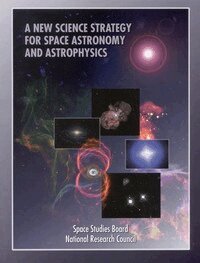
New Science Strategy for Space Astronomy and Astrophysics
Av National Research Council, Division on Engineering and Physical Sciences m. fl.
Häftad, 1997
1205 kr
Lägg i varukorg
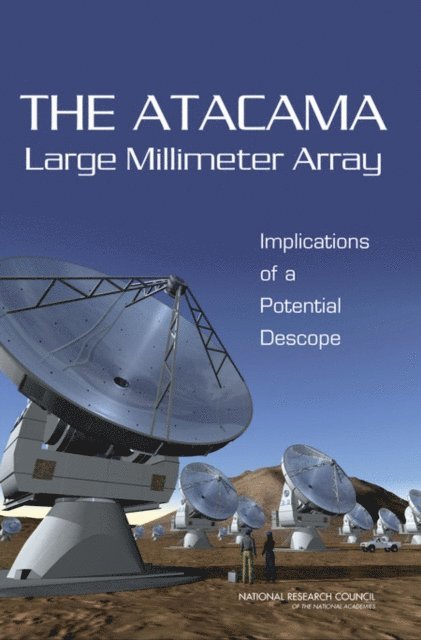
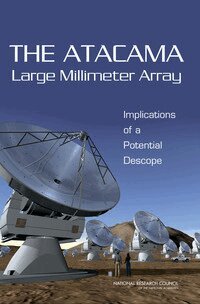
Atacama Large Millimeter Array
Implications of a Potential Descope
Av Committee to Review the Science Requirements for the Atacama Large Millimeter Array, Committee on Astronomy and Astrophysics m. fl.
E-bok, 2005
295 kr
Lägg i varukorg
The 1991 NRC decadal survey for astronomy and astrophysics included a project called the Millimeter Array (MMA). This instrument would be an array of millimeter-wavelength telescopes intended to capture images of star-forming regions and distant star-burst galaxies. With the addition of …
Federal Funding of Astronomical Research
Av Committee on Astronomy and Astrophysics, Board on Physics and Astronomy m. fl.
E-bok, 2000
416 kr
Lägg i varukorg
The Committee on Astronomy and Astrophysics (CAA), at its meeting on September 8, 1997, was briefed on the legislative report accompanying the bill to authorize appropriations for fiscal years 1998 and 1999 for the National Science Foundation (NSF). The report raised a number of questions about …
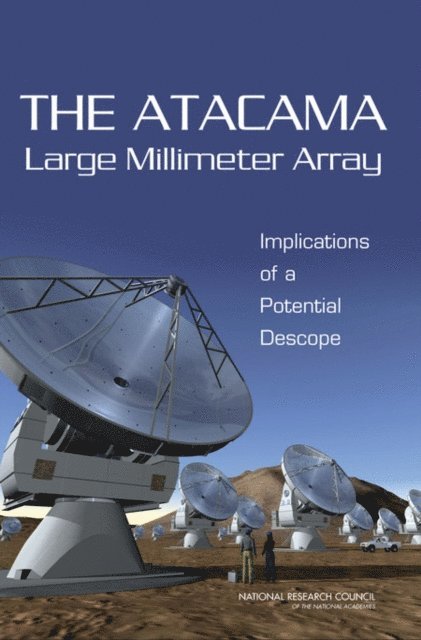
Atacama Large Millimeter Array
Implications of a Potential Descope
Av Committee to Review the Science Requirements for the Atacama Large Millimeter Array, Committee on Astronomy and Astrophysics m. fl.
E-bok, 2005
200 kr
Lägg i varukorg
The 1991 NRC decadal survey for astronomy and astrophysics included a project called the Millimeter Array (MMA). This instrument would be an array of millimeter-wavelength telescopes intended to capture images of star-forming regions and distant star-burst galaxies. With the addition of …
Federal Funding of Astronomical Research
Av Committee on Astronomy and Astrophysics, Board on Physics and Astronomy m. fl.
E-bok, 2000
278 kr
Lägg i varukorg
The Committee on Astronomy and Astrophysics (CAA), at its meeting on September 8, 1997, was briefed on the legislative report accompanying the bill to authorize appropriations for fiscal years 1998 and 1999 for the National Science Foundation (NSF). The report raised a number of questions about …
New Science Strategy for Space Astronomy and Astrophysics
Av Committee on Astronomy and Astrophysics, Space Studies Board m. fl.
E-bok, 1997
280 kr
Lägg i varukorg
Roman Space Telescope Observations
Report Series?Committee on Astronomy and Astrophysics
Av and Medicine National Academies of Sciences, Engineering, Division on Engineering and Physical Sciences m. fl.
Häftad, 2023
384 kr
Kommande
The Roman Space Telescope will measurably advance knowledge of dark energy and exoplanet demographics. Locally, it will likely enhance understanding of the structure and substructure of the Milky Way and nearby galaxies, including a census of the predicted but elusive ultra-faint dwarf galaxies. At …
Roman Space Telescope Observing Time Allocation Principles
Report Series-Committee on Astronomy and Astrophysics
Av Committee on Astronomy and Astrophysics, Board on Physics and Astronomy m. fl.
E-bok, 2022
173 kr
Lägg i varukorg
The Roman Space Telescope will measurably advance knowledge of dark energy and exoplanet demographics. Locally, it will likely enhance understanding of the structure and substructure of the Milky Way and nearby galaxies, including a census of the predicted but elusive ultra-faint dwarf galaxies. At …
Federal Funding of Astronomical Research
Av National Research Council, and Applications Commission on Physical Sciences, Mathematics m. fl.
Häftad, 2000
1179 kr
Tillfälligt slut
The Committee on Astronomy and Astrophysics (CAA), at its meeting on September 8, 1997, was briefed on the legislative report accompanying the bill to authorize appropriations for fiscal years 1998 and 1999 for the National Science Foundation (NSF). The report raised a number of questions about …
Atacama Large Millimeter Array
Implications of a Potential Descope
Av National Research Council, Division on Engineering and Physical Sciences m. fl.
Häftad, 2005
435 kr
Tillfälligt slut
The 1991 NRC decadal survey for astronomy and astrophysics included a project called the Millimeter Array (MMA). This instrument would be an array of millimeter-wavelength telescopes intended to capture images of star-forming regions and distant star-burst galaxies. With the addition of …