Douglas J. Herrmann - Böcker
Visar alla böcker från författaren Douglas J. Herrmann. Handla med fri frakt och snabb leverans.
13 produkter
13 produkter
1 095 kr
Skickas inom 10-15 vardagar
In 1885 Herman Ebbinghaus showed the world how the scientific method could be applied to the elusive phenomena of memory. But what of work on memory before Ebbinghaus? The long ascendance of the Ebbinghaus tradition has eclipsed the contributions of scholars before Ebbinghaus. Memory in Historical Perspective draws together for the first time a collection of writings that figured prominently in scholarly thought about memory from the 8th century B. C. until the scientific investigation of memory began in the late 19th century. Memory in Historical Perspective will be of value to students, researchers, teachers, and writers who wish to place the study of memory in its historical context. The writings are thought-provoking; they deal with a wide range of basic issues in memory in a direct and refreshing way. A study of these writings will stimulate insights into current issues about memory in psychology, philosophy, artificial intelligence, anthropology, and education.
1 991 kr
Skickas inom 7-10 vardagar
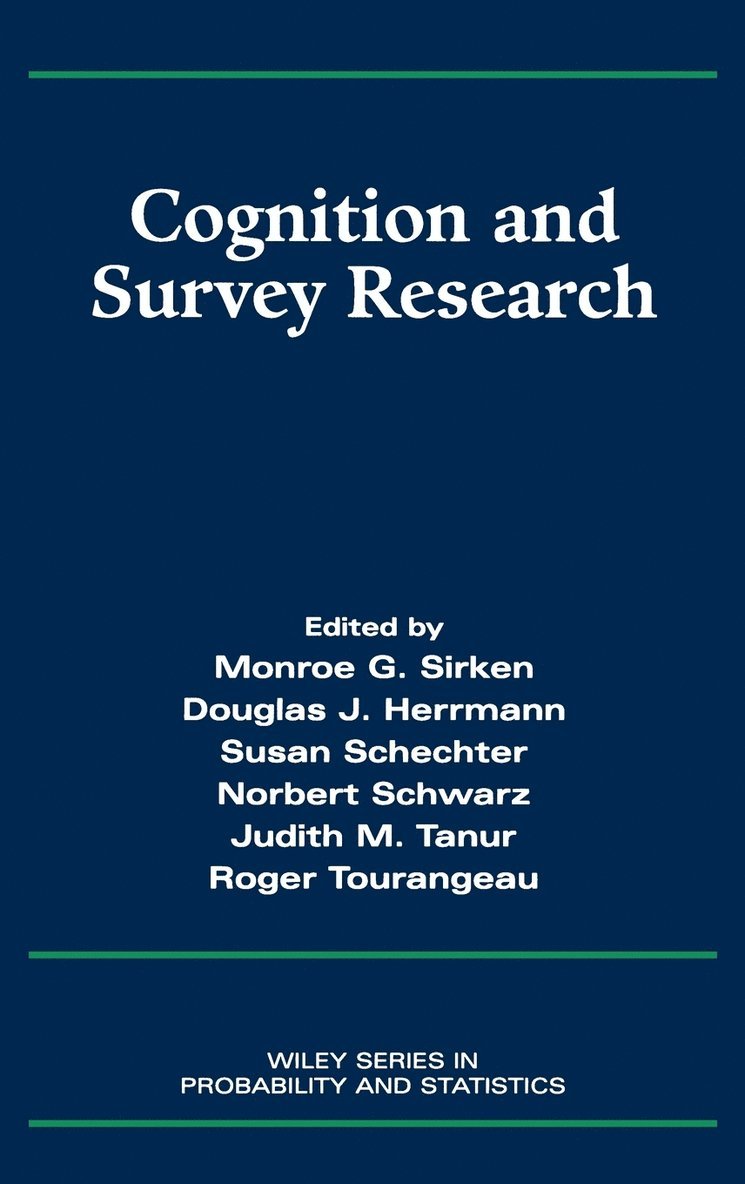
Survey methods research--an interdisciplinary approach. Introducing the theory and tools of cognitive aspects of survey methodology (CASM)--a movement that has greatly contributed to the evolving field of survey methods research--this collection of monographs explores advances in the use of cognitive psychology and other sciences to improve the quality of data collected in surveys. In 22 articles commissioned specifically for this volume, leading survey researchers, social scientists, and statisticians from around the globe evaluate the advantages of interdisciplinary survey techniques, focusing on the many contributions of the CASM movement and drawing on such disciplines as statistics, cognitive psychology, sociology, behavioral sciences, anthropology, linguistics, and computer sciences. The authors explain basic concepts and methodologies and demonstrate the application of cognitive theory to all phases of survey research, including data processing, analysis, presentation, and administration. They provide a critical review of the history and findings of CASM-oriented research and describe useful cognitive models used in survey testing and design. Also, the authors discuss the expanding role of computer technologies and statistical advances in the interdisciplinary aspects of survey methods and draw a roadmap for interdisciplinary survey research into the twenty-first century. Clearly written and supplemented with extensive references and more than 80 figures and charts, Cognition and Survey Research is an indispensable guide for statisticians and professionals who would like to be at the cutting edge of interdisciplinary survey methods research involving the social, cognitive, computer, or statistical sciences.
464 kr
Skickas inom 5-8 vardagar
Rapidly growing cognitive technologies (such as word processors, web browsers, cell phones, and personal data assistants) aid learning, memory, and problem solving, and contribute to every part of modern life from interviewing crime witnesses to learning a foreign language to calling one's mother. This collection of essays on cognitive technology examines the interaction between the human mind and the tools people create to enhance it, studying which technologies assist cognition the most and what features are most effective. It also considers the point at which the technological enhancement of human ability begins to restrict that very ability, such as the risk of some cognitive technologies impairing cognition or creating disadvantages for individuals or groups.This collection of 11 essays discusses the most recent psychological research in cognitive technology, showcasing the paradigms and theories that have driven the development of new cognitive technologies. It explores the impact of technology on cognitive psychology, the classroom, and social interaction and group problem solving. Topics covered include the distracting characteristics of new technologies (such as the effects of cell phone use on driving ability and of distracting advertisements on problem solving), the study of mass media through assessing memories for media experiences, the media's role in advancing gender and racial prejudices, and the misuse of cognitive technology through identity theft and cyberterrorism. Each essay concludes with a bibliography.
Basic and Applied Memory Research
Volume 1: Theory in Context; Volume 2: Practical Applications
Inbunden, Engelska, 1996
1 258 kr
Skickas inom 10-15 vardagar
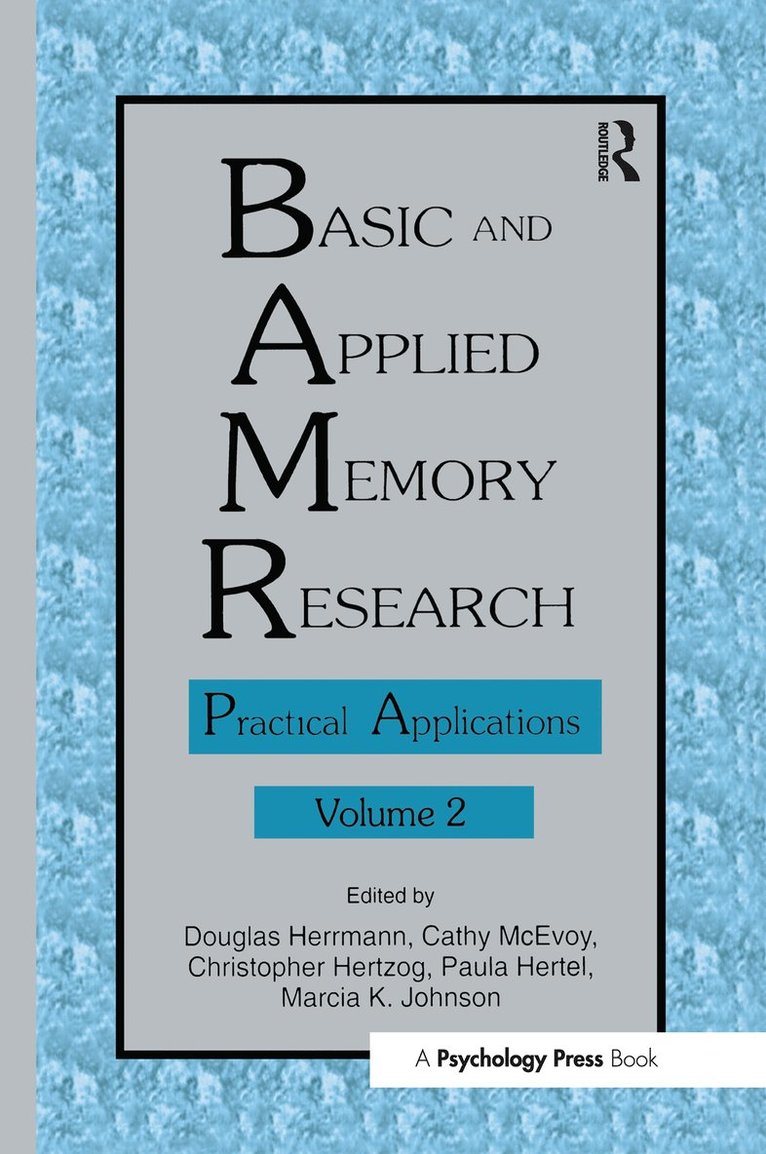
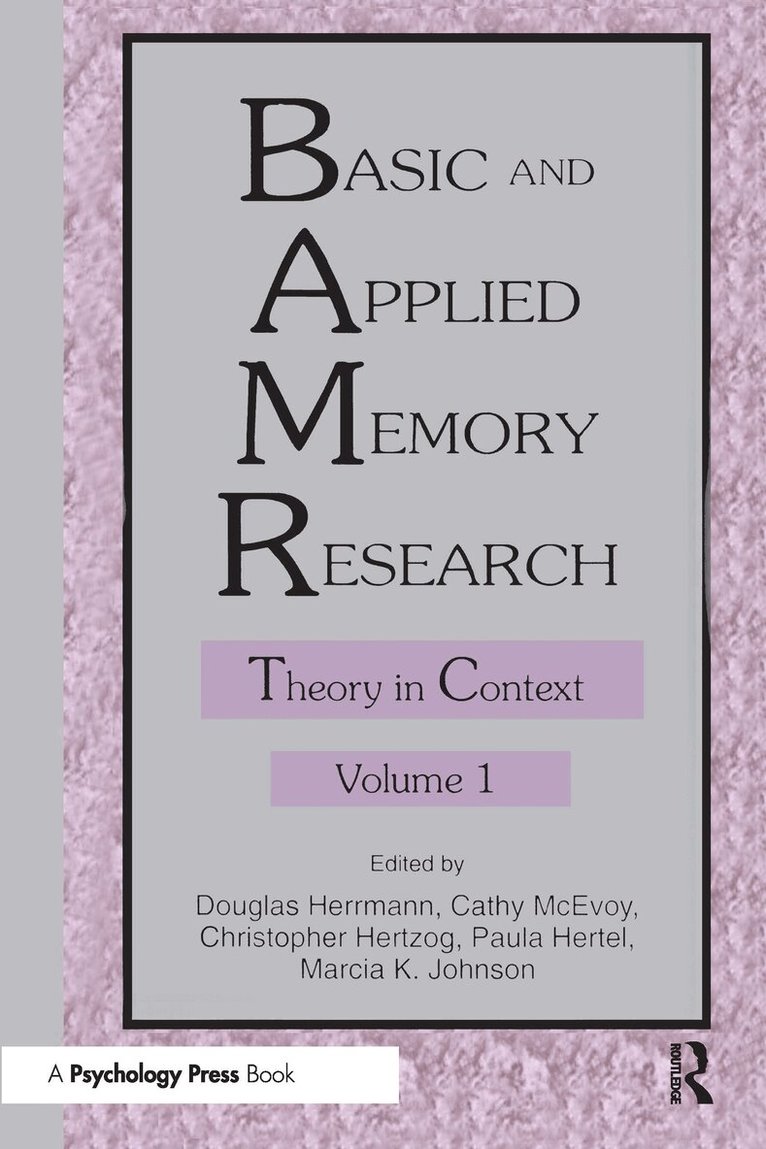
Basic researchers unlock the secrets of nature; applied researchers unlock the means by which those secrets of nature can change people's lives. Neither basic nor applied research has an independent impact. These volumes examine the convergence of basic and applied research in the field of memory. Volume 1: Theory and Context, focuses on the methods for understanding and applying basic memory theory, while Volume 2: Practical Applications, expands the understanding of practical memory research by providing in-depth research examples and findings.If the science of memory is to make a significant contribution to society, coordinating our basic and applied efforts and determining how they complement each other become of paramount importance. These volumes will help in this regard--both as textbooks demonstrating how to investigate memory and apply basic memory theory, and as reference sources leading to a better understanding of certain problems in basic and applied memory research.Readers of these volumes will gain a thorough grasp of the way major themes relate to basic and applied research collaboration, how programmatic basic and applied research can be conducted on particular memory problems, and the manner in which basic and applied work in major problem areas has been incorporated into the field of memory. Both volumes present important information that will be indispensable to researchers and students alike.
Basic and Applied Memory Research
Volume 1: Theory in Context; Volume 2: Practical Applications
Inbunden, Engelska, 1996
1 418 kr
Tillfälligt slut
Basic researchers unlock the secrets of nature; applied researchers unlock the means by which those secrets of nature can change people's lives. Neither basic nor applied research has an independent impact. These volumes examine the convergence of basic and applied research in the field of memory. Volume 1: Theory and Context, focuses on the methods for understanding and applying basic memory theory, while Volume 2: Practical Applications, expands the understanding of practical memory research by providing in-depth research examples and findings.If the science of memory is to make a significant contribution to society, coordinating our basic and applied efforts and determining how they complement each other become of paramount importance. These volumes will help in this regard--both as textbooks demonstrating how to investigate memory and apply basic memory theory, and as reference sources leading to a better understanding of certain problems in basic and applied memory research.Readers of these volumes will gain a thorough grasp of the way major themes relate to basic and applied research collaboration, how programmatic basic and applied research can be conducted on particular memory problems, and the manner in which basic and applied work in major problem areas has been incorporated into the field of memory. Both volumes present important information that will be indispensable to researchers and students alike.
Basic and Applied Memory Research
Volume 1: Theory in Context; Volume 2: Practical Applications
Häftad, Engelska, 1996
349 kr
Skickas inom 10-15 vardagar
Basic researchers unlock the secrets of nature; applied researchers unlock the means by which those secrets of nature can change people's lives. Neither basic nor applied research has an independent impact. These volumes examine the convergence of basic and applied research in the field of memory. Volume 1: Theory and Context, focuses on the methods for understanding and applying basic memory theory, while Volume 2: Practical Applications, expands the understanding of practical memory research by providing in-depth research examples and findings.If the science of memory is to make a significant contribution to society, coordinating our basic and applied efforts and determining how they complement each other become of paramount importance. These volumes will help in this regard--both as textbooks demonstrating how to investigate memory and apply basic memory theory, and as reference sources leading to a better understanding of certain problems in basic and applied memory research.Readers of these volumes will gain a thorough grasp of the way major themes relate to basic and applied research collaboration, how programmatic basic and applied research can be conducted on particular memory problems, and the manner in which basic and applied work in major problem areas has been incorporated into the field of memory. Both volumes present important information that will be indispensable to researchers and students alike.
2 030 kr
Skickas inom 10-15 vardagar
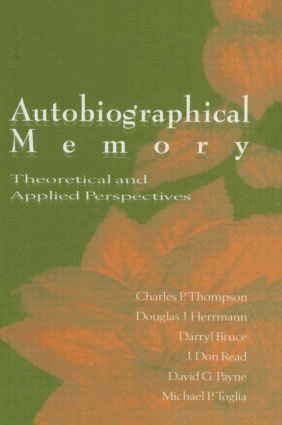
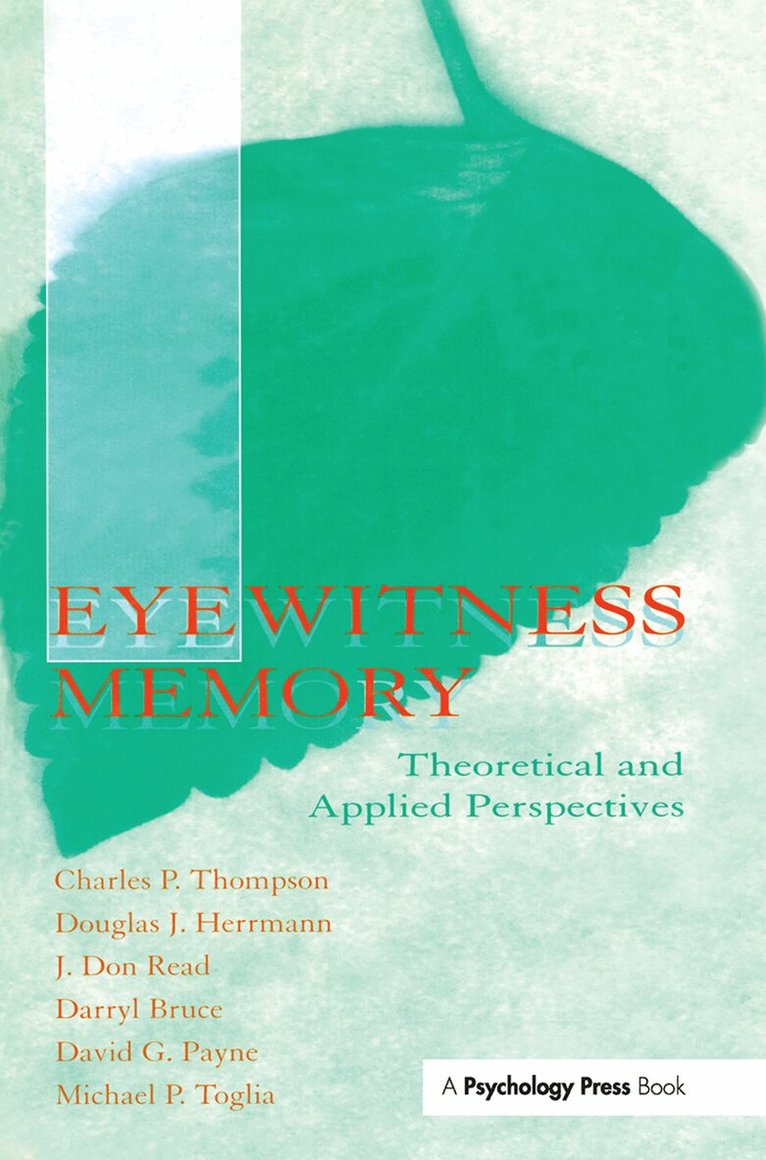
The organization of the first Society for Applied Research in Memory and Cognition (SARMAC) conference centered around two specifically identifiable research topics -- autobiographical memory and eyewitness memory. These two areas -- long-time staples on the menu of investigators of memory in more natural settings -- differ on a variety of dimensions, perhaps most notably in their specific goals for scientific inquiry and application. For many questions about memory and cognition that are of interest to scientific psychology, there have been historical as well as rather arbitrary reasons for their assignment to the autobiographical or eyewitness memory fields.Perhaps as a result of differing historical orientations, the first volume's seven autobiographical memory chapters focus upon the qualities or types of recall from research participants, whereas the seven chapters in the eyewitness memory volume generally focus upon the quantity (a concern for completeness) and accuracy of recall. This interest in the ultimate end-product and its application within the legal process in general encourages eyewitness memory investigators to modify their testing procedures continually in an attempt to gain even more information from participants about an event. Indeed, several of the eyewitness memory chapters reflect such attempts.Beyond the specific contributions of each chapter to the literature on autobiographical and eyewitness memory, the editors hope that the reader will come away with some general observations:the autobiographical and eyewitness memory fields are thrivingthese two fields are likely to remain center stage in the further investigation of memory in natural contextsalthough the autobiographical and eyewitness memory chapters have been segregated in these two volumes, the separation is often more arbitrary than real and connections between the two areas aboundthe two research traditions are entirely mindful of fundamental laboratory methods, research, and theory -- sometimes drawing their research inspirations from that quarter; andthe two fields -- though driven largely by everyday memory concerns -- can contribute to a more basic understanding of memory at both an empirical and a theoretical level
1 258 kr
Skickas inom 10-15 vardagar
The organization of the first Society for Applied Research in Memory and Cognition (SARMAC) conference centered around two specifically identifiable research topics -- autobiographical memory and eyewitness memory. These two areas -- long-time staples on the menu of investigators of memory in more natural settings -- differ on a variety of dimensions, perhaps most notably on their specific goals for scientific inquiry and application. For many questions about memory and cognition that are of interest to scientific psychology, there have been historical as well as rather arbitrary reasons for their assignment to the autobiographical or eyewitness memory fields. Perhaps as a result of differing historical orientations, the first volume's seven autobiographical memory chapters focus upon the qualities or types of recall from research participants, whereas the seven chapters in the eyewitness memory volume generally focus upon the quantity (a concern for completeness) and accuracy of recall. This interest in the ultimate end-product and its application within the legal process in general encourages eyewitness memory investigators to modify their testing procedures continually in an attempt to gain even more information from participants about an event. Indeed, several of the eyewitness memory chapters reflect such attempts. Beyond the specific contributions of each chapter to the literature on autobiographical and eyewitness memory, the editors hope that the reader will come away with some general observations: * the autobiographical and eyewitness memory fields are thriving; * these two fields are likely to remain center stage in the further investigation of memory in natural contexts; * although the autobiographical and eyewitness memory chapters have been segregated in these two volumes, the separation is often more arbitrary than real and connections between the two areas abound; * the two research traditions are entirely mindful of fundamental laboratory methods, research, and theory -- sometimes drawing their research inspirations from that quarter; and * the two fields -- though driven largely by everyday memory concerns -- can contribute to a more basic understanding of memory at both an empirical and a theoretical level.
2 030 kr
Skickas inom 7-10 vardagar
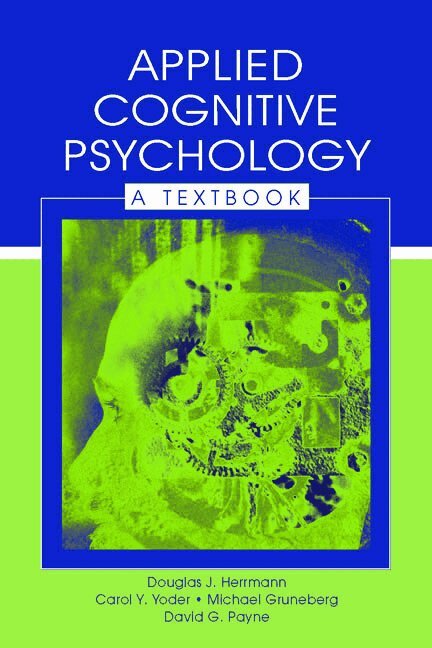
The field of applied cognitive psychology represents a new emphasis within cognitive psychology. Although interesting applied research has been published over the last several decades, and more frequently in the last dozen years, this is the first comprehensive book written about the progress in this new applied area. This text presents the theory and methodology of cognitive psychology that may be applied to problems of the real world and describes the current range of cognitive applications to real-world situations.In addition, Applied Cognitive Psychology:*identifies the rudimentary principles of basic theory (e.g., perception, comprehension, learning, retention, remembering, reasoning, problem solving, and communication) that lend themselves to application;*examines a range of cognitive products and services;*begins with an explanation of the differences between basic and applied science, especially in cognitive psychology across discipline areas;*is the first cognitive text to familiarize students with the institutional and social factors that affect communication between basic and applied researchers and, therefore, determine the success of application efforts;*presents applications important to many problems in society and demonstrates the value of basic research in leading to these important applications; and*cites a substantial number of references to help readers who want to apply cognitive psychology to do so.The text is intended to be used by students who are concurrently studying cognitive psychology or applied cognitive psychology. It could be used with graduate students as well as with undergraduates.
705 kr
Skickas inom 10-15 vardagar
The field of applied cognitive psychology represents a new emphasis within cognitive psychology. Although interesting applied research has been published over the last several decades, and more frequently in the last dozen years, this is the first comprehensive book written about the progress in this new applied area. This text presents the theory and methodology of cognitive psychology that may be applied to problems of the real world and describes the current range of cognitive applications to real-world situations.In addition, Applied Cognitive Psychology:*identifies the rudimentary principles of basic theory (e.g., perception, comprehension, learning, retention, remembering, reasoning, problem solving, and communication) that lend themselves to application;*examines a range of cognitive products and services;*begins with an explanation of the differences between basic and applied science, especially in cognitive psychology across discipline areas;*is the first cognitive text to familiarize students with the institutional and social factors that affect communication between basic and applied researchers and, therefore, determine the success of application efforts;*presents applications important to many problems in society and demonstrates the value of basic research in leading to these important applications; and*cites a substantial number of references to help readers who want to apply cognitive psychology to do so.The text is intended to be used by students who are concurrently studying cognitive psychology or applied cognitive psychology. It could be used with graduate students as well as with undergraduates.
831 kr
Skickas inom 10-15 vardagar
The organization of the first Society for Applied Research in Memory and Cognition (SARMAC) conference centered around two specifically identifiable research topics -- autobiographical memory and eyewitness memory. These two areas -- long-time staples on the menu of investigators of memory in more natural settings -- differ on a variety of dimensions, perhaps most notably in their specific goals for scientific inquiry and application. For many questions about memory and cognition that are of interest to scientific psychology, there have been historical as well as rather arbitrary reasons for their assignment to the autobiographical or eyewitness memory fields. Perhaps as a result of differing historical orientations, the first volume's seven autobiographical memory chapters focus upon the qualities or types of recall from research participants, whereas the seven chapters in the eyewitness memory volume generally focus upon the quantity (a concern for completeness) and accuracy of recall. This interest in the ultimate end-product and its application within the legal process in general encourages eyewitness memory investigators to modify their testing procedures continually in an attempt to gain even more information from participants about an event. Indeed, several of the eyewitness memory chapters reflect such attempts. Beyond the specific contributions of each chapter to the literature on autobiographical and eyewitness memory, the editors hope that the reader will come away with some general observations: * the autobiographical and eyewitness memory fields are thriving; * these two fields are likely to remain center stage in the further investigation of memory in natural contexts; * although the autobiographical and eyewitness memory chapters have been segregated in these two volumes, the separation is often more arbitrary than real and connections between the two areas abound; * the two research traditions are entirely mindful of fundamental laboratory methods, research, and theory -- sometimes drawing their research inspirations from that quarter; and * the two fields -- though driven largely by everyday memory concerns -- can contribute to a more basic understanding of memory at both an empirical and a theoretical level.
524 kr
Skickas inom 10-15 vardagar
The organization of the first Society for Applied Research in Memory and Cognition (SARMAC) conference centered around two specifically identifiable research topics -- autobiographical memory and eyewitness memory. These two areas -- long-time staples on the menu of investigators of memory in more natural settings -- differ on a variety of dimensions, perhaps most notably on their specific goals for scientific inquiry and application. For many questions about memory and cognition that are of interest to scientific psychology, there have been historical as well as rather arbitrary reasons for their assignment to the autobiographical or eyewitness memory fields. Perhaps as a result of differing historical orientations, the first volume's seven autobiographical memory chapters focus upon the qualities or types of recall from research participants, whereas the seven chapters in the eyewitness memory volume generally focus upon the quantity (a concern for completeness) and accuracy of recall. This interest in the ultimate end-product and its application within the legal process in general encourages eyewitness memory investigators to modify their testing procedures continually in an attempt to gain even more information from participants about an event. Indeed, several of the eyewitness memory chapters reflect such attempts. Beyond the specific contributions of each chapter to the literature on autobiographical and eyewitness memory, the editors hope that the reader will come away with some general observations: * the autobiographical and eyewitness memory fields are thriving; * these two fields are likely to remain center stage in the further investigation of memory in natural contexts; * although the autobiographical and eyewitness memory chapters have been segregated in these two volumes, the separation is often more arbitrary than real and connections between the two areas abound; * the two research traditions are entirely mindful of fundamental laboratory methods, research, and theory -- sometimes drawing their research inspirations from that quarter; and * the two fields -- though driven largely by everyday memory concerns -- can contribute to a more basic understanding of memory at both an empirical and a theoretical level.
554 kr
Skickas inom 10-15 vardagar
Memory Improvement: Implications for Memory Theory brings together researchers working on various aspects in the field. Recent findings on memory improvement are examined, and their relevance to memory theory is demonstrated. A majority of the chapters review how certain psychological factors (psychopharmacology, emotional state, metamemory, strategies, practice, external aids, social interaction, context, and attention) may be influenced to improve one's memory. In the final chapters an attempt is made to relate memory-improvement phenomena to the theory of memory improvement and to memory theory in general. This book extends understanding of memory and questions to what extent the memory system functions independently of the rest of the psychological system. The book is aimed at a broad spectrum of psychologists interested in state-of-the-art memory-improvement research from both a practical and a theoretical perspective.