J. Don Read - Böcker
Visar alla böcker från författaren J. Don Read. Handla med fri frakt och snabb leverans.
13 produkter
13 produkter
679 kr
Skickas inom 10-15 vardagar
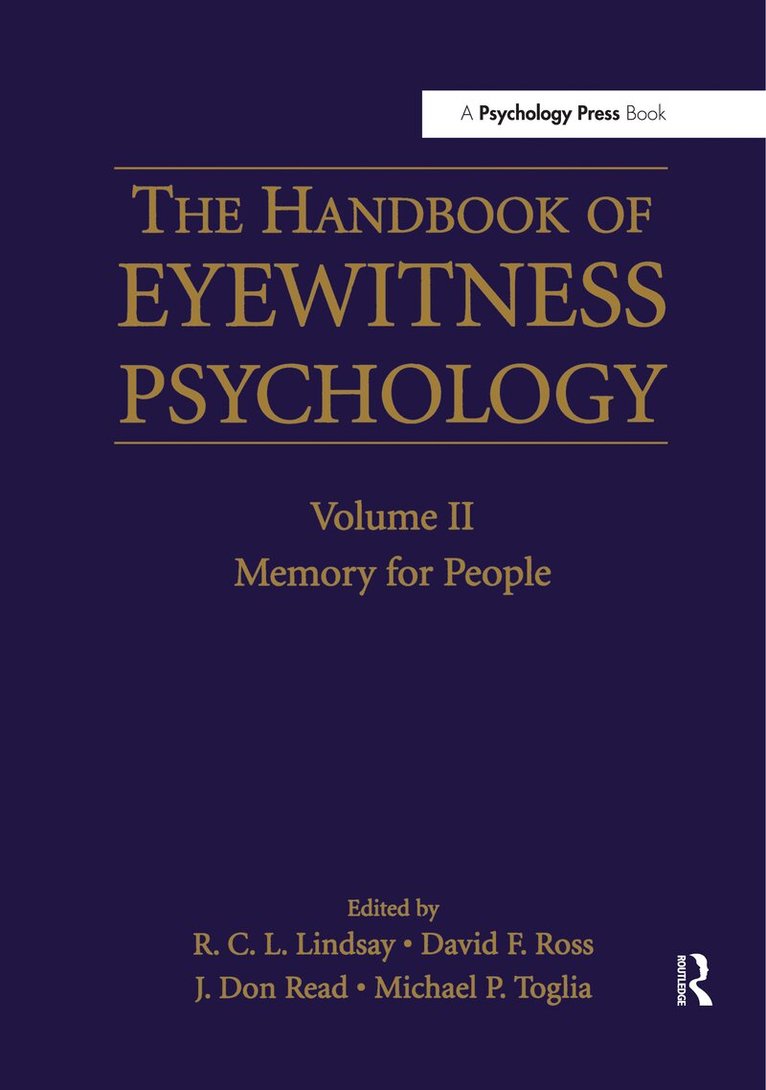
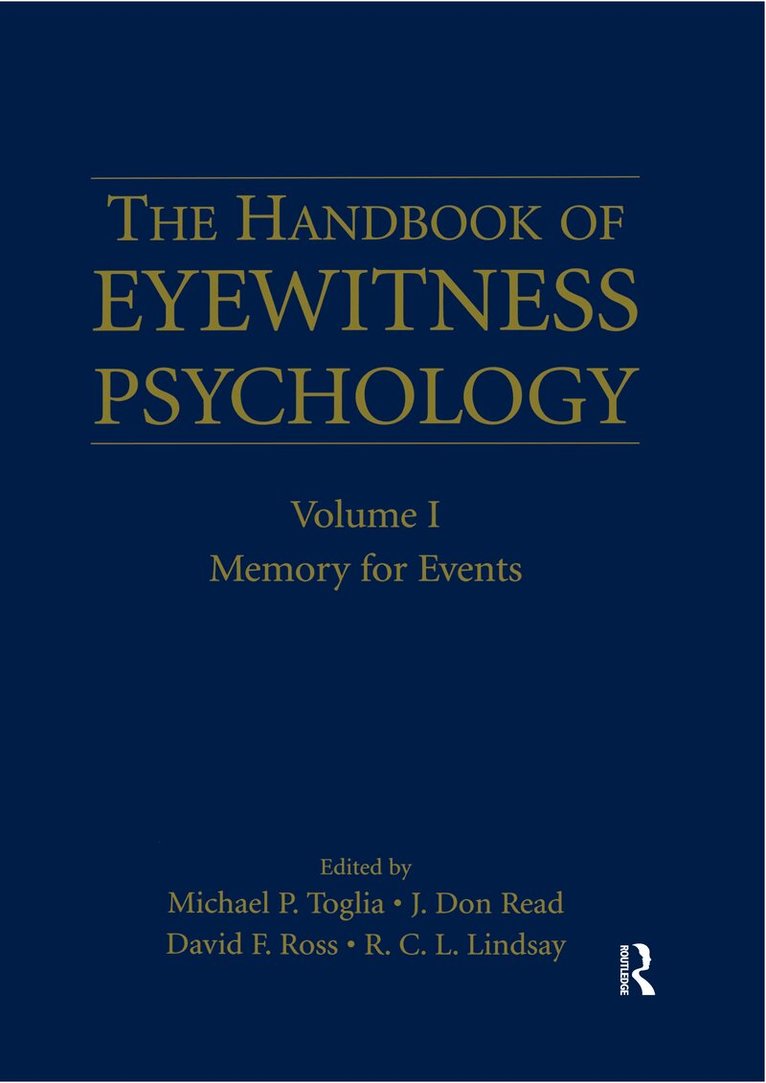
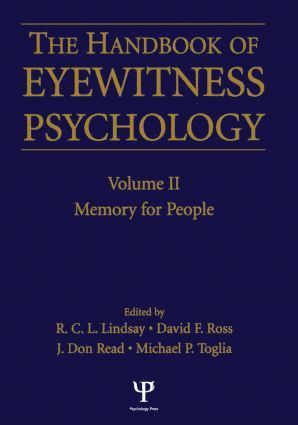
The Handbook of Eyewitness Psychology presents a survey of research and legal opinions from international experts on the rapidly expanding scientific literature addressing the accuracy and limitations of eyewitnesses as a source of evidence for the courts. For the first time, extensive reviews of factors influencing witnesses of all ages-children, adults, and the elderly-are compiled in a single pair of volumes. The disparate research currently being conducted in eyewitness memory in psychology, criminal justice, and legal studies is coherently presented in this work.Controversial topics such as the use of hypnosis, false and recovered memories, the impact of stress, and the accuracy of psychologically impaired witnesses are expertly examined. Leading eyewitness researchers also discuss the subjects of conversational memory, alibi evidence, witness credibility, facial memory, earwitness testimony, lineup theory, and expert testimony. The impact of witness testimony in court is considered, and each volume concludes with a legal commentary chapter.The Handbook of Eyewitness Psychology is an invaluable aid to researchers, legal scholars, and practicing lawyers who need access to the most recent research in the field, accompanied by the interpretations and commentary of many of the world's leading authorities on these topics.
719 kr
Skickas inom 10-15 vardagar
The Handbook of Eyewitness Psychology presents a survey of research and legal opinions from international experts on the rapidly expanding scientific literature addressing the accuracy and limitations of eyewitnesses as a source of evidence for the courts. For the first time, extensive reviews of factors influencing witnesses of all ages-children, adults, and the elderly-are compiled in a single pair of volumes. The disparate research currently being conducted in eyewitness memory in psychology, criminal justice, and legal studies is coherently presented in this work.Controversial topics such as the use of hypnosis, false and recovered memories, the impact of stress, and the accuracy of psychologically impaired witnesses are expertly examined. Leading eyewitness researchers also discuss the subjects of conversational memory, alibi evidence, witness credibility, facial memory, earwitness testimony, lineup theory, and expert testimony. The impact of witness testimony in court is considered, and each volume concludes with a legal commentary chapter.The Handbook of Eyewitness Psychology is an invaluable aid to researchers, legal scholars, and practicing lawyers who need access to the most recent research in the field, accompanied by the interpretations and commentary of many of the world's leading authorities on these topics.
636 kr
Skickas inom 7-10 vardagar
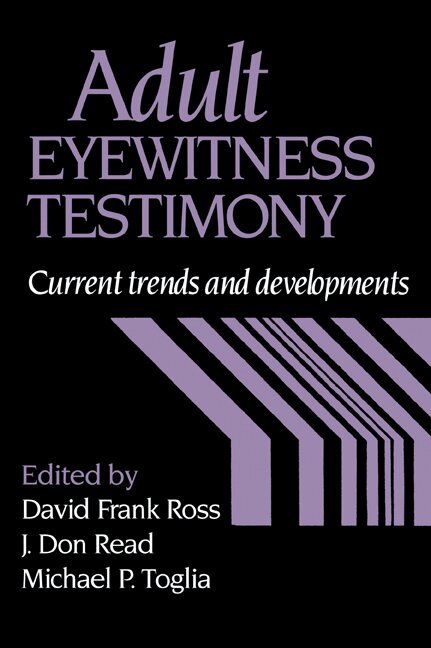
Adult Eyewitness Testimony: Current Trends and Developments provides an overview of empirical research on eyewitness testimony and identification accuracy, covering both theory and application. The volume is organized to address three important issues. First, what are the cognitive, social and physical factors that influence the accuracy of eyewitness reports? Second, how should lineups be constructed and verbal testimony be taken to improve the chances of obtaining accurate information? And third, whose testimony should be believed? Are there differences between accurate and inaccurate witnesses, and can jurors make such a distinction? Adult Eyewitness Testimony: Current Trends and Developments is crucial reading for memory researchers, as well as police officers, judges, lawyers and other members of the judicial system.
1 581 kr
Skickas inom 7-10 vardagar
Adult Eyewitness Testimony: Current Trends and Developments provides an overview of empirical research on eyewitness testimony and identification accuracy, covering both theory and application. The volume is organized to address three important issues. First, what are the cognitive, social and physical factors that influence the accuracy of eyewitness reports? Second, how should lineups be constructed and verbal testimony be taken to improve the chances of obtaining accurate information? And third, whose testimony should be believed? Are there differences between accurate and inaccurate witnesses, and can jurors make such a distinction? Adult Eyewitness Testimony: Current Trends and Developments is crucial reading for memory researchers, as well as police officers, judges, lawyers and other members of the judicial system.
2 030 kr
Skickas inom 10-15 vardagar
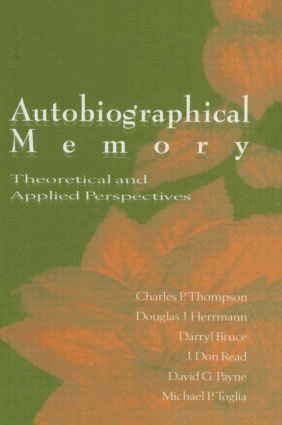
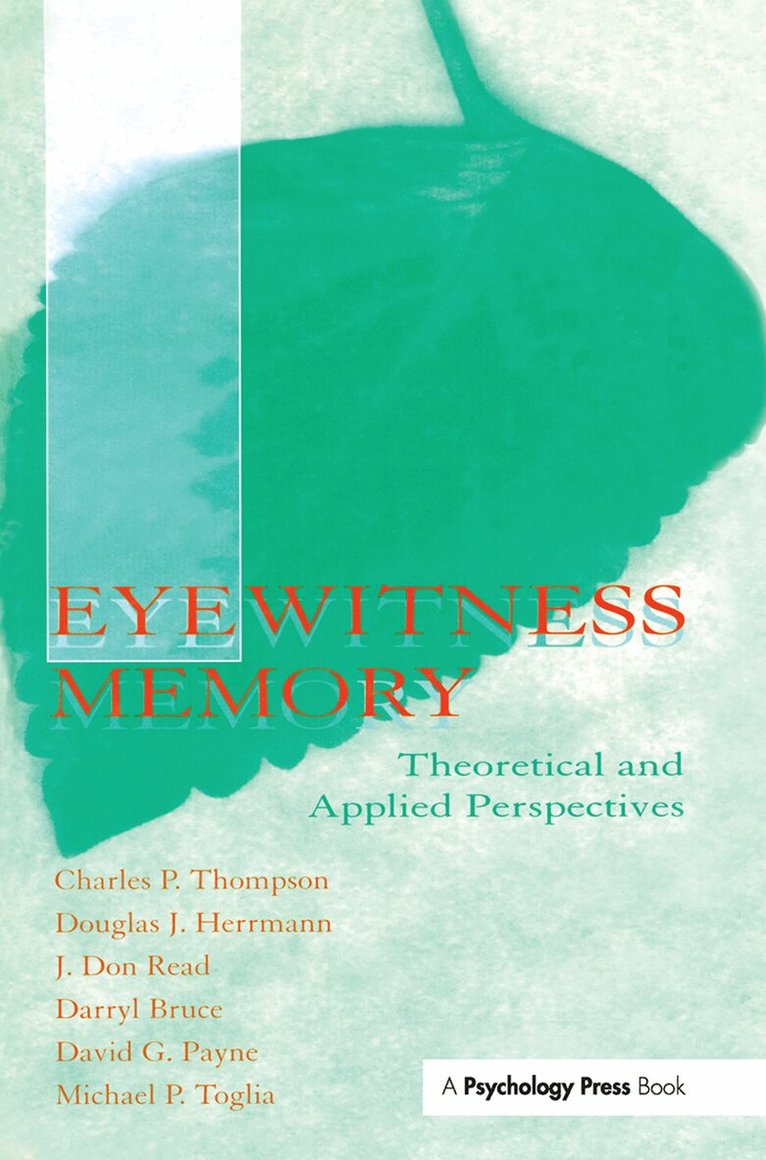
The organization of the first Society for Applied Research in Memory and Cognition (SARMAC) conference centered around two specifically identifiable research topics -- autobiographical memory and eyewitness memory. These two areas -- long-time staples on the menu of investigators of memory in more natural settings -- differ on a variety of dimensions, perhaps most notably in their specific goals for scientific inquiry and application. For many questions about memory and cognition that are of interest to scientific psychology, there have been historical as well as rather arbitrary reasons for their assignment to the autobiographical or eyewitness memory fields.Perhaps as a result of differing historical orientations, the first volume's seven autobiographical memory chapters focus upon the qualities or types of recall from research participants, whereas the seven chapters in the eyewitness memory volume generally focus upon the quantity (a concern for completeness) and accuracy of recall. This interest in the ultimate end-product and its application within the legal process in general encourages eyewitness memory investigators to modify their testing procedures continually in an attempt to gain even more information from participants about an event. Indeed, several of the eyewitness memory chapters reflect such attempts.Beyond the specific contributions of each chapter to the literature on autobiographical and eyewitness memory, the editors hope that the reader will come away with some general observations:the autobiographical and eyewitness memory fields are thrivingthese two fields are likely to remain center stage in the further investigation of memory in natural contextsalthough the autobiographical and eyewitness memory chapters have been segregated in these two volumes, the separation is often more arbitrary than real and connections between the two areas aboundthe two research traditions are entirely mindful of fundamental laboratory methods, research, and theory -- sometimes drawing their research inspirations from that quarter; andthe two fields -- though driven largely by everyday memory concerns -- can contribute to a more basic understanding of memory at both an empirical and a theoretical level
1 258 kr
Skickas inom 10-15 vardagar
The organization of the first Society for Applied Research in Memory and Cognition (SARMAC) conference centered around two specifically identifiable research topics -- autobiographical memory and eyewitness memory. These two areas -- long-time staples on the menu of investigators of memory in more natural settings -- differ on a variety of dimensions, perhaps most notably on their specific goals for scientific inquiry and application. For many questions about memory and cognition that are of interest to scientific psychology, there have been historical as well as rather arbitrary reasons for their assignment to the autobiographical or eyewitness memory fields. Perhaps as a result of differing historical orientations, the first volume's seven autobiographical memory chapters focus upon the qualities or types of recall from research participants, whereas the seven chapters in the eyewitness memory volume generally focus upon the quantity (a concern for completeness) and accuracy of recall. This interest in the ultimate end-product and its application within the legal process in general encourages eyewitness memory investigators to modify their testing procedures continually in an attempt to gain even more information from participants about an event. Indeed, several of the eyewitness memory chapters reflect such attempts. Beyond the specific contributions of each chapter to the literature on autobiographical and eyewitness memory, the editors hope that the reader will come away with some general observations: * the autobiographical and eyewitness memory fields are thriving; * these two fields are likely to remain center stage in the further investigation of memory in natural contexts; * although the autobiographical and eyewitness memory chapters have been segregated in these two volumes, the separation is often more arbitrary than real and connections between the two areas abound; * the two research traditions are entirely mindful of fundamental laboratory methods, research, and theory -- sometimes drawing their research inspirations from that quarter; and * the two fields -- though driven largely by everyday memory concerns -- can contribute to a more basic understanding of memory at both an empirical and a theoretical level.
2 910 kr
Skickas inom 10-15 vardagar
The Handbook of Eyewitness Psychology presents a survey of research and legal opinions from international experts on the rapidly expanding scientific literature addressing the accuracy and limitations of eyewitnesses as a source of evidence for the courts. For the first time, extensive reviews of factors influencing witnesses of all ages-children, adults, and the elderly-are compiled in a single pair of volumes. The disparate research currently being conducted in eyewitness memory in psychology, criminal justice, and legal studies is coherently presented in this work.Controversial topics such as the use of hypnosis, false and recovered memories, the impact of stress, and the accuracy of psychologically impaired witnesses are expertly examined. Leading eyewitness researchers also discuss the subjects of conversational memory, alibi evidence, witness credibility, facial memory, earwitness testimony, lineup theory, and expert testimony. The impact of witness testimony in court is considered, and each volume concludes with a legal commentary chapter.The Handbook of Eyewitness Psychology is an invaluable aid to researchers, legal scholars, and practicing lawyers who need access to the most recent research in the field, accompanied by the interpretations and commentary of many of the world's leading authorities on these topics.
3 074 kr
Skickas inom 10-15 vardagar
The Handbook of Eyewitness Psychology presents a survey of research and legal opinions from international experts on the rapidly expanding scientific literature addressing the accuracy and limitations of eyewitnesses as a source of evidence for the courts. For the first time, extensive reviews of factors influencing witnesses of all ages-children, adults, and the elderly-are compiled in a single pair of volumes. The disparate research currently being conducted in eyewitness memory in psychology, criminal justice, and legal studies is coherently presented in this work.Controversial topics such as the use of hypnosis, false and recovered memories, the impact of stress, and the accuracy of psychologically impaired witnesses are expertly examined. Leading eyewitness researchers also discuss the subjects of conversational memory, alibi evidence, witness credibility, facial memory, earwitness testimony, lineup theory, and expert testimony. The impact of witness testimony in court is considered, and each volume concludes with a legal commentary chapter.The Handbook of Eyewitness Psychology is an invaluable aid to researchers, legal scholars, and practicing lawyers who need access to the most recent research in the field, accompanied by the interpretations and commentary of many of the world's leading authorities on these topics.
7 171 kr
Skickas inom 10-15 vardagar
The Handbook of Eyewitness Psychology presents a survey of research and legal opinions from international experts on the rapidly expanding scientific literature addressing the accuracy and limitations of eyewitnesses as a source of evidence for the courts. For the first time, extensive reviews of factors influencing witnesses of all ages – children, adults, and the elderly – are compiled in a single pair of volumes. The disparate research currently being conducted in eyewitness memory in psychology, criminal justice, and legal studies is coherently presented in this work. Volume 1 covers memory for events. Volume 2 cover memory for people.
831 kr
Skickas inom 10-15 vardagar
The organization of the first Society for Applied Research in Memory and Cognition (SARMAC) conference centered around two specifically identifiable research topics -- autobiographical memory and eyewitness memory. These two areas -- long-time staples on the menu of investigators of memory in more natural settings -- differ on a variety of dimensions, perhaps most notably in their specific goals for scientific inquiry and application. For many questions about memory and cognition that are of interest to scientific psychology, there have been historical as well as rather arbitrary reasons for their assignment to the autobiographical or eyewitness memory fields. Perhaps as a result of differing historical orientations, the first volume's seven autobiographical memory chapters focus upon the qualities or types of recall from research participants, whereas the seven chapters in the eyewitness memory volume generally focus upon the quantity (a concern for completeness) and accuracy of recall. This interest in the ultimate end-product and its application within the legal process in general encourages eyewitness memory investigators to modify their testing procedures continually in an attempt to gain even more information from participants about an event. Indeed, several of the eyewitness memory chapters reflect such attempts. Beyond the specific contributions of each chapter to the literature on autobiographical and eyewitness memory, the editors hope that the reader will come away with some general observations: * the autobiographical and eyewitness memory fields are thriving; * these two fields are likely to remain center stage in the further investigation of memory in natural contexts; * although the autobiographical and eyewitness memory chapters have been segregated in these two volumes, the separation is often more arbitrary than real and connections between the two areas abound; * the two research traditions are entirely mindful of fundamental laboratory methods, research, and theory -- sometimes drawing their research inspirations from that quarter; and * the two fields -- though driven largely by everyday memory concerns -- can contribute to a more basic understanding of memory at both an empirical and a theoretical level.
524 kr
Skickas inom 10-15 vardagar
The organization of the first Society for Applied Research in Memory and Cognition (SARMAC) conference centered around two specifically identifiable research topics -- autobiographical memory and eyewitness memory. These two areas -- long-time staples on the menu of investigators of memory in more natural settings -- differ on a variety of dimensions, perhaps most notably on their specific goals for scientific inquiry and application. For many questions about memory and cognition that are of interest to scientific psychology, there have been historical as well as rather arbitrary reasons for their assignment to the autobiographical or eyewitness memory fields. Perhaps as a result of differing historical orientations, the first volume's seven autobiographical memory chapters focus upon the qualities or types of recall from research participants, whereas the seven chapters in the eyewitness memory volume generally focus upon the quantity (a concern for completeness) and accuracy of recall. This interest in the ultimate end-product and its application within the legal process in general encourages eyewitness memory investigators to modify their testing procedures continually in an attempt to gain even more information from participants about an event. Indeed, several of the eyewitness memory chapters reflect such attempts. Beyond the specific contributions of each chapter to the literature on autobiographical and eyewitness memory, the editors hope that the reader will come away with some general observations: * the autobiographical and eyewitness memory fields are thriving; * these two fields are likely to remain center stage in the further investigation of memory in natural contexts; * although the autobiographical and eyewitness memory chapters have been segregated in these two volumes, the separation is often more arbitrary than real and connections between the two areas abound; * the two research traditions are entirely mindful of fundamental laboratory methods, research, and theory -- sometimes drawing their research inspirations from that quarter; and * the two fields -- though driven largely by everyday memory concerns -- can contribute to a more basic understanding of memory at both an empirical and a theoretical level.
1 508 kr
Skickas inom 10-15 vardagar
The Handbook of Eyewitness Psychology presents a survey of research and legal opinions from international experts on the rapidly expanding scientific literature addressing the accuracy and limitations of eyewitnesses as a source of evidence for the courts. For the first time, extensive reviews of factors influencing witnesses of all ages – children, adults, and the elderly – are compiled in a single pair of volumes. The disparate research currently being conducted in eyewitness memory in psychology, criminal justice, and legal studies is coherently presented in this work. Volume 1 covers memory for events. Volume 2 cover memory for people.
1 095 kr
Skickas inom 10-15 vardagar
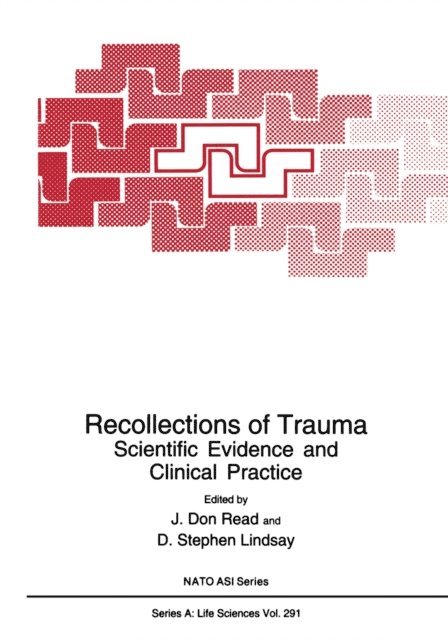
The controversy regarding cases in which people report "recovered memories" of childhood sexual abuse may well prove to be the most important issue in professional psy- chology in the 1990s. Some have argued that such reports often reflect illusory beliefs in- advertently created by suggestive forms of "memory work" in psychotherapy. This claim amounts to a charge of widespread malpractice, and publicity about it threatens the reputa- tion of clinical psychology. From a culturaVhistorical point of view, this controversy con- stitutes a crisis point in Western society's belated and still incomplete efforts to acknowledge and respond effectively to the shocking prevalence of child sexual abuse. "Responding effectively" entails both protecting children from abuse and avoiding false accusations. Some professionals who emphasise prevention of false accusations have de- scribed the popularisation of therapeutic searches for suspected hi