David G. Payne – författare
1 943 kr
Skickas inom 10-15 vardagar
2 077 kr
Skickas inom 10-15 vardagar
1 276 kr
Skickas inom 10-15 vardagar
2 067 kr
Skickas inom 5-8 vardagar
715 kr
Skickas inom 10-15 vardagar
860 kr
Läs direkt efter köp
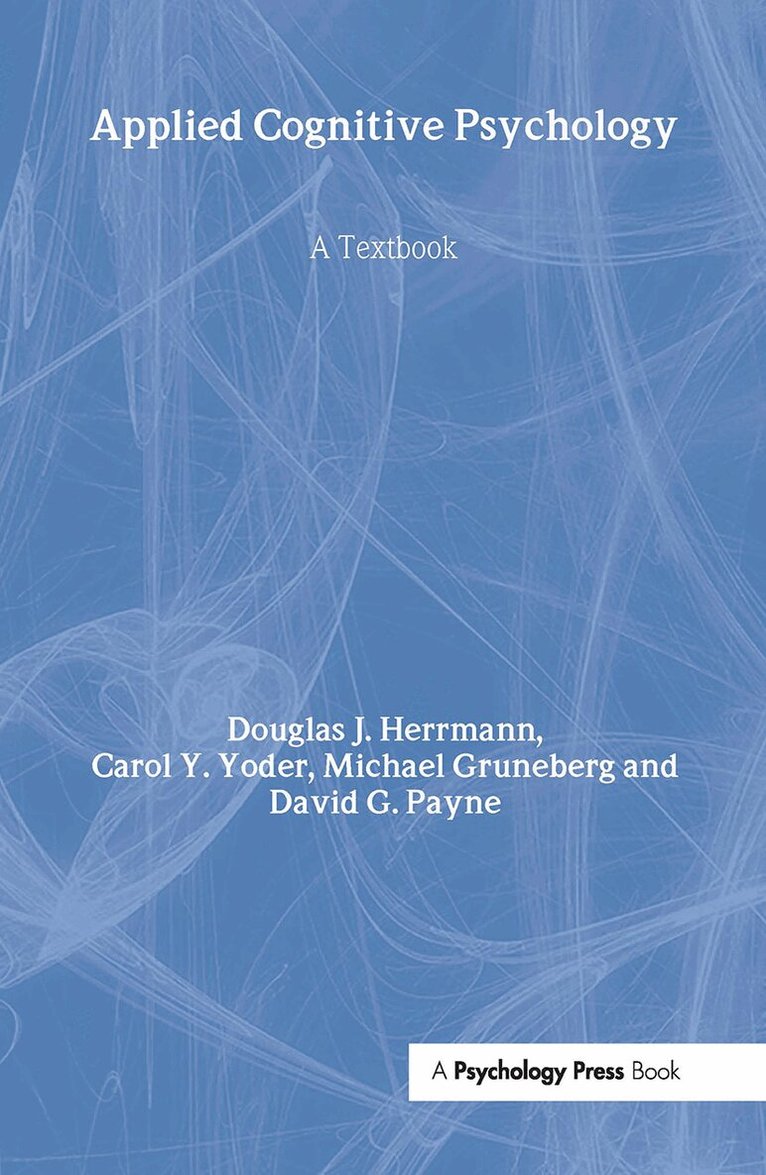
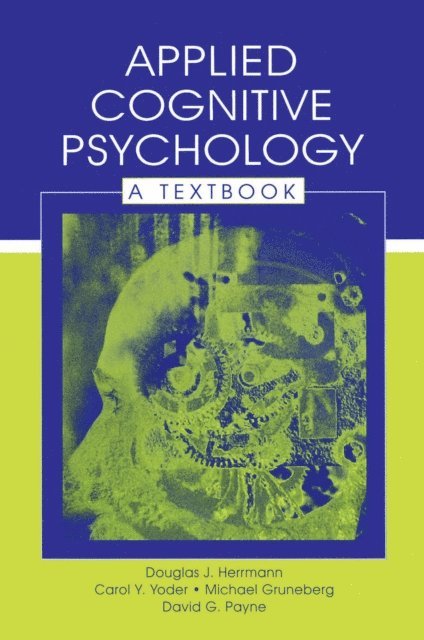
The field of applied cognitive psychology represents a new emphasis within cognitive psychology. Although interesting applied research has been published over the last several decades, and more frequently in the last dozen years, this is the first comprehensive book written about the progress in this new applied area. This text presents the theory and methodology of cognitive psychology that may be applied to problems of the real world and describes the current range of cognitive applications to real-world situations.In addition, Applied Cognitive Psychology:*identifies the rudimentary principles of basic theory (e.g., perception, comprehension, learning, retention, remembering, reasoning, problem solving, and communication) that lend themselves to application;*examines a range of cognitive products and services;*begins with an explanation of the differences between basic and applied science, especially in cognitive psychology across discipline areas;*is the first cognitive text to familiarize students with the institutional and social factors that affect communication between basic and applied researchers and, therefore, determine the success of application efforts;*presents applications important to many problems in society and demonstrates the value of basic research in leading to these important applications; and*cites a substantial number of references to help readers who want to apply cognitive psychology to do so.The text is intended to be used by students who are concurrently studying cognitive psychology or applied cognitive psychology. It could be used with graduate students as well as with undergraduates.
868 kr
Läs direkt efter köp
The field of applied cognitive psychology represents a new emphasis within cognitive psychology. Although interesting applied research has been published over the last several decades, and more frequently in the last dozen years, this is the first comprehensive book written about the progress in this new applied area. This text presents the theory and methodology of cognitive psychology that may be applied to problems of the real world and describes the current range of cognitive applications to real-world situations.In addition, Applied Cognitive Psychology:*identifies the rudimentary principles of basic theory (e.g., perception, comprehension, learning, retention, remembering, reasoning, problem solving, and communication) that lend themselves to application;*examines a range of cognitive products and services;*begins with an explanation of the differences between basic and applied science, especially in cognitive psychology across discipline areas;*is the first cognitive text to familiarize students with the institutional and social factors that affect communication between basic and applied researchers and, therefore, determine the success of application efforts;*presents applications important to many problems in society and demonstrates the value of basic research in leading to these important applications; and*cites a substantial number of references to help readers who want to apply cognitive psychology to do so.The text is intended to be used by students who are concurrently studying cognitive psychology or applied cognitive psychology. It could be used with graduate students as well as with undergraduates.
599 kr
Läs direkt efter köp
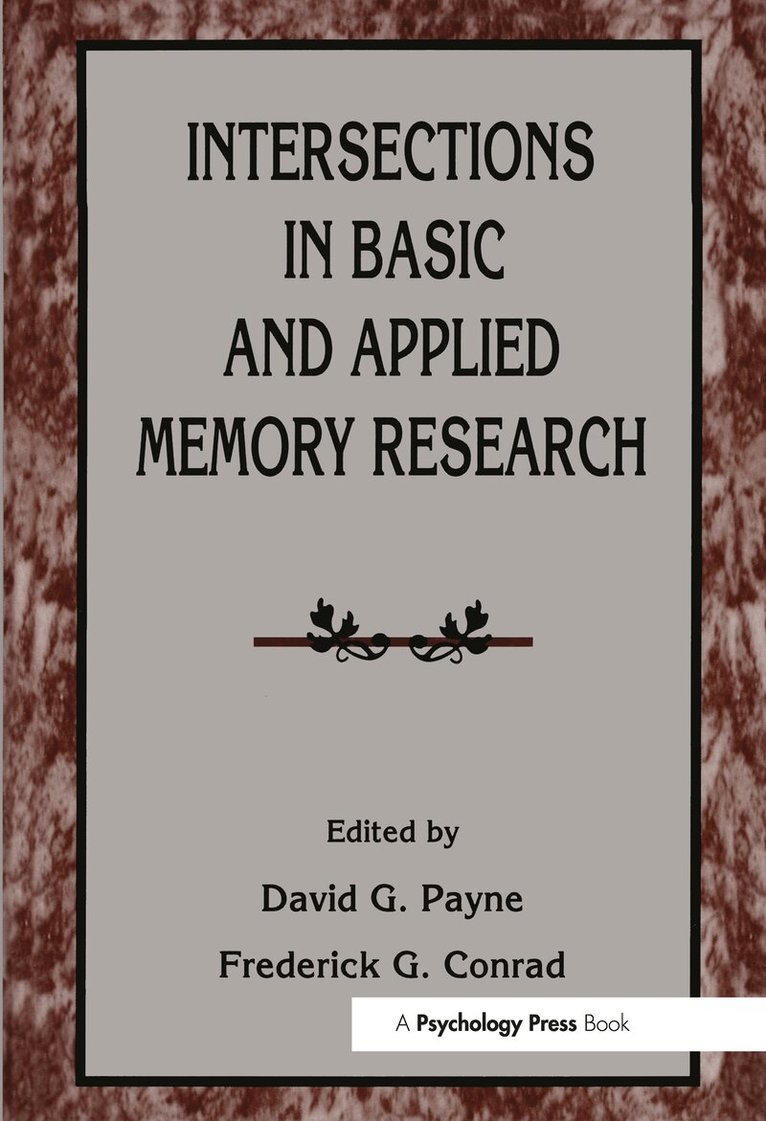
In recent years there has been increasing interaction between basic and applied memory researchers, ranging from heated debates to highly productive collaborations. This collection of papers -- based on presentations at the Third Practical Aspects of Memory conference -- reviews the progress, as well as obstacles to progress, in the ongoing collaboration between basic and applied memory researchers. This volume represents the state of the art in memory research domains that straddle the basic-applied divide. The text is organized around three themes, including theoretical and metatheoretical issues concerning the interaction of basic and applied memory research, laboratory investigation of real world memory problems, and solutions of everyday problems using theoretical concepts derived from basic memory research. The first section illustrates why collaboration between basic and applied memory researchers should be beneficial and provides guidelines for avoiding some of the pitfalls. The second and third sections present some of the most significant, contemporary findings by researchers whose work is basic-yet-applicable or applied-yet-theoretically-based. Students and professional memory researchers will find the substantive results to be provocative and theoretically engaging, making the information presented in this volume invaluable. These examples of successful application will be of substantial, pragmatic value and researchers are certain to be grappling with these issues for years to come.
599 kr
Läs direkt efter köp
In recent years there has been increasing interaction between basic and applied memory researchers, ranging from heated debates to highly productive collaborations. This collection of papers -- based on presentations at the Third Practical Aspects of Memory conference -- reviews the progress, as well as obstacles to progress, in the ongoing collaboration between basic and applied memory researchers. This volume represents the state of the art in memory research domains that straddle the basic-applied divide. The text is organized around three themes, including theoretical and metatheoretical issues concerning the interaction of basic and applied memory research, laboratory investigation of real world memory problems, and solutions of everyday problems using theoretical concepts derived from basic memory research. The first section illustrates why collaboration between basic and applied memory researchers should be beneficial and provides guidelines for avoiding some of the pitfalls. The second and third sections present some of the most significant, contemporary findings by researchers whose work is basic-yet-applicable or applied-yet-theoretically-based. Students and professional memory researchers will find the substantive results to be provocative and theoretically engaging, making the information presented in this volume invaluable. These examples of successful application will be of substantial, pragmatic value and researchers are certain to be grappling with these issues for years to come.
848 kr
Skickas inom 10-15 vardagar
534 kr
Skickas inom 10-15 vardagar
518 kr
Skickas inom 10-15 vardagar
986 kr
Läs direkt efter köp
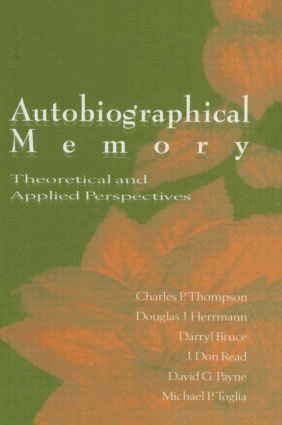
The organization of the first Society for Applied Research in Memory and Cognition (SARMAC) conference centered around two specifically identifiable research topics -- autobiographical memory and eyewitness memory. These two areas -- long-time staples on the menu of investigators of memory in more natural settings -- differ on a variety of dimensions, perhaps most notably in their specific goals for scientific inquiry and application. For many questions about memory and cognition that are of interest to scientific psychology, there have been historical as well as rather arbitrary reasons for their assignment to the autobiographical or eyewitness memory fields. Perhaps as a result of differing historical orientations, the first volume''s seven autobiographical memory chapters focus upon the qualities or types of recall from research participants, whereas the seven chapters in the eyewitness memory volume generally focus upon the quantity (a concern for completeness) and accuracy of recall. This interest in the ultimate end-product and its application within the legal process in general encourages eyewitness memory investigators to modify their testing procedures continually in an attempt to gain even more information from participants about an event. Indeed, several of the eyewitness memory chapters reflect such attempts. Beyond the specific contributions of each chapter to the literature on autobiographical and eyewitness memory, the editors hope that the reader will come away with some general observations: * the autobiographical and eyewitness memory fields are thriving; * these two fields are likely to remain center stage in the further investigation of memory in natural contexts; * although the autobiographical and eyewitness memory chapters have been segregated in these two volumes, the separation is often more arbitrary than real and connections between the two areas abound; * the two research traditions are entirely mindful of fundamental laboratory methods, research, and theory -- sometimes drawing their research inspirations from that quarter; and * the two fields -- though driven largely by everyday memory concerns -- can contribute to a more basic understanding of memory at both an empirical and a theoretical level.
986 kr
Läs direkt efter köp
The organization of the first Society for Applied Research in Memory and Cognition (SARMAC) conference centered around two specifically identifiable research topics -- autobiographical memory and eyewitness memory. These two areas -- long-time staples on the menu of investigators of memory in more natural settings -- differ on a variety of dimensions, perhaps most notably in their specific goals for scientific inquiry and application. For many questions about memory and cognition that are of interest to scientific psychology, there have been historical as well as rather arbitrary reasons for their assignment to the autobiographical or eyewitness memory fields. Perhaps as a result of differing historical orientations, the first volume''s seven autobiographical memory chapters focus upon the qualities or types of recall from research participants, whereas the seven chapters in the eyewitness memory volume generally focus upon the quantity (a concern for completeness) and accuracy of recall. This interest in the ultimate end-product and its application within the legal process in general encourages eyewitness memory investigators to modify their testing procedures continually in an attempt to gain even more information from participants about an event. Indeed, several of the eyewitness memory chapters reflect such attempts. Beyond the specific contributions of each chapter to the literature on autobiographical and eyewitness memory, the editors hope that the reader will come away with some general observations: * the autobiographical and eyewitness memory fields are thriving; * these two fields are likely to remain center stage in the further investigation of memory in natural contexts; * although the autobiographical and eyewitness memory chapters have been segregated in these two volumes, the separation is often more arbitrary than real and connections between the two areas abound; * the two research traditions are entirely mindful of fundamental laboratory methods, research, and theory -- sometimes drawing their research inspirations from that quarter; and * the two fields -- though driven largely by everyday memory concerns -- can contribute to a more basic understanding of memory at both an empirical and a theoretical level.
618 kr
Läs direkt efter köp
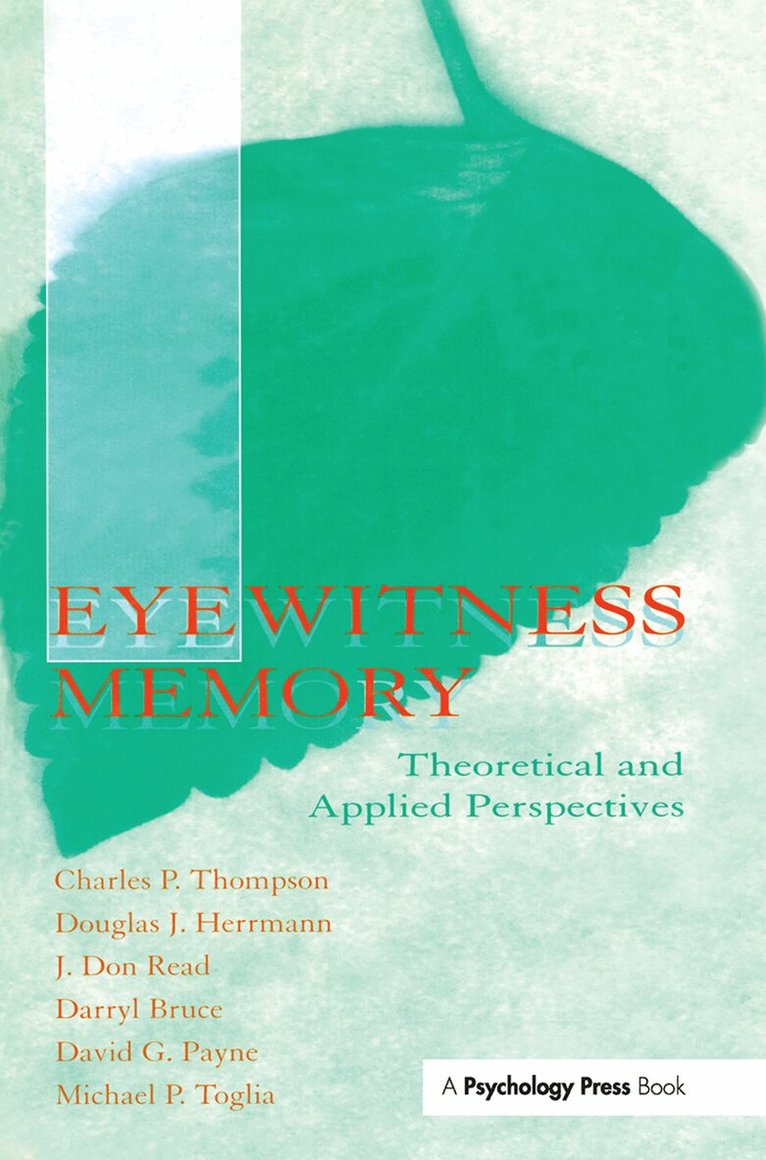
The organization of the first Society for Applied Research in Memory and Cognition (SARMAC) conference centered around two specifically identifiable research topics -- autobiographical memory and eyewitness memory. These two areas -- long-time staples on the menu of investigators of memory in more natural settings -- differ on a variety of dimensions, perhaps most notably on their specific goals for scientific inquiry and application. For many questions about memory and cognition that are of interest to scientific psychology, there have been historical as well as rather arbitrary reasons for their assignment to the autobiographical or eyewitness memory fields. Perhaps as a result of differing historical orientations, the first volume''s seven autobiographical memory chapters focus upon the qualities or types of recall from research participants, whereas the seven chapters in the eyewitness memory volume generally focus upon the quantity (a concern for completeness) and accuracy of recall. This interest in the ultimate end-product and its application within the legal process in general encourages eyewitness memory investigators to modify their testing procedures continually in an attempt to gain even more information from participants about an event. Indeed, several of the eyewitness memory chapters reflect such attempts. Beyond the specific contributions of each chapter to the literature on autobiographical and eyewitness memory, the editors hope that the reader will come away with some general observations: * the autobiographical and eyewitness memory fields are thriving; * these two fields are likely to remain center stage in the further investigation of memory in natural contexts; * although the autobiographical and eyewitness memory chapters have been segregated in these two volumes, the separation is often more arbitrary than real and connections between the two areas abound; * the two research traditions are entirely mindful of fundamental laboratory methods, research, and theory -- sometimes drawing their research inspirations from that quarter; and * the two fields -- though driven largely by everyday memory concerns -- can contribute to a more basic understanding of memory at both an empirical and a theoretical level.
618 kr
Läs direkt efter köp
The organization of the first Society for Applied Research in Memory and Cognition (SARMAC) conference centered around two specifically identifiable research topics -- autobiographical memory and eyewitness memory. These two areas -- long-time staples on the menu of investigators of memory in more natural settings -- differ on a variety of dimensions, perhaps most notably on their specific goals for scientific inquiry and application. For many questions about memory and cognition that are of interest to scientific psychology, there have been historical as well as rather arbitrary reasons for their assignment to the autobiographical or eyewitness memory fields. Perhaps as a result of differing historical orientations, the first volume''s seven autobiographical memory chapters focus upon the qualities or types of recall from research participants, whereas the seven chapters in the eyewitness memory volume generally focus upon the quantity (a concern for completeness) and accuracy of recall. This interest in the ultimate end-product and its application within the legal process in general encourages eyewitness memory investigators to modify their testing procedures continually in an attempt to gain even more information from participants about an event. Indeed, several of the eyewitness memory chapters reflect such attempts. Beyond the specific contributions of each chapter to the literature on autobiographical and eyewitness memory, the editors hope that the reader will come away with some general observations: * the autobiographical and eyewitness memory fields are thriving; * these two fields are likely to remain center stage in the further investigation of memory in natural contexts; * although the autobiographical and eyewitness memory chapters have been segregated in these two volumes, the separation is often more arbitrary than real and connections between the two areas abound; * the two research traditions are entirely mindful of fundamental laboratory methods, research, and theory -- sometimes drawing their research inspirations from that quarter; and * the two fields -- though driven largely by everyday memory concerns -- can contribute to a more basic understanding of memory at both an empirical and a theoretical level.