Elizabeth Fennema - Böcker
Visar alla böcker från författaren Elizabeth Fennema. Handla med fri frakt och snabb leverans.
12 produkter
12 produkter
393 kr
Tillfälligt slut
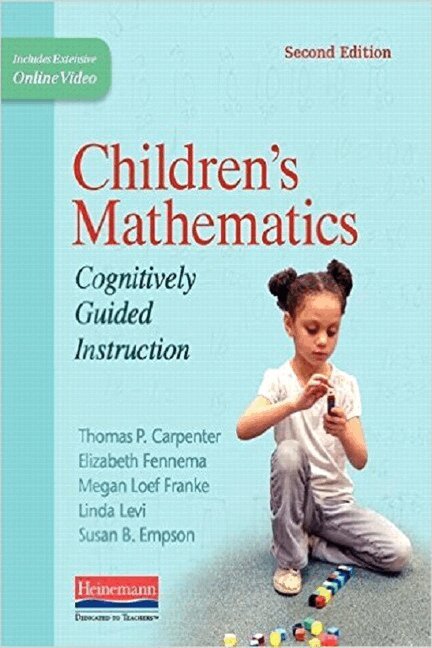
The bestselling first edition of Children’s Mathematics helped hundreds of thousands of teachers understand children’s intuitive mathematical thinking and use that knowledge to help children learn mathematics with understanding. The highly anticipated Second Edition provides new insights about Cognitively Guided Instruction based on the authors’ research and experience in CGI classrooms over the last 15 years. Highlights include: how children solve problems using their intuitive understanding of addition, subtraction, multiplication, and division the development of children’s mathematical thinking throughout the primary grades instructional practices that promote children’s active engagement in mathematics connections between children’s strategies and powerful mathematical concepts A new expanded collection of over 90 online video episodes illustrating children’s mathematical thinking, interactions between students and teachers, and classroom instruction that builds on children’s mathematical thinking. Together, the Second Edition and videos provide a detailed research-based account of the development of children’s mathematical thinking and problem solving, and how teachers can promote this development in ways that honor children’s thinking.
1 455 kr
Skickas inom 7-10 vardagar
The issue of how to provide equitable schooling for ethnic and linguistic minorities has come to the forefront of education. Walter Secada has brought together top researchers to examine equity from the standpoint of mathematics education - an excellent forum for the topic, since the results are quantifiable and the disparity in performance is stark. New Directions for Equity in Mathematics Education first addresses broad cultural issues, such as how social class and our notion of merit enter into education. The second section of the book analyses gender issues in maths learning, and the third and final section looks at language and mathematics. A number of themes cut across these three groupings. For example, there is a critique of the reform movement across several chapters; many of the chapters look closely at teachers and the dynamics of the classroom. And chapters in different sections address issues of teacher empowerment and the re-skilling of teachers. Michael Apple, author of Education and Power, provides a provocative concluding chapter to the book.
507 kr
Skickas inom 7-10 vardagar
The issue of how to provide equitable schooling for ethnic and linguistic minorities has come to the forefront of education. Walter Secada has brought together top researchers to examine equity from the standpoint of mathematics education - an excellent forum for the topic, since the results are quantifiable and the disparity in performance is stark. New Directions for Equity in Mathematics Education first addresses broad cultural issues, such as how social class and our notion of merit enter into education. The second section of the book analyses gender issues in maths learning, and the third and final section looks at language and mathematics. A number of themes cut across these three groupings. For example, there is a critique of the reform movement across several chapters; many of the chapters look closely at teachers and the dynamics of the classroom. And chapters in different sections address issues of teacher empowerment and the re-skilling of teachers. Michael Apple, author of Education and Power, provides a provocative concluding chapter to the book.
382 kr
Tillfälligt slut
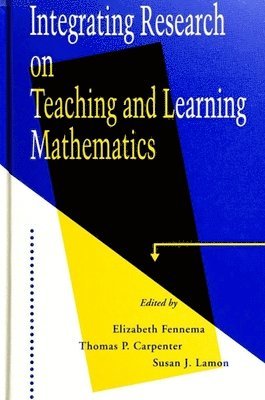
During the last decade there were significant advances in the study of students' learning and problem solving in mathematics, and in the study of classroom instruction. Because these two research programs usually have been conducted individually, it is generally agreed now that there is an increasing need for an integrated research program. This book represents initial discussions and development of a unified paradigm for studying teaching in mathematics that builds upon both cognitive as well as instructional research.
2 100 kr
Skickas inom 10-15 vardagar
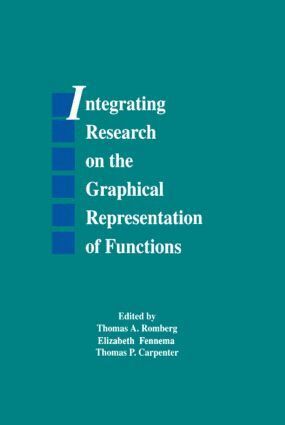
This volume focuses on the important mathematical idea of functions that, with the technology of computers and calculators, can be dynamically represented in ways that have not been possible previously. The book's editors contend that as result of recent technological developments combined with the integrated knowledge available from research on teaching, instruction, students' thinking, and assessment, curriculum developers, researchers, and teacher educators are faced with an unprecedented opportunity for making dramatic changes.The book presents content considerations that occur when the mathematics of graphs and functions relate to curriculum. It also examines content in a carefully considered integration of research that conveys where the field stands and where it might go. Drawing heavily on their own work, the chapter authors reconceptualize research in their specific areas so that this knowledge is integrated with the others' strands. This model for synthesizing research can serve as a paradigm for how research in mathematics education can -- and probably should -- proceed.
2 500 kr
Skickas inom 10-15 vardagar
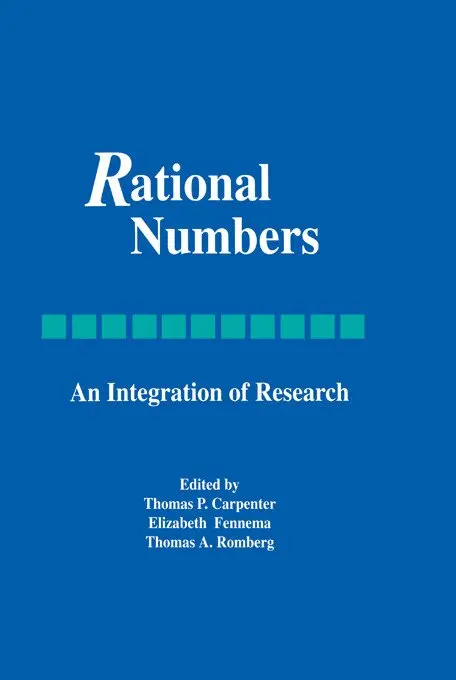
Until recently there had been relatively little integration of programs of research on teaching, learning, curriculum, and assessment. However, in the last few years it has become increasingly apparent that a more unified program of research is needed to acquire an understanding of teaching and learning in schools that will inform curriculum development and assessment. The chapters in this volume represent a first step toward an integration of research paradigms in one clearly specified mathematical domain.Integrating a number of different research perspectives is a complex task, and ways must be found to reduce the complexity without sacrificing the integration. The research discussed in this volume is tied together because it deals with a common content strand. During the last ten years specific content domains have served as focal points for research on the development of mathematical concepts in children. The areas of addition and subtraction, algebra, rational numbers, and geometry are notable examples. Whether a similar organizational structure will prevail for programs of research that integrate the study of teaching, learning, curriculum, and assessment is an open question. The perspectives presented in this volume illustrate the potential for adopting this perspective.
533 kr
Skickas inom 10-15 vardagar
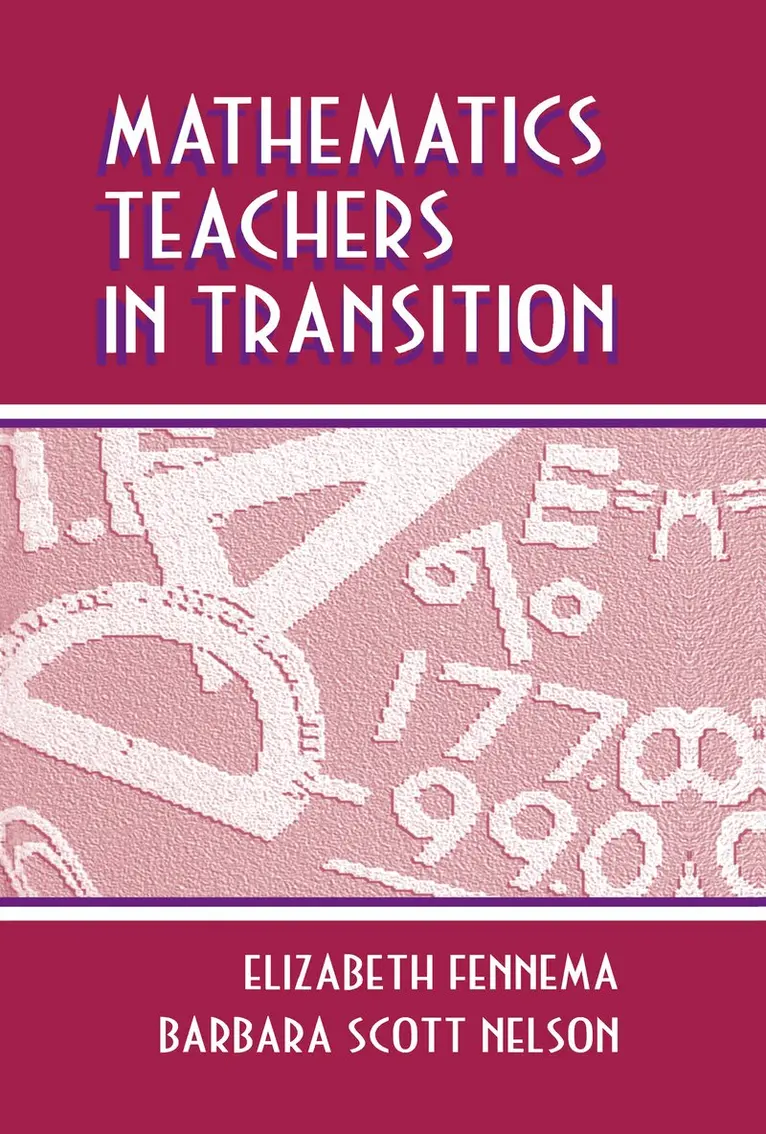
This book addresses the need of professional development leaders and policymakers for scholarly knowledge about influencing teachers to modify mathematical instruction to bring it more in alignment with the recommendations of the current reform movement initiated by the National Council of Teachers of Mathematics. The book presents: * theoretical perspectives for studying, analyzing, and understanding teacher change; * descriptions of contextual variables to be considered as one studies and attempts to understand teacher change; and * descriptions of professional development programs that resulted in teacher change. One chapter builds a rationale for looking to developmental psychology for guidance in constructing models of reconstructing new forms of mathematical instruction. Another highlights the relevance to mathematics teacher development of research-based knowledge about how children construct mathematical ideas. Other chapters explore the relationships between the various contexts of schooling and instructional change. Included also are chapters that describe and analyze major reform efforts designed to assist teachers in modifying their instructional practices (Cognitively Guided Instruction, Math-Cubed, Project Impact, Mathematics in Context, and the Case-Based Project). Finally, the current state of knowledge about encouraging teachers to modify their instruction is discussed, the implications of major research and implementation findings are suggested, and some of the major questions that need to be addressed are identified, such as what we have learned about teacher change.
344 kr
Skickas inom 10-15 vardagar
This book addresses the need of professional development leaders and policymakers for scholarly knowledge about influencing teachers to modify mathematical instruction to bring it more in alignment with the recommendations of the current reform movement initiated by the National Council of Teachers of Mathematics. The book presents: * theoretical perspectives for studying, analyzing, and understanding teacher change; * descriptions of contextual variables to be considered as one studies and attempts to understand teacher change; and * descriptions of professional development programs that resulted in teacher change. One chapter builds a rationale for looking to developmental psychology for guidance in constructing models of reconstructing new forms of mathematical instruction. Another highlights the relevance to mathematics teacher development of research-based knowledge about how children construct mathematical ideas. Other chapters explore the relationships between the various contexts of schooling and instructional change. Included also are chapters that describe and analyze major reform efforts designed to assist teachers in modifying their instructional practices (Cognitively Guided Instruction, Math-Cubed, Project Impact, Mathematics in Context, and the Case-Based Project). Finally, the current state of knowledge about encouraging teachers to modify their instruction is discussed, the implications of major research and implementation findings are suggested, and some of the major questions that need to be addressed are identified, such as what we have learned about teacher change.
2 572 kr
Skickas inom 10-15 vardagar
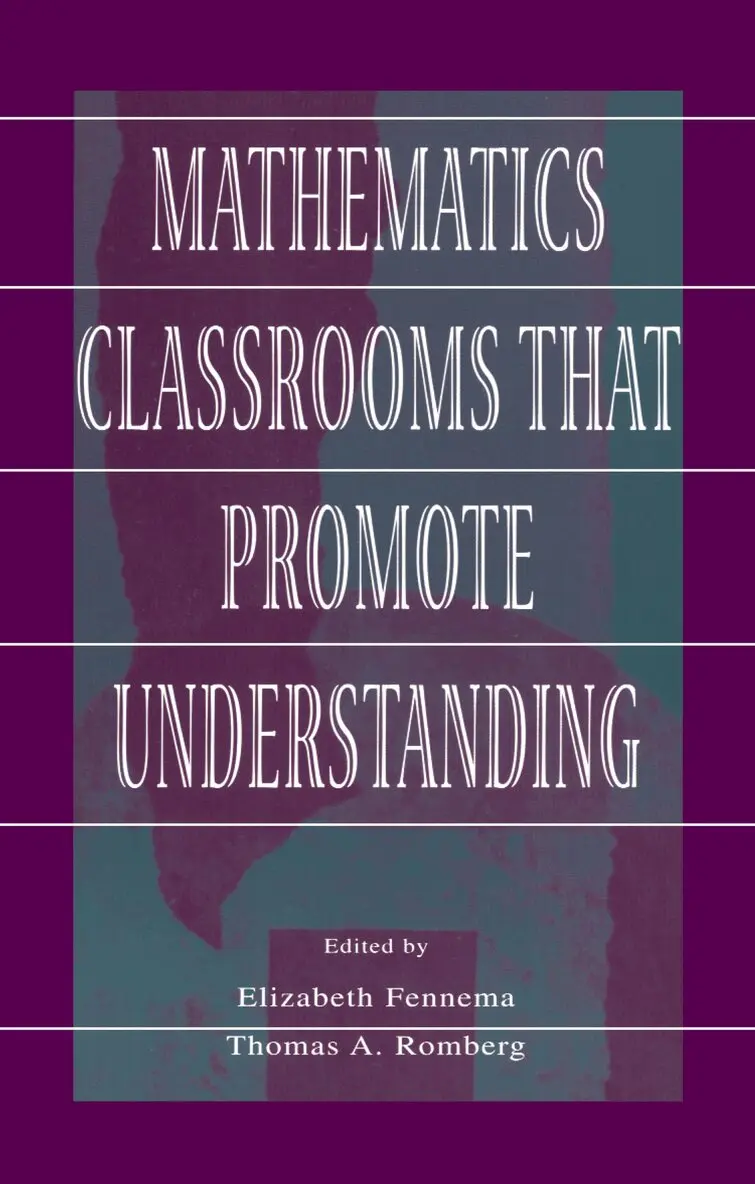
Mathematics Classrooms That Promote Understanding synthesizes the implications of research done by the National Center for Research in Mathematical Sciences on integrating two somewhat diverse bodies of scholarly inquiry: the study of teaching and the study of learning mathematics.This research was organized around content domains and/or continuing issues of education, such as equity and assessment of learning, and was guided by two common goals--defining the mathematics content of the K-12 curriculum in light of the changing mathematical needs of citizens for the 21st century, and identifying common components of classrooms that enable students to learn the redefined mathematics with understanding. To accomplish these goals, classrooms in which instruction facilitated the growth of understanding were established and/or studied. This volume reports and discusses the findings which grew out of this research, and subsequent papers and discussions among the scholars engaged in the endeavor.Section I, "Setting the Stage," focuses on three major threads: What mathematics should be taught; how we should define and increase students' understanding of that mathematics; and how learning with understanding can be facilitated for all students. Section II, "Classrooms That Promote Understanding," includes vignettes from diverse classrooms that illustrate classroom discourse, student work, and student engagement in the mathematics described in Chapter 1 as well as the mental activities described in Chapter 2. These chapters also illustrate how teachers deal with the equity concerns described in Chapter 3. Section III addresses "Developing Classrooms That Promote Understanding."The knowledge of the teaching/learning process gained from the research reported in this volume is a necessary prerequisite for implementing the revisions called for in the current reform movement. The classrooms described show that innovative reform in teaching and learning mathematics is possible. Unlike many volumes reporting research, this book is written at a level appropriate for master's degree students. Very few references are included in the chapters themselves; instead, each chapter includes a short annotated list of articles for expanded reading which provides the scholarly basis and research substantiation for this volume.
722 kr
Skickas inom 10-15 vardagar
Mathematics Classrooms That Promote Understanding synthesizes the implications of research done by the National Center for Research in Mathematical Sciences on integrating two somewhat diverse bodies of scholarly inquiry: the study of teaching and the study of learning mathematics.This research was organized around content domains and/or continuing issues of education, such as equity and assessment of learning, and was guided by two common goals--defining the mathematics content of the K-12 curriculum in light of the changing mathematical needs of citizens for the 21st century, and identifying common components of classrooms that enable students to learn the redefined mathematics with understanding. To accomplish these goals, classrooms in which instruction facilitated the growth of understanding were established and/or studied. This volume reports and discusses the findings which grew out of this research, and subsequent papers and discussions among the scholars engaged in the endeavor.Section I, "Setting the Stage," focuses on three major threads: What mathematics should be taught; how we should define and increase students' understanding of that mathematics; and how learning with understanding can be facilitated for all students. Section II, "Classrooms That Promote Understanding," includes vignettes from diverse classrooms that illustrate classroom discourse, student work, and student engagement in the mathematics described in Chapter 1 as well as the mental activities described in Chapter 2. These chapters also illustrate how teachers deal with the equity concerns described in Chapter 3. Section III addresses "Developing Classrooms That Promote Understanding."The knowledge of the teaching/learning process gained from the research reported in this volume is a necessary prerequisite for implementing the revisions called for in the current reform movement. The classrooms described show that innovative reform in teaching and learning mathematics is possible. Unlike many volumes reporting research, this book is written at a level appropriate for master's degree students. Very few references are included in the chapters themselves; instead, each chapter includes a short annotated list of articles for expanded reading which provides the scholarly basis and research substantiation for this volume.
689 kr
Skickas inom 10-15 vardagar
Until recently there had been relatively little integration of programs of research on teaching, learning, curriculum, and assessment. However, in the last few years it has become increasingly apparent that a more unified program of research is needed to acquire an understanding of teaching and learning in schools that will inform curriculum development and assessment. The chapters in this volume represent a first step toward an integration of research paradigms in one clearly specified mathematical domain.Integrating a number of different research perspectives is a complex task, and ways must be found to reduce the complexity without sacrificing the integration. The research discussed in this volume is tied together because it deals with a common content strand. During the last ten years specific content domains have served as focal points for research on the development of mathematical concepts in children. The areas of addition and subtraction, algebra, rational numbers, and geometry are notable examples. Whether a similar organizational structure will prevail for programs of research that integrate the study of teaching, learning, curriculum, and assessment is an open question. The perspectives presented in this volume illustrate the potential for adopting this perspective.
663 kr
Skickas inom 10-15 vardagar
This volume focuses on the important mathematical idea of functions that, with the technology of computers and calculators, can be dynamically represented in ways that have not been possible previously. The book's editors contend that as result of recent technological developments combined with the integrated knowledge available from research on teaching, instruction, students' thinking, and assessment, curriculum developers, researchers, and teacher educators are faced with an unprecedented opportunity for making dramatic changes.The book presents content considerations that occur when the mathematics of graphs and functions relate to curriculum. It also examines content in a carefully considered integration of research that conveys where the field stands and where it might go. Drawing heavily on their own work, the chapter authors reconceptualize research in their specific areas so that this knowledge is integrated with the others' strands. This model for synthesizing research can serve as a paradigm for how research in mathematics education can -- and probably should -- proceed.