Eric Worby – författare
Visar alla böcker från författaren Eric Worby. Handla med fri frakt och snabb leverans.
4 produkter
4 produkter
E-bok
Engelska, 2008373 kr
Läs direkt efter köp
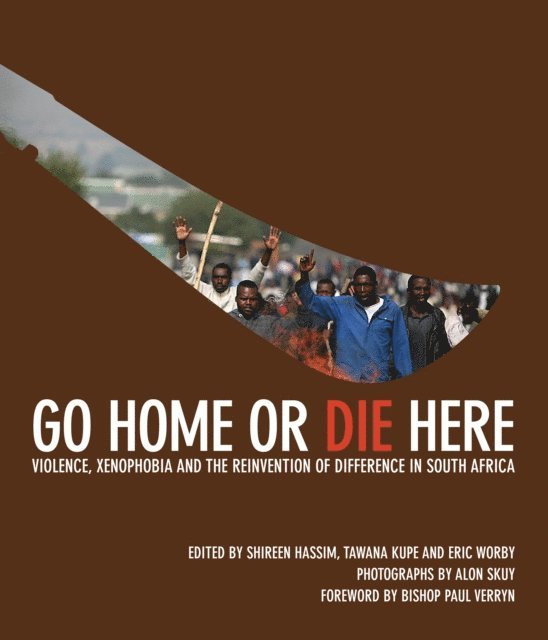
The xenophobic attacks that started in Alexandra, Johannesburg in May 2008 before quickly spreading around the country caused an outcry across the world and raised many fundamental questions: Of what profound social malaise is xenophobia – and the violence that it inspires – a symptom? Have our economic and political choices created new forms of exclusion that fuel anger and distrust? What consequences does the emergence of xenophobia hold for the idea of an equal, non-racial society as symbolised by a democratic South Africa?On 28 May 2008 the Faculty of Humanities in the University of the Witwatersrand, Johannesburg convened an urgent colloquium that focused on searching for short and long-term solutions. Nearly twenty individuals – mostly Wits academics from a variety of disciplines, but also two student leaders, a journalist and a bishop – addressed the unfolding violence in ways that were conversant with the moment, yet rooted in scholarship and ongoing research.Go Home or Die Here emanates directly from the colloquium. It hopes to make sense of the nuances and trajectories of building a democratic society out of a deeply divided and conflictual past, in the conditions of global recession, heightening inequalities and future uncertainty. The authors hoped to pose questions that would lead both to research and to more informed, reflective forms of public action. With extensive photographs by award-winning photographer Alon Skuy, who covered the violence for The Times newspaper, the volume is passionate and engaged, and aims to stimulate reflection, debate and activism among concerned members of a broad public.
E-bok
PDF, Engelska, 2011384 kr
Läs direkt efter köp
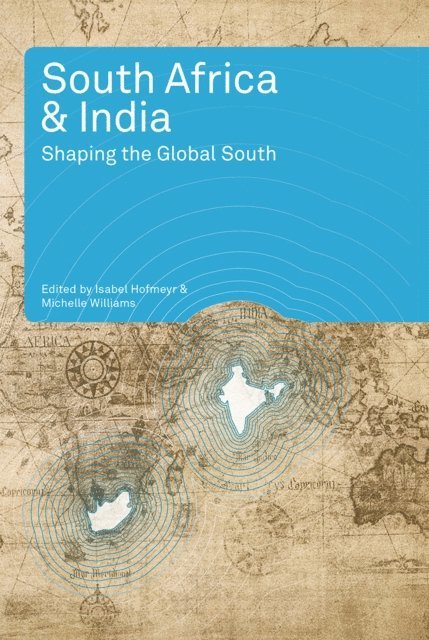
South Africa’s future is increasingly tied up with that of India. While trade and investment between the two countries is intensifying, they share long-standing historical ties and have much in common: apart from cricket, colonialism and Gandhi, both countries are important players in the global South. As India emerges as a major economic power, the need to understand these links becomes ever more pressing. Can the two countries enter balanced forms of exchange? What forms of transnational political community between these two regions have yet to be researched and understood? The first section of South Africa and India traces the range of historical connection between the two countries. The second section explores unconventional comparisons that offer rich ground on which to build original areas of study. This innovative book looks to a post-American world in which the global South will become ever more important. Within this context, the Indian Ocean arena itself and South Africa and India in particular move to the fore. The book’s main contribution lies in the approaches and methods offered by its wide range of contributors for thinking about this set of circumstances.
E-bok
PDF, Engelska, 2008373 kr
Läs direkt efter köp
The xenophobic attacks that started in Alexandra, Johannesburg in May 2008 before quickly spreading around the country caused an outcry across the world and raised many fundamental questions: Of what profound social malaise is xenophobia – and the violence that it inspires – a symptom? Have our economic and political choices created new forms of exclusion that fuel anger and distrust? What consequences does the emergence of xenophobia hold for the idea of an equal, non-racial society as symbolised by a democratic South Africa?On 28 May 2008 the Faculty of Humanities in the University of the Witwatersrand, Johannesburg convened an urgent colloquium that focused on searching for short and long-term solutions. Nearly twenty individuals – mostly Wits academics from a variety of disciplines, but also two student leaders, a journalist and a bishop – addressed the unfolding violence in ways that were conversant with the moment, yet rooted in scholarship and ongoing research.Go Home or Die Here emanates directly from the colloquium. It hopes to make sense of the nuances and trajectories of building a democratic society out of a deeply divided and conflictual past, in the conditions of global recession, heightening inequalities and future uncertainty. The authors hoped to pose questions that would lead both to research and to more informed, reflective forms of public action. With extensive photographs by award-winning photographer Alon Skuy, who covered the violence for The Times newspaper, the volume is passionate and engaged, and aims to stimulate reflection, debate and activism among concerned members of a broad public.
E-bok
Engelska, 2011384 kr
Läs direkt efter köp
South Africa’s future is increasingly tied up with that of India. While trade and investment between the two countries is intensifying, they share long-standing historical ties and have much in common: apart from cricket, colonialism and Gandhi, both countries are important players in the global South. As India emerges as a major economic power, the need to understand these links becomes ever more pressing. Can the two countries enter balanced forms of exchange? What forms of transnational political community between these two regions have yet to be researched and understood? The first section of South Africa and India traces the range of historical connection between the two countries. The second section explores unconventional comparisons that offer rich ground on which to build original areas of study. This innovative book looks to a post-American world in which the global South will become ever more important. Within this context, the Indian Ocean arena itself and South Africa and India in particular move to the fore. The book’s main contribution lies in the approaches and methods offered by its wide range of contributors for thinking about this set of circumstances.