Friedrich Kittler - Böcker
Visar alla böcker från författaren Friedrich Kittler. Handla med fri frakt och snabb leverans.
16 produkter
16 produkter
867 kr
Skickas inom 5-8 vardagar
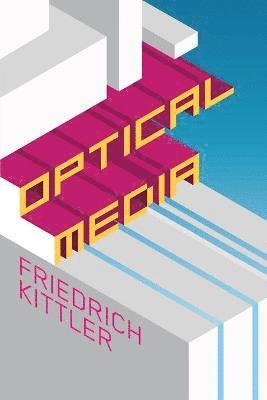
This major new book provides a concise history of optical media from Renaissance linear perspective to late twentieth-century computer graphics. Kittler begins by looking at European painting since the Renaissance in order to discern the principles according to which modern optical perception was organized. He also discusses the development of various mechanical devices, such as the camera obscura and the laterna magica, which were closely connected to the printing press and which played a pivotal role in the media war between the Reformation and the Counter-Reformation. After examining this history, Kittler then addresses the ways in which images were first stored and made to move, through the development of photography and film. He discusses the competitive relationship between photography and painting as well as between film and theater, as innovations like the Baroque proscenium or "picture-frame" stage evolved from elements that would later constitute cinema. The central question, however, is the impact of film on the ancient monopoly of writing, as it not only provoked new forms of competition for novelists but also fundamentally altered the status of books. In the final section, Kittler examines the development of electrical telecommunications and electronic image processing from television to computer simulations.In short, this book provides a comprehensive introduction to the history of image production that is indispensable for anyone wishing to understand the prevailing audiovisual conditions of contemporary culture.
244 kr
Skickas inom 7-10 vardagar
This major new book provides a concise history of optical media from Renaissance linear perspective to late twentieth-century computer graphics. Kittler begins by looking at European painting since the Renaissance in order to discern the principles according to which modern optical perception was organized. He also discusses the development of various mechanical devices, such as the camera obscura and the laterna magica, which were closely connected to the printing press and which played a pivotal role in the media war between the Reformation and the Counter-Reformation. After examining this history, Kittler then addresses the ways in which images were first stored and made to move, through the development of photography and film. He discusses the competitive relationship between photography and painting as well as between film and theater, as innovations like the Baroque proscenium or "picture-frame" stage evolved from elements that would later constitute cinema. The central question, however, is the impact of film on the ancient monopoly of writing, as it not only provoked new forms of competition for novelists but also fundamentally altered the status of books. In the final section, Kittler examines the development of electrical telecommunications and electronic image processing from television to computer simulations.In short, this book provides a comprehensive introduction to the history of image production that is indispensable for anyone wishing to understand the prevailing audiovisual conditions of contemporary culture.
388 kr
Skickas inom 7-10 vardagar
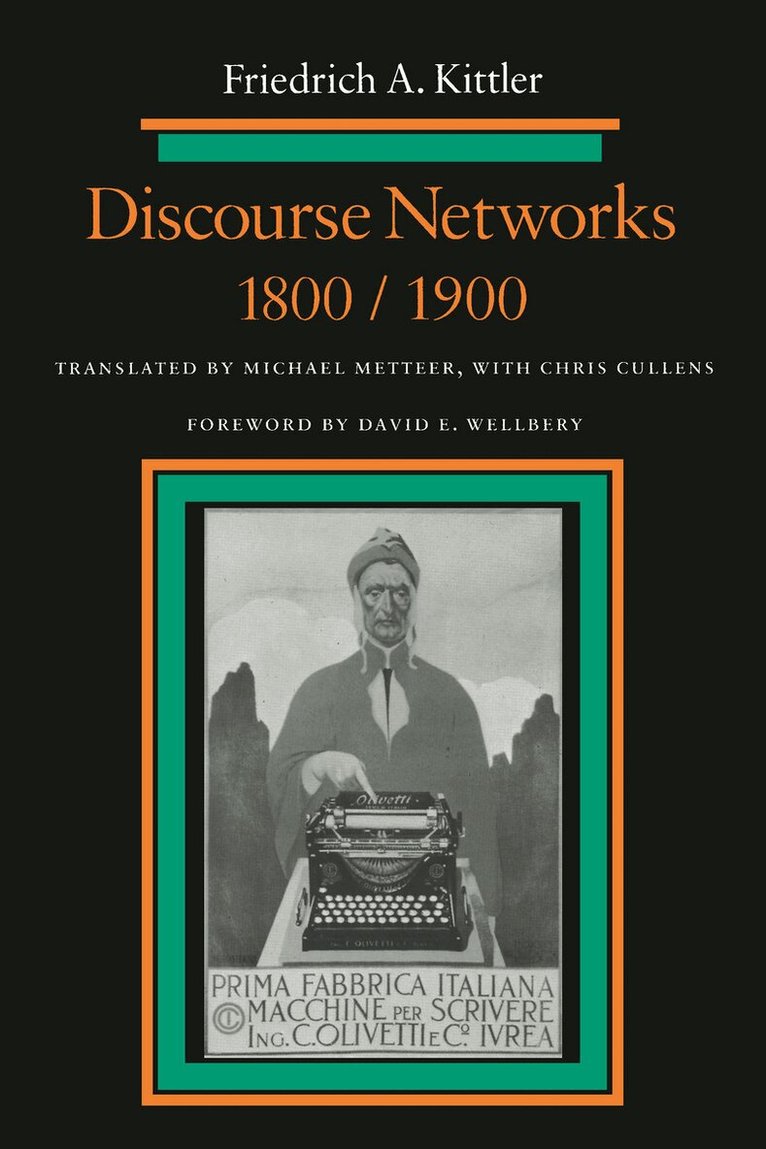
This is a highly original book about the connections between historical moment, social structure, technology, communications systems, and what is said and thought using these systems - notably literature. The author focuses on the differences between "discourse networks" in 1800 and 1900, in the process developing a new analysis of the shift from romanticism to modernism. The work might be classified as a German equivalent to the New Historicism of American literary scholars, both in the intellectual influences to which Kittler responds and in his concern to ground literature in the most concrete details of historical reality.The artful structure of the book begins with Goethe's Faust and ends with Valery's Faust. In the 1800 section, the author discusses how language was learned, the emergence of the modern university, the associated beginning of the interpretation of contemporary literature, and the canonization of literature. Among the writers and works Kittler analyzes in addition to Geothe's Faust are Schlegel, E.T.A. Hoffmann's "The Golden Pot," and Goethe's Tasso.The 1900 section argues that the new discourse network in which literature is situated in the modern period is characterized by new technological media - film, the photograph, and the typewritten page - and the crisis that these caused for literary production. Along the way, the author discusses the work of Nietzsche, Getrude Stein, Mallarme, Bram Stoker, the Surrealists, Rilke, Kafka, and Freud, among others.
1 138 kr
Skickas inom 7-10 vardagar
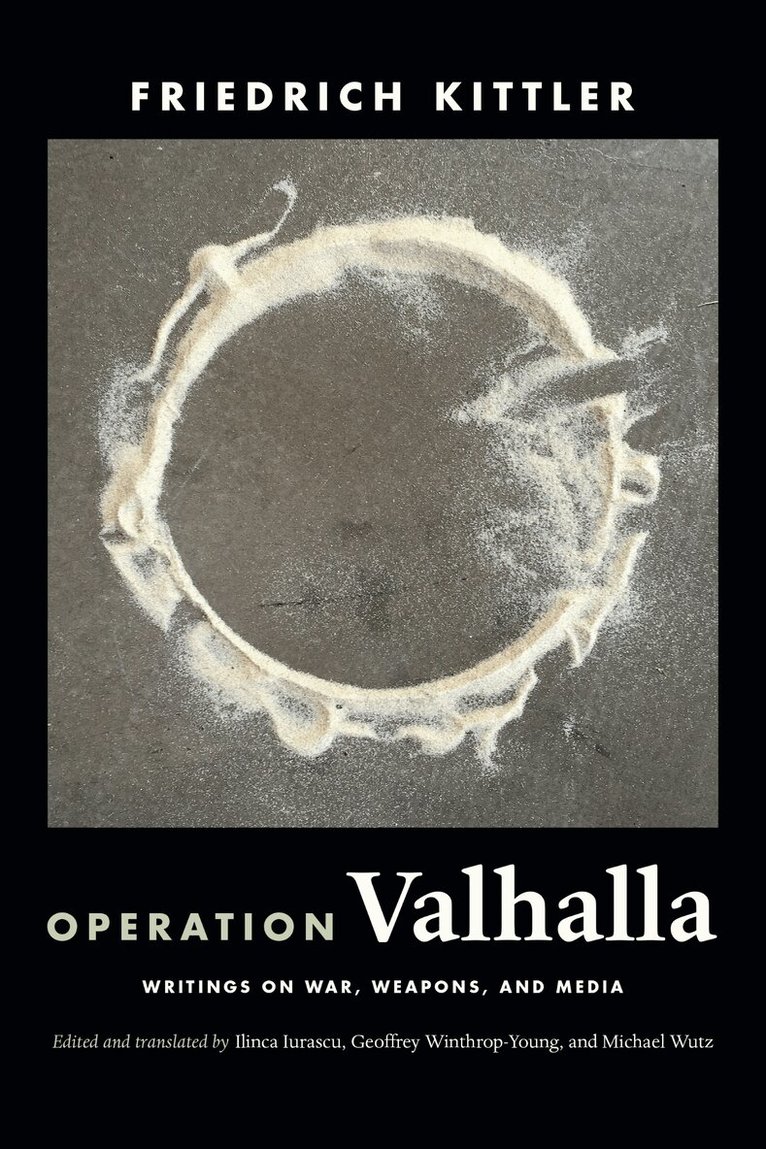
Operation Valhalla collects eighteen texts by German media theorist Friedrich Kittler on the close connections between war and media technology. In these essays, public lectures, interviews, literary analyses, and autobiographical musings, Kittler outlines how war has been a central driver of media's evolution, from Prussia's wars against Napoleon to the so-called War on Terror. Covering an eclectic array of topics, he charts the intertwined military and theatrical histories of the searchlight and the stage lamp, traces the microprocessor's genealogy back to the tank, shows how rapid-fire guns brought about new standards for optics and acoustics, and reads Thomas Pynchon's Gravity's Rainbow to upset established claims about the relationship between war, technology, and history in the twentieth century. Throughout, Operation Valhalla foregrounds the outsize role of war in media history as well as Kittler's importance as a daring and original thinker.
296 kr
Skickas inom 7-10 vardagar
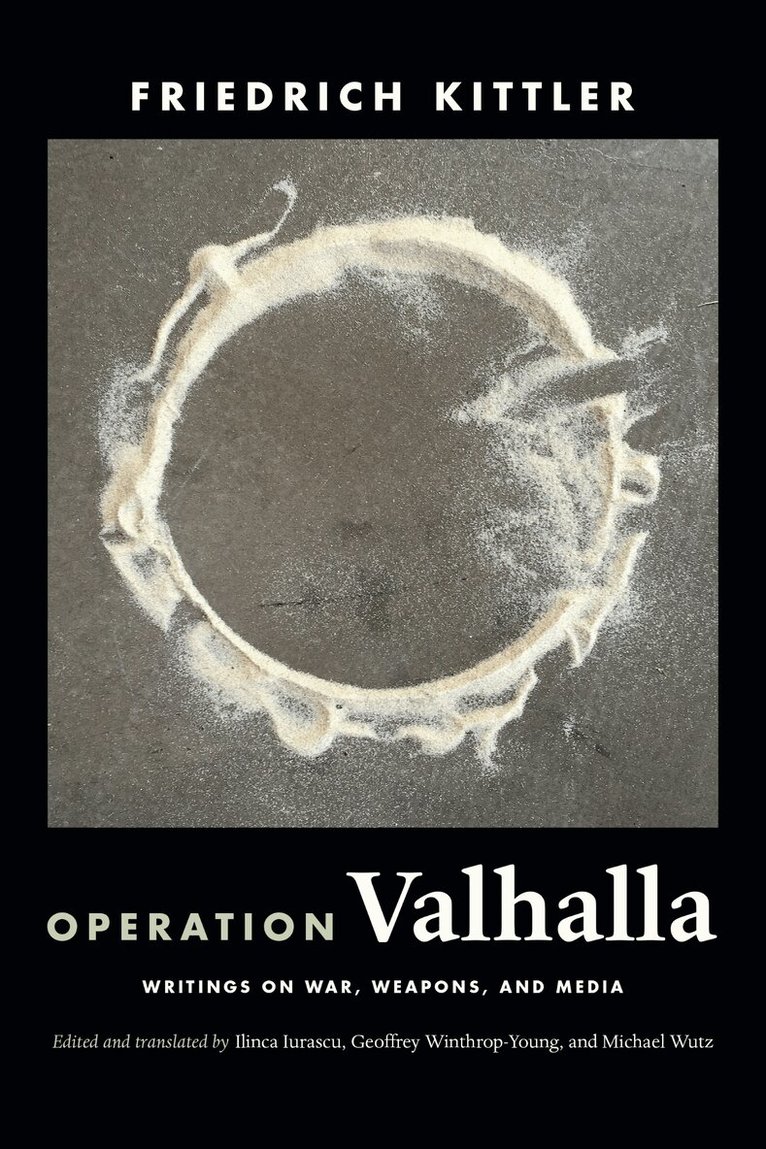
Operation Valhalla collects eighteen texts by German media theorist Friedrich Kittler on the close connections between war and media technology. In these essays, public lectures, interviews, literary analyses, and autobiographical musings, Kittler outlines how war has been a central driver of media's evolution, from Prussia's wars against Napoleon to the so-called War on Terror. Covering an eclectic array of topics, he charts the intertwined military and theatrical histories of the searchlight and the stage lamp, traces the microprocessor's genealogy back to the tank, shows how rapid-fire guns brought about new standards for optics and acoustics, and reads Thomas Pynchon's Gravity's Rainbow to upset established claims about the relationship between war, technology, and history in the twentieth century. Throughout, Operation Valhalla foregrounds the outsize role of war in media history as well as Kittler's importance as a daring and original thinker.
1 370 kr
Skickas inom 3-6 vardagar
124 kr
Skickas inom 3-6 vardagar
234 kr
Skickas inom 3-6 vardagar
136 kr
Skickas inom 3-6 vardagar
218 kr
Skickas inom 3-6 vardagar
676 kr
Skickas inom 10-15 vardagar
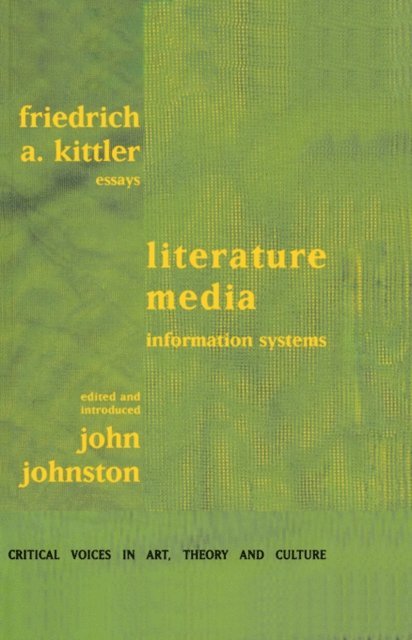
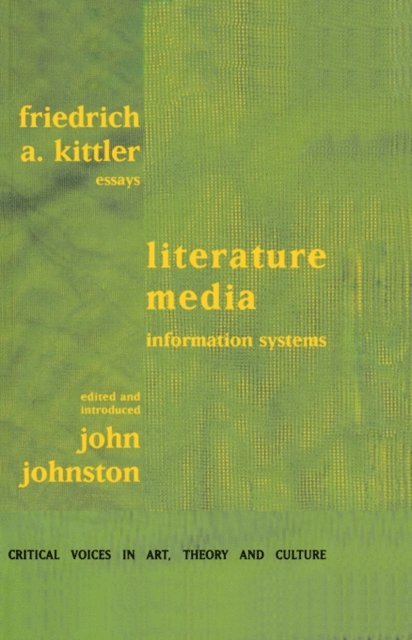
John Johnston's background combines expertise in modern literature, poststructuralist philosophy, and high technology's production. Like Kittler, he draws on historic fact, anecdote, and literature. From this vantage point he explicates the theoretical and practical consequences of Friedrich Kittler's insights into the social and psychological effects of the processes by which metaphor in one medium is made real by another.
2 287 kr
Skickas inom 10-15 vardagar
John Johnston's background combines expertise in modern literature, poststructuralist philosophy, and high technology's production. Like Kittler, he draws on historic fact, anecdote, and literature. From this vantage point he explicates the theoretical and practical consequences of Friedrich Kittler's insights into the social and psychological effects of the processes by which metaphor in one medium is made real by another.
Del 1 - Kartotek
Litteraturens laterna magica : Friedrich Schillers og E.T.A. Hoffmanns mediestrategier ; Nattevakter
Häftad, Norska, 2021
68 kr
Skickas
Kartotek 1: Friderich Kittler – Litteraturens laterna magica: Friedrich Schiller og E.T.A. Hoffmans mediestrategier / August Klingemann – utdrag från romanen Nattevakter. Förord: Ragnild Lome. Tanken bakom skriftserien Kartotek är att lyfta fram viktiga teoretiska texter för en nordisk läsekrets i ett format som uppmuntrar till dialog mellan filosofi, teoretiskt tänkande, skönlitteratur och konst, samt inbjuder till vidare fördjupning. Varje del av skriftserien består var för sig av två texter, en teoretisk eller essäistisk text ackompanjerad av en skönlitterär text. Materiellt påminner varje del i skriftserien om små pamfletter, tryckta på enkelt papper, klammerhäftade, lätta att ta med på bussen tåget eller flyget, och menade att distribueras mellan vänner och kollegor.
235 kr
Skickas
279 kr
Skickas
"Nedskrivningssystem är en modern klassiker inom humaniora." (Thomas Karlsohn i GP)Med utgångspunkt i den mediala maskinparkens historiska förvandlingar skriver Friedrich Kittler här nuets historia. Detta verk har gjort honom till en exemplarisk teoretiker för den digitala eran och till huvudgestalt inom den tyska forskning som ersatt gamla och vördnadsbjudande begrepp som "mening" och "subjekt", "kommunikation" och "förståelse" med de betydligt kyligare "medium" och "information", "databehandling" och "gränssnitt".I Nedskrivningssystem 1800·1900 läser Kittler Goethe genom en reformpedagog, Nietzsche genom skrivmaskinens konstruktör och Lacan genom fonografens uppfinnare, för att bara nämna några av bokens omaka konstellationer. Kopplingarna är oväntade men inte godtyckliga. Det som förbinder litteratur och humanistisk bildning med praktiskt eller ingenjörsmässigt vetande är den medieteknologi som genom historien organiserat den västerländska kulturens diskurser. Kittler gör därmed en motläsning av den humanistiska traditionen. I hjärtat av den europeiska kulturen finns inte en själ, inte en ande och inte ett subjekt, utan en teknologi. Snarare än att framhålla människans förmåga att överskrida sina villkor tecknar studien en kylig bild av mediernas makt att strukturera vår verklighetsuppfattning.Nedskrivningssystem 1800·1900 är Kittlers mest genomgripande försök att formulera sina tankar kring medier och makt, och boken har blivit något av ett grunddokument för den mediehistoriska vändningen inom humaniora under de senaste decennierna. Det är en litteraturvetenskaplig studie där traditionella storheter som text, författarskap, böcker, verk och läsare omdefinieras som funktioner i ett medialt system. Samtidigt är undersökningen ett slags avsked till litteraturvetenskapen: när frågan om mediet ersätter frågan om texten så kan man visserligen fortsatt intressera sig för fenomen som traditionellt hört till litteraturvetenskapens domäner, men litteraturens särställning framstår ohjälpligen som effekten av vissa historiskt föränderliga mediala villkor. Vår värld, menar Kittler, är tekniskt konstruerad, från början till slut. Genom att i detalj belägga detta i sina historiska fallstudier lyckades han få en hel humanistisk forskarvärld att upptäcka och tala om medier där man förut bara sett "text". Hans sätt att förena en innovativ framsynthet med ett historiskt siktdjup och en kompromisslöshet i tanken lämnar inte någon oberörd.I Nedskrivningssystem 1800·1900 visar sig Kittlers medieanalys i helfigur. Först här framträder med full skärpa komplexiteten i hans högst personliga teoriarkitektur, där Freud, Saussure, Foucault, Derrida, Lacan och McLuhan lämnat lika viktiga bidrag. Det är en bok som rikt belönar sin läsare. För den som på allvar önskar förstå hur medierna definierat, och fortsätter att definiera, vår situation och oss själva erbjuder den oundgänglig läsning.Friedrich Kittler, tysk mediehistoriker, 1943-2011. Han har tidigare presenterats på svenska i essäsamlingen Maskinskrifter (2002). Aufschreibesysteme 1800·1900 utkom i en fjärde omarbetad utgåva 2003."Att 'Nedskrivningssystem 1800/1900' nu finns på svenska är en dröm som gått i uppfyllelse; ett hjältedåd av utgivare och inte minst översättaren Tommy Andersson, vars ohyggliga arbete givit enastående resultat."Jan Holmberg, Dagens Nyheter"Nedskrivningssystem är en modern klassiker inom humaniora. Nyligen utkom boken på Glänta Produktion i kongenial svensk översättning av Tommy Andersson. Det är ett välkommet initiativ och en imponerande prestation att göra denna drygt sexhundrasidiga volym tillgänglig på vårt språk."Thomas Karlsohn, GP ?Kittler är, kan man säga, medieteoretikern par excellence. Med en sylvass noggrannhet och vetenskapsmannens distans, analyserar han ? och på sin alldeles egna, svindlande, spännande och otroligt stimulerande stil som till och med kommit att kallas ?Kittlertyska? ? mediernas diskurs?Carl Magnus Juliusson, Tidningen Kulturen"I denna digra volym från 1985, som brukar ses som en modern klassiker och ett viktigt incitament till humanioras nya inriktning mot mediehistoria, reflekterar [Kittler] kring medier och makt. [...] Denna originella och djärvt nytänkande bok vänder sig till alla som vill förstå hur medierna definierar vår nutida situation."Inger Littberger Caisou-Rouss, BTJ"Det är [...] en synnerligen intressant läsning och översättningen är mycket väl genomförd."Pär Thörn, Sydsvenskan
85 kr
Skickas inom 5-8 vardagar
I det nya numret, som utkommer i slutet av januari, skriver Kathy Acker pirateriets manifest, Hegel frågar sig vem som tänker abstrakt, Meriç Algün Ringborg gör en ny turkisk-svensk ordbok, Nancy Bauer reder ut förhållandet mellan feminism och filosofi och Friedrich Kittler diskuterar tänkandets ödmjukhet i den sista intervju som gjordes med honom innan hans bortgång förra året. Dessutom belgiska koloniala loopar, amerikanska satellitbilder, syriska minnesförluster och mycket mer.