Gerd Stumme – författare
561 kr
Skickas inom 10-15 vardagar
708 kr
Läs direkt efter köp
561 kr
Skickas inom 10-15 vardagar
708 kr
Läs direkt efter köp
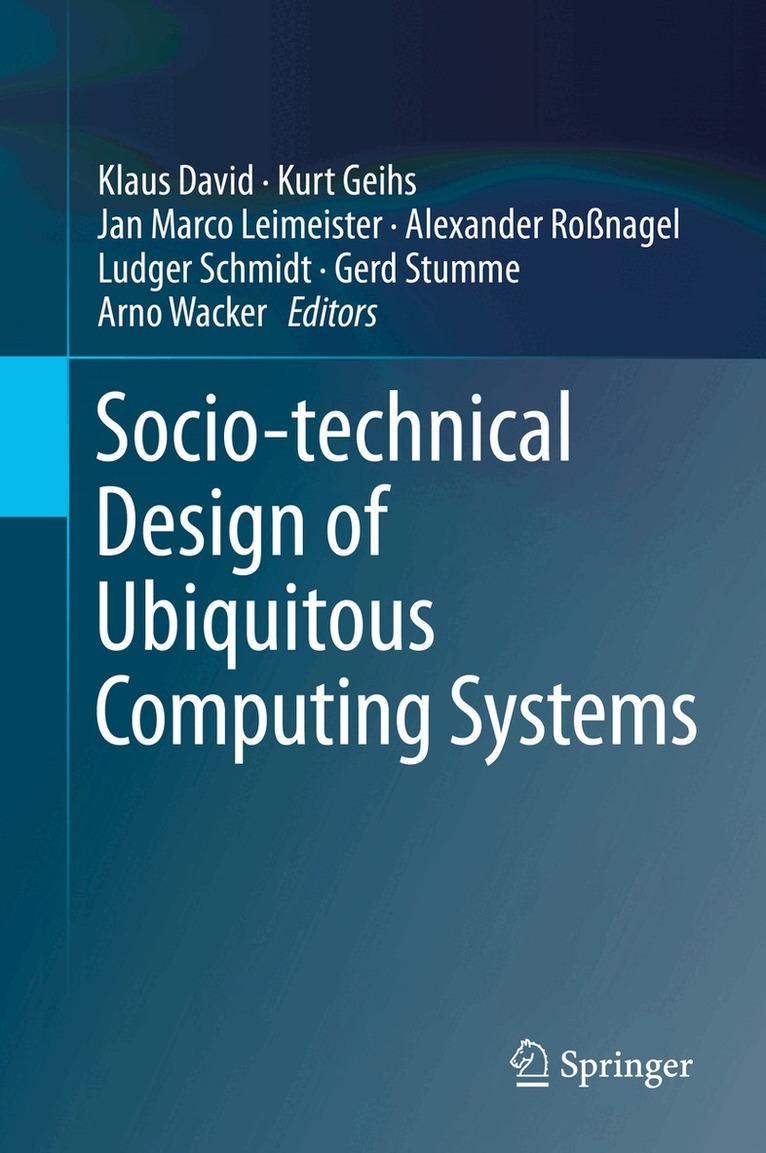
By using various data inputs, ubiquitous computing systems detect their current usage context, automatically adapt their services to the user’s situational needs and interact with other services or resources in their environment on an ad-hoc basis.
Designing such self-adaptive, context-aware knowledge processing systems is, in itself, a formidable challenge. This book presents core findings from the VENUS project at the Interdisciplinary Research Center for Information System Design (ITeG) at Kassel University, where researchers from different fields, such as computer science, information systems, human-computer interaction and law, together seek to find general principles and guidelines for the design of socially aware ubiquitous computing systems. To this end, system usability, user trust in the technology and adherence to privacy laws and regulations were treated as particularly important criteria in the context of socio-technical system design.
During the project, a comprehensive blueprint for systematic, interdisciplinary software development was developed, covering the particular functional and non-functional design aspects of ubiquitous computing at the interface between technology and human beings. The organization of the book reflects the structure of the VENUS work program. After an introductory part I, part II provides the groundwork for VENUS by presenting foundational results from all four disciplines involved. Subsequently, part III focuses on methodological research funneling the development activities into a common framework. Part IV then covers the design of the demonstrators that were built in order to develop and evaluate the VENUS method. Finally, part V is dedicated to the evaluation phase to assess the user acceptance of the new approach and applications.
The presented findings are especially important for researchers in computer science, information systems, and human-computer interaction, but alsofor everyone working on the acceptance of new technologies in society in general.
1 082 kr
Skickas inom 10-15 vardagar
1 379 kr
Läs direkt efter köp
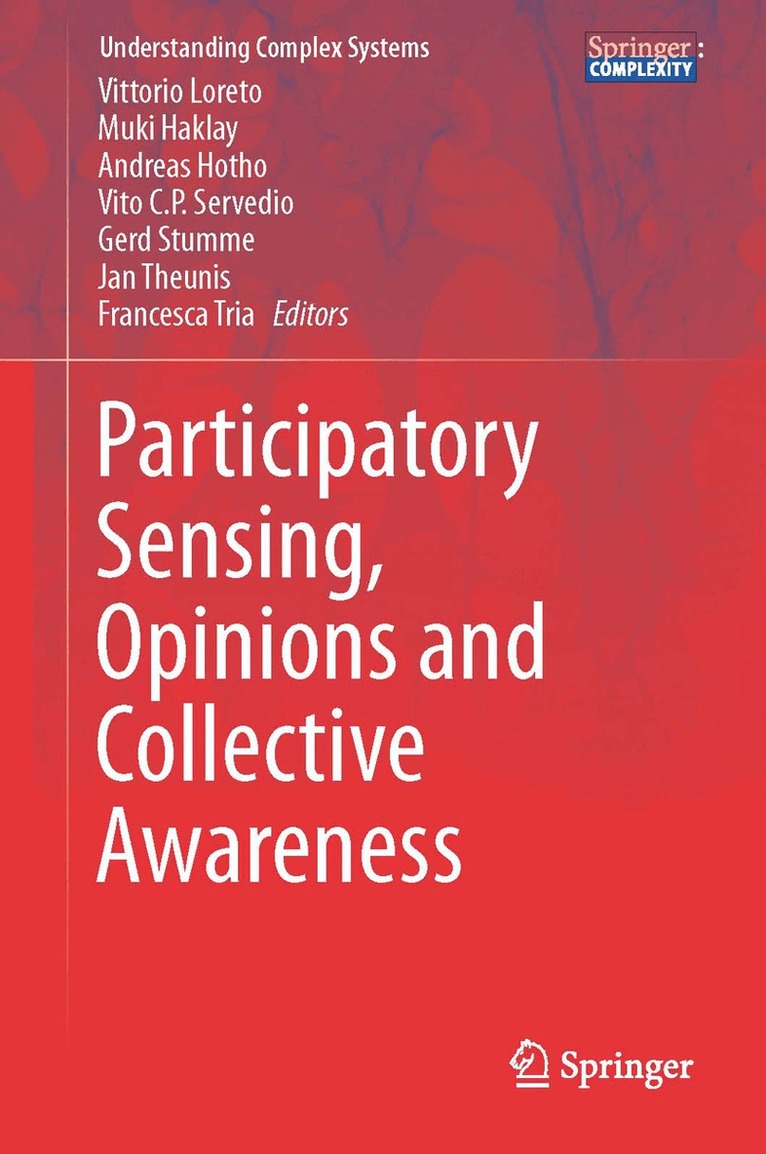
This book introduces and reviews recent advances inthe field in a comprehensive and non-technical way by focusing on the potentialof emerging citizen-science and social-computation frameworks, coupled with thelatest theoretical and modeling tools developed by physicists, mathematicians,computer and social scientists to analyse, interpret and visualize complex datasets.
There is overwhelming evidence that the currentorganisation of our economies and societies is seriously damaging biologicalecosystems and human living conditions in the short term, with potentiallycatastrophic effects in the long term. The need to re-organise the dailyactivities with the greatest impact – energy consumption, transport, housing –towards a more efficient and sustainable development model has recently beenraised in the public debate on several global, environmental issues. Above all,this requires the mismatch between global, societal and individual needs to beaddressed. Recent advancesin Information and Communication Technologies (ICT)can trigger important transitions at the individual and collective level toachieve this aim.
Based on the findings of the collaborative researchnetwork EveryAware the following developments among the emerging ICTtechnologies are discussed in depth in this volume:
• Participatory sensing – where ICT development ispushed to the level where it can supportinformed action at the hyperlocal scale, providing capabilities forenvironmental monitoring, data aggregation and mining, as well as informationpresentation and sharing.
• Web gaming, social computing and internet-mediatedcollaboration – where the Web will continue to acquire the status of aninfrastructure for social computing, allowing users’ cognitive abilities to becoordinated in online communities, and steering the collective action towardspredefined goals.
• Collective awareness and decision-making – where theaccess to both personal and community data, collected by users, processed withsuitable analysis tools, and re-presented in an appropriate format by usablecommunication interfaces leads to a bottom-up development of collective socialstrategies.
561 kr
Skickas inom 10-15 vardagar
1 082 kr
Skickas inom 10-15 vardagar
561 kr
Skickas inom 10-15 vardagar
537 kr
Skickas inom 10-15 vardagar
893 kr
Skickas inom 10-15 vardagar
708 kr
Läs direkt efter köp
1 069 kr
Läs direkt efter köp
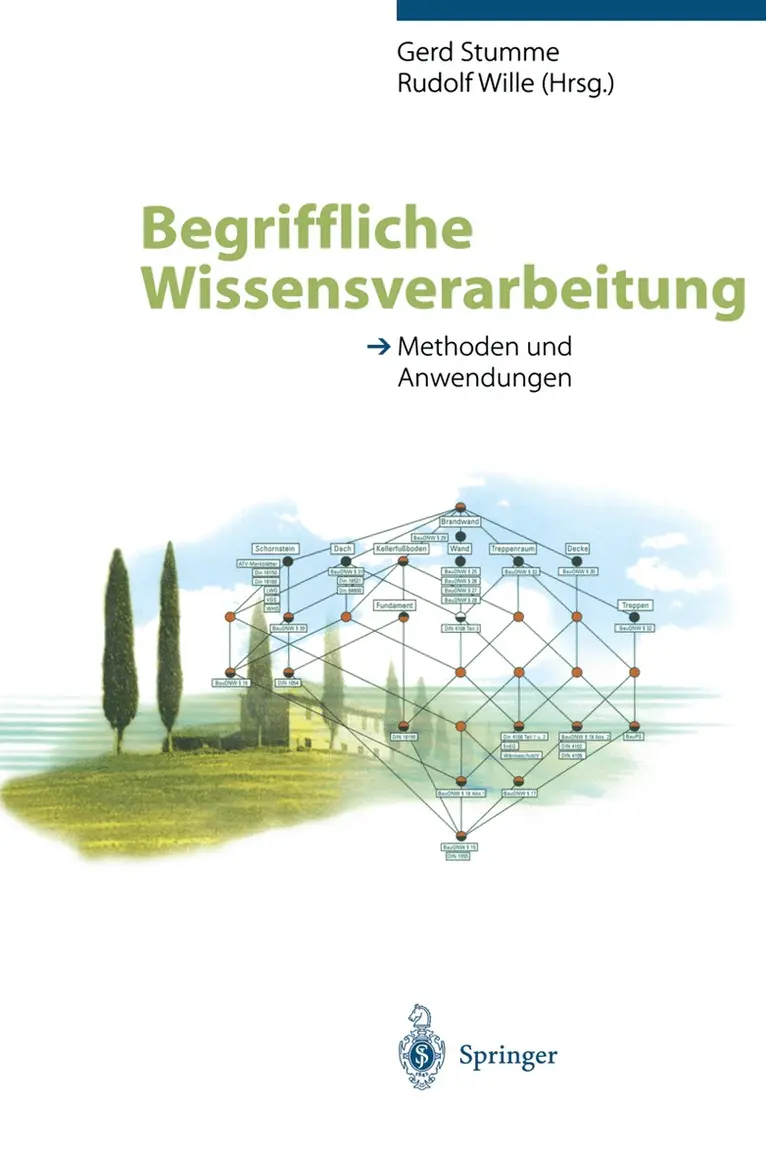
Formal concept analysis has been developed as a field of applied mathematics based on the mathematization of concept and concept hierarchy. It thereby allows us to mathematically represent, analyze, and construct conceptual structures. The formal concept analysis approach has been proven successful in a wide range of application fields.
This book constitutes a comprehensive and systematic presentation of the state of the art of formal concept analysis and its applications. The first part of the book is devoted to foundational and methodological topics. The contributions in the second part demonstrate how formal concept analysis is successfully used outside of mathematics, in linguistics, text retrieval, association rule mining, data analysis, and economics. The third part presents applications in software engineering.
687 kr
Läs direkt efter köp
561 kr
Skickas inom 10-15 vardagar
687 kr
Läs direkt efter köp
537 kr
Skickas inom 10-15 vardagar
708 kr
Läs direkt efter köp
783 kr
Skickas inom 10-15 vardagar
1 114 kr
Skickas inom 10-15 vardagar
1 408 kr
Läs direkt efter köp
423 kr
Skickas inom 10-15 vardagar
316 kr
Läs direkt efter köp
Knowledge Discovery Enhanced with Semantic and Social Information
1 114 kr
Skickas inom 10-15 vardagar
577 kr
Läs direkt efter köp