Malehoko Tshoaedi - Böcker
Visar alla böcker från författaren Malehoko Tshoaedi. Handla med fri frakt och snabb leverans.
4 produkter
4 produkter
186 kr
Tillfälligt slut
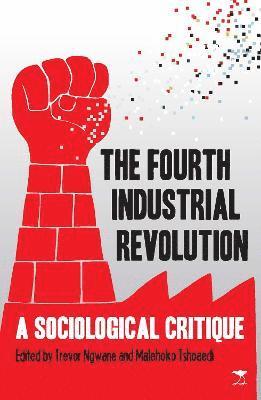
One of the chief concerns regarding the Fourth Industrial Revolution (4IR) technologies is that they are owned and monopolised by advanced capitalist countries. Both between countries and within countries we find ‘the digital divide’. Most of humanity, having little or no access to widespread means of communication and access to information via the internet, will not benefit from the 4IR. The promotion and adoption of these technologies without a plan to address this will lead to a more unequal world. The talk about people changing careers or learning new skills in the face of technologically driven job losses does not consider the differential skills and potentialities among people. Importantly, countries are told to do everything in their power not to be left behind by the 4IR. They are told that they must adopt these technologies come what may, without properly assessing country-specific and class-specific implications, threats and needs. Is there any guarantee that agreeing to and adoption of the Fourth Industrial Revolution technologies by, say, African countries, will not have the same result – leaving them exploited and dominated by those who wield and own the new technologies?
361 kr
Skickas inom 7-10 vardagar
Labour Beyond Cosatu is the fourth volume in the series Taking Democracy Seriously – a ground-breaking, textured and nuanced study on workers and democracy – which was established in the 1990s. The series looks at members of trade unions affiliated to the Congress of South African Trade Unions (Cosatu) and provides a rich database of trade union members and research conducted over the past twenty years. It is one of the very few such resources available to researchers anywhere in the world. Labour Beyond Cosatu paints a complex picture. The 12 chapters of the volume explore various rebellions and conflicts in the trade union sector, starting with the National Union of Mineworkers (NUM) and rivalries between Cosatu affiliates. Unpacking the conflicts between state-sector and private-sector workers, contributors look at the impact of generational and educational shifts, seen by some commentators as proof that Cosatu is now 'middle class'. The book also raises the issue of gender in the unions by usefully locating the controversy around charges levelled at Zwelinzima Vavi in 2013 in the larger context of serious problems in the gender politics within parts of Cosatu.Refuting the image of a union federation solidly committed to the ANC, Labour Beyond Cosatu presents evidence of a sharp decline in support for the ANC within Cosatu, and growing scepticism towards the Alliance. It shows that attempts to understand the labour movement in South Africa in the future will need to include research of smaller, independent unions and social movements. The volume's contributors make a major contribution to key debates on labour and democracy, providing new material that can potentially shift the discussion in important ways. This book will be of great value to students and researchers in Industrial Sociology, Political Studies, Industrial Psychology and Economics and Management.
372 kr
Skickas inom 7-10 vardagar
Analyses the fragmentation and future of labour movements in South Africa and globally in the context of globalisation, the fourth industrial revolution and the Covid-19 pandemic.
1 574 kr
Skickas inom 3-6 vardagar
Analyses the fragmentation and future of labour movements in South Africa and globally in the context of globalisation, the fourth industrial revolution and the Covid-19 pandemic.