Marcel Vellinga - Böcker
Visar alla böcker från författaren Marcel Vellinga. Handla med fri frakt och snabb leverans.
9 produkter
9 produkter
2 299 kr
Skickas inom 10-15 vardagar
The issues surrounding the function and meaning of vernacular architecture in the twenty-first century are complex and extensive. Taking a distinctively rigorous theoretical approach, this book considers these issues from a number of perspectives, broadening current debate to a wider multidisciplinary audience. These collected essays from the leading experts in the field focus on theory, education and practice in this essential sector of architecture, and help to formulate solutions to the environmental, disaster management and housing challenges facing the global community today.
750 kr
Skickas inom 10-15 vardagar
The issues surrounding the function and meaning of vernacular architecture in the twenty-first century are complex and extensive. Taking a distinctively rigorous theoretical approach, this book considers these issues from a number of perspectives, broadening current debate to a wider multidisciplinary audience. These collected essays from the leading experts in the field focus on theory, education and practice in this essential sector of architecture, and help to formulate solutions to the environmental, disaster management and housing challenges facing the global community today.
1 311 kr
Skickas inom 10-15 vardagar
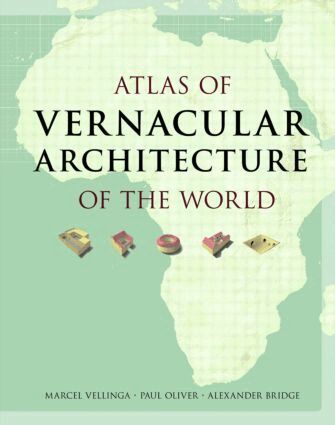
The first world atlas ever compiled on vernacular architecture, this comprehensive work illustrates the variety and ingenuity of the world’s vernacular building traditions from a multi-disciplinary, cross-cultural and comparative approach, using over sixty world and regional maps.Mapping such diverse aspects as materials and resources, technologies, structural systems, symbolism, forms and service systems on a cross-cultural and comparative basis, the Atlas of Vernacular Architecture of the World reveals the distribution, diversity and relationships of the world’s vernacular building traditions. Indicating geographical patterns, developments, lacunae and anomalies, it gives rise to new insights and understandings, stimulating new hypotheses, questions and research efforts.Augmenting the award-winning Encyclopedia of Vernacular Architecture of the World, the Atlas of Vernacular Architecture of the World constitutes a unique and unparalleled resource for anyone involved in the growing field of vernacular architecture studies, including architects, geographers, art historians, planners, folklorists, conservationists, builders, and anthropologists as well as being of use to all those working in the fields of heritage conservation, architecture, regeneration, energy efficient building, resources management, development and sustainability.
Consuming Architecture
On the occupation, appropriation and interpretation of buildings
Inbunden, Engelska, 2014
2 647 kr
Skickas inom 10-15 vardagar
Projecting forward in time from the processes of design and construction that are so often the focus of architectural discourse, Consuming Architecture examines the variety of ways in which buildings are consumed after they have been produced, focusing in particular on processes of occupation, appropriation and interpretation. Drawing on contributions by architects, historians, anthropologists, literary critics, artists, film-makers, photographers and journalists, it shows how the consumption of architecture is a dynamic and creative act that involves the creation and negotiation of meanings and values by different stakeholders and that can be expressed in different voices. In so doing, it challenges ideas of what constitutes architecture, architectural discourse and architectural education, how we understand and think about it, and who can claim ownership of it.Consuming Architecture is aimed at students in architectural education and will also be of interest to students and researchers from disciplines that deal with architecture in terms of consumption and material culture.
Consuming Architecture
On the occupation, appropriation and interpretation of buildings
Häftad, Engelska, 2014
835 kr
Skickas inom 10-15 vardagar
Projecting forward in time from the processes of design and construction that are so often the focus of architectural discourse, Consuming Architecture examines the variety of ways in which buildings are consumed after they have been produced, focusing in particular on processes of occupation, appropriation and interpretation. Drawing on contributions by architects, historians, anthropologists, literary critics, artists, film-makers, photographers and journalists, it shows how the consumption of architecture is a dynamic and creative act that involves the creation and negotiation of meanings and values by different stakeholders and that can be expressed in different voices. In so doing, it challenges ideas of what constitutes architecture, architectural discourse and architectural education, how we understand and think about it, and who can claim ownership of it.Consuming Architecture is aimed at students in architectural education and will also be of interest to students and researchers from disciplines that deal with architecture in terms of consumption and material culture.
893 kr
Skickas inom 7-10 vardagar
A comprehensive and detailed overview of the active regeneration, rehabilitation and revitalisation of architectural heritage. The combined processes of globalisation, urbanisation, environmental change, population growth and rapid technological development have resulted in an increasingly complex, dynamic and interrelated world, in which concerns about the meaning of cultural heritage and identity continue to grow. As the need for culturally and environmentally sustainable design grows, the challenge for professionals involved in the management of inherited built environments is to respond to this ever-changing context in a critical, dynamic and creative way. Our knowledge and understanding of the principles, approaches and methods to sustainably adapt existing buildings and places is rapidly expanding. Architectural Regeneration contributes to this knowledge-base through a holistic approach that links policy with practice and establishes a theoretical framework within which to understand architectural regeneration. It includes extensive case studies of the regeneration, rehabilitation and revitalisation of architectural heritage from around the world. Different scales and contexts of architectural regeneration are discussed, including urban, suburban, rural and temporary.At a time when regeneration policy has shifted to the recognition that ‘heritage matters’ and that the historic environment and creative industries are a vital driver of regeneration, an increasing workload of architectural practices concerns the refurbishment, adaptive re-use or extension of existing buildings. As a result, this book is ideal for undergraduate and graduate students of architecture, historic conservation, urban and environmental design, sustainability, and urban regeneration, as well as for practitioners and decision makers working in those fields.
Design and the Vernacular
Interpretations for Contemporary Architectural Practice and Theory
Inbunden, Engelska, 2023
1 520 kr
Skickas inom 10-15 vardagar
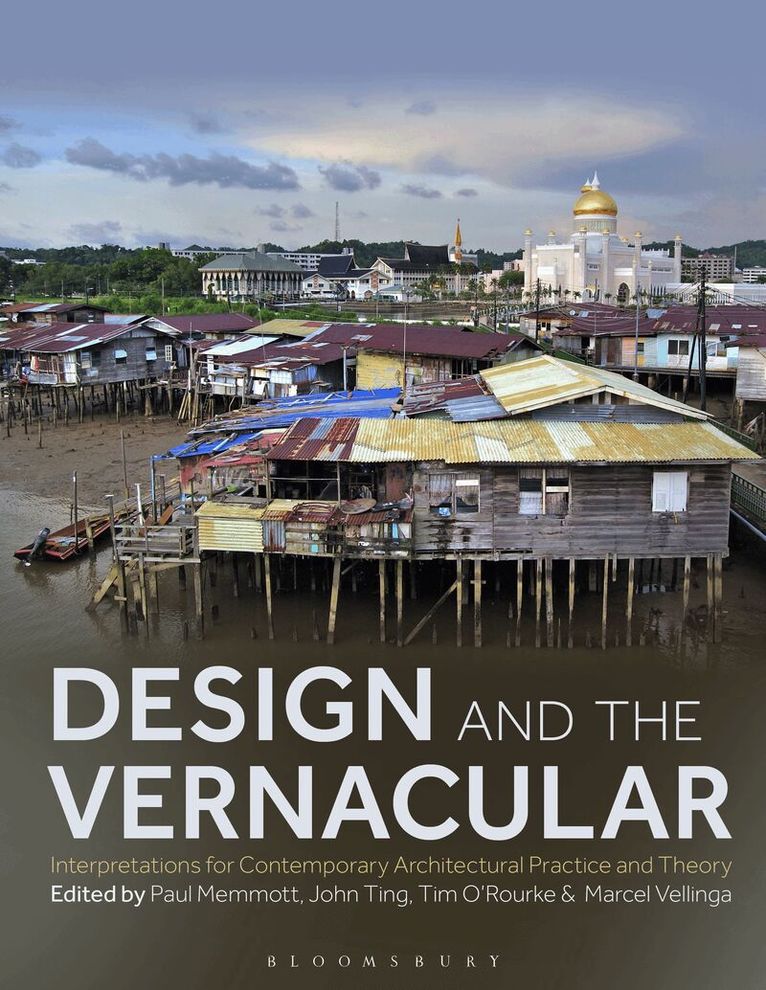
Design and the Vernacular explores the intersection between vernacular architecture, local cultures, and modernity and globalization, focussing on the vast and diverse global region of Australasia and Oceania. The relevance and role of vernacular architecture in contemporary urban planning and architectural design are examined in the context of rapid political, economic, technological, social and environmental changes, including globalization, exchanges of people, finance, material culture, and digital technologies.Sixteen chapters by architects designers and theorists, including Indigenous writers, explore key questions about the agency of vernacular architecture in shaping contemporary building and design practice. These questions include: How have Indigenous building traditions shaped modern building practices? What can the study of vernacular architecture contribute to debates about sustainable development? And how has vernacular architecture been used to argue for postcolonial modernisation and nation-building and what has been the effect on heritage and conservation?Such questions provide valuable case studies and lessons for architecture in other global regions -- and challenge assumptions about vernacular architecture being anachronistic and static, instead demonstrating how it can shape contemporary architecture, nation building and cultural identities.
Design and the Vernacular
Interpretations for Contemporary Architectural Practice and Theory
Häftad, Engelska, 2025
347 kr
Skickas inom 7-10 vardagar
How have Indigenous building traditions shaped modern building practices? What can the study of vernacular architecture contribute to debates about sustainable development? How has vernacular architecture been used to argue for postcolonial modernisation – and what has been the effect on heritage and conservation?Design and the Vernacular explores how the vernacular architecture of Australasia and Oceania intersects with modernity and globalization – challenging assumptions about vernacular architecture being anachronistic and static, and instead demonstrating how it can shape contemporary architecture, nation building and cultural identities.Sixteen chapters by architects, designers, and theorists, including Indigenous writers, explore different facets of vernacular architecture amid the context of rapid political, economic, technological, social and environmental changes. The result offers valuable lessons and case studies for architects across the globe, and for anyone interested in how the vernacular can inform contemporary urban planning and architectural design.
33 499 kr
Tillfälligt slut
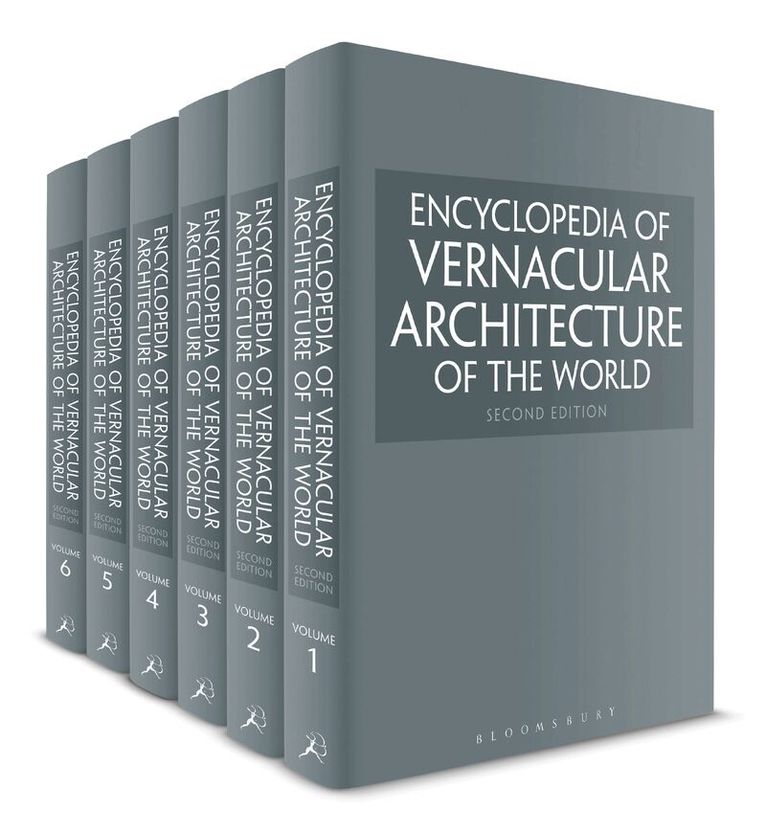
The Encyclopedia of Vernacular Architecture of the World presents, in six volumes, 2 million words, and 3,000 illustrated entries, the definitive resource for the study of the world’s vernacular and traditional building cultures. This is a fully revised and expanded new edition of Paul Oliver’s classic 1997 work - moving from three volumes to six, updated throughout, and with over 30% new material. A major development in the field of vernacular architecture studies, this new edition reflects the considerable growth in research in the field since the first edition.The first two volumes focus on the theories, principals and philosophy that underpin the study of vernacular architecture, capturing the most up-to-date theoretical approaches and exploring general architectural and cultural themes such as symbolism and decoration, materials and technologies, environment and sustainability, as well as major new subject areas including 'Sustainable development' and 'Consumption'. The following four volumes then cover in detail the buildings of over 1,000 different cultures across the globe – arranged geographically with each volume representing one of four major global regions (Asia, Australia and Oceania; Europe and Eurasia; the Americas and Caribbean; Africa and the Middle East). Entries detail social, cultural, and environmental factors alongside the architectural works of each culture.