Matthias Lamping - Böcker
Visar alla böcker från författaren Matthias Lamping. Handla med fri frakt och snabb leverans.
10 produkter
10 produkter
1 188 kr
Skickas inom 10-15 vardagar
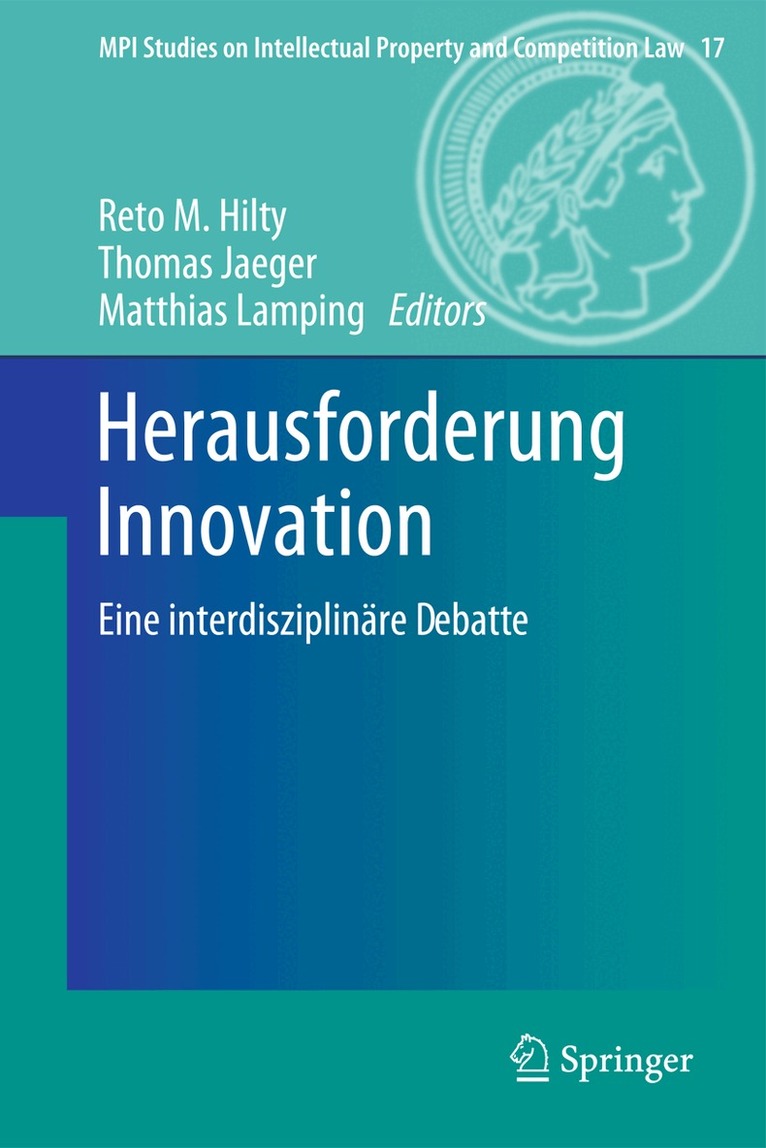
Warum und unter welchen Voraussetzungen soll die Rechtsordnung technischen und kreativen Leistungen Schutz gewähren? Wie wirken sich rechtliche Schutzinstrumente auf den Zugang zu Wissen als grundlegender Triebkraft von Innovation, Kreativität und technischem Fortschritt aus? Die Antworten auf diese Fragen nach dem Zweck und den Wirkungen des Schutzes von Immaterialgütern überspannen zunächst sämtliche Disziplinen der Rechtswissenschaft, denn nur im Gesamtgefüge der Rechtsordnung lässt sich die Funktion des Immaterialgüterrechts als Spezial- und Rahmengebiet der marktwirtschaftlichen Ordnung zuverlässig erfassen. Das Streben nach möglichst hoher Zuverlässigkeit der hier gesuchten Antworten fordert die Rechtswissenschaft aber vor allem auch zum Diskurs mit anderen Disziplinen auf bzw. heraus, etwa mit den Wirtschafts- und den Sozialwissenschaften. Nur im Dialog der Disziplinen lässt sich die gesellschaftspolitische Funktion des Immaterialgüterrechts ermitteln. Der vorliegende Band wirft aktuelle Schlaglichter auf einzelne Aspekte dieser diskursiven, interdisziplinären Suche nach Antworten.
Optimierung der Festphasenpeptidsynthese und deren direkte Anwendung bei der Synthese von Filaggrin-Peptiden
Häftad, Tyska, 2012
726 kr
Skickas inom 3-6 vardagar
2 897 kr
Skickas inom 10-15 vardagar
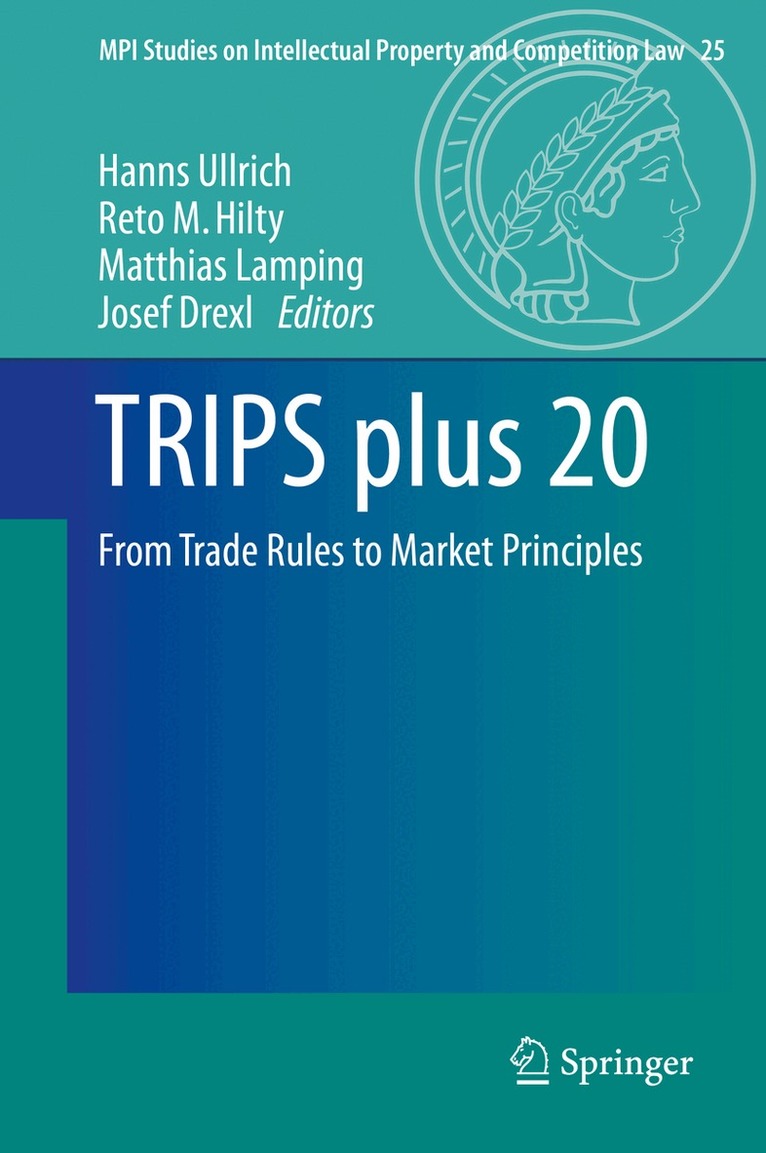
This book examines the impact and shortcomings of the TRIPS Agreement, which was signed in Marrakesh on 15 April 1994. Over the last 20 years, the framework conditions have changed fundamentally. New technologies have emerged, markets have expanded beyond national borders, some developing states have become global players, the terms of international competition have changed, and the intellectual property system faces increasing friction with public policies. The contributions to this book inquireinto whether the TRIPS Agreement should still be seen only as part of aninternational trade regulation, or whether it needs to be understood – or even reconceptualized– as a framework regulation for the international protection of intellectualproperty. The purpose, therefore, is not to define the terms of an outright revision of theTRIPS Agreement but rather to discuss the framework conditions for an interpretative evolutionthat could makethe Agreement better suited to the expectations and needs of today’s globaleconomy.
2 897 kr
Skickas inom 10-15 vardagar
This book examines the impact and shortcomings of the TRIPS Agreement, which was signed in Marrakesh on 15 April 1994. Over the last 20 years, the framework conditions have changed fundamentally. New technologies have emerged, markets have expanded beyond national borders, some developing states have become global players, the terms of international competition have changed, and the intellectual property system faces increasing friction with public policies. The contributions to this book inquireinto whether the TRIPS Agreement should still be seen only as part of aninternational trade regulation, or whether it needs to be understood – or even reconceptualized– as a framework regulation for the international protection of intellectualproperty. The purpose, therefore, is not to define the terms of an outright revision of theTRIPS Agreement but rather to discuss the framework conditions for an interpretative evolutionthat could makethe Agreement better suited to the expectations and needs of today’s globaleconomy.
1 355 kr
Skickas inom 10-15 vardagar
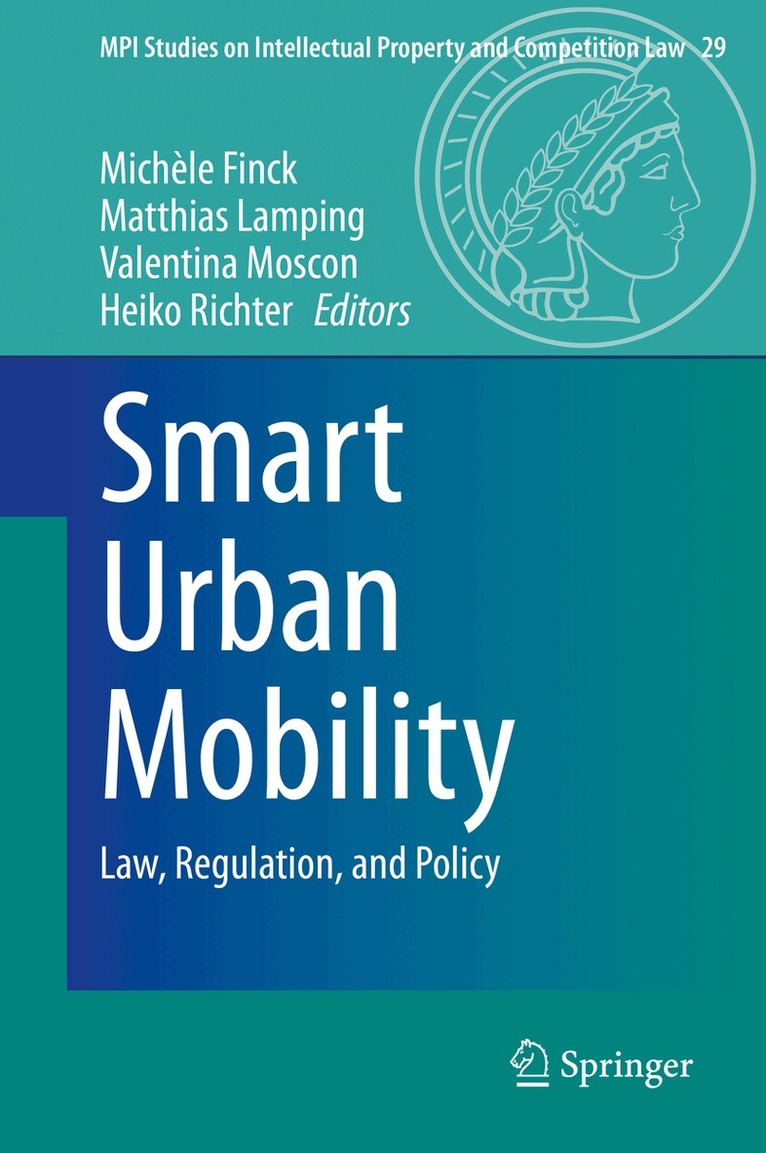
This book adds a critical perspective to the legal dialogue on the regulation of ‘smart urban mobility’. Mobility is one of the most visible sub-domains of the ‘smart city’, which has become shorthand for technological advances that influence how cities are structured, public services are fashioned, and citizens coexist. In the urban context, mobility has come under pressure due to a variety of different forces, such as the implementation of new business models (e.g. car and bicycle sharing), the proliferation of alternative methods of transportation (e.g. electric scooters), the emergence of new market players and stakeholders (e.g. internet and information technology companies), and advancements in computer science (in particular due to artificial intelligence). At the same time, demographic changes and the climate crisis increase innovation pressure. In this context law is a seminal factor that both shapes and is shaped by socio-economic andtechnological change. This book puts a spotlight on recent developments in smart urban mobility from a legal, regulatory, and policy perspective. It considers the implications for the public sector, businesses, and citizens in relation to various areas of public and private law in the European Union, including competition law, intellectual property law, contract law, data protection law, environmental law, public procurement law, and legal philosophy.Chapter 'Location Data as Contractual Counter-Performance: A Consumer Perspective on Recent EU Legislation' of this book is available open access under a CC BY 4.0 license at link.springer.com.
1 355 kr
Skickas inom 10-15 vardagar
This book adds a critical perspective to the legal dialogue on the regulation of ‘smart urban mobility’. Mobility is one of the most visible sub-domains of the ‘smart city’, which has become shorthand for technological advances that influence how cities are structured, public services are fashioned, and citizens coexist. In the urban context, mobility has come under pressure due to a variety of different forces, such as the implementation of new business models (e.g. car and bicycle sharing), the proliferation of alternative methods of transportation (e.g. electric scooters), the emergence of new market players and stakeholders (e.g. internet and information technology companies), and advancements in computer science (in particular due to artificial intelligence). At the same time, demographic changes and the climate crisis increase innovation pressure. In this context law is a seminal factor that both shapes and is shaped by socio-economic andtechnological change. This book puts a spotlight on recent developments in smart urban mobility from a legal, regulatory, and policy perspective. It considers the implications for the public sector, businesses, and citizens in relation to various areas of public and private law in the European Union, including competition law, intellectual property law, contract law, data protection law, environmental law, public procurement law, and legal philosophy.Chapter 'Location Data as Contractual Counter-Performance: A Consumer Perspective on Recent EU Legislation' of this book is available open access under a CC BY 4.0 license at link.springer.com.
Critical Mind
Hanns Ullrich’s Footprint in Internal Market Law, Antitrust and Intellectual Property
Inbunden, Engelska, 2023
2 704 kr
Skickas inom 10-15 vardagar
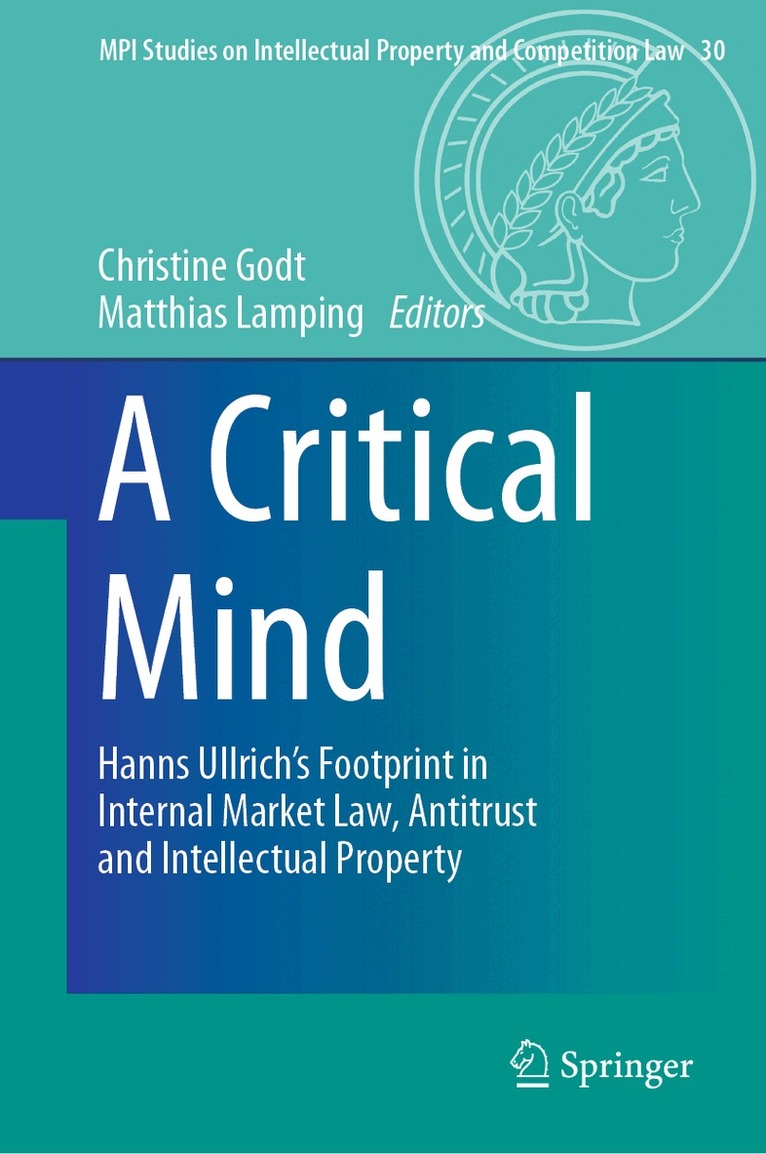
This book traces the academic footprint of Hanns Ullrich. Thirty contributions revolve around five central topics of his oeuvre: the European legal order, competition law, intellectual property, the regulation of new technologies, and the global market order. Acknowledging him as a trailblazer, the book aims to capture how deeply Hanns Ullrich has influenced contemporaries and subsequent generations of scholars. The contributors re-iterate the path-breaking patterns of his teachings, such as his contemplation of intellectual property as embedded in competition, the necessity of balancing private and public interests in intellectual property law, the policies of market integration, and the peculiar relationship of technological advancement and protectionism.
A Critical Mind : Hanns Ullrich's Footprint in Internal Market Law, Antitrust and Intellectual Property
Engelska, 2023
584 kr
Skickas inom 5-8 vardagar
Critical Mind
Hanns Ullrich’s Footprint in Internal Market Law, Antitrust and Intellectual Property
Häftad, Engelska, 2024
2 704 kr
Skickas inom 10-15 vardagar
This book traces the academic footprint of Hanns Ullrich. Thirty contributions revolve around five central topics of his oeuvre: the European legal order, competition law, intellectual property, the regulation of new technologies, and the global market order. Acknowledging him as a trailblazer, the book aims to capture how deeply Hanns Ullrich has influenced contemporaries and subsequent generations of scholars. The contributors re-iterate the path-breaking patterns of his teachings, such as his contemplation of intellectual property as embedded in competition, the necessity of balancing private and public interests in intellectual property law, the policies of market integration, and the peculiar relationship of technological advancement and protectionism.
1 506 kr
Skickas inom 3-6 vardagar