Policy Division – författare
Visar alla böcker från författaren Policy Division. Handla med fri frakt och snabb leverans.
19 produkter
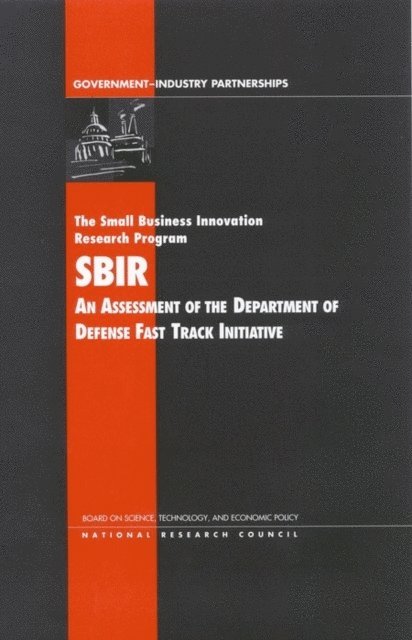
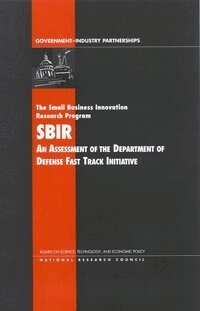
Small Business Innovation Research Program
An Assessment of the Department of Defense Fast Track Initiative
Av and Economic Policy Board on Science, Technology, Policy Division m. fl.
E-bok, 2000
1159 kr
Lägg i varukorg
In 1992, Congress for the first time explicitly directed the federal agencies making SBIR grants to use commercial potential as a criterion for granting SBIR awards. In response, the Department of Defense developed the SBIR Fast Track initiative, which provides expedited decision-making for SBIR …
Overcoming Barriers to Collaborative Research
Report of a Workshop
Av Government-University-Industry Research Roundtable, Policy Division m. fl.
E-bok, 1999
428 kr
Lägg i varukorg
This report summarizes discussions and insights from the workshop on Overcoming Barriers to Collaborative Research held March 23-24, 1998, in Irvine, California. The workshop was organized by the Government-University-Industry Research Roundtable of the National Academy of Sciences, National …
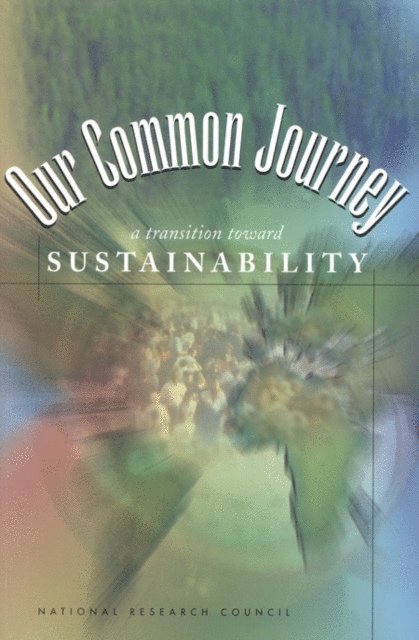
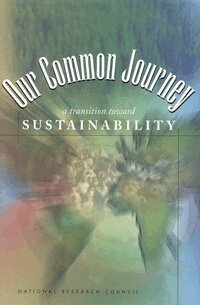
Our Common Journey
A Transition Toward Sustainability
Av Board on Sustainable Development, Policy Division m. fl.
E-bok, 1999
953 kr
Lägg i varukorg
World human population is expected to reach upwards of 9 billion by 2050 and then level off over the next half-century. How can the transition to a stabilizing population also be a transition to sustainability? How can science and technology help to ensure that human needs are met while the …
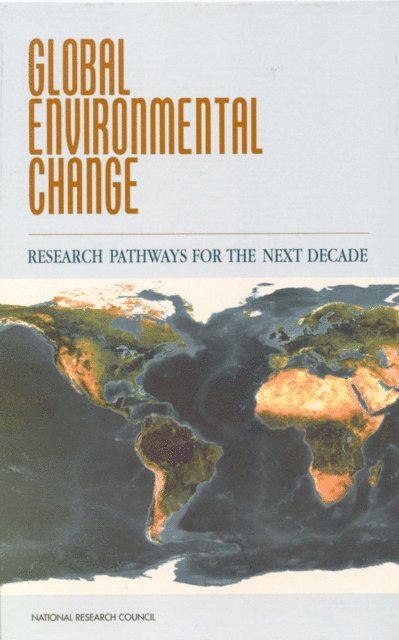
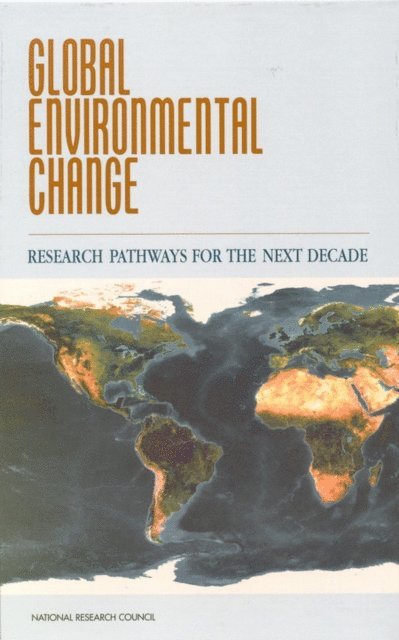
Global Environmental Change
Research Pathways for the Next Decade
Av Committee on Global Change Research, Board on Sustainable Development m. fl.
E-bok, 1999
1212 kr
Lägg i varukorg
How can we understand and rise to the environmental challenges of global change? One clear answer is to understand the science of global change, not solely in terms of the processes that control changes in climate and the composition of the atmosphere, but in how ecosystems and human society …
Linking Science and Technology to Society's Environmental Goals
Av Policy Division, Policy and Global Affairs m. fl.
E-bok, 1996
1017 kr
Lägg i varukorg
Where should the United States focus its long-term efforts to improve the nation''s environment? What are the nation''s most important environmental issues? What role should science and technology play in addressing these issues? Linking Science and Technology to Society''s Environmental Goals …
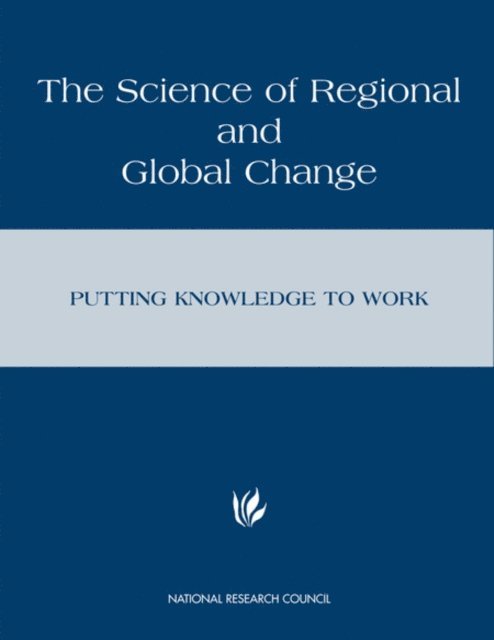
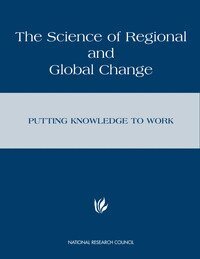
Science of Regional and Global Change
Putting Knowledge to Work
Av Committee on Global Change Research, Policy Division m. fl.
E-bok, 2000
658 kr
Lägg i varukorg
This report is intended to promote a dialogue between the scientific community and the government officials who will lead our nation in the coming years on global change research. The first section of the report is a brief description of the challenges and proposed responses needed from the highest …
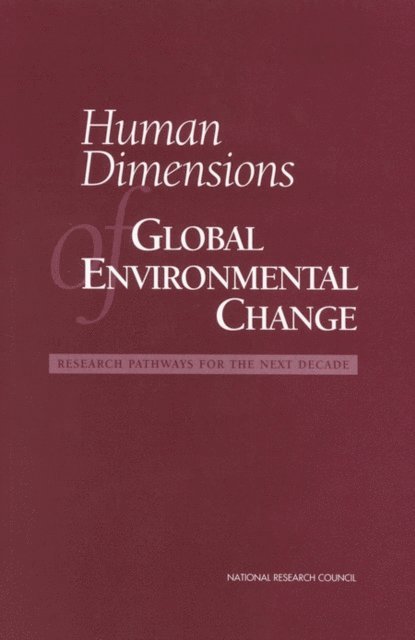
Human Dimensions of Global Environmental Change
Research Pathways for the Next Decade
Av Committee on the Human Dimensions of Global Change and Committee on Global Change Research, Board on Environmental Change and Society m. fl.
E-bok, 1999
416 kr
Lägg i varukorg
This publication is extracted from a much larger report, Global Environmental Change: Research Pathways for the Next Decade , which addresses the full range of the scientific issues concerning global environmental change and offers guidance to the scientific effort on these issues in the United …
Small Business Innovation Research Program
An Assessment of the Department of Defense Fast Track Initiative
Av and Economic Policy Board on Science, Technology, Policy Division m. fl.
E-bok, 2000
1008 kr
Lägg i varukorg
In 1992, Congress for the first time explicitly directed the federal agencies making SBIR grants to use commercial potential as a criterion for granting SBIR awards. In response, the Department of Defense developed the SBIR Fast Track initiative, which provides expedited decision-making for SBIR …
Overcoming Barriers to Collaborative Research
Report of a Workshop
Av Government-University-Industry Research Roundtable, Policy Division m. fl.
E-bok, 1999
295 kr
Lägg i varukorg
This report summarizes discussions and insights from the workshop on Overcoming Barriers to Collaborative Research held March 23-24, 1998, in Irvine, California. The workshop was organized by the Government-University-Industry Research Roundtable of the National Academy of Sciences, National …
Our Common Journey
A Transition Toward Sustainability
Av Board on Sustainable Development, Policy Division m. fl.
E-bok, 1999
667 kr
Lägg i varukorg
World human population is expected to reach upwards of 9 billion by 2050 and then level off over the next half-century. How can the transition to a stabilizing population also be a transition to sustainability? How can science and technology help to ensure that human needs are met while the …
Global Environmental Change
Research Pathways for the Next Decade
Av Committee on Global Change Research, Board on Sustainable Development m. fl.
E-bok, 1999
1195 kr
Lägg i varukorg
How can we understand and rise to the environmental challenges of global change? One clear answer is to understand the science of global change, not solely in terms of the processes that control changes in climate and the composition of the atmosphere, but in how ecosystems and human society …
Linking Science and Technology to Society's Environmental Goals
Av Policy Division, Policy and Global Affairs m. fl.
E-bok, 1996
996 kr
Lägg i varukorg
Where should the United States focus its long-term efforts to improve the nation''s environment? What are the nation''s most important environmental issues? What role should science and technology play in addressing these issues? Linking Science and Technology to Society''s Environmental Goals …
Science of Regional and Global Change
Putting Knowledge to Work
Av Committee on Global Change Research, Policy Division m. fl.
E-bok, 2000
468 kr
Lägg i varukorg
This report is intended to promote a dialogue between the scientific community and the government officials who will lead our nation in the coming years on global change research. The first section of the report is a brief description of the challenges and proposed responses needed from the highest …
Human Dimensions of Global Environmental Change
Research Pathways for the Next Decade
Av Committee on the Human Dimensions of Global Change and Committee on Global Change Research, Board on Environmental Change and Society m. fl.
E-bok, 1999
286 kr
Lägg i varukorg
This publication is extracted from a much larger report, Global Environmental Change: Research Pathways for the Next Decade , which addresses the full range of the scientific issues concerning global environmental change and offers guidance to the scientific effort on these issues in the United …
Linking Science and Technology to Society's Environmental Goals
Av National Research Council, Policy and Global Affairs m. fl.
Inbunden, 1996
1633 kr
Tillfälligt slut
Where should the United States focus its long-term efforts to improve the nation's environment? What are the nation's most important environmental issues? What role should science and technology play in addressing these issues? Linking Science and Technology to Society's Environmental Goals …
Human Dimensions of Global Environmental Change
Research Pathways for the Next Decade
Av National Research Council, Division of Behavioral and Social Sciences and Education m. fl.
Häftad, 1999
1205 kr
Tillfälligt slut
This publication is extracted from a much larger report, Global Environmental Change: Research Pathways for the Next Decade, which addresses the full range of the scientific issues concerning global environmental change and offers guidance to the scientific effort on these issues in the United …
Small Business Innovation Research Program
An Assessment of the Department of Defense Fast Track Initiative
Av National Research Council, Policy Division m. fl.
Inbunden, 2000
1732 kr
Tillfälligt slut
In 1992, Congress for the first time explicitly directed the federal agencies making SBIR grants to use commercial potential as a criterion for granting SBIR awards. In response, the Department of Defense developed the SBIR Fast Track initiative, which provides expedited decision-making for SBIR …
Science of Regional and Global Change
Putting Knowledge to Work
Av National Research Council, Policy and Global Affairs m. fl.
Häftad, 2000
679 kr
Tillfälligt slut
This report is intended to promote a dialogue between the scientific community and the government officials who will lead our nation in the coming years on global change research. The first section of the report is a brief description of the challenges and proposed responses needed from the highest …
Our Common Journey
A Transition Toward Sustainability
Av National Research Council, Policy and Global Affairs m. fl.
Häftad, 1999
1538 kr
Tillfälligt slut
World human population is expected to reach upwards of 9 billion by 2050 and then level off over the next half-century. How can the transition to a stabilizing population also be a transition to sustainability? How can science and technology help to ensure that human needs are met while the …