Rana Pratap Singh – författare
Visar alla böcker från författaren Rana Pratap Singh. Handla med fri frakt och snabb leverans.
11 produkter
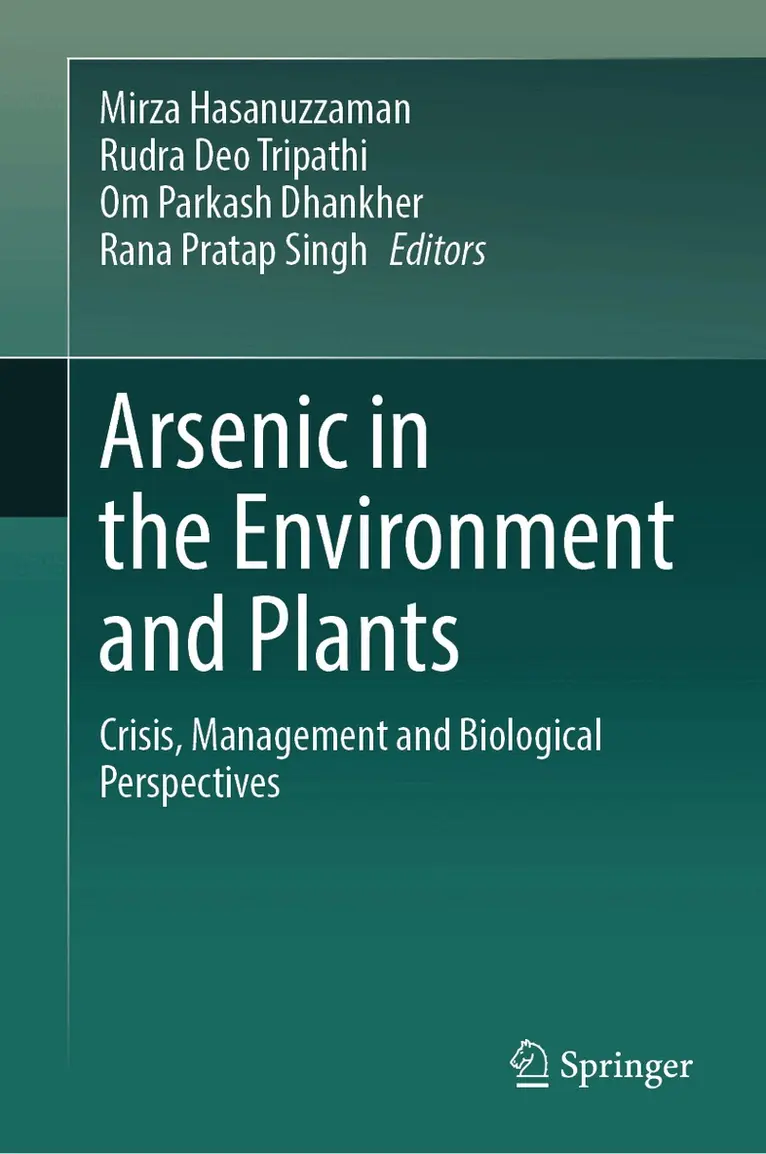
Arsenic in the Environment and Plants
Crisis, Management and Biological Perspectives
Av Mirza Hasanuzzaman, Rudra Deo Tripathi m. fl.
Inbunden, 2027
2482 kr
Kommande
This book compiles the latest research and insights on arsenic's impact on the environment, emphasizing the urgency and scale of this issue. The complexity of As contamination demands a multidisciplinary approach. This book brings together experts from environmental science, biology, public health, …
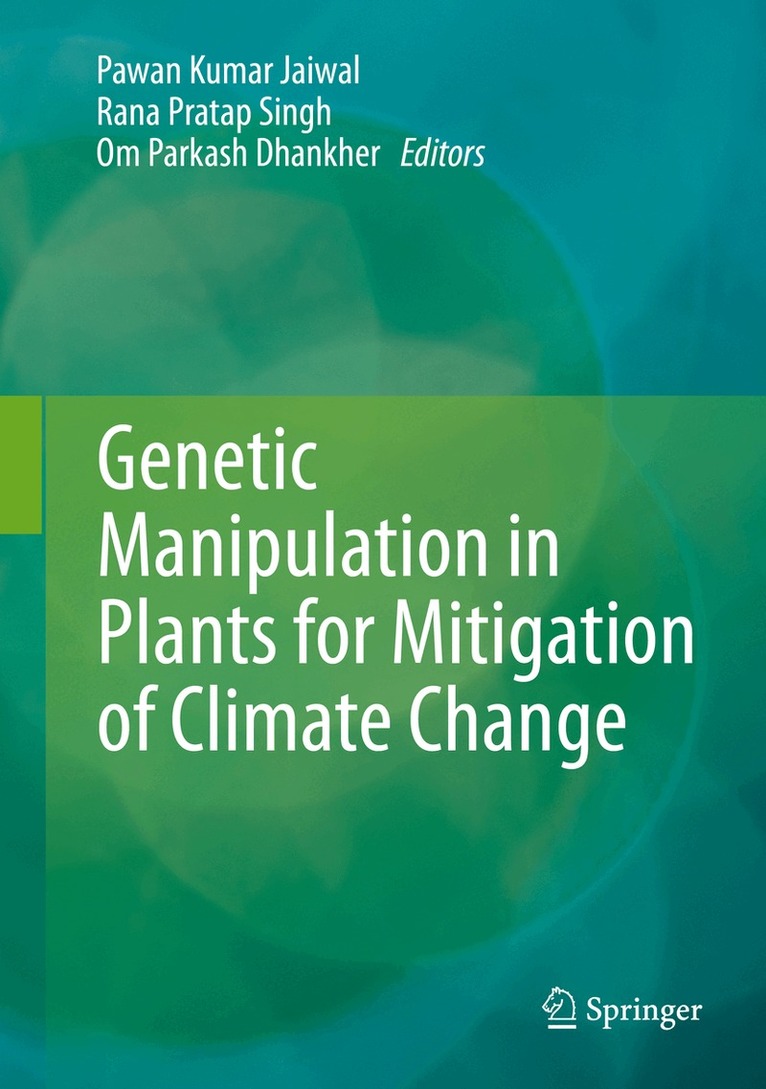
Genetic Manipulation in Plants for Mitigation of Climate Change
Av Pawan Kumar Jaiwal, Rana Pratap Singh m. fl.
Inbunden, 2016
1641 kr
Lägg i varukorg
This book presents a detailed overview and critical evaluation of the state of the art and latest approaches in genetic manipulation studies on plants to mitigate the impact of climate change on growth and productivity. Each chapter has been written by experts in plant-stress biology and highlights …
Genetic Manipulation in Plants for Mitigation of Climate Change
Av Om Parkash Dhankher, Rana Pratap Singh m. fl.
E-bok, 2016
2111 kr
Lägg i varukorg
This book presents a detailed overview and critical evaluation of the state of the art and latest approaches in genetic manipulation studies on plants to mitigate the impact of climate change on growth and productivity. Each chapter has been written by experts in plant-stress biology and highlights …
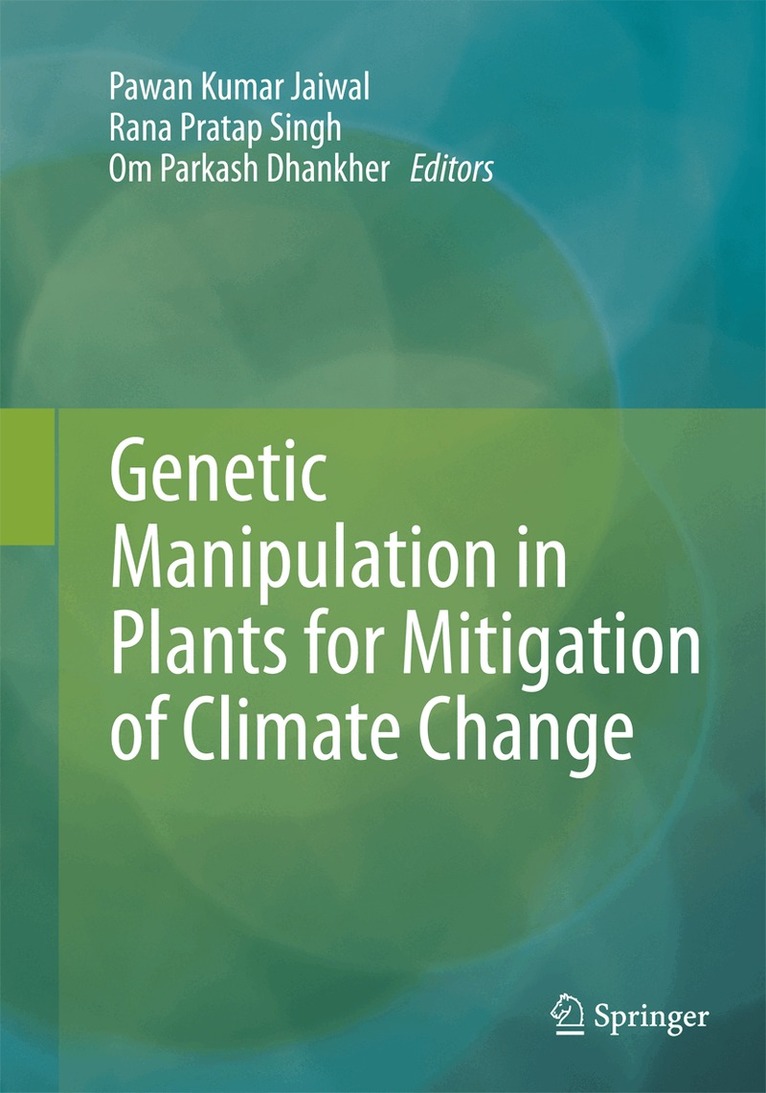
Genetic Manipulation in Plants for Mitigation of Climate Change
Av Pawan Kumar Jaiwal, Rana Pratap Singh m. fl.
Häftad, 2018
1641 kr
Lägg i varukorg
This book presents a detailed overview and critical evaluation of the state of the art and latest approaches in genetic manipulation studies on plants to mitigate the impact of climate change on growth and productivity. Each chapter has been written by experts in plant-stress biology and highlights …
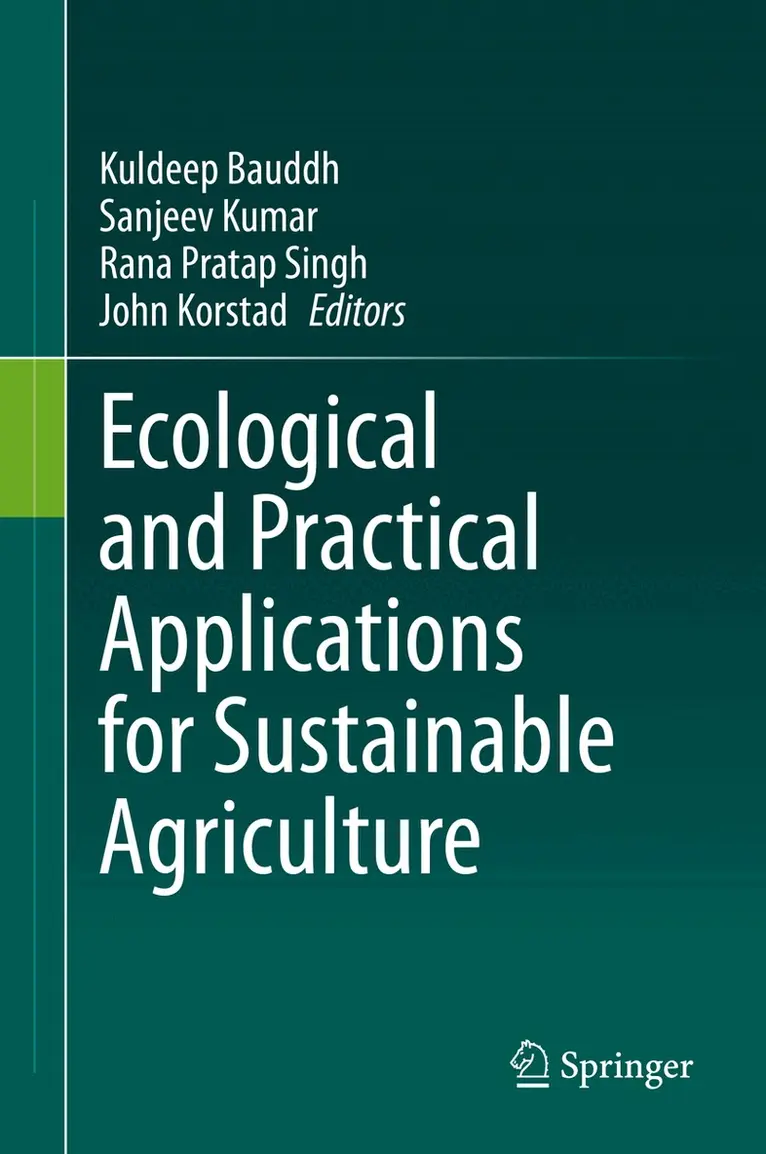
Ecological and Practical Applications for Sustainable Agriculture
Av Kuldeep Bauddh, Sanjeev Kumar m. fl.
Inbunden, 2020
2730 kr
Lägg i varukorg
Rampant industrialization, urbanization, and population growth have resulted in increased global environmental contamination. The productivity of agricultural soil is drastically deteriorated and requires a high dose of fertilizers to cultivate crops. To ensure food security, farmers are compelled …
Ecological and Practical Applications for Sustainable Agriculture
Av John Korstad, Rana Pratap Singh m. fl.
E-bok, 2020
3577 kr
Lägg i varukorg
Rampant industrialization, urbanization, and population growth have resulted in increased global environmental contamination. The productivity of agricultural soil is drastically deteriorated and requires a high dose of fertilizers to cultivate crops. To ensure food security, farmers are compelled …
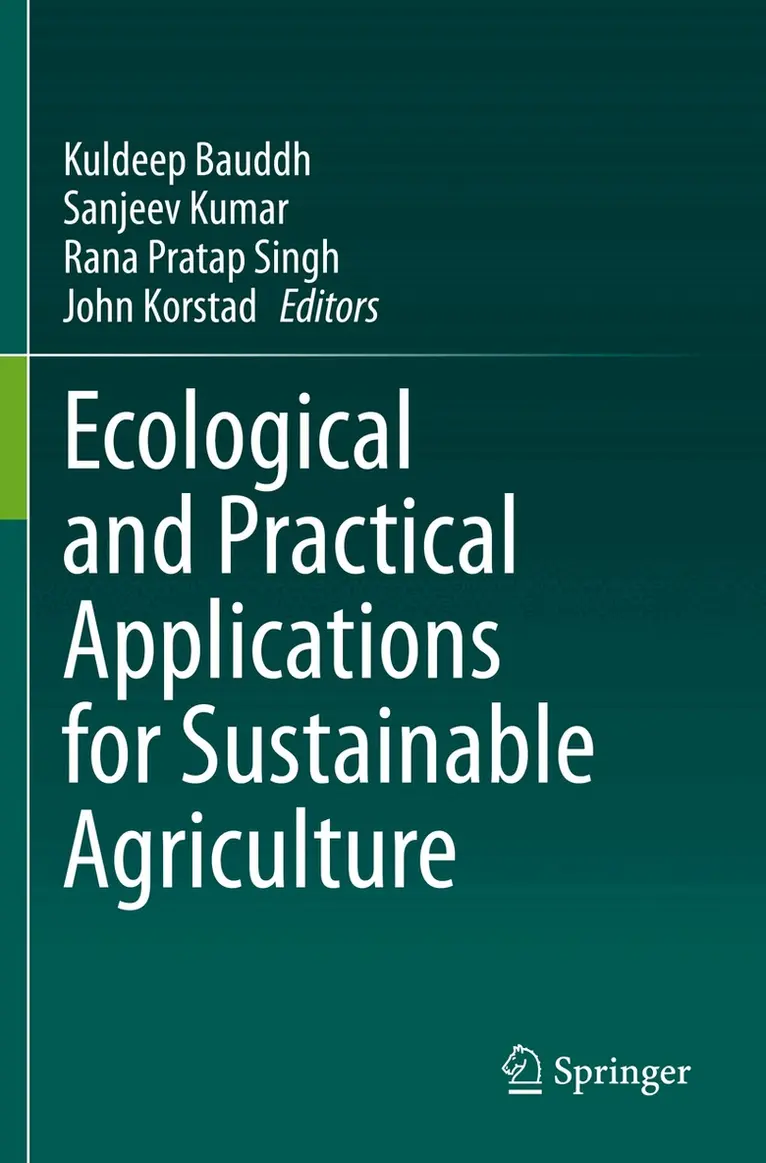
Ecological and Practical Applications for Sustainable Agriculture
Av Kuldeep Bauddh, Sanjeev Kumar m. fl.
Häftad, 2021
2730 kr
Lägg i varukorg
Rampant industrialization, urbanization, and population growth have resulted in increased global environmental contamination. The productivity of agricultural soil is drastically deteriorated and requires a high dose of fertilizers to cultivate crops. To ensure food security, farmers are compelled …
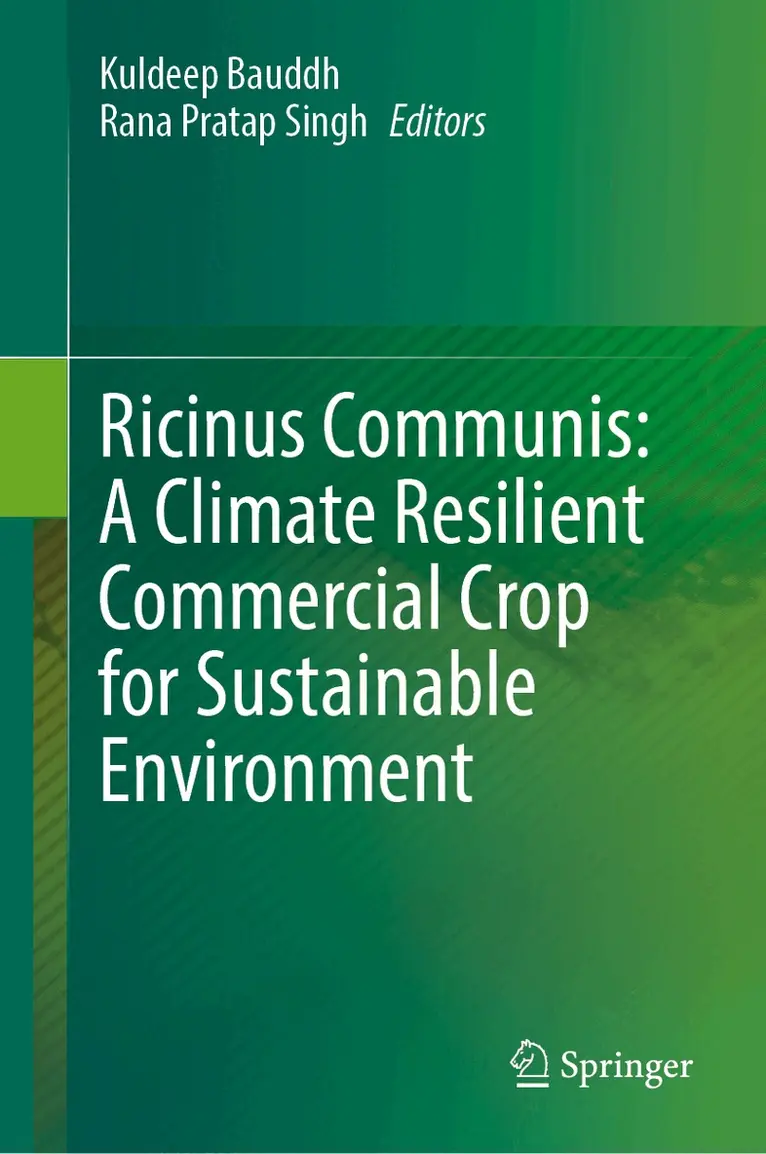
Ricinus Communis: A Climate Resilient Commercial Crop for Sustainable Environment
Av Kuldeep Bauddh, Rana Pratap Singh
Inbunden, 2025
2392 kr
Lägg i varukorg
Due to the diverse properties of Ricinus communis (castor), this book provides a comprehensive account of castor as a ‘climate resilient and value-added crop.’ It explores the morphological variations, various cultivation techniques, genotypic differences, suitable soil types, and the crop’s yield. …
Ricinus Communis: A Climate Resilient Commercial Crop for Sustainable Environment
Av Rana Pratap Singh, Kuldeep Bauddh
E-bok, 2025
3251 kr
Lägg i varukorg
Due to the diverse properties of Ricinus communis (castor), this book provides a comprehensive account of castor as a ‘climate resilient and value-added crop.’ It explores the morphological variations, various cultivation techniques, genotypic differences, suitable soil types, and the crop’s yield. …
Ricinus Communis: A Climate Resilient Commercial Crop for Sustainable Environment
Av Kuldeep Bauddh, Rana Pratap Singh
Häftad, 2026
2403 kr
Lägg i varukorg
Due to the diverse properties of Ricinus communis (castor), this book provides a comprehensive account of castor as a ‘climate resilient and value-added crop.’ It explores the morphological variations, various cultivation techniques, genotypic differences, suitable soil types, and the crop’s yield. …