Robert M. Hauser - Böcker
Visar alla böcker från författaren Robert M. Hauser. Handla med fri frakt och snabb leverans.
8 produkter
8 produkter
518 kr
Tillfälligt slut
The Committee and the Board on Children, Youth, and Families convened in September a workshop to discuss ways to foster greater collaboration and sharing of information among principal investigators of several longitudinal surveys of children. Among many topics discussed were issues of coverage and balance of content, sampling design and weighting, measurement and analysis, field operations, legitimation and retention of cases, data disclosure and dissemination, and resources available for longitudinal studies. The workshop was sponsored by the National Institute on Justice.
605 kr
Tillfälligt slut
Everyone is in favor of "high education standards" and "fair testing" of student achievement, but there is little agreement as to what these terms actually mean. High Stakes looks at how testing affects critical decisions for American students. As more and more tests are introduced into the country's schools, it becomes increasingly important to know how those tests are used--and misused--in assessing children's performance and achievements. High Stakes focuses on how testing is used in schools to make decisions about tracking and placement, promotion and retention, and awarding or withholding high school diplomas. This book sorts out the controversies that emerge when a test score can open or close gates on a student's educational pathway. The expert panel: Proposes how to judge the appropriateness of a test. Explores how to make tests reliable, valid, and fair. Puts forward strategies and practices to promote proper test use. Recommends how decisionmakers in education should--and should not--use test results.The book discusses common misuses of testing, their political and social context, what happens when test issues are taken to court, special student populations, social promotion, and more. High Stakes will be of interest to anyone concerned about the long-term implications for individual students of picking up that Number 2 pencil: policymakers, education administrators, test designers, teachers, and parents.
519 kr
Tillfälligt slut
In his 1997 State of the Union address, President Clinton announced a federal initiative to develop tests of 4th-grade reading and 8th-grade mathematics that would provide reliable information about student performance at two key points in their educational careers. According to the U.S. Department of Education, the Voluntary National Tests (VNT) would create a catalyst for continued school improvement by focusing parental and community-wide attention on achievement and would become new tools to hold school systems accountable for their students' performance. The National Assessment Governing Board (NAGB) has responsibility for development of the VNT. Congress recognized that a testing program of the scale and magnitude of the VNT initiative raises many important technical questions and requires quality control throughout development and implementation. In P.L.105-78, Congress called on the National Research Council (NRC) to evaluate a series of technical issues pertaining to the validity of test items, the validity of proposed links between the VNT and the National Assessment of Educational Progress (NAEP), plans for the accommodation and inclusion of students with disabilities and English-language learners, plans for reporting test information to parents and the public, and potential uses of the tests. This report covers phase 1 of the evaluation (November 1997-July 1998) and focuses on three principal issues: test specifications and frameworks; preliminary evidence of the quality of test items; and plans for the pilot and field test studies, for inclusion and accommodation, and for reporting VNT results.
665 kr
Tillfälligt slut
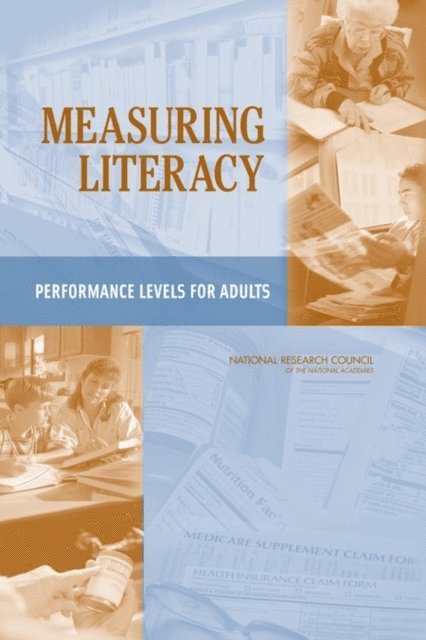
The National Assessment of Adult Literacy (NAAL) is a household survey conducted periodically by the Department of Education that evaluates the literacy skills of a sample of adults in the United Stages ages 16 and older. NAAL results are used to characterize adultsa (TM) literacy skills and to inform policy and programmatic decisions. The Committee on Performance Levels for Adult Literacy was convened at the Departmenta (TM)s request for assistance in determining a means for booking assessment results that would be useful and understandable for NAALa (TM)S many varied audiences. Through a process detailed in the book, the committee determined that five performance level categories should be used to characterize adultsa (TM) literacy skills: nonliterate in English, below basic literacy, basic literacy, intermediate literacy, and advanced literacy. This book documents the process the committee used to determine these performance categories, estimates the percentages of adults whose literacy skills fall into each category, recommends ways to communicate about adultsa (TM) literacy skills based on NAAL, and makes suggestions for ways to improve future assessments of adult literacy.
Conducting Biosocial Surveys
Collecting, Storing, Accessing, and Protecting Biospecimens and Biodata
Häftad, Engelska, 2010
376 kr
Tillfälligt slut
Recent years have seen a growing tendency for social scientists to collect biological specimens such as blood, urine, and saliva as part of large-scale household surveys. By combining biological and social data, scientists are opening up new fields of inquiry and are able for the first time to address many new questions and connections. But including biospecimens in social surveys also adds a great deal of complexity and cost to the investigator's task. Along with the usual concerns about informed consent, privacy issues, and the best ways to collect, store, and share data, researchers now face a variety of issues that are much less familiar or that appear in a new light. In particular, collecting and storing human biological materials for use in social science research raises additional legal, ethical, and social issues, as well as practical issues related to the storage, retrieval, and sharing of data.For example, acquiring biological data and linking them to social science databases requires a more complex informed consent process, the development of a biorepository, the establishment of data sharing policies, and the creation of a process for deciding how the data are going to be shared and used for secondary analysis--all of which add cost to a survey and require additional time and attention from the investigators. These issues also are likely to be unfamiliar to social scientists who have not worked with biological specimens in the past. Adding to the attraction of collecting biospecimens but also to the complexity of sharing and protecting the data is the fact that this is an era of incredibly rapid gains in our understanding of complex biological and physiological phenomena. Thus the tradeoffs between the risks and opportunities of expanding access to research data are constantly changing. Conducting Biosocial Surveys offers findings and recommendations concerning the best approaches to the collection, storage, use, and sharing of biospecimens gathered in social science surveys and the digital representations of biological data derived therefrom.It is aimed at researchers interested in carrying out such surveys, their institutions, and their funding agencies.
High School Dropout, Graduation, and Completion Rates
Better Data, Better Measures, Better Decisions
Häftad, Engelska, 2011
514 kr
Tillfälligt slut
High school graduation and dropout rates have long been used as indicators of educational system productivity and effectiveness and of social and economic well being. While determining these rates may seem like a straightforward task, their calculation is in fact quite complicated. How does one count a student who leaves a regular high school but later completes a GED? How does one count a student who spends most of his/her high school years at one school and then transfers to another? If the student graduates, which school should receive credit? If the student drops out, which school should take responsibility? High School Dropout, Graduation, and Completion Rates addresses these issues and to examine (1) the strengths, limitations, accuracy, and utility of the available dropout and completion measures; (2) the state of the art with respect to longitudinal data systems; and (3) ways that dropout and completion rates can be used to improve policy and practice.
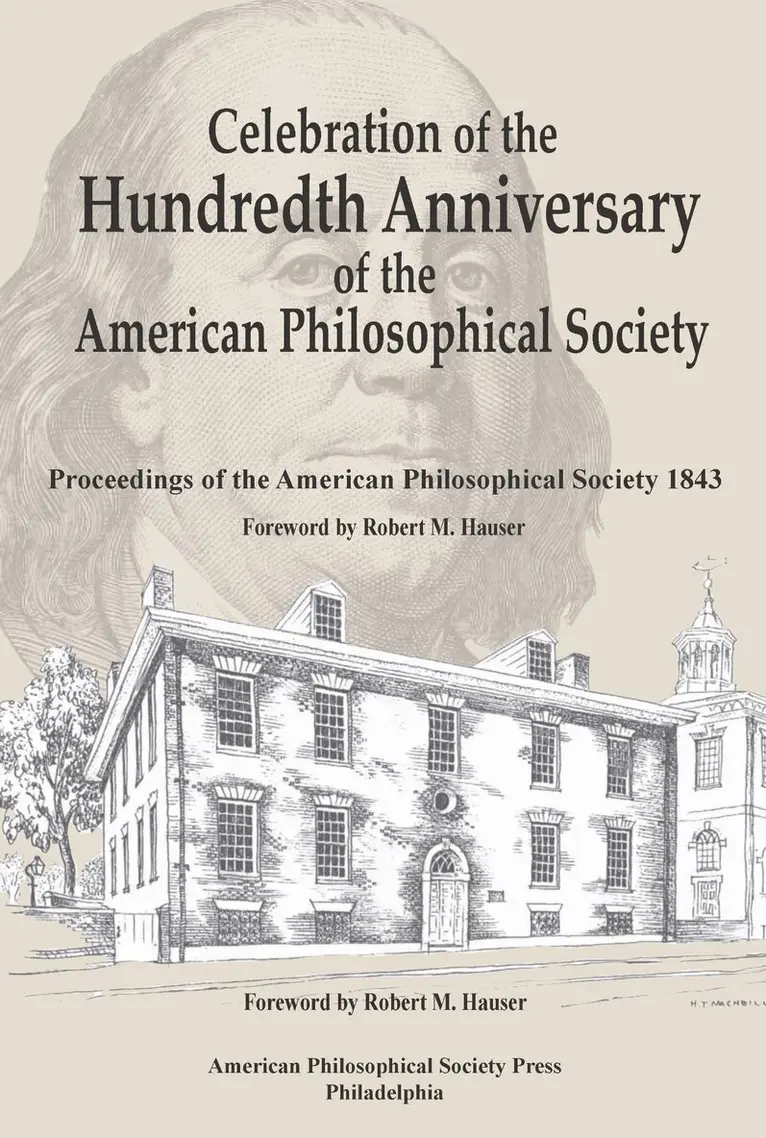
Celebration of the Hundredth Anniversary of the American Philosophical Society
Proceedings of the American Philosophical Society 1843, Transactions, American Philosophical Society (Vol. 107, Part 5)
Häftad, Engelska, 2018
621 kr
Skickas inom 10-15 vardagar
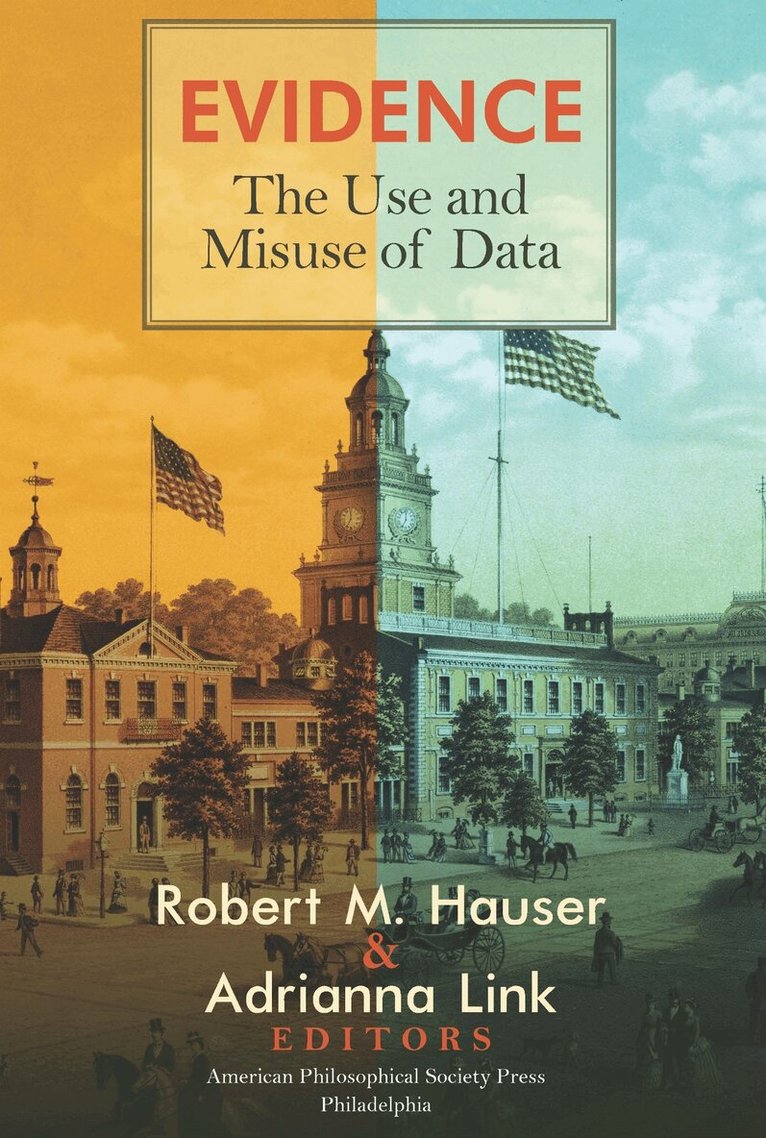
Evidence
The Use and Misuse of Data, Transactions, American Philosophical Society (Vol. 112, Part 3)
Häftad, Engelska, 2023
362 kr
Skickas inom 7-10 vardagar