Ruth Aylett – författare
Visar alla böcker från författaren Ruth Aylett. Handla med fri frakt och snabb leverans.
20 produkter
20 produkter
E-bok
Engelska, 2021264 kr
Läs direkt efter köp
Häftad, Engelska, 2023
209 kr
Skickas
Häftad, Engelska, 2008
202 kr
Skickas inom 5-8 vardagar
Inbunden, Engelska, 2008
307 kr
Skickas inom 5-8 vardagar
Häftad, Engelska, 2026
162 kr
Kommande
Häftad, Engelska, 2023
172 kr
Skickas
Häftad, Engelska, 2025
172 kr
Skickas
Häftad, Engelska, 2003
566 kr
Skickas inom 10-15 vardagar
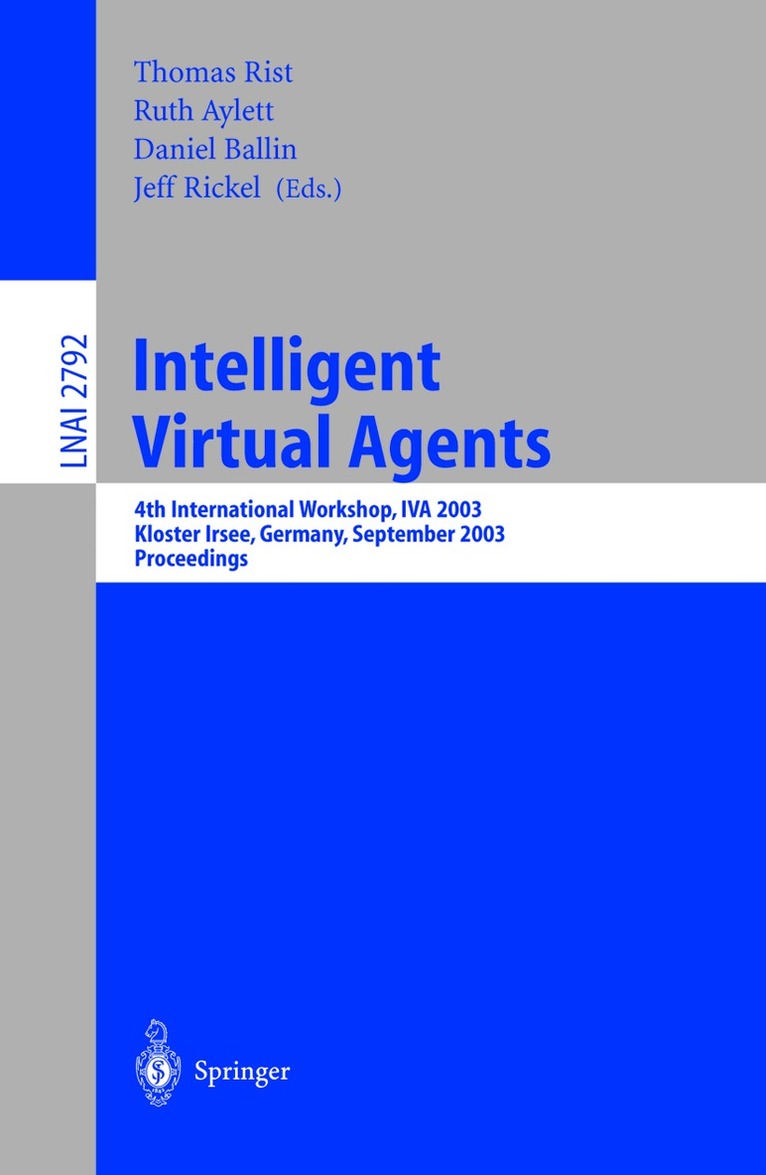
This volume, containing the proceedings of IVA 2003, held at Kloster Irsee, in Germany, September 15–17, 2003, is testimony to the growing importance of IntelligentVirtualAgents(IVAs) asaresearch?eld.Wereceived67submissions, nearly twice as many as for IVA 2001, not only from European countries, but from China, Japan, and Korea, and both North and South America. As IVA research develops, a growing number of application areas and pl- forms are also being researched. Interface agents are used as part of larger - plications, often on the Web. Education applications draw on virtual actors and virtual drama, while the advent of 3D mobile computing and the convergence of telephones and PDAs produce geographically-aware guides and mobile - tertainment applications. A theme that will be apparent in a number of the papers in this volume is the impact of embodiment on IVA research – a char- teristic di?erentiating it to some extent from the larger ?eld of software agents.
Häftad, Engelska, 2005
566 kr
Skickas inom 10-15 vardagar
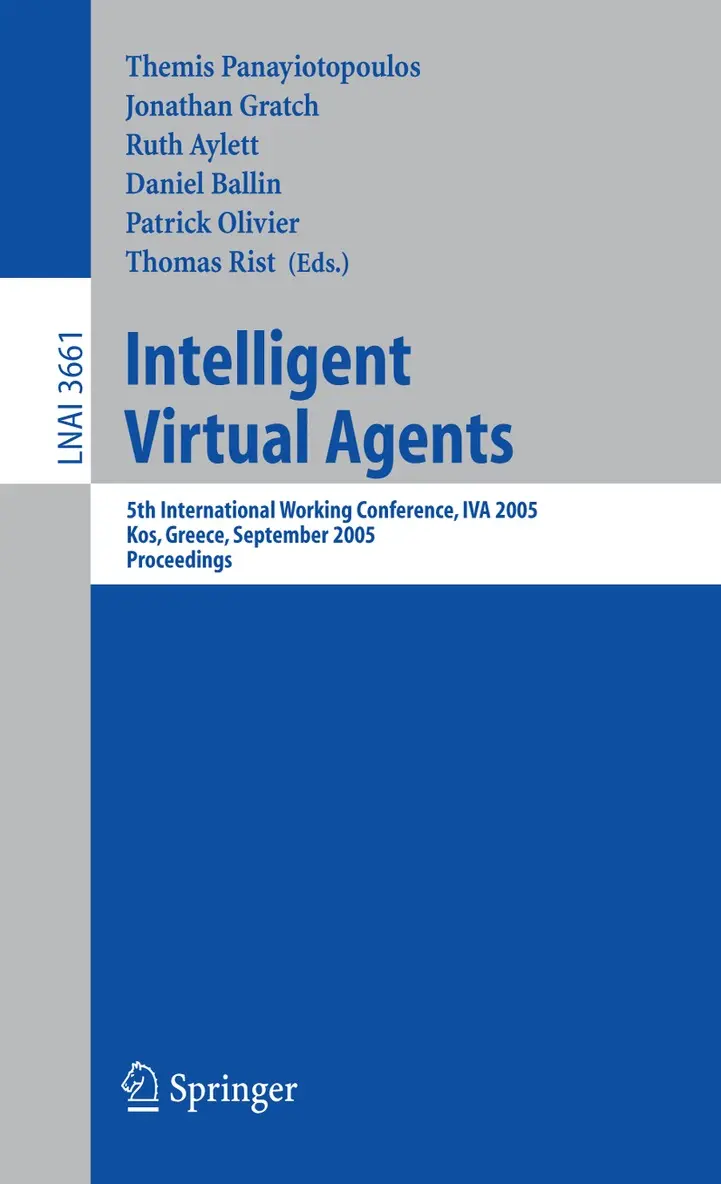
The origin of the Intelligent Virtual Agents conference dates from a successful workshop on Intelligent Virtual Environments held in Brighton at the 13th European Conference on Artificial Intelligence (ECAI'98). This workshop was followed by a second one held in Salford in Manchester in 1999. Subsequent events took place in Madrid, Spain in 2001 and Irsee, Germany in 2003 and attracted participants from both sides of the Atlantic as well as Asia. th This volume contains the proceedings of the 5 International Working Conference on Intelligent Virtual Agents, IVA 2005, held on Kos Island, Greece, September 12–14, 2005, which highlighted once again the importance and vigor of the research field. A half-day workshop under the title “Socially Competent IVA’s: We are not alone in this (virtual) world!” also took place as part of this event. IVA 2005 received 69 submissions from Europe, North and South America, Africa and Asia. The papers published here are the 26 full papers and 14 short papers presented at the conference, as well as one-page descriptions of the 15 posters and the descriptions of the featured invited talks by Prof. Justine Cassell, of Northwestern University and Prof. Kerstin Dautenhahn, of the University of Hertfordshire. We would like to thank a number of people that have contributed to the success of this conference. First of all, we thank the authors for their high-quality work and their willingness to share their ideas.
E-bok
PDF, Engelska, 2005668 kr
Läs direkt efter köp
The origin of the Intelligent Virtual Agents conference dates from a successful workshop on Intelligent Virtual Environments held in Brighton at the 13th European Conference on Artificial Intelligence (ECAI''98). This workshop was followed by a second one held in Salford in Manchester in 1999. Subsequent events took place in Madrid, Spain in 2001 and Irsee, Germany in 2003 and attracted participants from both sides of the Atlantic as well as Asia. th This volume contains the proceedings of the 5 International Working Conference on Intelligent Virtual Agents, IVA 2005, held on Kos Island, Greece, September 12–14, 2005, which highlighted once again the importance and vigor of the research field. A half-day workshop under the title “Socially Competent IVA’s: We are not alone in this (virtual) world!” also took place as part of this event. IVA 2005 received 69 submissions from Europe, North and South America, Africa and Asia. The papers published here are the 26 full papers and 14 short papers presented at the conference, as well as one-page descriptions of the 15 posters and the descriptions of the featured invited talks by Prof. Justine Cassell, of Northwestern University and Prof. Kerstin Dautenhahn, of the University of Hertfordshire. We would like to thank a number of people that have contributed to the success of this conference. First of all, we thank the authors for their high-quality work and their willingness to share their ideas.
E-bok
PDF, Engelska, 20061 938 kr
Läs direkt efter köp
Edutainment 2006 is an international conference on research and development on e-learning and digital entertainment. The main purpose of the conference is the d- cussion, information and opinions exchange on the development and use of such s- tems. It provides a very interesting opportunity for researchers who want to attend or present communications at these events. The conference includes plenary invited talks, workshops, tutorials, paper presentation tracks and panel discussions. "Edutainment" is a recently coined term that expresses the union between education and entertainment in a television program, game or website. Today, the world of multimedia games and activities is a place where education and entertainment meet. Edutainment has evolved as a prospering research topic banding together formerly disjoined disciplines stemming from education, entertainment as well as computer s- ence. Thus, with this conference, we can bring people from different fields together to discuss techniques for e-learning and digital entertainment as well as about the future of edutainment. This conference developed from the previous Europe–China Workshop on E-learning and Games called Edutainment 2005 (April 28-March 2, 2005), which was originally based on the ELVIS project, an EU–Asia link project (Prof. Ruth Alyett was the project coordinator and Prof. Zhigeng Pan was the project leader). It was also a sub-event for celebrating the 30th Anniversary of EU China Diplomatic Relations. During this workshop, experts from home and abroad were invited to give keynote speeches, and about 90 people attended the workshop.
Häftad, Engelska, 2006
566 kr
Skickas inom 10-15 vardagar
The origin of the Intelligent Virtual Agents conference dates from a successful workshop on Intelligent Virtual Environments held in Brighton, UK at the 13th European Conference on Arti?cial Intelligence (ECAI’98). This workshop was followed by a second one held in Salford in Manchester, UK in 1999.Subsequent events took place in Madrid, Spain in 2001, Isree, Germany in 2003 and Kos, Greece in 2005. Starting in 2006, Intelligent Virtual Agents moved from being a biennial to an annual event and became a full ?edged international conference, hosted in California. This volume contains the proceedings of the 6th International Conference on Intelligent Virtual Agents, IVA 2006, held in Marina del Rey, California, USA from August 21–23.For the second year in a row,IVA also hosted the Gathering of Animated Lifelike Agents (GALA 2006), an annual festival to showcase the latest animated lifelike agents created by university students and academic or industrial research groups. IVA 2006 received 73 submissions from Europe, the AmericasandAsia.Thepaperspublishedherearethe24fullpapersand11short papers presented at the conference, as well as one-page descriptions of posters and the featured invited talks by Brian Parkinson of Oxford University, Rod Humble of Electronic Arts, and Michael Mateas of the University of California, Santa Cruz and Andrew Stern of Procedural Arts.
E-bok
PDF, Engelska, 2006668 kr
Läs direkt efter köp
The origin of the Intelligent Virtual Agents conference dates from a successful workshop on Intelligent Virtual Environments held in Brighton, UK at the 13th European Conference on Arti?cial Intelligence (ECAI’98). This workshop was followed by a second one held in Salford in Manchester, UK in 1999.Subsequent events took place in Madrid, Spain in 2001, Isree, Germany in 2003 and Kos, Greece in 2005. Starting in 2006, Intelligent Virtual Agents moved from being a biennial to an annual event and became a full ?edged international conference, hosted in California. This volume contains the proceedings of the 6th International Conference on Intelligent Virtual Agents, IVA 2006, held in Marina del Rey, California, USA from August 21–23.For the second year in a row,IVA also hosted the Gathering of Animated Lifelike Agents (GALA 2006), an annual festival to showcase the latest animated lifelike agents created by university students and academic or industrial research groups. IVA 2006 received 73 submissions from Europe, the AmericasandAsia.Thepaperspublishedherearethe24fullpapersand11short papers presented at the conference, as well as one-page descriptions of posters and the featured invited talks by Brian Parkinson of Oxford University, Rod Humble of Electronic Arts, and Michael Mateas of the University of California, Santa Cruz and Andrew Stern of Procedural Arts.
E-bok
PDF, Engelska, 2003668 kr
Läs direkt efter köp
This volume, containing the proceedings of IVA 2003, held at Kloster Irsee, in Germany, September 15–17, 2003, is testimony to the growing importance of IntelligentVirtualAgents(IVAs) asaresearch?eld.Wereceived67submissions, nearly twice as many as for IVA 2001, not only from European countries, but from China, Japan, and Korea, and both North and South America. As IVA research develops, a growing number of application areas and pl- forms are also being researched. Interface agents are used as part of larger - plications, often on the Web. Education applications draw on virtual actors and virtual drama, while the advent of 3D mobile computing and the convergence of telephones and PDAs produce geographically-aware guides and mobile - tertainment applications. A theme that will be apparent in a number of the papers in this volume is the impact of embodiment on IVA research – a char- teristic di?erentiating it to some extent from the larger ?eld of software agents.
Häftad, Engelska, 2001
565 kr
Skickas inom 10-15 vardagar
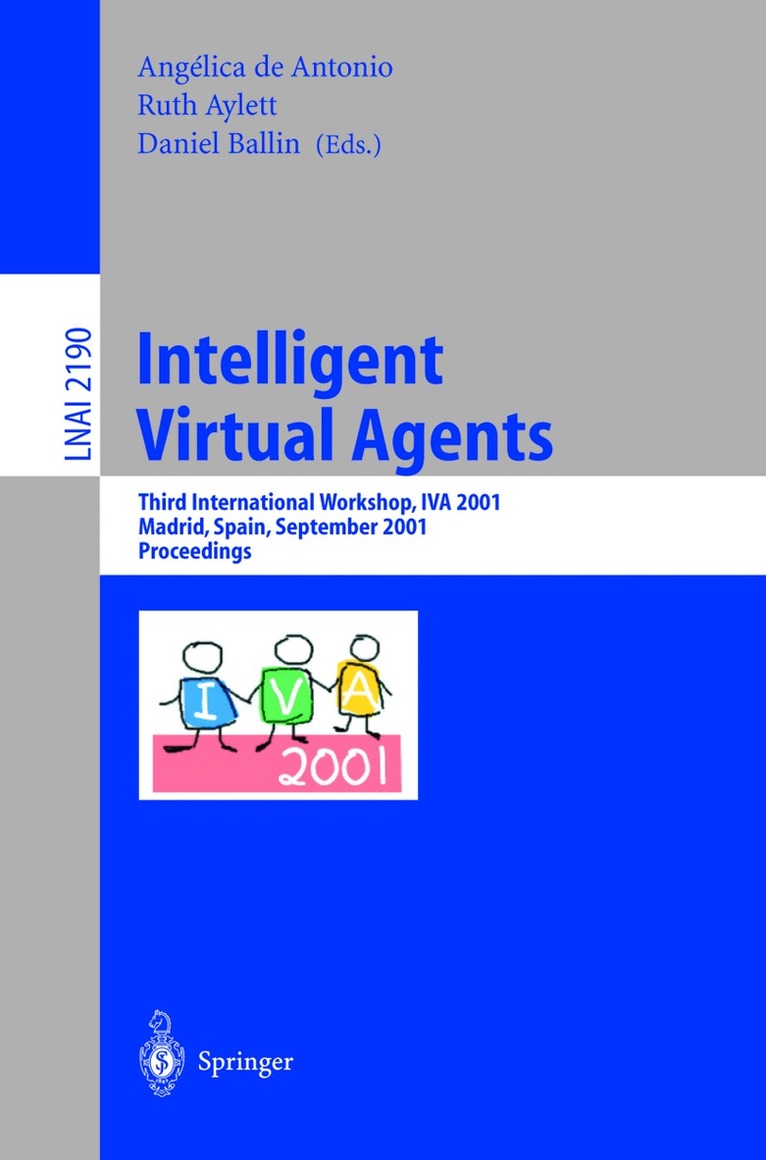
Predicting the future is a risky game, and can often leave egg on one’s face. However when the organizers of the Intelligent Virtual Environments workshop at the European Conference on AI predicted that the field of Intelligent Virtual Agents would grow and mature rapidly, they were not wrong. From this small workshop spawned the successful one on Intelligent Virtual Agents, held in Manchester in 1999. This volume comprises the proceedings of the much larger third workshop held in Madrid, September 10 11, 2001, which successfully achieved the aim of taking a more international focus, bringing together researchers from all over the world. We received 35 submissions from 18 different countries in America, Asia, and Africa. The 16 papers presented at the conference and published here show the high quality of the work that is currently being done in this field. In addition, five contributions were selected as short papers, which were presented as posters at the workshop. This proceedings volume also includes the two prestigious papers presented at the workshop by our keynote speakers: Daniel Thalmann, Professor at the Swiss Federal Institute of Technology (EPFL) in Lausanne and Director of the Computer Graphics Lab., who talked about The Foundations to Build a Virtual Human Society. Jeff Rickel, Project Leader at the Information Sciences Institute and a Research Assistant Professor in the Department of Computer Science at the University of Southern California, who debated about Intelligent Virtual Agents for Education and Training: Opportunities and Challenges.
E-bok
PDF, Engelska, 2003692 kr
Läs direkt efter köp
Predicting the future is a risky game, and can often leave egg on one’s face. However when the organizers of the Intelligent Virtual Environments workshop at the European Conference on AI predicted that the field of Intelligent Virtual Agents would grow and mature rapidly, they were not wrong. From this small workshop spawned the successful one on Intelligent Virtual Agents, held in Manchester in 1999. This volume comprises the proceedings of the much larger third workshop held in Madrid, September 10 11, 2001, which successfully achieved the aim of taking a more international focus, bringing together researchers from all over the world. We received 35 submissions from 18 different countries in America, Asia, and Africa. The 16 papers presented at the conference and published here show the high quality of the work that is currently being done in this field. In addition, five contributions were selected as short papers, which were presented as posters at the workshop. This proceedings volume also includes the two prestigious papers presented at the workshop by our keynote speakers: Daniel Thalmann, Professor at the Swiss Federal Institute of Technology (EPFL) in Lausanne and Director of the Computer Graphics Lab., who talked about The Foundations to Build a Virtual Human Society. Jeff Rickel, Project Leader at the Information Sciences Institute and a Research Assistant Professor in the Department of Computer Science at the University of Southern California, who debated about Intelligent Virtual Agents for Education and Training: Opportunities and Challenges.
Häftad, Engelska, 2010
566 kr
Skickas inom 10-15 vardagar
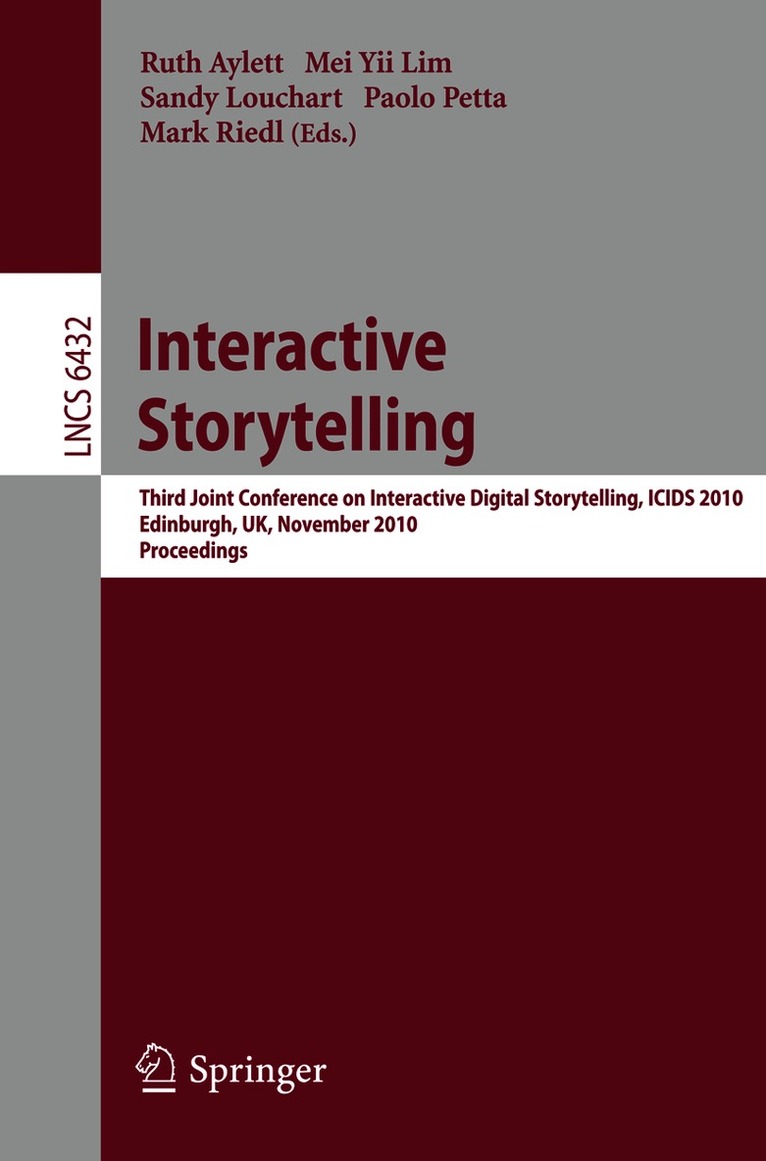
Novel pervasive, mobile, and interactive graphical technologies underlie a new mode of storytelling-interactive digital storytelling (IDS)-whether in int- active entertainment, computer games, education, therapy or other interactive digitalapplications.Thisraisesthepossibilityofrede?ningtheexperienceofn- rative through interactive simulations of computer-generated story worlds. The wide range of papers at ICIDS 2010, held in Edinburgh November 1-3, 2010, was testament to both the number and variety of researchers now investigating this ?eld. Some papers addressedkey theoreticalproblems in the ?eld: howto reconcile interactivity and narrative structure; how to make complex digital systems - cessibletothecreativeauthor;whatprocessesandmetricsareneededtoevaluate the outputs of IDS systems. Others addressed IDS in speci?c domains: in e- cation; enhancement of automated sports commentary; therapeutic approaches to trauma; location-aware presentation of culture and history; computer games. IDS systems now employ not only conventional desktop systems, but also lar- scale immersive display systems, and mobile devices; as well as modalities such as ?lm and video, which remain important sources of knowledge and experience.Inatrulyinter-disciplinary?eld,ICIDS2010servedasaforumforthediscussion of ideas, experiences and achievements of researchers with very di?erent ideas and assumptions. The ICIDS 2010acceptancerateswere24%for long papersand 46%for both long and short. This re?ects the high standards applied by the members of the Program Committee. Posters and demos rounded out the conference to create an atmosphere of interactivity. In addition, seven pre-conference workshops and tutorials allowed more intensive discussion of speci?c themes. Three keynote speakers supported the inter-disciplinaryrangeof ICIDS 2010 and the ?eld's natural ties between academic research, the arts and industry.
E-bok
PDF, Engelska, 2010734 kr
Läs direkt efter köp
Häftad, Engelska, 2013
566 kr
Skickas inom 10-15 vardagar
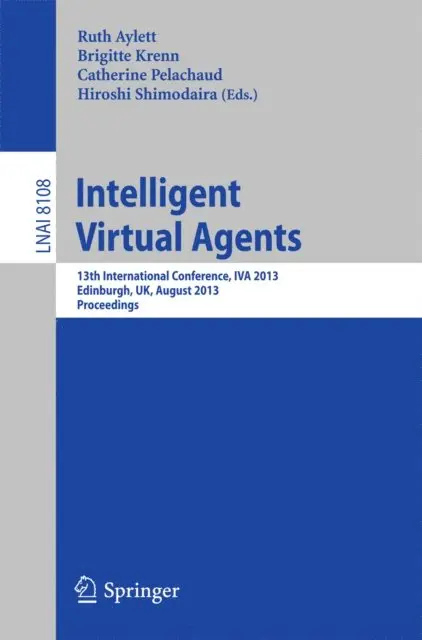
This book constitutes the proceedings of the 13th International Conference on Intelligent Virtual Agents, IVA 2013, held in Edinburgh, UK, in August 2013. There was a total of 94 submissions. The 18 full and 18 short papers presented in this volume were carefully reviewed and selected for inclusion in the book. In addition, the volume lists the 34 posters which were on display during the conference. The papers are organized in topical sections named: cognitive models; applications; dialogue, language, speech; non-verbal behaviour; and social, cultural models and agents.
E-bok
PDF, Engelska, 2013708 kr
Läs direkt efter köp
This book constitutes the proceedings of the 13th International Conference on Intelligent Virtual Agents, IVA 2013, held in Edinburgh, UK, in August 2013. There was a total of 94 submissions. The 18 full and 18 short papers presented in this volume were carefully reviewed and selected for inclusion in the book. In addition, the volume lists the 34 posters which were on display during the conference. The papers are organized in topical sections named: cognitive models; applications; dialogue, language, speech; non-verbal behaviour; and social, cultural models and agents.