Susan Booysen - Böcker
Visar alla böcker från författaren Susan Booysen. Handla med fri frakt och snabb leverans.
7 produkter
7 produkter
361 kr
Skickas inom 7-10 vardagar
Civil society, NGOs, governments, and multilateral institutions all repeatedly call for improved or 'good' governance – yet they seem to speak past one another. Governance is in danger of losing all meaning precisely because it means many things to different people in varied locationsThis is especially true in sub-Saharan Africa. Here, the postcolony takes many forms, reflecting the imperial project with painful accuracy. Offering a set of multidisciplinary analyses of governance in different sectors (crisis management, water, food security, universities), in different locales across sub-Saharan Africa, and from different theoretical approaches (network to adversarial network governance); this volume makes a useful addition to the growing debates on 'how to govern'. It steers away from offering a 'correct' definition of governance, or from promoting a particular position on postcoloniality. It gives no neat conclusion, but invites readers to draw their own conclusions based on these differing approaches to and analyses of governance in the postcolony.As a robust, critical assessment of power and accountability in the sub-Saharan context, Governance and the Postcolony: Views from Africa brings together topical case studies that will be a valuable resource for those working in the field of African international relations, public policy, public management and administration.
318 kr
Skickas inom 7-10 vardagar
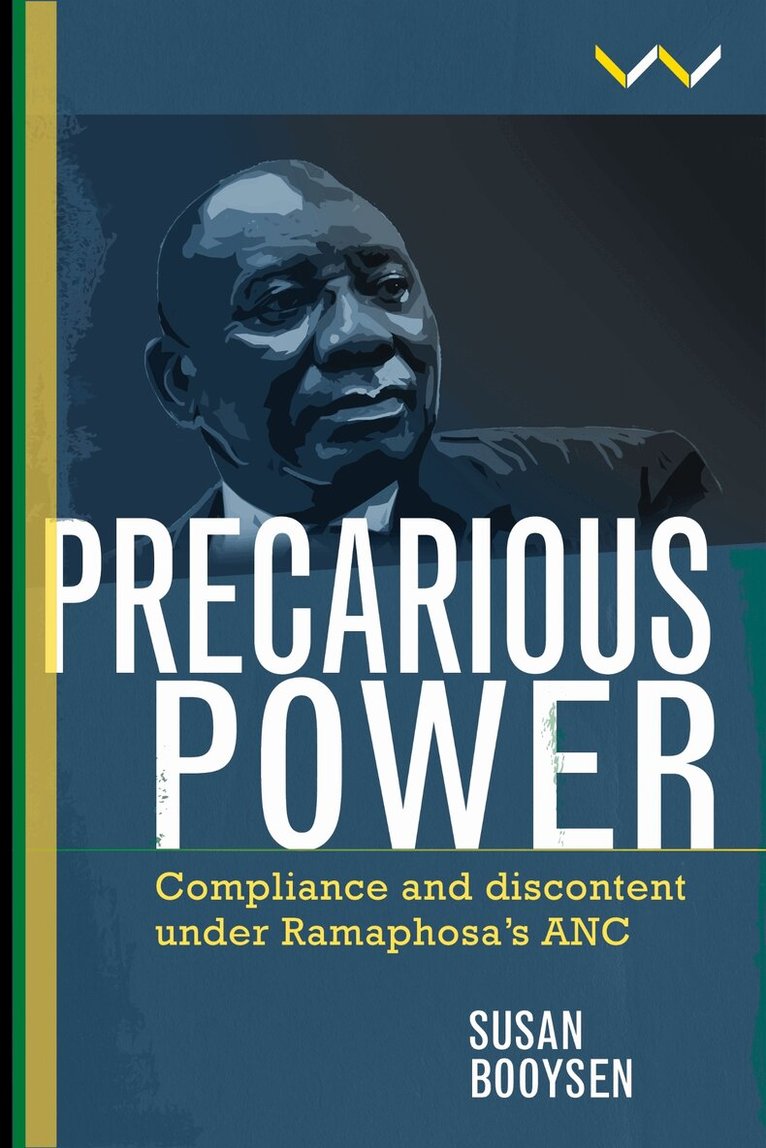
An incisive analysis of South Africa's ANC power-as party, as government, as stateSouth Africa's African National Congress (ANC) is in decline, its hegemony has been weakened, its legitimacy diluted. President Cyril Ramaphosa's appointment suspended the ANC's electoral decline, it also heightened internal tensions between those who would deepen its acquired status as corrupt and captured, and those who would remodel it as redeemable. These are the incontrovertible knowns of South African politics; what will evolve from this is less certain.In Precarious Power, renowned political scientist Susan Booysen uses in-depth research and analysis to distill that which is bound to shape South Africa's political future, Booysen focuses on contradictory party politics and internal ANC dissent that is veiled for the sake of retaining an electoral following. Also exposed is the incongruous, populist policymaking, protest politics and the use of soft law to ensure it does not alienate angry citizens, fueling further discontent and protest. The ANC's power has become exceedingly precarious. Precarious Power is the name of the political game, for the foreseeable future.The comprehensive analysis in Precarious Power will appeal not only to political scientists and postgraduate students, but to all who take a keen interest in current affairs.
1 196 kr
Skickas inom 5-8 vardagar
An incisive analysis of South Africa's ANC power-as party, as government, as stateSouth Africa's African National Congress (ANC) is in decline, its hegemony has been weakened, its legitimacy diluted. President Cyril Ramaphosa's appointment suspended the ANC's electoral decline, it also heightened internal tensions between those who would deepen its acquired status as corrupt and captured, and those who would remodel it as redeemable. These are the incontrovertible knowns of South African politics; what will evolve from this is less certain.In Precarious Power, renowned political scientist Susan Booysen uses in-depth research and analysis to distill that which is bound to shape South Africa's political future, Booysen focuses on contradictory party politics and internal ANC dissent that is veiled for the sake of retaining an electoral following. Also exposed is the incongruous, populist policymaking, protest politics and the use of soft law to ensure it does not alienate angry citizens, fueling further discontent and protest. The ANC's power has become exceedingly precarious. Precarious Power is the name of the political game, for the foreseeable future.The comprehensive analysis in Precarious Power will appeal not only to political scientists and postgraduate students, but to all who take a keen interest in current affairs.
448 kr
Skickas inom 5-8 vardagar
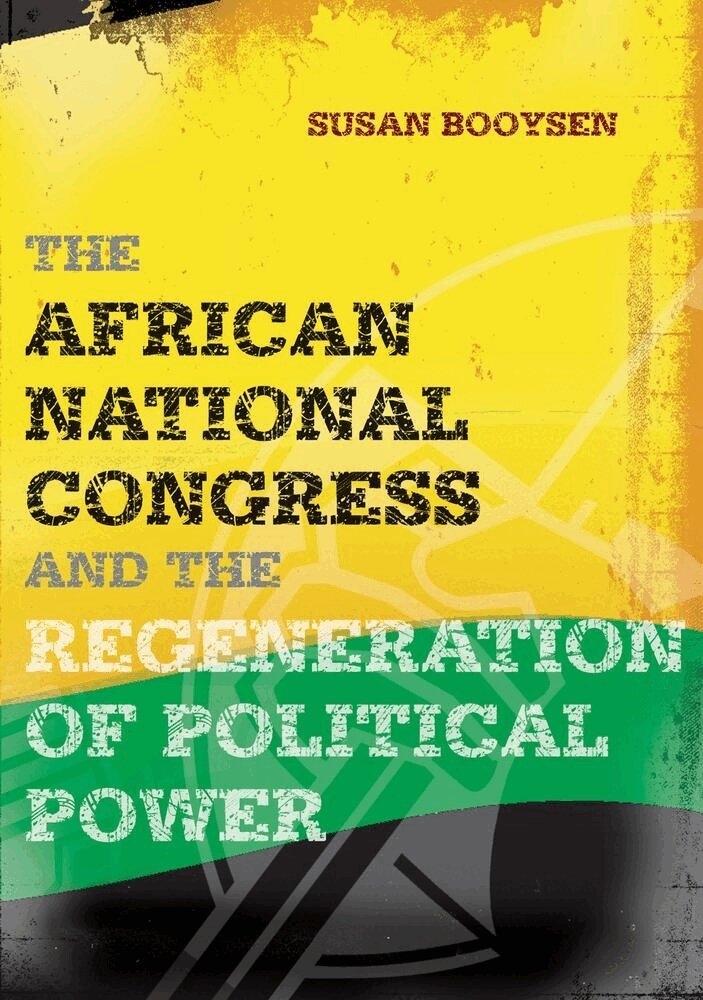
The African National Congress is light years beyond the liberation movement of old. It remains a juggernaut, but its control and dominance are no longer watertight. The ANC lives the contradictions of weaknesses, cracks and factions while retaining its colossal status. As a party-movement it draws on its liberation credentials, and extracts immense power from its deep anchorage in South Africa's people. It is immersed in electoral politics that marks the state of its overwhelming power cyclically. As government the ANC is the object of protest, but not protest designed to bring the ruling party to its knees. The ANC is in command of the state, yet fails to definitively counter the deficits that make South Africa's democracy seem so diluted. Its incredulous and thus far trusting supporters condemn but only rarely punish deployees who do not 'pass through the eye of the needle'.The ANC and the Regeneration of Political Power unpacks these contradictions. It focuses on four faces of the ANC's political power – the organisation, the people, political parties and elections, and policy and government – and explores how the ANC has acted since 1994 to continuously regenerate its power. By 2011-12 the power configurations around the ANC were converging to a conjuncture holding vexing uncertainties. This book presents insights into how South African politics – in many ways synonymous with the politics of the ANC – is likely to unfold in years and possibly decades to come.
361 kr
Skickas inom 7-10 vardagar
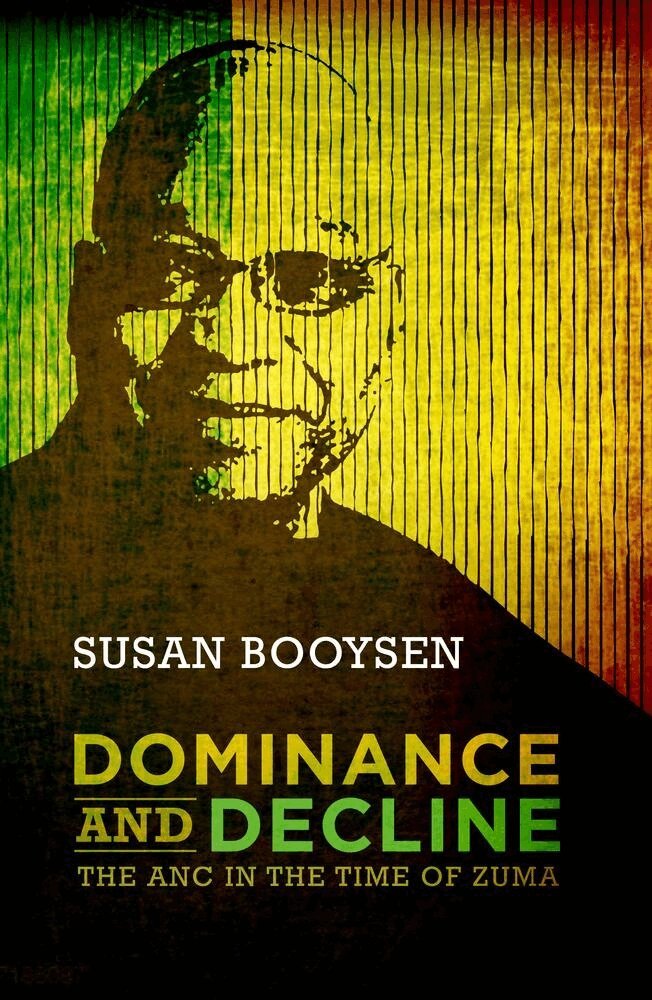
As Jacob Zuma moves into the twilight years of his presidencies of both the African National Congress (ANC) and of South Africa, this book takes stock of the Zuma-led administration and its impact on the ANC. Dominance and Decline: The ANC in the Time of Zuma combines hard-hitting arguments with astute analysis. Susan Booysen shows how the ANC has become centred on the personage of Zuma, and that its defence of his extremely flawed leadership undermines the party's capacity to govern competently, and to protect its long term future. Following on from her first book, The African National Congress and the Regeneration of Power (2011), Booysen delves deeper into the four faces of power that characterise the ANC. Her principal argument is that the state is failing as the president's interests increasingly supersede those of party and state. Organisationally, the ANC has become a hegemon riven by factions, as the internal blocs battle for core positions of power and control. Meanwhile, the Zuma-controlled ANC has witnessed the implosion of the tripartite alliance and decimation of its youth, women's and veterans' leagues. Electorally, the leading party has been ceding ground to increasingly assertive opposition parties. And on the policy front, it is faltering through poor implementation and a regurgitation of old ideas. As Zuma's replacements start competing and succession politics take shape, Booysen considers whether the ANC will recover from the damage wrought under Zuma's reign and attain its former glory. Ultimately, she believes that while the damage is irrevocable, the electorate may still reward the ANC for transcending the Zuma years. This is a must-have reference book on the development of the modern ANC. With rigour and incisiveness, Booysen offers scholars and researchers a coherent framework for considering future patterns in the ANC and its hold on political power.
351 kr
Skickas inom 7-10 vardagar
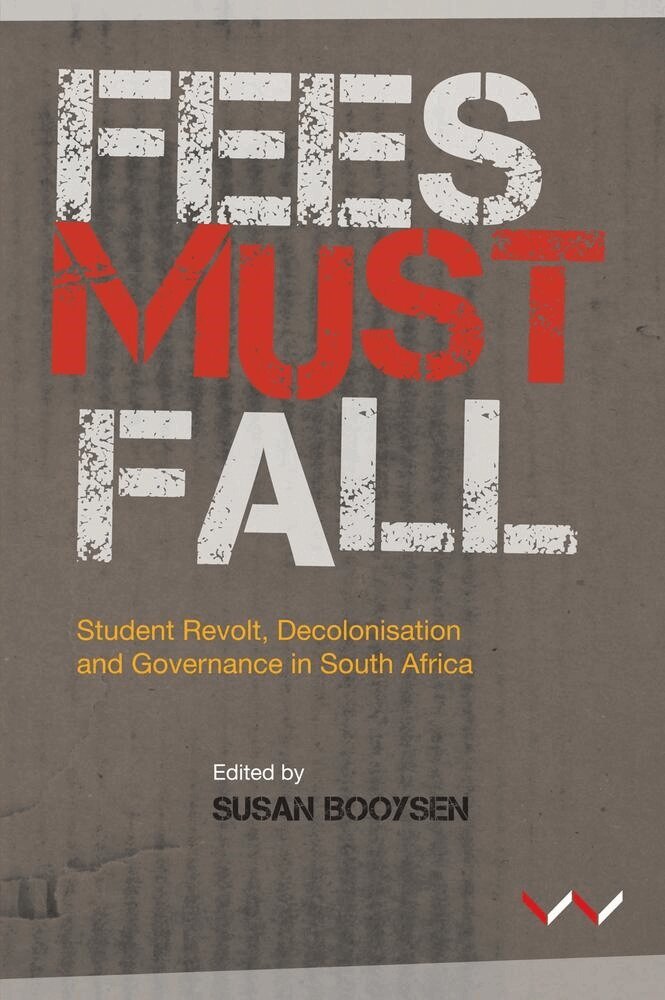
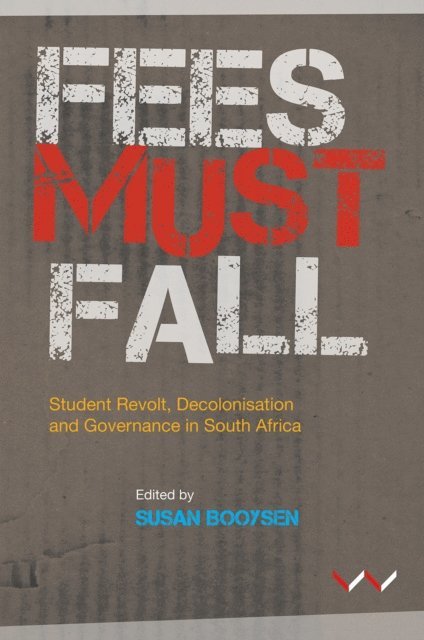
This book explores the student discontent a year after the start of the 2015 South African #FeesMustFall revolt#FeesMustFall, the student revolt that began in October 2015, was an uprising against lack of access to, and financial exclusion from, higher education in South Africa. More broadly, it radically questioned the socio-political dispensation resulting from the 1994 social pact between big business, the ruling elite and the liberation movement. The 2015 revolt links to national and international youth struggles of the recent past and is informed by black consciousness politics and social movements of the international left. Yet, its objectives are more complex than those of earlier struggles. The student movement has challenged the hierarchical, top-down leadership system of university management and it's 'double speak' of professing to act in workers' and students' interests yet entrenching a regressive system for control and governance. University managements, while on one level amenable to change, have also co-opted students into their ranks to create co-responsibility for the highly bureaucratised university financial aid that stands in the way of their social revolution. This book maps the contours of student discontent a year after the start of the #FeesMustFall revolt. Student voices dissect colonialism, improper compromises by the founders of democratic South Africa, feminism, worker rights and meaningful education. In-depth assessments by prominent scholars reflect on the complexities of student activism, its impact on national and university governance, and offer provocative analyses of the power of the revolt.
1 017 kr
Skickas inom 5-8 vardagar