Tuomas Räsänen - Böcker
Visar alla böcker från författaren Tuomas Räsänen. Handla med fri frakt och snabb leverans.
4 produkter
4 produkter
671 kr
Skickas inom 10-15 vardagar
Animals are conscious beings that form their own perspective regarding the lifeworlds in which they exist, and according to which they act in relation to their species and other animals. In recent decades a thorough transformation in societal research has taken place, as many groups that were previously perceived as being passive or subjugated objects have become active subjects. This fundamental reassessment, first promoted by feminist and radical studies, has subsequently been followed by spatial and material turns that have brought non-human agency to the fore. In human–animal relations, despite a power imbalance, animals are not mere objects but act as agents. They shape our material world and our encounters with them influence the way we think about the world and ourselves.This book focuses on animal agency and interactions between humans and animals. It explores the reciprocity of human–animal relations and the capacity of animals to act and shape human societies. The chapters draw on examples from the Global North to explore how human life in modernity has been and is shaped by the sentience, autonomy, and physicality of various animals, particularly in landscapes where communities and wild animals exist in close proximity. It offers a timely contribution to animal studies, environmental geography, environmental history, and social science and humanities studies of the environment more broadly.
2 088 kr
Skickas inom 10-15 vardagar
Animals are conscious beings that form their own perspective regarding the lifeworlds in which they exist, and according to which they act in relation to their species and other animals. In recent decades a thorough transformation in societal research has taken place, as many groups that were previously perceived as being passive or subjugated objects have become active subjects. This fundamental reassessment, first promoted by feminist and radical studies, has subsequently been followed by spatial and material turns that have brought non-human agency to the fore. In human–animal relations, despite a power imbalance, animals are not mere objects but act as agents. They shape our material world and our encounters with them influence the way we think about the world and ourselves.This book focuses on animal agency and interactions between humans and animals. It explores the reciprocity of human–animal relations and the capacity of animals to act and shape human societies. The chapters draw on examples from the Global North to explore how human life in modernity has been and is shaped by the sentience, autonomy, and physicality of various animals, particularly in landscapes where communities and wild animals exist in close proximity. It offers a timely contribution to animal studies, environmental geography, environmental history, and social science and humanities studies of the environment more broadly.
526 kr
Skickas inom 5-8 vardagar
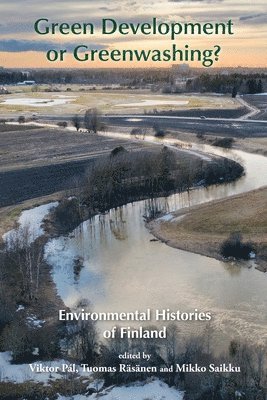
Finland has often been labelled a 'green superpower', lauded as one of the world's cleanest and greenest countries. Nordic countries in general have tended to be idealised as 'pristine and green', in contrast to the rest of the rapidly contaminating world where the race for markets and profits has enormously accelerated consumption, imposing on the environment an alarming level of extraction and commerce, and a wide array of new and old forms of pollution. Environmental historians, however, can perceive that the reputed 'greenness' of the Nordic countries is partly an illusion. Authors in this volume argue that Finland, similarly to Denmark, Norway and Sweden, has evolved into a green superpower at the cost of considerable environmental problems. Ironically, Finland's current leading position in sustainable development has been built on the heavy use of natural resources and by sacrificing ecosystem health. This volume thus seeks to acquaint the reader with many stories of long-lasting negative environmental impacts in and around Finland: old-growth forests have been replaced by intensive forest farming for lumber and pulp industries; most wetlands have been drained for agriculture, forest cultivation and peat extraction; wild animal populations have been decimated; and Finland today is confined to the south and west by arguably the most polluted sea in the world.There are lessons for the future to be learnt from Finland's tendency to rest on the laurels of a positive environmental reputation built at least in part on myth. In the twenty-first century, the world badly needs less greenwashing and a truer commitment to green-ness.
Animal Industries
Nordic Perspectives on the Exploitation of Animals since 1860
Inbunden, Engelska, 2024
1 251 kr
Skickas inom 5-8 vardagar
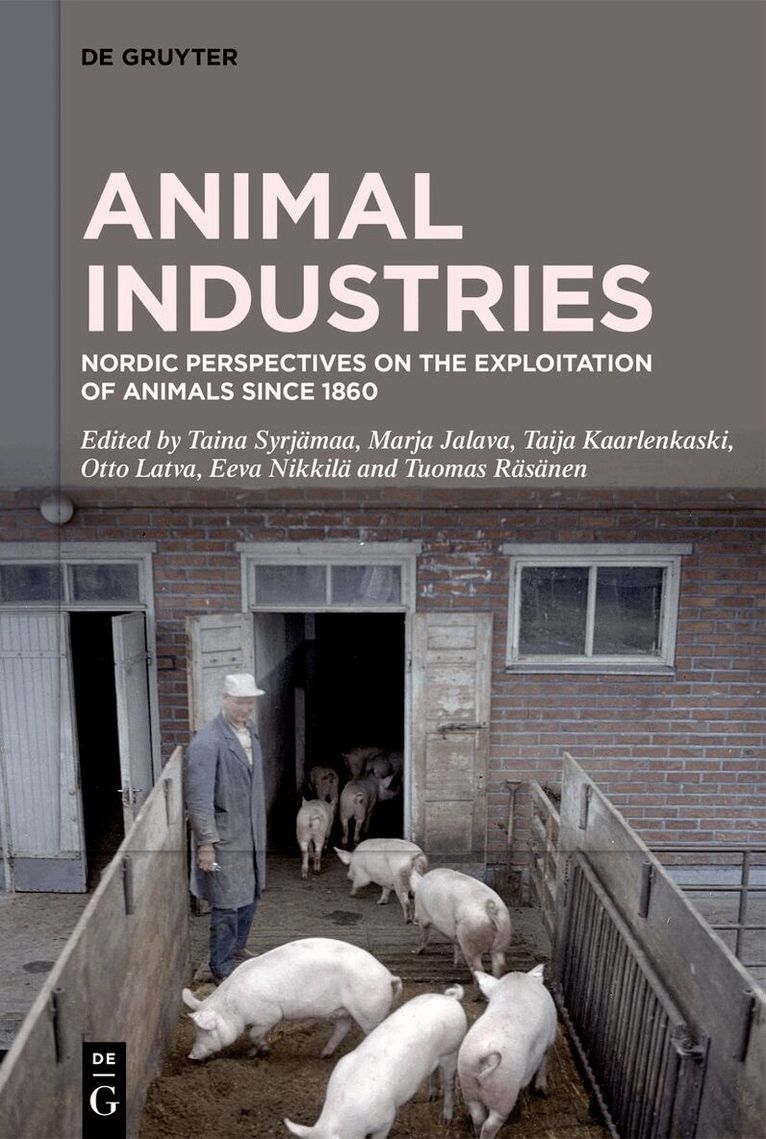
This book examines an extremely topical phenomenon, the massive industrial exploitation of animals, from a previously neglected perspective. It explores the history and development of animal industries in Nordic countries from their establishment in the late nineteenth century to the present day. These countries are often considered to be progressive and advanced in animal protection, but consumption practices in this area are actually excessive in relation to planetary resources and are among the most unsustainable on a global scale. If we want to understand current problems, it is essential to be aware of long-term changes and continuities, as well as the diversity of animals that have been exploited. The purpose of this book is to explain these changes and provide new knowledge for scholars in human-animal studies, decisionmakers and the general public.