Vidisha Tomer – författare
Visar alla böcker från författaren Vidisha Tomer. Handla med fri frakt och snabb leverans.
9 produkter
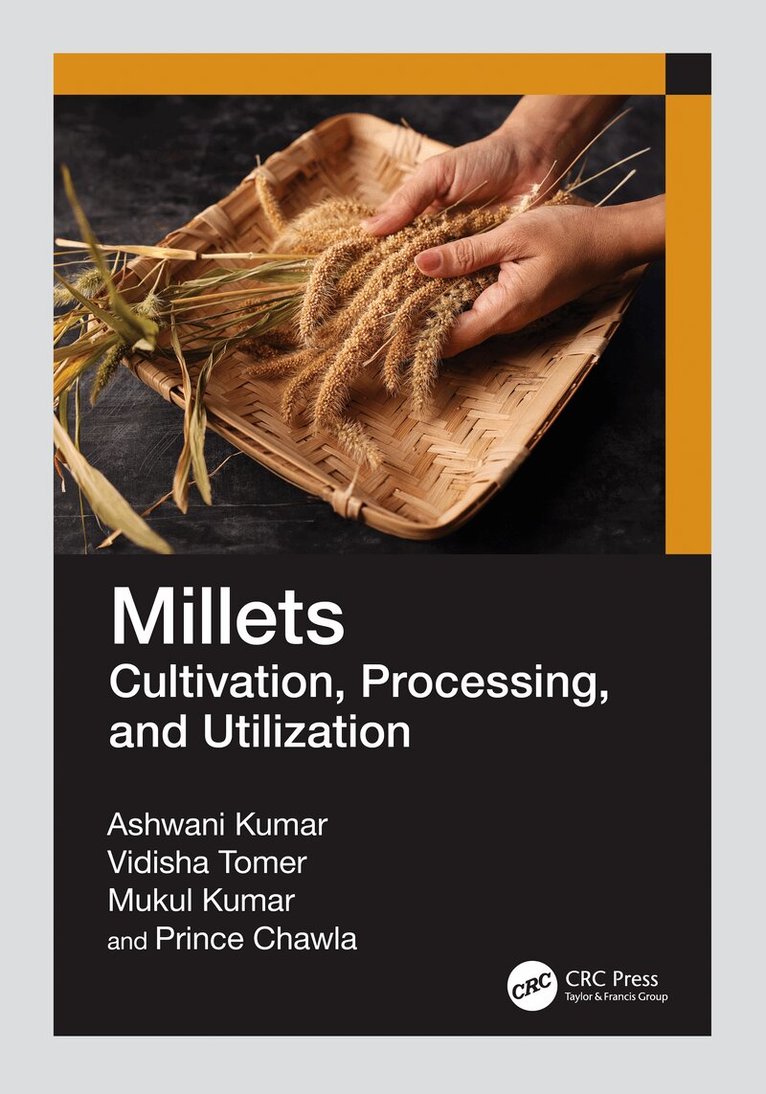
Millets
Cultivation, Processing, and Utilization
Av Ashwani Kumar, Vidisha Tomer m. fl.
Häftad, 2024
1495 kr
Lägg i varukorg
Millets are diverse small-seeded crops which are resilient to climatic stress, pests, and diseases. These can be grown in rainfed conditions with minimal agricultural inputs. These are considered nutritionally superior to other major cereals like rice, wheat, and maize as they contain a significant …
Millets
Cultivation, Processing, and Utilization
Av Ashwani Kumar, Vidisha Tomer m. fl.
Inbunden, 2024
3799 kr
Lägg i varukorg
Millets are diverse small-seeded crops which are resilient to climatic stress, pests, and diseases. These can be grown in rainfed conditions with minimal agricultural inputs. These are considered nutritionally superior to other major cereals like rice, wheat, and maize as they contain a significant …
Millets
Cultivation, Processing, and Utilization
Av Prince Chawla, Mukul Kumar m. fl.
E-bok, 2024
1437 kr
Lägg i varukorg
Millets are diverse small-seeded crops which are resilient to climatic stress, pests, and diseases. These can be grown in rainfed conditions with minimal agricultural inputs. These are considered nutritionally superior to other major cereals like rice, wheat, and maize as they contain a significant …
Millets
Cultivation, Processing, and Utilization
Av Prince Chawla, Mukul Kumar m. fl.
E-bok, 2024
1392 kr
Lägg i varukorg
Millets are diverse small-seeded crops which are resilient to climatic stress, pests, and diseases. These can be grown in rainfed conditions with minimal agricultural inputs. These are considered nutritionally superior to other major cereals like rice, wheat, and maize as they contain a significant …
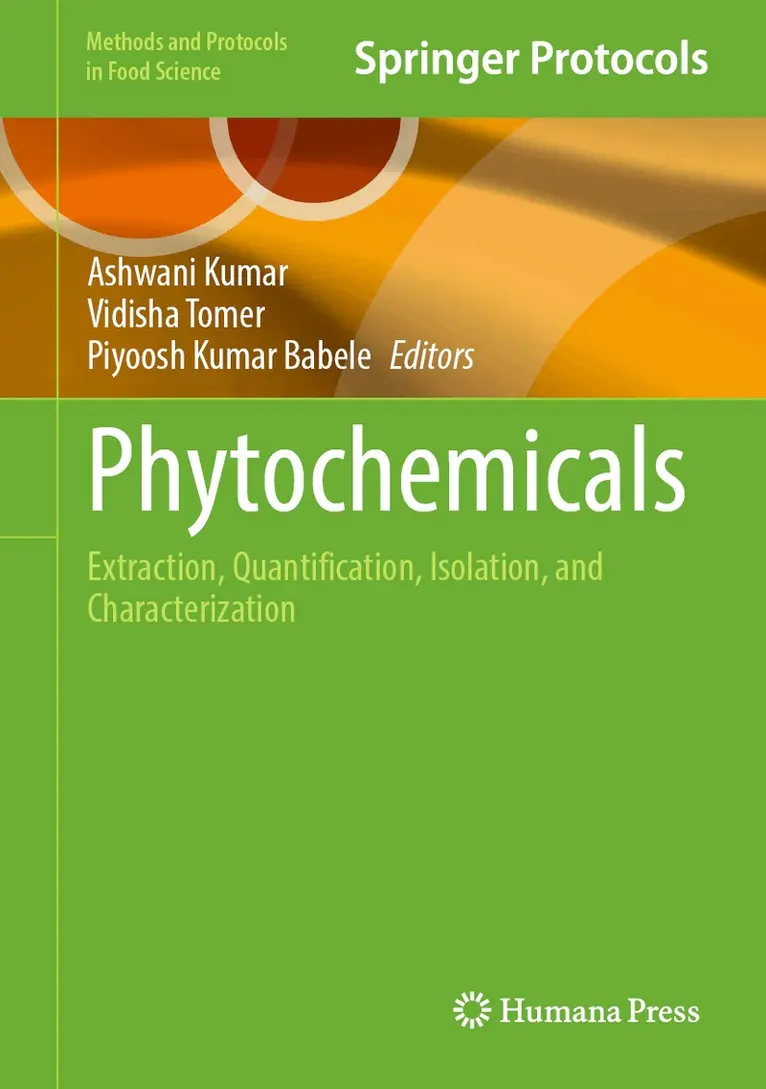
Phytochemicals
Extraction, Quantification, Isolation, and Characterization
Av Ashwani Kumar, Vidisha Tomer m. fl.
Inbunden, 2025
1954 kr
Lägg i varukorg
This volume details methods and protocols of extraction, separation, characterization, and quantification of phytochemicals. Chapters cover extraction techniques, for instance, solvent extraction and supercritical fluid extraction, UV-Vis spectroscopy, high-performance liquid chromatography (HPLC), …
Phytochemicals
Extraction, Quantification, Isolation, and Characterization
Av Piyoosh Kumar Babele, Vidisha Tomer m. fl.
E-bok, 2025
2517 kr
Lägg i varukorg
This volume details methods and protocols of extraction, separation, characterization, and quantification of phytochemicals. Chapters cover extraction techniques, for instance, solvent extraction and supercritical fluid extraction, UV-Vis spectroscopy, high-performance liquid chromatography (HPLC), …
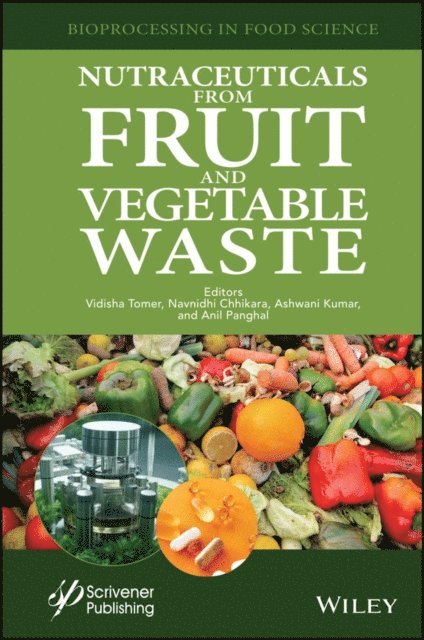
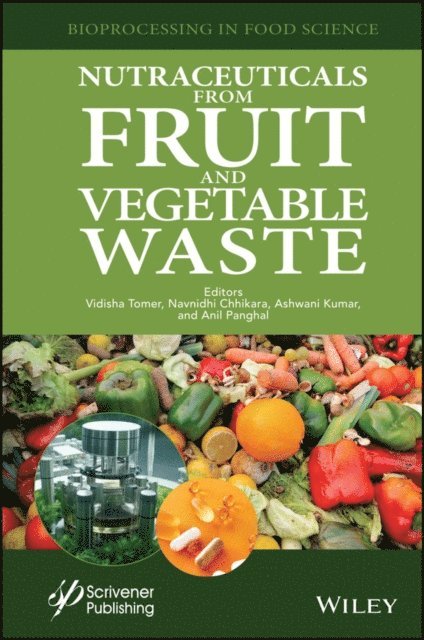
Nutraceuticals from Fruit and Vegetable Waste
Av Vidisha Tomer, Navnidhi Chhikara m. fl.
Inbunden, 2024
2745 kr
Lägg i varukorg
NUTRACEUTICALS FROM FRUIT AND VEGETABLE WASTE Nutraceuticals from Fruit and Vegetable Waste, the latest volume in the series, “Bioprocessing in Food Science,” is an essential reference on the valorization of fruit and vegetable waste and the state of the art for fruit and vegetable processing. …
Nutraceuticals from Fruit and Vegetable Waste
Av Anil Panghal, Ashwani Kumar m. fl.
E-bok, 2024
3348 kr
Lägg i varukorg
NUTRACEUTICALS FROM FRUIT AND VEGETABLE WASTE Nutraceuticals from Fruit and Vegetable Waste , the latest volume in the series, “Bioprocessing in Food Science,” is an essential reference on the valorization of fruit and vegetable waste and the state of the art for fruit and vegetable processing. …
Nutraceuticals from Fruit and Vegetable Waste
Av Anil Panghal, Ashwani Kumar m. fl.
E-bok, 2024
3422 kr
Lägg i varukorg
NUTRACEUTICALS FROM FRUIT AND VEGETABLE WASTE Nutraceuticals from Fruit and Vegetable Waste , the latest volume in the series, “Bioprocessing in Food Science,” is an essential reference on the valorization of fruit and vegetable waste and the state of the art for fruit and vegetable processing. …