Anil Panghal - Böcker
Visar alla böcker från författaren Anil Panghal. Handla med fri frakt och snabb leverans.
12 produkter
12 produkter
2 351 kr
Skickas inom 7-10 vardagar
Functional Foods Presenting cutting-edge information on new and emerging food engineering processes, Functional Foods, the second volume in the groundbreaking new series, “Bioprocessing in Food Science,” is an essential reference on the modeling, quality, safety, and technologies associated with food processing operations today. Functional Foods, the second volume in series, “Bioprocessing in Food Science,” is an up-to-date, comprehensive volume covering the preparation, processes and health benefits of functional foods. Written and edited by a team of experts in the field, this important new volume provides readers extensive knowledge about different types of traditional and commercially available functional foods from different sources, such as milk, meat, cereals, millets and fruits and vegetables. The main objective of this book is to disseminate knowledge about the recent technologies developed in the field of functional foods to students, researchers, and industry professionals. This will enable them to make crucial decisions regarding the adoption, implementation, economics, and constraints of the different technologies. As the demand for healthy food is increasing, manufacturers are searching for new possibilities for occupying a growing share in the rapidly changing food market. Covering the use of conventional and non-conventional sources, prebiotics, probiotics and many other topics, with emphasis on their functionality in food systems, this volume also provides insights on the specific packaging requirements for functional foods with maximum illustrations of how to enhance shelf life and create superior quality products. The authors and editors discuss the need for regulatory frameworks, government bodies, guidelines, and their challenges within the context of the functional food market. Whether for the veteran engineer or scientist, the student, or a manager or other technician working in the field, this volume is a must-have for any library. This outstanding new volume: Discusses an overview of functional foods including global regulations, legislations and packaging requirementsProvides knowledge of functional ingredients and health benefits of functional foods from different plants, animals, and microbes sourcesAcquaints the readers about technological aspects for functional ingredients delivery Addresses the basic to advanced aspects of different functional foods, combining the requirements, health benefits and regulations, showcasing the development of functional food products with potential functional benefitsAudience: Process and chemical engineers, chemists, engineers in other disciplines, managers, researchers, scientists, students, and teachers working in the field of food engineering and processing
2 178 kr
Skickas inom 7-10 vardagar
NOVEL TECHNOLOGIES IN FOOD SCIENCE Presenting cutting-edge information on new and emerging food engineering processes, Novel Technologies in Food Science, the newest volume in the ground-breaking new series, “Bioprocessing in Food Science,” is an essential reference on the modelling, quality, safety, and technologies associated with food processing operations today. Novel Technologies in Food Science, the latest volume in the series, “Bioprocessing in Food Science,” is based on the novel technologies in usage and requirements for handling, processing, storage, and packaging of food. Novel bioprocessing technologies are gaining more interest among researchers and industries due to the minimal impact on product quality in comparison to conventional methods. These techniques are also superior in terms of energy, time-saving and extended shelf life, and thus can replace the conventional technologies partially or completely. Practical application of these technologies by the food industry, however, is limited due to higher costs, lack of knowledge in food manufacturers for the implementation of technologies, and validation systems. An in-depth discussion on consumer needs and rights, industry responsibilities, and future prospectus of novel technologies in food science are covered in this volume. The main objective of this book is to disseminate knowledge about the recent technologies developed in the field of food science to students, researchers, and industry people. This will enable them to make crucial decisions regarding the adoption, implementation, economics, and constraints of the different technologies. Different technologies like ultrasonication, pulse electric field, high-pressure processing, magnetization, ohmic heating, and irradiation are discussed with their application in food product manufacturing, packaging, food safety, and quality assurance. Whether for the veteran engineer or scientist, the student, or a manager or other technician working in the field, this volume is a must-have for any library.
2 455 kr
Skickas inom 7-10 vardagar
Microbes in the Food IndustryThis newest volume in the groundbreaking new series, "Bioprocessing in Food Science," focuses on the latest processes, industrial applications, and leading research on microbes in the food industry, for engineers, scientists, students, and other industry professionals.Microbes in the Food Industry, the latest volume in the series, "Bioprocessing in Food Science," is focused on different aspects in food microbiology, food science and related subjects for individuals in the food industry, researchers, academics, and students. Microbes are key components of the food processing industry, and this book concentrates on topics that incorporate ideas and applications from various fields to address concerns relating to food safety, quality, and sensory attributes. Researchers around the globe will be able to use this information as a guide in establishing the direction of future research on food processing considering various aspects related to microbes.The main objective of this book is to disseminate knowledge about the recent technologies developed in the field of microbiology and their relation to the food industry. Written in an easy-to-understand style, the chapters gathered here are of interest to people in the industry with a great deal of experience and knowledge but also for students and newly hired professionals in the food industry. Whether for the veteran engineer or scientist, the student, or a manager or other technician working in the field, this volume is a must-have for any library.
2 351 kr
Skickas inom 7-10 vardagar
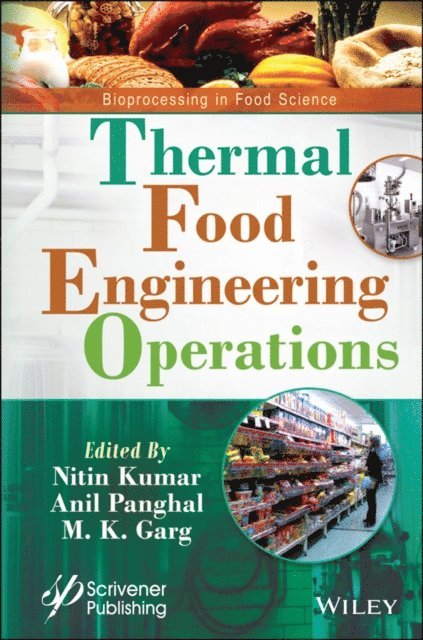
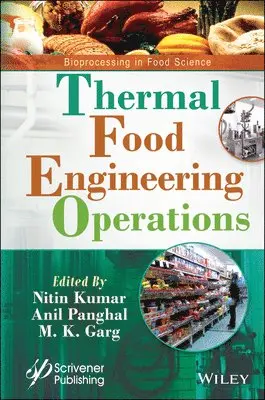
Thermal Food Engineering Operations Presenting cutting-edge information on new and emerging food engineering processes, Thermal Food Engineering Operations, the first volume in the new series, “Bioprocessing in Food Science,” is an essential reference on the modeling, quality, safety, and technologies associated with food processing operations today. As the demand for healthy food increases in the current global scenario, manufacturers are searching for new possibilities for occupying a greater share in the rapidly changing food market. Compiled reports and updated knowledge on thermal processing of food products are imperative for commercial enterprises and manufacturing units. In the current scenario, academia, researchers, and food industries are working in a scattered manner and different technologies developed at each level are not compiled to implement for the benefits of different stakeholders. However, advancements in bioprocesses are required at all levels for the betterment of food industries and consumers. This series of groundbreaking edited volumes will be a comprehensive compilation of all the research that has been carried out so far, their practical applications, and the future scope of research and development in the food bioprocessing industry. This first volume includes all the conventional and novel thermal technologies based on conduction, convection, and radiation principles and covers the basics of microbial inactivation with heat treatments, aseptic processing, retorting, drying, dehydration, combined high-pressure thermal treatments, and safety and quality concerns in food processing. Before studying the novel non-thermal processes and the concept of minimal processing, comprehensive knowledge about the conventional thermal technologies is desired along with benefits, constraints, equipment, and implementation of these technologies. Whether for the engineer, scientist, or student, this series is a must-have for any library. This outstanding new volume: Discusses food safety and quality and thermal processing, laying the groundwork for further study and research Provides case studies of solid–liquid and supercritical fluid extractionExplores pasteurization, ohmic heating, irradiation, and morePresents cutting-edge information on new and emerging food engineering processesAudience: Process and chemical engineers, chemists, engineers in other disciplines, managers, researchers, scientists, students, and teachers working in the field of food engineering and processing
2 178 kr
Skickas inom 7-10 vardagar
NONTHERMAL FOOD ENGINEERING OPERATIONS Presenting cutting-edge information on new and emerging food engineering processes, Nonthermal Food Engineering Operations, the latest volume in the series, “Bioprocessing in Food Science,” is an essential reference on the modeling, quality, safety, and technologies associated with food processing operations today. “Bioprocessing in Food Science” is a series of volumes covering the entirety of unit operations in food processing. This latest volume covers nonthermal food engineering operations, focusing on packaging techniques, artificial intelligence and other emerging technologies and their use and relevance within food engineering, fluid extraction, nanotechnology, and many other topics. As the demand for healthy food is increasing in the current global scenario, manufacturers are searching for new possibilities for occupying a greater share in the rapidly changing food market. Compiled reports and updated knowledge on thermal processing of food products are imperative for commercial enterprises and manufacturing units. In the current scenario, academia, researchers, and food industries are working in a scattered manner and different technologies developed at each level are not compiled to implement for the benefits of different stakeholders. However, advancements in bioprocesses are required at all levels for the betterment of food industries and consumers. This series of groundbreaking edited volumes will be a comprehensive compilation of all the research that has been carried out so far, their practical applications, and the future scope of research and development in the food bioprocessing industry. During the last decade, there have been major developments in novel technologies for food processing. This series will cover all the novel technologies employed for processing different types of foods, encompassing the background, principles, classification, applications, equipment, effect on foods, legislative issue, technology implementation, constraints, and food and human safety concerns.
2 351 kr
Skickas inom 7-10 vardagar
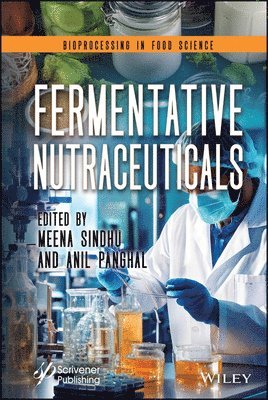
Fermentative Nutraceuticals, the latest volume in the series Bioprocessing in Food Science, presents recent advances and breakthroughs in bioactive peptides derived from fermented foods, highlighting their applications as nutraceuticals. This volume explores opportunities for product design and innovation in food processing. Bioprocessing in Food Science is a series of volumes that comprehensively covers unit operations in food processing. This latest installment addresses the advances, breakthroughs, and challenges associated with fermentative nutraceuticals. The demand for food nutraceuticals and functional foods is growing among consumers worldwide. Academia, researchers, and the food industry are working in a fragmented manner, with technologies developed at each level often not compiled in a unified resource for stakeholders. Typically, the foods we consume are enriched with certain nutrients but deficient in others. Microbial fermentation can enhance the nutritional properties of food. Bioactive peptides produced through fermentation exhibit antioxidative, anticancer, and antidiabetic properties. Increased efforts from the food industry are needed to focus research on peptides and their applications as food-grade preservatives and functional food ingredients. This groundbreaking volume provides a comprehensive compilation of existing research, practical applications, and future research prospects. The editors and contributing experts have made an earnest effort to include every possible detail, presenting an up-to-date repository of scientific literature and their own research findings. This volume is an invaluable resource for students, researchers, product developers, and industry professionals.
2 178 kr
Skickas inom 7-10 vardagar
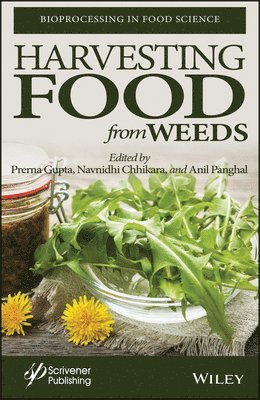
HARVESTING FOODS from WEEDS Food science is a rapidly changing and complicated subject. This new series addresses the current state-of-the-art concepts and technologies associated with the industry and will cover new ideas and emerging novel technologies and processes. With the world’s population continuing to grow exponentially, with many “food deserts” across the globe, including even in rich countries, food production is more important than ever. Finding alternative ways to produce food, in a sustainable way, is increasingly important and something that is on the minds of scientists, engineers, policy makers, and other professionals. Weeds are mainly undesirable plants, but nowadays researchers are exploring these weeds as a food source. Weeds can also grow in adverse climatic conditions with minimum nutritional requirements. Weeds that are rich in nutrients and bioactive compounds are suitable ingredients for functional foods and meet nutritional requirements at a cheaper cost and thus are lucrative and attractive for the food industry. This latest volume in the groundbreaking series, “Bioprocessing in the Food Industry,” covers different types of weeds, like eleusine indica, tribulus terrestris, hibiscus cannabinus, corchorus, gynandra gynandropsis, and many others. These weeds have limited food applications, mainly because of traditional food production. This book will provide detailed knowledge regarding the nutritional value, health benefits and processing methods of these weeds. Readers will learn how these weeds can be utilized for food production, healthy food development, and sustainability. Combining the technological requirements, food safety and quality, this book showcases the utilization of modern technologies to process food products with great benefits. The volume will comprehensively meet the knowledge requirements for the curriculum of undergraduate, postgraduate and research students for learning the concepts of bioprocessing in food engineering, as well as veteran engineers, policy makers, scientists, chemists, and other industry professionals. It is a must have for any library.
2 554 kr
Kommande
2 409 kr
Skickas inom 7-10 vardagar
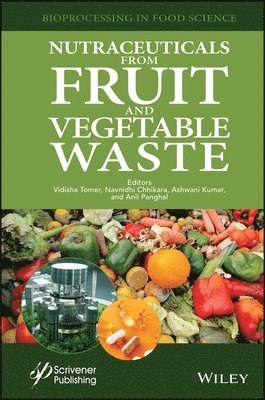
NUTRACEUTICALS FROM FRUIT AND VEGETABLE WASTE Nutraceuticals from Fruit and Vegetable Waste, the latest volume in the series, “Bioprocessing in Food Science,” is an essential reference on the valorization of fruit and vegetable waste and the state of the art for fruit and vegetable processing. “Bioprocessing in Food Science” is a series of volumes covering the entirety of unit operations in food processing. This latest volume disseminates the recent advances, breakthroughs, and challenges of the valorization of fruit and vegetable industry waste. Numerous researchers have studied fruit and vegetable processing and waste valorization in general, but there is little work available to scientists and engineers regarding real-world solutions to practical everyday problems in this industry. The knowledge has to be made available in book format to facilitate academia, researchers, and the food manufacturing industry to utilize waste for extraction of valuable polysaccharides, additives, and nutraceuticals. This groundbreaking new volume is a comprehensive compilation of all the research that has been carried out so far, their practical applications, and the future scope of research. An earnest effort to capture every possible detail and present an up-to-date compilation of scientific literature, including their own research work, for the benefit of the science has been carried out by the editors and experts in their respective fields who contributed. Students, researchers, product developers, and industry professionals will find the book an invaluable resource and a one-of-a-kind tool.
2 351 kr
Skickas inom 7-10 vardagar
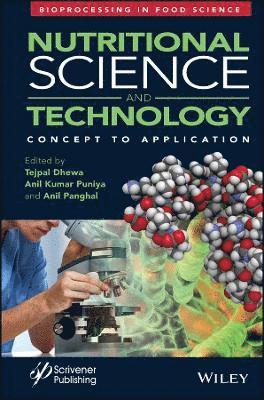
NUTRITIONAL SCIENCE AND TECHNOLOGY Food science is a rapidly changing and complicated subject. This new series addresses the current state-of-the-art concepts and technologies associated with the industry and will cover new ideas and emerging novel technologies and processes. The book Nutritional Science and Technology: Concept to Application in the series, “Bioprocessing in Food Science,” is an excellent resource for any scientist, engineer, student, or other industry professional interested in this topic. It covers a wide range of topics, including human nutrition, technological processes, the health benefits of fermented foods, and food safety concerns. The content contributors and editors are experts in the field, and their primary goal is to provide extensive knowledge about recent technologies in nutritional science and technology to students, researchers, and industry professionals. Manufacturers are looking for new possibilities to occupy a growing share of the rapidly changing food market, and this book will enable them to make informed decisions about adopting appropriate processing technology, implementation, economics, and constraints of different technologies. The book also provides insights on advances in nutritional science and technology for healthy and safe nutrition, with maximum illustrations of how to ensure public health safety and adequate nutrition. Overall, this book is a comprehensive overview of this study area and a valuable resource for anyone interested in this field.
4 546 kr
Skickas inom 7-10 vardagar
Since prehistoric times, humans have consumed probiotic foods and prebiotic components of food, developing them through modification in substrates, processes, and technology. In the current era, health-conscious consumers demand functional food with health-promoting activity. Synbiotics positively affect the gut microbiota population and, therefore, improve human health and well-being. As the demand for healthy food increases globally, manufacturers are searching for new possibilities to occupy a share in the rapidly evolving food market. This book covers synbiotics and advances in food microbiology, its concepts, trends, and safety aspects. It covers the utilization of microbes in different types of foods, encompassing the background, principles, classification, applications, equipment, effect on foods, legislative issues, technology implementation, constraints, and food and human safety concerns, making it a comprehensive resource for academics and industry professionals alike.
2 419 kr
Kommande