Vincent Chua - Böcker
Visar alla böcker från författaren Vincent Chua. Handla med fri frakt och snabb leverans.
3 produkter
3 produkter
2 103 kr
Skickas inom 10-15 vardagar
How can social cohesion be achieved in a meritocratic and multicultural global city-state? Meritocracy poses a paradox: On one hand, it integrates individuals through frameworks of equal treatment, equal justice and opportunity regardless of race, language or religion. On the other hand, individuals are then segregating through academic sorting, they are rewarded based on credentials and performance which also results in elite identification and bonding. After a generation, without mitigation action, social stratification can result. Distinctive circles differentiating social elites from non-elites, the professional classes from non-professional classes emerge. The remedy the authors propose is network diversity which is the organic forming of ties across class and other social boundaries built on deliberate policies, programmes and platforms designed to facilitate that. This social mixing, forged in social infrastructure such as schools, workplaces, and voluntary associations pays off by producing the collective goods of national identity and trust. This hypothesis has been tested in the case of Singapore society and the empirical results from the research on the power of network diversity and bridging social capital are found in this volume. An insightful read for scholars and practitioners in public policy and social network analysis looking to understand the challenges faced by and the experiences that have emerged from the case of Singapore with its multicultural and cosmopolitan setting.
616 kr
Skickas inom 10-15 vardagar
How can social cohesion be achieved in a meritocratic and multicultural global city-state? Meritocracy poses a paradox: On one hand, it integrates individuals through frameworks of equal treatment, equal justice and opportunity regardless of race, language or religion. On the other hand, individuals are then segregating through academic sorting, they are rewarded based on credentials and performance which also results in elite identification and bonding. After a generation, without mitigation action, social stratification can result. Distinctive circles differentiating social elites from non-elites, the professional classes from non-professional classes emerge. The remedy the authors propose is network diversity which is the organic forming of ties across class and other social boundaries built on deliberate policies, programmes and platforms designed to facilitate that. This social mixing, forged in social infrastructure such as schools, workplaces, and voluntary associations pays off by producing the collective goods of national identity and trust. This hypothesis has been tested in the case of Singapore society and the empirical results from the research on the power of network diversity and bridging social capital are found in this volume. An insightful read for scholars and practitioners in public policy and social network analysis looking to understand the challenges faced by and the experiences that have emerged from the case of Singapore with its multicultural and cosmopolitan setting.
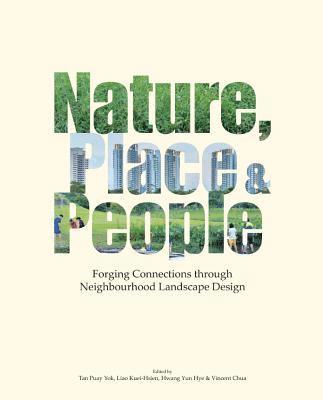
Nature, Place & People: Forging Connections Through Neighbourhood Landscape Design
Inbunden, Engelska, 2018
1 962 kr
Tillfälligt slut
Neighbourhood landscapes are the quintessential forms of urban landscapes in most cities worldwide. They are pervasive, and hence experienced by the large majority of urban dwellers in their everyday life. More than parks, nature reserves or nature areas which are visited as destinations, neighbourhood landscapes provide the most immediate, frequent and convenient form of nature experienced by urban dwellers on a daily basis. They are also valuable as social spaces to bring residents together, foster social ties, and strengthen communities. Despite their importance, surprisingly little has been written to guide the planning and design of neighbourhood landscapes.This book is written for a specific purpose, to illustrate how the design of neighbourhood landscapes helps to deliver more benefits for urban dwellers and, at the same time, protect ecosystems that facilitate human well-being. This is in turn important as the synergistic relationships between human well-being, quality of biophysical urban environment, and health of human-environment interactions fundamentally underpin urban sustainability. The authors emphasize the role neighbourhood landscapes play in forging connections between people and nature, people and people, and people and place. Most of all, the book highlights the role of focusing on people in this endeavour, as it is only when landscapes are appropriately designed, and when people recognize these benefits, that they become valued and protected as a community resource.This book is organized into two parts. Part 1 focuses on the conceptual foundations that underpin the neighbourhood landscape design guidelines being developed. In this section, the authors describe the key concepts relating functions of neighbourhood landscapes to the key urban development goals of sustainability, liveability and reliance; how they can be represented in a framework; and how a synthesis of current knowledge of cities as socio-ecological systems helps to identify principles that can guide the designing of neighbourhood landscapes. Part 2 is more application focused, and is centred on neighbourhood landscape design guidelines inspired by the concept of ecosystem services. The guidelines consist of design approaches, practical strategies, design targets and performance monitoring indicators for tracking the performance of neighbourhood landscapes. The book is written for readers in academia and design practice, and anyone who has a role in shaping neighbourhood landscapes for the benefit of urban dwellers.