436 kr
Kommande
436 kr
Kommande
543 kr
Läs direkt efter köp
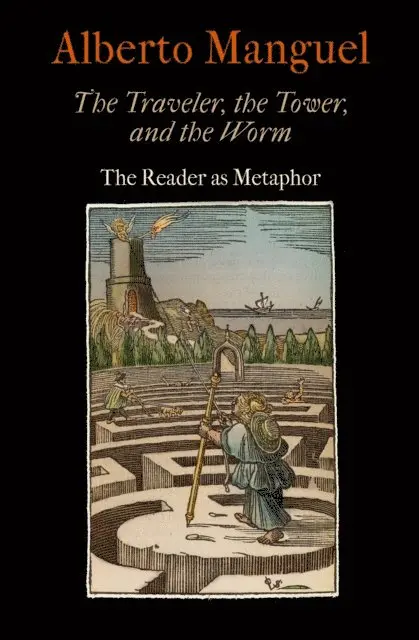
As far as one can tell, human beings are the only species for which the world seems made up of stories, Alberto Manguel writes. We read the book of the world in many guises: we may be travelers, advancing through its pages like pilgrims heading toward enlightenment. We may be recluses, withdrawing through our reading into our own ivory towers. Or we may devour our books like burrowing worms, not to benefit from the wisdom they contain but merely to stuff ourselves with countless words.
With consummate grace and extraordinary breadth, the best-selling author of A History of Reading and The Library at Night considers the chain of metaphors that have described readers and their relationships to the text-that-is-the-world over a span of four millennia. In figures as familiar and diverse as the book-addled Don Quixote and the pilgrim Dante who carries us through the depths of hell up to the brilliance of heaven, as well as Prince Hamlet paralyzed by his learning, and Emma Bovary who mistakes what she has read for the life she might one day lead, Manguel charts the ways in which literary characters and their interpretations reflect both shifting attitudes toward readers and reading, and certain recurrent notions on the role of the intellectual: "We are reading creatures. We ingest words, we are made of words. . . . It is through words that we identify our reality and by means of words that we ourselves are identified."
303 kr
Läs direkt efter köp
945 kr
Läs direkt efter köp
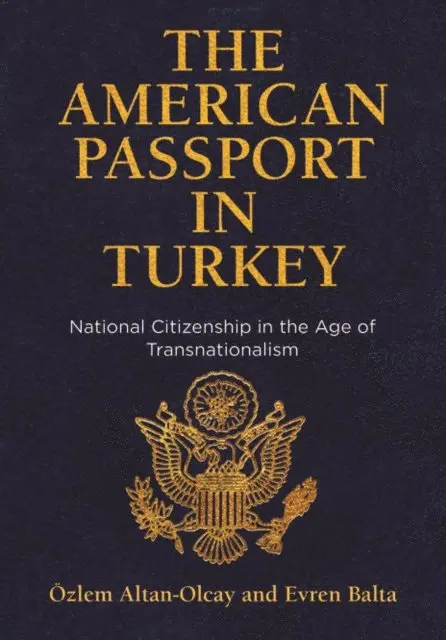
An ethnographic exploration of the meaning of national citizenship in the context of globalizationThe American Passport in Turkey explores the diverse meanings and values that people outside of the United States attribute to U.S. citizenship, specifically those who possess or seek to obtain U.S. citizenship while residing in Turkey. Özlem Altan-Olcay and Evren Balta interviewed more than one hundred individuals and families and, through their narratives, shed light on how U.S. citizenship is imagined, experienced, and practiced in a setting where everyday life is marked by numerous uncertainties and unequal opportunities. When a Turkish mother wants to protect her daughter''s modern, secular upbringing through U.S. citizenship, U.S. citizenship, for her, is a form of insurance for her daughter given Turkey''s unknown political future. When a Turkish-American citizen describes how he can make a credible claim of national belonging because he returned to Turkey yet can also claim a cosmopolitan Western identity because of his U.S. citizenship, he represents the popular identification of the West with the United States. And when a natural-born U.S. citizen describes with enthusiasm the upward mobility she has experienced since moving to Turkey, she reveals how the status of U.S. citizenship and "Americanness" become valuable assets outside of the States.Offering a corrective to citizenship studies where discussions of inequality are largely limited to domestic frames, Altan-Olcay and Balta argue that the relationship between inequality and citizenship regimes can only be fully understood if considered transnationally. Additionally, The American Passport in Turkey demonstrates that U.S. global power not only reveals itself in terms of foreign policy but also manifests in the active desires people have for U.S. citizenship, even when they do not intend to live in the United States. These citizens, according to the authors, create a new kind of empire with borders and citizen-state relations that do not map onto recognizable political territories.
355 kr
Läs direkt efter köp
1 317 kr
Läs direkt efter köp
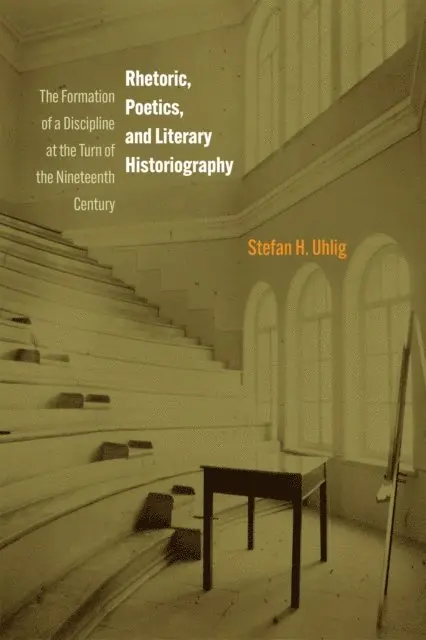
In Rhetoric, Poetics, and Literary Historiography, Stefan H. Uhlig offers a new account of the emergence of literary studies. Most histories of the early years of the field search for unifying origins of literature as a discipline and object of study. Uhlig turns to the decades around 1800 in Europe to reveal that the inception of the literary field was instead defined by intellectual diversity and contestation. He draws on an array of European writers to show how three schools of literary study—rhetoric teaching, theories of poetry, and literary history—emerged and clashed during this time, offering near-contemporaneous, yet divergent, visions of how to understand literature. Rhetoric and poetics thwarted criticism, to different ends, while literary historiography proved institutionally reassuring yet less useful as a tool for textual understanding.Uhlig details how Scottish writers like Adam Smith and Hugh Blair taught rhetoric as a form self-expression, while Anglophone and German theorists of poetry like William Wordsworth, Friedrich Schlegel, and Johann Wolfgang von Goethe both engaged with and resented critics. At the same time, varying opinions on the practice of literary history emerged, with Immanuel Kant and Thomas De Quincey arguing for the independence of literature from historical forces while writers like Matthew Arnold approached literature as a means of narrating cultural archives instead of drawing on close reading and analysis. Rhetoric, Poetics, and Literary Historiography traces current debates in literary studies back to this formative moment, serving as a guide to past and present controversies in the field.
756 kr
Läs direkt efter köp
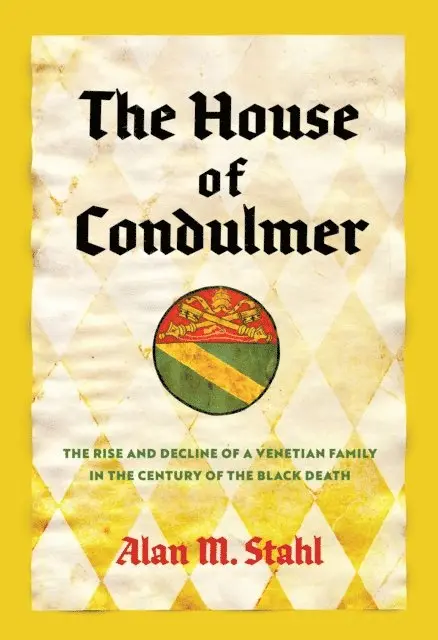
How a lower patrician Venetian family strove for status and wealth over the course of the fourteenth and early fifteenth centuriesThe House of Condulmer tells the story of a lower patrician Venetian family in the wake of the Black Death, as they strove for status and wealth over the course of the fourteenth and early fifteenth centuries. The Condulmers experienced mixed fortunes in their efforts at social mobility. Exiled after their participation in a failed revolt against the Venetian state, they nevertheless managed to accrue a great deal of wealth in the period before the Black Death. In the aftermath of the plague, which ravaged Venice and wiped out many lines of the family, the fortune of the Condulmers was concentrated in two main branches, whose members are the subject of this book.Through original research drawing on hundreds of unpublished archival sources, Alan M. Stahl traces the careers and changing personal circumstances of five members of the Condulmer family: Jacobello, who used his civic participation and donations to achieve noble status for himself and his descendants but impoverished himself and his family in the process; Vielmo, a moneychanger who paraded around in the trappings of wealth, attempting to imitate the appearance of his noble cousins; Franceschina, who used her power over dowries to get noble husbands for her daughters and stepdaughters; Simoneto, who achieved great wealth through Mediterranean commerce but lost it in the crash of the bank in which he was a partner; and Gabriele, who would eventually become one of the most consequential and reviled popes of the Renaissance, Eugene IV.The House of Condulmer brings readers into the world of intrigue, finance, religion, and plague in medieval Venice, capturing the vicissitudes of life in the one of the wealthiest cities of the world on the eve of the Renaissance.
1 192 kr
Läs direkt efter köp
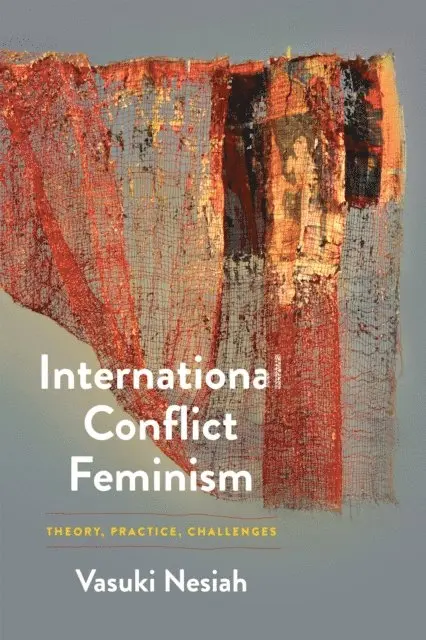
Analyzes the impact of International Conflict Feminism’s alliance with powerful global institutionsIn this book, Vasuki Nesiah tells the story of the astonishing uptake of International Conflict Feminism (ICF) in the most powerful institutions of global governance. ICF refers to a repertoire of policy agendas and legal strategies allied with those institutions to focus on women’s vulnerabilities, fight impunity for sexual violence, and promote women’s roles in peace-building processes. ICF emerged from feminist networks anchored in the Global North that gained momentum in the aftermath of the Cold War. Although this volume offers a testament to ICF’s remarkable success, it also analyzes how this success was intertwined with the defeat of alternative visions and agendas, including a range of dissident and heterodox feminisms that were eclipsed as ICF gained traction.Emerging from Nesiah’s dual occupations in academia and international law and policy practice, International Conflict Feminism shows how centrally the ICF agenda has shaped fields such as peace building, international criminal law, transitional justice, and post-conflict economic policy. Each section pauses at different sites in the international governance architecture to analyze the distributive impact of ICF and its allied global policy agendas to examine what is privileged, legitimized, and empowered, and what is subordinated, marginalized, and further excluded.ICF is a project of ideas and passions, legal proposals, and policy orientations. Today, when the most powerful countries of the world are describing their military, economic, and political interventions as a “feminist foreign policy,” the task of understanding and assessing the ICF project is especially urgent. Nesiah argues that, rather than obfuscating and denying the power of the ICF agenda, grappling with ICF’s power is essential to achieving solidarity with feminisms that don’t have a seat at the table, in particular those dissident feminist traditions with priorities and interests that challenge the dominant world order and its injustices and hierarchies.
851 kr
Läs direkt efter köp
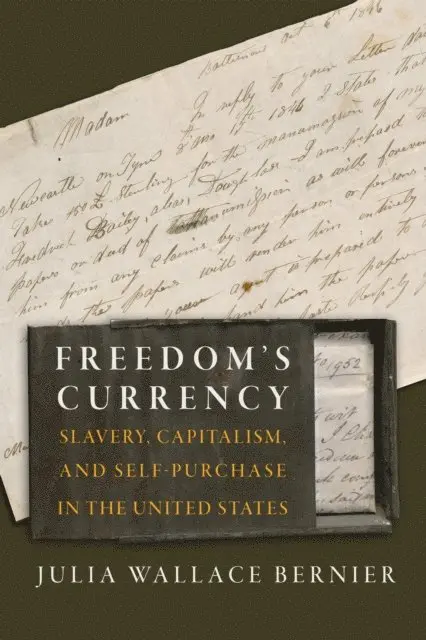
The first comprehensive study of self-purchase in the United States from the American Revolution to the Civil WarEnslaved people lived in a world in which everything had a price. Even freedom. Freedom’s Currency follows enslaved people’s efforts to buy themselves out of slavery across the United States from the American Revolution to the Civil War. In the first comprehensive study of self-purchase in the nation, Julia Wallace Bernier reveals how enslaved people raised money, fostered connections, and made use of slavery’s systems of value and exchange to wrest control of their lives from those who owned them. She chronicles the stories of famous fugitives like Frederick Douglass, who, with the help of friends and supporters, purchased his freedom to protect himself against the continued legal claims of his enslavers and the possibility of recapture. She also shows how enslaved fathers like Lunsford Lane and mothers like Elizabeth Keckley tried to secure lives for their families outside of slavery.Freedom’s Currency argues that freedom played a central role in the social and economic lives of the enslaved and in the ways that these aspects of their lives overlapped. This intimate portrait of community illuminates the complexity of enslaved people’s ideas about their place at the intersection of slavery and American capitalism and their attempts to value freedom above all. Given the stakes—liberation or remaining enslaved—it is an account of both triumph and devastating failure.
573 kr
Läs direkt efter köp
649 kr
Kommande
682 kr
Kommande
746 kr
Läs direkt efter köp
541 kr
Läs direkt efter köp
764 kr
Kommande
450 kr
Läs direkt efter köp
641 kr
Kommande
545 kr
Läs direkt efter köp
649 kr
Kommande
614 kr
Kommande
464 kr
Kommande
389 kr
Kommande
585 kr
Kommande
454 kr
Kommande
764 kr
Kommande
764 kr
Kommande
687 kr
Kommande
625 kr
Kommande
655 kr
Kommande
596 kr
Kommande