241 kr
Skickas inom 3-6 vardagar
241 kr
Skickas inom 3-6 vardagar
230 kr
Skickas inom 3-6 vardagar
179 kr
Skickas
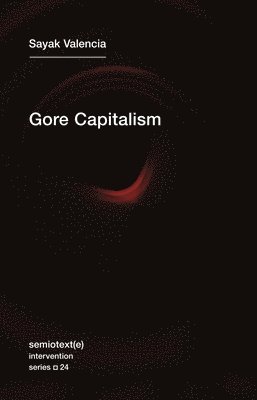
“Death has become the most profitable business in existence.”—from Gore Capitalism
Written by the Tijuana activist intellectual Sayak Valencia, Gore Capitalism is a crucial essay that posits a decolonial, feminist philosophical approach to the outbreak of violence in Mexico and, more broadly, across the global regions of the Third World. Valencia argues that violence itself has become a product within hyper-consumerist neoliberal capitalism, and that tortured and mutilated bodies have become commodities to be traded and utilized for profit in an age of impunity and governmental austerity.
In a lucid and transgressive voice, Valencia unravels the workings of the politics of death in the context of contemporary networks of hyper-consumption, the ups and downs of capital markets, drug trafficking, narcopower, and the impunity of the neoliberal state. She looks at the global rise of authoritarian governments, the erosion of civil society, the increasing violence against women, the deterioration of human rights, and the transformation of certain cities and regions into depopulated, ghostly settings for war. She offers a trenchant critique of masculinity and gender constructions in Mexico, linking their misogynist force to the booming trade in violence.
This book is essential reading for anyone seeking to analyze the new landscapes of war. It provides novel categories that allow us to deconstruct what is happening, while proposing vital epistemological tools developed in the convulsive Third World border space of Tijuana.
269 kr
Skickas inom 3-6 vardagar
198 kr
Skickas
180 kr
Skickas
202 kr
Skickas
189 kr
Skickas inom 7-10 vardagar
207 kr
Skickas
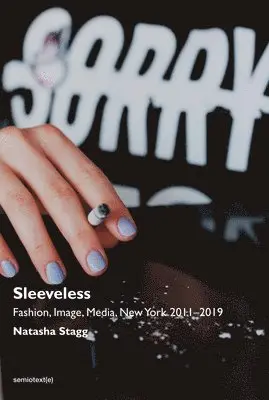
We were supposed to meet Rose McGowan at Café d'Alsace after the party, but she cancelled at the last minute. I saw on Twitter that she had been hit with a drug possession charge, which she insisted was a scheme to keep her Weinstein dirt quiet. I hadn't even read her Weinstein story… I still wanted to know that the articles were being published, and in large quantities, but reading stories of abuse and humiliation was as stupefying as a hangover. I didn't feel empowered; I only felt more hopeless. I wanted to watch the patriarchy go up in flames, but I wasn't excited about what was being pitched to replace it. If we got all of it out in the open, what would we have left? My fear was that guilt would destroy the classics and there'd be no one left to fuck. All movies would be as low-budget and as puritanical as the stuff they play on Lifetime, all of New York would look like a Target ad, every book or article would be a cathartic tell-all, and I'd be sexually frustrated but too ashamed to hook up with assholes, or even to watch porn.—from Sleeveless
Eve Babitz meets Roland Barthes in Sleeveless, Natasha Stagg's follow up to Surveys, her 2016 novel about internet fame. Composed of essays and stories commissioned by fashion, art, and culture magazines, Sleeveless is a scathing and sensitive report from New York in the 2010s. During those years, Stagg worked as an editor for V magazine and as a consultant, creating copy for fashion brands. Through these jobs, she met and interviewed countless industry luminaries, celebrities, and artists, and learned about the quickly evolving strategies of branding. In Sleeveless, she exposes the mechanics of personal identity and its monetization that propelled the narrator of Surveys from a mall job in Tucson to international travel and internet fame.
172 kr
Skickas
147 kr
Skickas
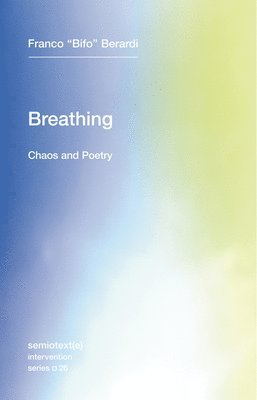
Chaos and Poetry
158 kr
Skickas
Since the hopeful days of the Occupy movement, many things have changed in the respiration of the world, and we have entered a cycle of spasm, despair, and chaos. Breathing is a book about the increasingly chaotic rhythm of our respiration, about the sense of suffocation that grows everywhere.“I can't breathe.” These words panted by Eric Garner before dying, strangled by a police officer on the streets of Staten Island, capture perfectly catching the overall sentiment of our time. In Breathing, Franco "Bifo" Berardi comes back to the subject that was the core of his 2011 book, The Uprising: the place of poetry in the relations between language, capital, and possibility. In The Uprising, he focuses on poetry as an anticipation of the trend toward abstraction that led to the present form of financial capitalism. In Breathing, he tries to envision poetry as the excess of the field of signification, as the premonition of a possible harmony inscribed in the present chaos. The Uprising was a genealogical diagnosis. Breathing is an essay on poetical therapy. How we deal with chaos, as we know that those who fight against chaos will be defeated, because chaos feeds upon war? How do we deal with suffocation? Is there a way out from the corpse of financial capitalism?
209 kr
Skickas
202 kr
Skickas
180 kr
Skickas
158 kr
Skickas
169 kr
Skickas
190 kr
Skickas
180 kr
Skickas
191 kr
Skickas
Radical feminist author Andrea Dworkin was a caricature of misandrist extremism in the popular imagination and a polarizing figure within the women's movement, infamous for her antipornography stance and her role in the feminist sex wars of the 1980s. She still looms large in feminist demands for sexual freedom, evoked as a censorial demagogue, more than a decade after her death. Among the very first writers to use her own experiences of rape and battery in a revolutionary analysis of male supremacy, Dworkin was a philosopher outside and against the academy who wrote with a singular, apocalyptic urgency.
Last Days at Hot Slit brings together selections from Dworkin's work, both fiction and nonfiction, with the aim of putting the contentious positions she's best known for in dialogue with her literary oeuvre. The collection charts her path from the militant primer Woman Hating (1974), to the formally complex polemics of Pornography (1979) and Intercourse (1987) and the raw experimentalism of her final novel Mercy (1990). It also includes “Goodbye to All This” (1983), a scathing chapter from an unpublished manuscript that calls out her feminist adversaries, and “My Suicide” (1999), a despairing long-form essay found on her hard drive after her death in 2005.
296 kr
Skickas
219 kr
Kommande
228 kr
Skickas inom 3-6 vardagar
355 kr
Skickas
219 kr
Kommande
360 kr
Skickas inom 5-8 vardagar
231 kr
Skickas inom 3-6 vardagar
211 kr
Skickas inom 3-6 vardagar
215 kr
Skickas
191 kr
Skickas
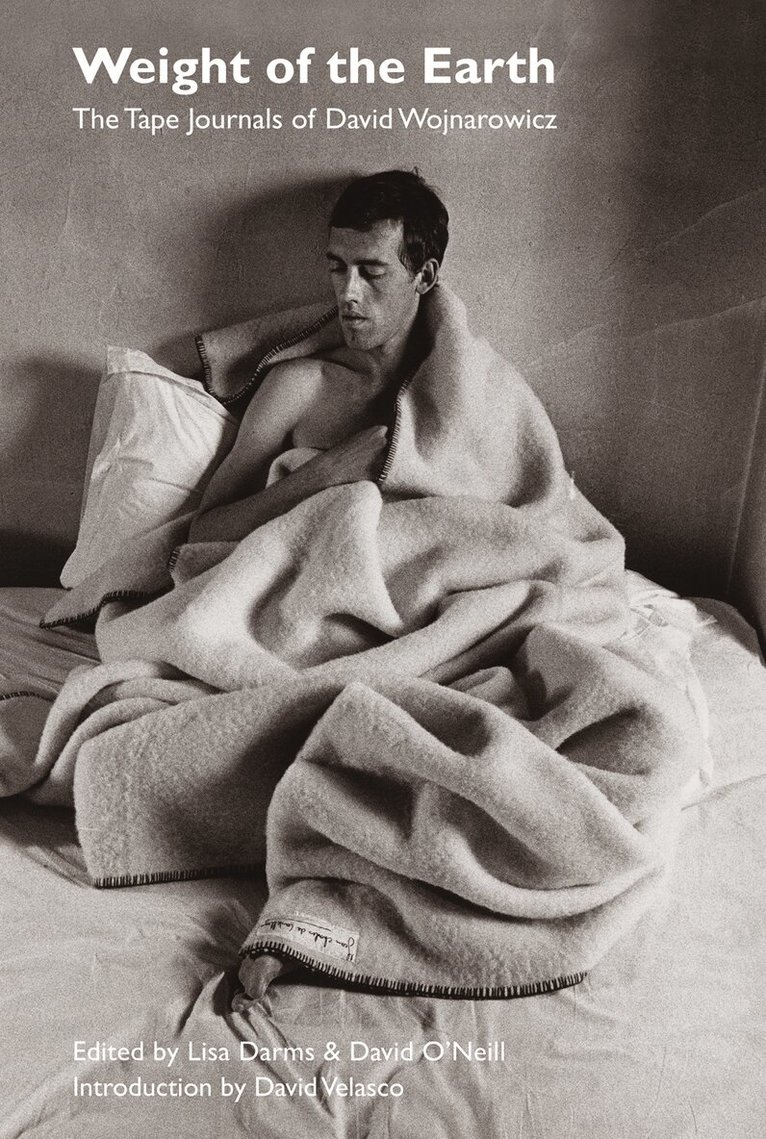
In these moments I hate language. I hate what words are like, I hate the idea of putting these preformed gestures on the tip of my tongue, or through my lips, or through the inside of my mouth, forming sounds to approximate something that's like a cyclone, or something that's like a flood, or something that's like a weather system that's out of control, that's dangerous, or alarming.... It just seems like sounds that have been uttered back and forth maybe now over centuries. And it always boils down to the same meaning within those sounds, unless you're more intense uttering them, or you precede them or accompany them with certain forms of violence.—from The Weight of the Earth
Artist, writer, and activist David Wojnarowicz (1954–1992) was an important figure in the downtown New York art scene. His art was preoccupied with sex, death, violence, and the limitations of language. At the height of the AIDS epidemic, Wojnarowicz began keeping audio journals, returning to a practice he'd begun in his youth.The Weight of the Earth presents transcripts of these tapes, documenting Wojnarowicz's turbulent attempts to understand his anxieties and passions, and tracking his thoughts as they develop in real time.
In these taped diaries, Wojnarowicz talks about his frustrations with the art world, recounts his dreams, and describes his rage, fear, and confusion about his HIV diagnosis. Primarily spanning the years 1987 and 1989, recorded as Wojnarowicz took solitary road trips around the United States or ruminated in his New York loft, the audio journals are an intimate and affecting record of an artist facing death. By turns despairing, funny, exalted, and angry, this volume covers a period largely missing from Wojnarowicz's written journals, providing us with an essential new record of a singular American voice.