Automotive Series – serie
Visar alla böcker i serien Automotive Series. Handla med fri frakt och snabb leverans.
18 produkter
18 produkter
Inbunden, Engelska, 2013
1 403 kr
Skickas inom 5-8 vardagar
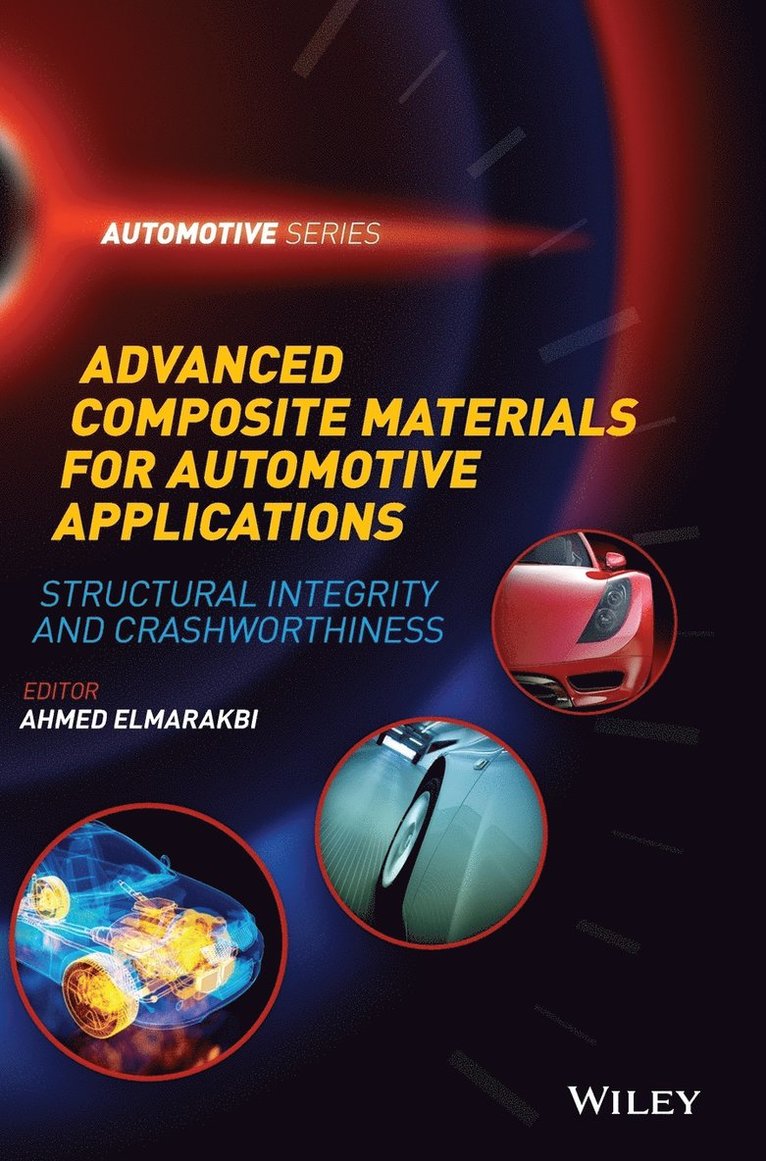
The automotive industry faces many challenges, including increased global competition, the need for higher-performance vehicles, a reduction in costs and tighter environmental and safety requirements. The materials used in automotive engineering play key roles in overcoming these issues: ultimately lighter materials mean lighter vehicles and lower emissions. Composites are being used increasingly in the automotive industry due to their strength, quality and light weight.Advanced Composite Materials for Automotive Applications: Structural Integrity and Crashworthiness provides a comprehensive explanation of how advanced composite materials, including FRPs, reinforced thermoplastics, carbon-based composites and many others, are designed, processed and utilized in vehicles. It includes technical explanations of composite materials in vehicle design and analysis and covers all phases of composite design, modelling, testing and failure analysis. It also sheds light on the performance of existing materials including carbon composites and future developments in automotive material technology which work towards reducing the weight of the vehicle structure.Key features: Chapters written by world-renowned authors and experts in their own fieldsIncludes detailed case studies and examples covering all aspects of composite materials and their application in the automotive industriesUnique topic integration between the impact, crash, failure, damage, analysis and modelling of compositesPresents the state of the art in composite materials and their application in the automotive industryIntegrates theory and practice in the fields of composite materials and automotive engineeringConsiders energy efficiency and environmental implicationsAdvanced Composite Materials for Automotive Applications: Structural Integrity and Crashworthiness is a comprehensive reference for those working with composite materials in both academia and industry, and is also a useful source of information for those considering using composites in automotive applications in the future.
Inbunden, Engelska, 2014
1 350 kr
Skickas inom 5-8 vardagar
Modeling and Control of Engines and DrivelinesControl systems have come to play an important role in the performance of modern vehicles with regards to meeting goals on low emissions and low fuel consumption. To achieve these goals, modeling, simulation, and analysis have become standard tools for the development of control systems in the automotive industry.Modeling and Control of Engines and Drivelines provides an up-to-date treatment of the topic from a clear perspective of systems engineering and control systems, which are at the core of vehicle design.This book has three main goals. The first is to provide a thorough understanding of component models as building blocks. It has therefore been important to provide measurements from real processes, to explain the underlying physics, to describe the modeling considerations, and to validate the resulting models experimentally. Second, the authors show how the models are used in the current design of control and diagnosis systems. These system designs are never used in isolation, so the third goal is to provide a complete setting for system integration and evaluation, including complete vehicle models together with actual requirements and driving cycle analysis.Key features: Covers signals, systems, and control in modern vehiclesCovers the basic dynamics of internal combustion engines and drivelinesProvides a set of standard models and includes examples and case studiesCovers turbo- and super-charging, and automotive dependability and diagnosisAccompanied by a web site hosting example models and problems and solutionsModeling and Control of Engines and Drivelines is a comprehensive reference for graduate students and the authors' close collaboration with the automotive industry ensures that the knowledge and skills that practicing engineers need when analysing and developing new powertrain systems are also covered.
Del 1 - Automotive Series
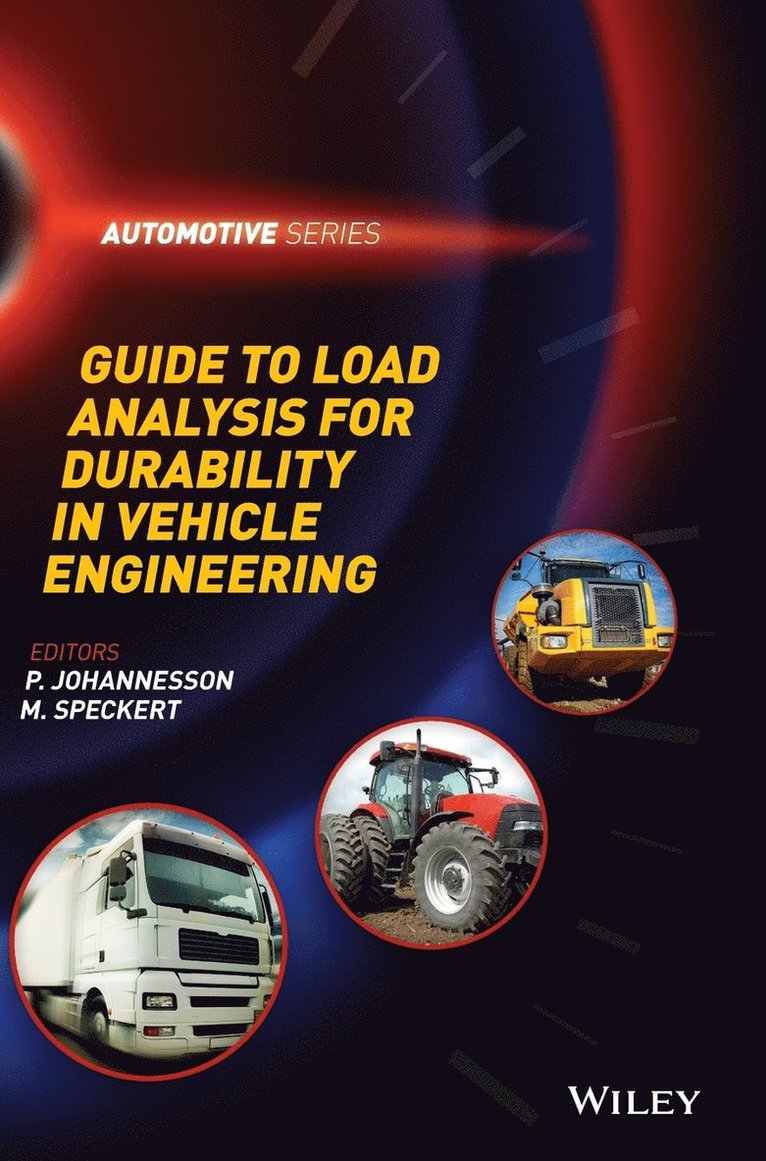
Guide to Load Analysis for Durability in Vehicle Engineering
Inbunden, Engelska, 2013
1 363 kr
Skickas inom 5-8 vardagar
The overall goal of vehicle design is to make a robust and reliable product that meets the demands of the customers and this book treats the topic of analysing and describing customer loads with respect to durability.Guide to Load Analysis for Vehicle and Durability Engineering supplies a variety of methods for load analysis and also explains their proper use in view of the vehicle design process. In Part I, Overview, there are two chapters presenting the scope of the book as well as providing an introduction to the subject. Part II, Methods for Load Analysis, describes useful methods and indicates how and when they should be used. Part III, Load Analysis in view of the Vehicle Design Process, offers strategies for the evaluation of customer loads, in particular characterization of customer populations, which leads to the derivation of design loads, and finally to the verification of systems and components.Key features:• Is a comprehensive collection of methods for load analysis, vehicle dynamics and statistics• Combines standard load data analysis methods with statistical aspects on deriving test loads from surveys of customer usage• Sets the methods used in the framework of system dynamics and response, and derives recommendations for the application of methods in engineering practice• Presents a reliability design methodology based on statistical evaluation of component strength and customers loads• Includes case studies and illustrative examples that translate the theory into engineering practiceDeveloped in cooperation with six European truck manufacturers (DAF, Daimler, Iveco, MAN, Scania and Volvo) to meet the needs of industry, Guide to Load Analysis for Vehicle and Durability Engineering provides an understanding of the current methods in load analysis and will inspire the incorporation of new techniques in the design and test processes.
Inbunden, Engelska, 2015
1 129 kr
Skickas inom 5-8 vardagar
The automotive industry is still one of the world's largest manufacturing sectors, but it suffers from being very technology-focused as well as being relatively short-term focused. There is little emphasis within the industry and its consultancy and analyst supply network on the broader social and economic impacts of automobility and of the sector that provides it.The Global Automotive Industry addresses this need and is a first port of call for any academic, official or consultant wanting an overview of the state of the industry. An international team of specialist researchers, both from academia and business, review and analyse the key issues that make vehicle manufacturing still the world’s premier manufacturing sector, closely tied in with the fortunes of both established and newly emerging economies. In doing so, it covers issues related to manufacturing, both established practices as well as new developments; issues relating to distribution, marketing and retail, vehicle technologies and regulatory trends; and, crucially, labour practices and the people who build cars. In all this it explains both how the current situation arose and also likely future trajectories both in terms of social and regulatory trends, as the technological, marketing and labour practice responses to those, leading in many cases to the development of new business models.Key features Provides a global overview of the automotive industry, covering its current state and considering future challengesContains contributions from international specialists in the automotive sectorPresents current research and sets this in an historical and broader industry contextCovers threats to the industry, including globalization, economic and environmental sustainabilityThe Global Automotive Industry is a must-have reference for researchers and practitioners in the automotive industry and is an excellent source of information for business schools, governments, and graduate and undergraduate students in automotive engineering.
Inbunden, Engelska, 2017
1 390 kr
Skickas inom 5-8 vardagar
Thermal Management of Electric Vehicle Battery Systems provides a thorough examination of various conventional and cutting edge electric vehicle (EV) battery thermal management systems (including phase change material) that are currently used in the industry as well as being proposed for future EV batteries. It covers how to select the right thermal management design, configuration and parameters for the users’ battery chemistry, applications and operating conditions, and provides guidance on the setup, instrumentation and operation of their thermal management systems (TMS) in the most efficient and effective manner. This book provides the reader with the necessary information to develop a capable battery TMS that can keep the cells operating within the ideal operating temperature ranges and uniformities, while minimizing the associated energy consumption, cost and environmental impact. The procedures used are explained step-by-step, and generic and widely used parameters are utilized as much as possible to enable the reader to incorporate the conducted analyses to the systems they are working on. Also included are comprehensive thermodynamic modelling and analyses of TMSs as well as databanks of component costs and environmental impacts, which can be useful for providing new ideas on improving vehicle designs.Key features: Discusses traditional and cutting edge technologies as well as research directionsCovers thermal management systems and their selection for different vehicles and applicationsIncludes case studies and practical examples from the industryCovers thermodynamic analyses and assessment methods, including those based on energy and exergy, as well as exergoeconomic, exergoenvironmental and enviroeconomic techniquesAccompanied by a website hosting codes, models, and economic and environmental databases as well as various related informationThermal Management of Electric Vehicle Battery Systems is a unique book on electric vehicle thermal management systems for researchers and practitioners in industry, and is also a suitable textbook for senior-level undergraduate and graduate courses.
Inbunden, Engelska, 2018
1 390 kr
Skickas inom 5-8 vardagar
Provides technical details and developments for all automotive power transmission systems The transmission system of an automotive vehicle is the key to the dynamic performance, drivability and comfort, and fuel economy. Modern advanced transmission systems are the combination of mechanical, electrical and electronic subsystems. The development of transmission products requires the synergy of multi-disciplinary expertise in mechanical engineering, electrical engineering, and electronic and software engineering.Automotive Power Transmission Systems comprehensively covers various types of power transmission systems of ground vehicles, including conventional automobiles driven by internal combustion engines, and electric and hybrid vehicles. The book covers the technical aspects of design, analysis and control for manual transmissions, automatic transmission, CVTs, dual clutch transmissions, electric drives, and hybrid power systems. It not only presents the technical details of key transmission components, but also covers the system integration for dynamic analysis and control. Key features: Covers conventional automobiles as well as electric and hybrid vehicles.Covers aspects of design, analysis and control.Includes the most recent developments in the field of automotive power transmission systems. The book is essential reading for researchers and practitioners in automotive, mechanical and electrical engineering.
Inbunden, Engelska, 2017
1 420 kr
Skickas inom 5-8 vardagar
The latest developments in the field of hybrid electric vehiclesHybrid Electric Vehicles provides an introduction to hybrid vehicles, which include purely electric, hybrid electric, hybrid hydraulic, fuel cell vehicles, plug-in hybrid electric, and off-road hybrid vehicular systems. It focuses on the power and propulsion systems for these vehicles, including issues related to power and energy management. Other topics covered include hybrid vs. pure electric, HEV system architecture (including plug-in & charging control and hydraulic), off-road and other industrial utility vehicles, safety and EMC, storage technologies, vehicular power and energy management, diagnostics and prognostics, and electromechanical vibration issues.Hybrid Electric Vehicles, Second Edition is a comprehensively updated new edition with four new chapters covering recent advances in hybrid vehicle technology. New areas covered include battery modelling, charger design, and wireless charging. Substantial details have also been included on the architecture of hybrid excavators in the chapter related to special hybrid vehicles. Also included is a chapter providing an overview of hybrid vehicle technology, which offers a perspective on the current debate on sustainability and the environmental impact of hybrid and electric vehicle technology. Completely updated with new chaptersCovers recent developments, breakthroughs, and technologies, including new drive topologiesExplains HEV fundamentals and applicationsOffers a holistic perspective on vehicle electrificationHybrid Electric Vehicles: Principles and Applications with Practical Perspectives, Second Edition is a great resource for researchers and practitioners in the automotive industry, as well as for graduate students in automotive engineering.
Inbunden, Engelska, 2015
1 257 kr
Skickas inom 5-8 vardagar
Comprehensively covers the fundamentals of vehicle dynamics with application to automotive mechatronicsPresents a number of different design, analysis and implementation considerations related to automobiles, including power requirements, converters, performance, fuel consumption and vehicle dynamic modelsCovers the dynamics, modeling and control of not only the entire vehicle system, but also of key elements of the vehicle such as transmissions, and hybrid systems integrationIncludes exercise problems and MATLAB® codesAccompanied by a website hosting animations
Inbunden, Engelska, 2019
1 162 kr
Skickas inom 5-8 vardagar
An introduction to vehicle dynamics and the fundamentals of mathematical modeling Fundamentals of Vehicle Dynamics and Modeling is a student-focused textbook providing an introduction to vehicle dynamics, and covers the fundamentals of vehicle model development. It illustrates the process for construction of a mathematical model through the application of the equations of motion. The text describes techniques for solution of the model, and demonstrates how to conduct an analysis and interpret the results. A significant portion of the book is devoted to the classical linear dynamic models, and provides a foundation for understanding and predicting vehicle behaviour as a consequence of the design parameters.Modeling the pneumatic tire is also covered, along with methods for solving the suspension kinematics problem, and prediction of acceleration and braking performance. The book introduces the concept of multibody dynamics as applied to vehicles and provides insight into how large and high fidelity models can be constructed. It includes the development of a method suitable for computer implementation, which can automatically generate and solve the linear equations of motion for large complex models.Key features: Accompanied by a website hosting MATLAB® code.Supported by the Global Education Delivery channels.Fundamentals of Vehicle Dynamics and Modeling is an ideal textbook for senior undergraduate and graduate courses on vehicle dynamics.
Inbunden, Engelska, 2016
1 202 kr
Skickas inom 5-8 vardagar
The automobile is an icon of modern technology because it includes most aspects of modern engineering, and it offers an exciting approach to engineering education. Of course there are many existing books on introductory fluid/aero dynamics but the majority of these are too long, focussed on aerospace and don’t adequately cover the basics. Therefore, there is room and a need for a concise, introductory textbook in this area.Automotive Aerodynamics fulfils this need and is an introductory textbook intended as a first course in the complex field of aero/fluid mechanics for engineering students. It introduces basic concepts and fluid properties, and covers fluid dynamic equations. Examples of automotive aerodynamics are included and the principles of computational fluid dynamics are introduced. This text also includes topics such as aeroacoustics and heat transfer which are important to engineering students and are closely related to the main topic of aero/fluid mechanics.This textbook contains complex mathematics, which not only serve as the foundation for future studies but also provide a road map for the present text. As the chapters evolve, focus is placed on more applicable examples, which can be solved in class using elementary algebra. The approach taken is designed to make the mathematics more approachable and easier to understand.Key features: Concise textbook which provides an introduction to fluid mechanics and aerodynamics, with automotive applicationsWritten by a leading author in the field who has experience working with motor sports teams in industryExplains basic concepts and equations before progressing to cover more advanced topicsCovers internal and external flows for automotive applicationsCovers emerging areas of aeroacoustics and heat transfer Automotive Aerodynamics is a must-have textbook for undergraduate and graduate students in automotive and mechanical engineering, and is also a concise reference for engineers in industry.
Inbunden, Engelska, 2023
1 023 kr
Skickas inom 5-8 vardagar
THERMAL ENERGY MANAGEMENT IN VEHICLES Comprehensive coverage of thermal energy management systems and components in vehicles In Thermal Energy Management in Vehicles, a team of distinguished researchers delivers a robust and authoritative account of thermal energy management systems and components in vehicles. Covering three main areas—the thermal management of internal combustion engines, mobile air-conditioning, and thermal management of hybrid electric vehicles and electric vehicles—the book discusses and proposes simulation models for many of the components and systems introduced in the book. The authors also cover state-of-the-art and emerging technologies, as well as likely future industry trends, and offer an accompanying website with supplementary materials like downloadable models. Readers will also find: Material that bridges the gap between academia and industryProposed simulation models for vehicular components and systemsFulsome discussions of industry trends likely to take hold in the near futureAccompanying online resources, including downloadable simulation models, on a complimentary websitePerfect for researchers, graduate students, and practitioners in automotive engineering, Thermal Energy Management in Vehicles will also benefit anyone seeking a comprehensive treatment of vehicular thermal energy management systems and components.
Inbunden, Engelska, 2018
1 510 kr
Skickas inom 5-8 vardagar
A concise reference that provides an overview of the design of high speed off-road vehiclesHigh Speed Off-Road Vehicles is an excellent, in-depth review of vehicle performance in off-road conditions with a focus on key elements of the running gear systems of vehicles. In particular, elements such as suspension systems, wheels, tyres, and tracks are addressed in-depth. It is a well-written text that provides a pragmatic discussion of off-road vehicles from both a historical and analytical perspective. Some of the unique topics addressed in this book include link and flexible tracks, ride performance of tracked vehicles, and active and semi-active suspension systems for both armoured and unarmoured vehicles.The book provides spreadsheet-based analytic approaches to model these topic areas giving insight into steering, handling, and overall performance of both tracked and wheeled systems. The author further extends these analyses to soft soil scenarios and thoroughly addresses rollover situations. The text also provides some insight into more advanced articulated systems.High Speed Off-Road Vehicles: Suspensions, Tracks, Wheels and Dynamics provides valuable coverage of: Tracked and wheeled vehiclesSuspension component design and characteristics, vehicle ride performance, link track component design and characteristics, flexible track, and testing of active suspension test vehiclesGeneral vehicle configurations for combat and logistic vehicles, suspension performance modelling and measurement, steering performance, and the effects of limited slip differentials on the soft soil traction and steering behavior of vehiclesWritten from a very practical perspective, and based on the author’s extensive experience, High Speed Off-Road Vehicles provides an excellent introduction to off-road vehicles and will be a helpful reference text for those practicing design and analysis of such systems.
Inbunden, Engelska, 2017
1 390 kr
Skickas inom 5-8 vardagar
This new edition includes approximately 30% new materials covering the following information that has been added to this important work: extends the contents on Li-ion batteries detailing the positive and negative electrodes and characteristics and other components including binder, electrolyte, separator and foils, and the structure of Li-ion battery cell. Nickel-cadmium batteries are deleted.adds a new section presenting the modelling of multi-mode electrically variable transmission, which gradually became the main structure of the hybrid power-train during the last 5 years.newly added chapter on noise and vibration of hybrid vehicles introduces the basics of vibration and noise issues associated with power-train, driveline and vehicle vibrations, and addresses control solutions to reduce the noise and vibration levels.Chapter 10 (chapter 9 of the first edition) is extended by presenting EPA and UN newly required test drive schedules and test procedures for hybrid electric mileage calculation for window sticker considerations.In addition to the above major changes in this second edition, adaptive charging sustaining point determination method is presented to have a plug-in hybrid electric vehicle with optimum performance.
Inbunden, Engelska, 2019
1 484 kr
Skickas inom 5-8 vardagar
A comprehensive examination of advanced battery management technologies and practices in modern electric vehiclesPolicies surrounding energy sustainability and environmental impact have become of increasing interest to governments, industries, and the general public worldwide. Policies embracing strategies that reduce fossil fuel dependency and greenhouse gas emissions have driven the widespread adoption of electric vehicles (EVs), including hybrid electric vehicles (HEVs), pure electric vehicles (PEVs) and plug-in electric vehicles (PHEVs). Battery management systems (BMSs) are crucial components of such vehicles, protecting a battery system from operating outside its Safe Operating Area (SOA), monitoring its working conditions, calculating and reporting its states, and charging and balancing the battery system. Advanced Battery Management Technologies for Electric Vehicles is a compilation of contemporary model-based state estimation methods and battery charging and balancing techniques, providing readers with practical knowledge of both fundamental concepts and practical applications.This timely and highly-relevant text covers essential areas such as battery modeling and battery state of charge, energy, health and power estimation methods. Clear and accurate background information, relevant case studies, chapter summaries, and reference citations help readers to fully comprehend each topic in a practical context. Offers up-to-date coverage of modern battery management technology and practiceProvides case studies of real-world engineering applicationsGuides readers from electric vehicle fundamentals to advanced battery management topicsIncludes chapter introductions and summaries, case studies, and color charts, graphs, and illustrationsSuitable for advanced undergraduate and graduate coursework, Advanced Battery Management Technologies for Electric Vehicles is equally valuable as a reference for professional researchers and engineers.
Inbunden, Engelska, 2019
1 624 kr
Skickas inom 5-8 vardagar
A design reference for engineers developing composite components for automotive chassis, suspension, and drivetrain applicationsThis book provides a theoretical background for the development of elements of car suspensions. It begins with a description of the elastic-kinematics of the vehicle and closed form solutions for the vertical and lateral dynamics. It evaluates the vertical, lateral, and roll stiffness of the vehicle, and explains the necessity of the modelling of the vehicle stiffness. The composite materials for the suspension and powertrain design are discussed and their mechanical properties are provided. The book also looks at the basic principles for the design optimization using composite materials and mass reduction principles. Additionally, references and conclusions are presented in each chapter.Design and Analysis of Composite Structures for Automotive Applications: Chassis and Drivetrain offers complete coverage of chassis components made of composite materials and covers elastokinematics and component compliances of vehicles. It looks at parts made of composite materials such as stabilizer bars, wheels, half-axes, springs, and semi-trail axles. The book also provides information on leaf spring assembly for motor vehicles and motor vehicle springs comprising composite materials. Covers the basic principles for the design optimization using composite materials and mass reduction principlesEvaluates the vertical, lateral, and roll stiffness of the vehicle, and explains the modelling of the vehicle stiffnessDiscusses the composite materials for the suspension and powertrain designFeatures closed form solutions of problems for car dynamics explained in details and illustrated pictoriallyDesign and Analysis of Composite Structures for Automotive Applications: Chassis and Drivetrain is recommended primarily for engineers dealing with suspension design and development, and those who graduated from automotive or mechanical engineering courses in technical high school, or in other higher engineering schools.
Inbunden, Engelska, 2018
1 610 kr
Skickas inom 11-20 vardagar
A comprehensive and versatile treatment of an important and complex topic in vehicle designWritten by an expert in the field with over 30 years of NVH experience, Noise and Vibration Control of Automotive Body offers nine informative chapters on all of the core knowledge required for noise, vibration, and harshness engineers to do their job properly. It starts with an introduction to noise and vibration problems; transfer of structural-borne noise and airborne noise to interior body; key techniques for body noise and vibration control; and noise and vibration control during vehicle development. The book then goes on to cover all the noise and vibration issues relating to the automotive body, including: overall body structure; local body structure; sound package; excitations exerted on the body and transfer functions; wind noise; body sound quality; body squeak and rattle; and the vehicle development process for an automotive body.Vehicle noise and vibration is one of the most important attributes for modern vehicles, and it is extremely important to understand and solve NVH problems. Noise and Vibration Control of Automotive Body offers comprehensive coverage of automotive body noise and vibration analysis and control, making it an excellent guide for body design engineers and testing engineers. Covers all the noise and vibration issues relating to the automotive bodyFeatures a thorough set of tables, illustrations, photographs, and examplesIntroduces automotive body structure and noise and vibration problemsPulls together the diverse topics of body structure, sound package, sound quality, squeak and rattle, and target settingNoise and Vibration Control of Automotive Body is a valuable reference for engineers, designers, researchers, and graduate students in the fields of automotive body design and NVH.
Inbunden, Engelska, 2014
1 630 kr
Skickas inom 5-8 vardagar
Enhanced e-book includes videos Many books have been written on modelling, simulation and control of four-wheeled vehicles (cars, in particular). However, due to the very specific and different dynamics of two-wheeled vehicles, it is very difficult to reuse previous knowledge gained on cars for two-wheeled vehicles.Modelling, Simulation and Control of Two-Wheeled Vehicles presents all of the unique features of two-wheeled vehicles, comprehensively covering the main methods, tools and approaches to address the modelling, simulation and control design issues. With contributions from leading researchers, this book also offers a perspective on the future trends in the field, outlining the challenges and the industrial and academic development scenarios. Extensive reference to real-world problems and experimental tests is also included throughout.Key features: The first book to cover all aspects of two-wheeled vehicle dynamics and controlCollates cutting-edge research from leading international researchers in the fieldCovers motorcycle control – a subject gaining more and more attention both from an academic and an industrial viewpointCovers modelling, simulation and control, areas that are integrated in two-wheeled vehicles, and therefore must be considered together in order to gain an insight into this very specific field of researchPresents analysis of experimental data and reports on the results obtained on instrumented vehicles.Modelling, Simulation and Control of Two-Wheeled Vehicles is a comprehensive reference for those in academia who are interested in the state of the art of two-wheeled vehicles, and is also a useful source of information for industrial practitioners.
Inbunden, Engelska, 2014
976 kr
Tillfälligt slut
Advances in methods of gear design and the possibility of predicting the sound pressure level and life time of gearboxes and perfect instrumentation of test stands allows for the production of a new generation of quiet transmission units. Current literature on gearbox noise and vibration is usually focused on a particular problem such as gearbox design without a detailed description of measurement methods for noise and vibration testing. Vehicle Gearbox Noise and Vibration: Measurement, Signal Analysis, Signal Processing and Noise Reduction Measures addresses this need and comprehensively covers the sources of noise and vibration in gearboxes and describes various methods of signal processing. It also covers gearing design, precision manufacturing, measuring the gear train transmission error, noise test on testing stands and also during vehicle pass-by tests.The analysis tools for gearbox inspection are based on the frequency and time domain methods, including envelope and average toothmesh analysis. To keep the radiated noise under control, the effect of load, the gear contact ratio and the tooth surface modification on noise and vibration are illustrated by measurement examples giving an idea how to reduce transmission noise.Key features: Covers methods of processing noise and vibration signalsTakes a practical approach to the subject and includes a case study covering how to successfully reduce transmission noiseDescribes the procedure for the measurement and calculation of the angular vibrations of gears during rotationConsiders various signal processing methods including order analysis, synchronous averaging, Vold-Kalman order tracking filtration and measuring the angular vibration Vehicle Gearbox Noise and Vibration: Measurement, Signal Analysis, Signal Processing and Noise Reduction Measures is a comprehensive reference for designers of gearing systems and test engineers in the automotive industry and is also a useful source of information for graduate students in automotive and noise engineering.