Contemporary Food Science - Böcker
Visar alla böcker i serien Contemporary Food Science. Handla med fri frakt och snabb leverans.
10 produkter
10 produkter
1 766 kr
Skickas inom 10-15 vardagar
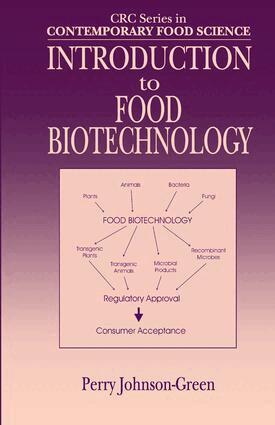
Universities throughout the US and the rest of the world offer Food Biotechnology courses. However, until now, professors lacked a single, comprehensive text to present to their students. Introduction to Food Biotechnology describes, explains, and discusses biotechnology within the context of human nutrition, food production, and food processing. Written for undergraduate students in Food Science and Nutrition who do not have a background in molecular biology, it provides clear explanations of the broad range of topics that comprise the field of food biotechnology.Students will gain an understanding of the methods and rationales behind the genetic modification of plants and animals, as well as an appreciation of the associated risks to the environment and to public health. Introduction to Food Biotechnology examines cell culture, transgenic organisms, regulatory policy, safety issues, and consumer concerns. It covers microbial biotechnology in depth, emphasizing applications to the food industry and methods of large-scale cultivation of microbes and other cells. It also explores the potential of biotechnology to affect food security, risks, and other ethical problems.Biotechnology can be used as a tool within many disciplines, including food science, nutrition, dietetics, and agriculture. Using numerous examples, Introduction to Food Biotechnology lays a solid foundation in all areas of food biotechnology and provides a comprehensive review of the biological and chemical concepts that are important in each discipline. The book develops an understanding of the potential contributions of food biotechnology to the food industry, and towards improved food safety and public health.
1 076 kr
Skickas inom 10-15 vardagar
In order to truly understand food microbiology, it is necessary to have some experience in a laboratory. Food Microbiology Laboratory presents 18 well-tested, student-proven, and thoroughly outlined experiments for use in a one-semester introductory food microbiology course.Based on lab experiments developed for food science and microbiology courses at the University of Massachusetts, this manual provides students with hands-on experience with both traditional methods of enumerating microorganisms from food samples and "rapid methods" often used by industry. It covers topics such as E. coli, Staph, and Salmonella detection, as well as the thermal destruction of microorganisms, and using PCR to confirm Listeria monocytogenes. All parameters and dilutions presented in the text have been optimized to ensure the success of each exercise. An instructor's manual is also available with qualifying course adoptions to assist in the planning, ordering, and preparation of materials.This valuable text features well-established laboratory exercises based upon methods published in the FDA Bacteriological Analytical Manual. It provides the backbone for any laboratory session and may be customized with test kits to reflect the emphasis and level of the class.
Food Chemistry Laboratory
A Manual for Experimental Foods, Dietetics, and Food Scientists, Second Edition
Häftad, Engelska, 2003
1 076 kr
Skickas inom 10-15 vardagar
A popular book in its first edition, The Food Chemistry Laboratory: A Manual for Experimental Foods, Dietetics, and Food Scientists, Second Edition continues to provide students with practical knowledge of the fundamentals of designing, executing, and reporting the results of a research project. Presenting experiments that can be completed, in many cases, without requiring extensive student laboratory facilities, the authors include new exercises in the areas of physical properties, lipids, proteins, and gelatin. Also new in this edition are a brief introduction to each laboratory exercise and a listing of materials needed, approximate time needed for completion, and possible complications and/or pitfalls.Tested and refined for over 20 years, and performed by thousands of students, experiments are presented within 12 planned laboratory sessions. This flexible format allows you to create your own laboratory sessions by choosing the number and order of sessions and experiments to be performed. In addition to the well-tested experiments, The Food Chemistry Laboratory, Second Edition provides students with information on accessing food chemistry literature, research proposal preparation, preparing oral and written technical reports, and an evaluation score sheet. Guidelines for preparing laboratory notebooks are also included and a handy appendix allows rapid access to directions for setting up a difference testing experiment.
2 317 kr
Tillfälligt slut
Recently there has been a growing awareness of the need to conduct sound and inclusive interdisciplinary research in key academic and applied areas. Interdisciplinary Food Safety Research answers the increasing calls to better understand and analyze the impact of food safety efforts. By collecting a wide range of multidisciplinary examples, the text identifies important areas of research while providing a resource for future group-building activities. Topics covered include:Food research safety teams E. coli contamination in a beef slaughterhouse Costs of pathogen reduction strategies for Australian beef slaughter plants Food safety and quality assurance in the food chain Phytosanitary barriers to trade Food safety issues in developing nations Product liability and food safety Consumer acceptance of irradiated meats Food safety control for retail butchers Bases of food safety concerns Future needsThis book encourages comprehensive research by recognizing significant early efforts and considers a range of food safety problems, research techniques, and solutions. The use of global examples and interdisciplinary team-based reports, along with information from the fields of academia, government, and industry, makes Interdisciplinary Food Safety Research an important resource for enhancing the safety of our food supply.
Automation for Food Engineering
Food Quality Quantization and Process Control
Inbunden, Engelska, 2001
3 728 kr
Skickas inom 10-15 vardagar
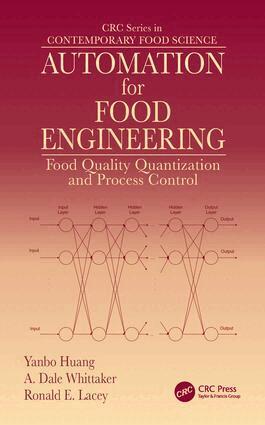
In the past ten years electronics and computer technologies have significantly pushed forward the progress of automation in the food industry. The application of these technologies to automation for food engineering will produce more nutritious, better quality, and safer items for consumers. Automation for Food Engineering: Food Quality Quantization and Process Control explores the usage of advanced methods, such as wavelet analysis and artificial neural networks, to automated food quality evaluation and process control. It introduces novel system prototypes, such as machine vision, elastography, and the electronic nose, for food quality measurement, analysis, and prediction.The book discusses advanced techniques, such as medical imaging, mathematical analysis, and statistical modeling, which have proven successful in food engineering. The authors use the characteristics of food processes to describe concepts, and they employ data from food engineering applications to explain the methods. To aid in the comprehension of technical information, they provide real-world examples and case studies from food engineering projects.The material covers the frameworks, techniques, designs, algorithms, tests and implementation of data acquisition, analysis, modeling, prediction, and control in automation for food engineering. It demonstrates the techniques for automation of food engineering, and helps you in the development of techniques for your own applications. Automation for Food Engineering: Food Quality Quantization and Process Control is the first and only book that gives a systematical study and summary about concepts, principles, methods, and practices in food quality quantization and process control.
3 282 kr
Skickas inom 10-15 vardagar
Dramatically restructured, more than double in size, the second edition of the Food Properties Handbook has been expanded from seven to 24 chapters. In the more than ten years since the publication of the internationally acclaimed and bestselling first edition, many changes have taken place in the approaches used to solve problems in food preservation, processing, storage, marketing, consumption, and even after consumption. Incorporating changes too numerous to list, this updated edition provides new measurement techniques, basic data compiled for diversified food groups, worked-out examples, and detailed graphs and illustrations.Explores Empirical and Theoretical Prediction ModelsThe book clearly defines the terminology and elucidates the theory behind the measurement techniques, including applications and limitations of each method. It includes data on sources of error in measurement techniques and experimental data from the literature in graphical or tabular form. The volume also elucidates empirical and theoretical prediction models for different foods with processing conditions, descriptions of the applications of the properties, and coverage of where and how to use the data and models in food processing.User-Friendly Format Puts the Latest Information within Easy ReachStill under the aegis of Shafir Rahman, the new edition is now an edited volume, benefitting from the input and expertise of numerous contributors spanning both the globe and the many disciplines that influence the field. Presented in a user-friendly format, the second edition remains the definitive, and arguably the only, source for data on physical, thermal, thermodynamic, structural, and acoustic properties of foods.
3 457 kr
Skickas inom 10-15 vardagar
Food Shelf Life Stability provides a unique approach to understanding this critical subject by examining physical, chemical, and biochemical factors affecting food quality.The first section emphasizes the effects that water activity, glass transition, and plasticization have on temperature, water content, and time-dependant phenomena affecting the shelf life of low and intermediate moisture foods.The remaining chapters discuss how mechanical handling and temperature, irradiation, and packaging all influence shelf life. Section two, on chemical factors, examines the benefits of controlled atmosphere storage and modified atmosphere packaging on vegetables, fruits, grains, and oilseeds. The remaining chapters compare the effectiveness of antioxidants, emulsifiers, stabilizers, and sulfur dioxide to enhance food quality. The remaining chapter in this section deals with the application of biotechnology for improving shelf life. Intended for food science professionals as well as students, Food Shelf Life Stability presents the fundamental principles that are applied to maintaining a high food quality for an extended period of time.
Food Chemistry Laboratory
A Manual for Experimental Foods, Dietetics, and Food Scientists, Second Edition
Inbunden, Engelska, 2017
2 713 kr
Skickas inom 10-15 vardagar
A popular book in its first edition, The Food Chemistry Laboratory: A Manual for Experimental Foods, Dietetics, and Food Scientists, Second Edition continues to provide students with practical knowledge of the fundamentals of designing, executing, and reporting the results of a research project. Presenting experiments that can be completed, in many cases, without requiring extensive student laboratory facilities, the authors include new exercises in the areas of physical properties, lipids, proteins, and gelatin. Also new in this edition are a brief introduction to each laboratory exercise and a listing of materials needed, approximate time needed for completion, and possible complications and/or pitfalls.Tested and refined for over 20 years, and performed by thousands of students, experiments are presented within 12 planned laboratory sessions. This flexible format allows you to create your own laboratory sessions by choosing the number and order of sessions and experiments to be performed. In addition to the well-tested experiments, The Food Chemistry Laboratory, Second Edition provides students with information on accessing food chemistry literature, research proposal preparation, preparing oral and written technical reports, and an evaluation score sheet. Guidelines for preparing laboratory notebooks are also included and a handy appendix allows rapid access to directions for setting up a difference testing experiment.
2 781 kr
Skickas inom 10-15 vardagar
In order to truly understand food microbiology, it is necessary to have some experience in a laboratory. Food Microbiology Laboratory presents 18 well-tested, student-proven, and thoroughly outlined experiments for use in a one-semester introductory food microbiology course.Based on lab experiments developed for food science and microbiology courses at the University of Massachusetts, this manual provides students with hands-on experience with both traditional methods of enumerating microorganisms from food samples and "rapid methods" often used by industry. It covers topics such as E. coli, Staph, and Salmonella detection, as well as the thermal destruction of microorganisms, and using PCR to confirm Listeria monocytogenes. All parameters and dilutions presented in the text have been optimized to ensure the success of each exercise. An instructor's manual is also available with qualifying course adoptions to assist in the planning, ordering, and preparation of materials.This valuable text features well-established laboratory exercises based upon methods published in the FDA Bacteriological Analytical Manual. It provides the backbone for any laboratory session and may be customized with test kits to reflect the emphasis and level of the class.
3 187 kr
Skickas inom 10-15 vardagar
Far more than a simple update and revision, the Handbook of Food Spoilage Yeasts, Second Edition extends and restructures its scope and content to include important advances in the knowledge of microbial ecology, molecular biology, metabolic activity, and strategy for the prohibition and elimination of food borne yeasts. The author incorporates new insights in taxonomy and phylogeny, detection and identification, and the physiological and genetic background of yeast stress responses, and introduces novel and improved processing, packaging, and storage technologies.Including 30 new tables, 40 new figures, 20 percent more species, and more than 2000 references, this second edition provides an unparalleled overview of spoilage yeasts, delivering comprehensive coverage of the biodiversity and ecology of yeasts in a wide variety food types and commodities. Beginning with photographic examples of morphological and phenotypic characteristics, the book considers changes in taxonomy and outlines ecological factors with new sections on biofilms and interactions. It examines the yeast lifecycle, emphasizing kinetics and predictive modeling as well as stress responses; describes the regulation of metabolic activities; and looks at traditional and alternative methods for the inhibition and inactivation of yeasts. The book introduces molecular techniques for identification, enumeration, and detection and points to future developments in these areas. An entirely new chapter explores novel industrial applications of yeasts in food fermentation and biotechnology.Providing a practical guide to understanding the ecological factors governing the activities of food borne yeasts, Handbook of Food Spoilage Yeasts, Second Edition lays the foundation for improved processing technologies and more effective preservation and fermentation of food and beverage products.