Epistles of the Brethren of Purity – serie
Visar alla böcker i serien Epistles of the Brethren of Purity. Handla med fri frakt och snabb leverans.
13 produkter
13 produkter
Inbunden, Engelska, 2024
1 009 kr
Skickas inom 5-8 vardagar
This volume presents the original Arabic text of Epistle 9 of the Brethren of Purity, with a clear English translation, introduction, and notes. This epistle is a major medieval treatise on ethics and character traits, which drinks from two sources: the Greek tradition, especially Plato, Aristotle, and Galen; and Islamic revelation.· Presents the original text with a clear new English translation· Includes notes to technical concepts and obscure passages· Provides an Introduction to the text, translation and edition· The Epistles is a classic work of medieval Islamic learningThe Ikhwan al-Safa' (Brethren of Purity), the anonymous adepts of a tenth-century esoteric fraternity based in Basra and Baghdad, hold an eminent position in the history of science and philosophy in Islam due to the wide reception and assimilation of their monumental encyclopaedia, the Rasa 'il Ikhwan al-Safa' (Epistles of the Brethren of Purity). This compendium contains fifty-two epistles offering synoptic accounts of the classical sciences and philosophies of the age; divided into four classificatory parts, it treats themes in mathematics, logic, natural philosophy, psychology, metaphysics, and theology, in addition to didactic fables.This volume presents the original text of Epistle 9, with a clear English translation, introduction, and notes. This epistle is a major treatise on ethics and character traits, which drinks from two sources: the Greek tradition, especially Plato, Aristotle, and Galen; and Islamic revelation. A true repository of virtues and vices, it explores four causes for the diversity of characters, defines five types of souls, and divides society into eight classes. The authors emphasize the dichotomy inward/outward, elevating the guides of the inward interpretation of revelation. They also include a sophisticated understanding of the symbolic meaning of Satan, which could be described as 'spiritual psychology'. The concept of renunciation of worldliness dominates the second half, as do descriptions of the 'Friends of God' as epitomes of moral virtues. Overall, the epistle contains numerous illustrative stories, an unusual number of Qur'anic verses and hadith, and also rare examples of pseudo-quotes from the Biblical tradition and munajat-style texts.
Inbunden, Engelska, 2014
651 kr
Skickas inom 5-8 vardagar
The Ikhwan al-Safa' (Brethren of Purity), the anonymous adepts of a tenth-century esoteric fraternity based in Basra and Baghdad, hold an eminent position in the history of science and philosophy amongst Muslims due to the wide reception and assimilation of their monumental encyclopaedia, the Rasa'il Ikhwan al-Safa' (Epistles of the Brethren of Purity). The present volume is the fourth of this definitive series consisting of the very first critical edition of the Rasa'il in Arabic, complete with the first fully annotated English translation. Prepared by James Montgomery and Ignacio Sánchez, Epistle 4: 'On Geography' contains a description of the Earth and its climes of great importance to understand both the Islamic geographical tradition and the thought of the Ikhwan al-Safa'.This epistle, which was one of the few geographical works translated into Latin in Medieval Europe, clearly shows the acquaintance of its authors with the Greek Prolemaic tradition, and allows us to trace the main sources used in its composition, namely al-Farghani and al-Khwarizmi. But it is also a propaedeutic work aimed at providing the intellectual tools needed to decipher the signs of God's Creation, and at understanding the phenomena of the sub-lunar world in the light of the cosmological order. In this regard, 'On Geography' epitomises many of the central themes in the conceptual universe of the Ikhwan al-Safa', such as the conception of science as a path towards the superior knowledge of God, and the relationship between microcosmos and macrocosmos as part of the divine design.
Inbunden, Engelska, 2017
866 kr
Skickas inom 5-8 vardagar
The Ikhwan al-Safa' (Brethren of Purity), the anonymous adepts of a tenth-century esoteric fraternity based in Basra and Baghdad, hold an eminent position in the history of science and philosophy in Islam due to the wide reception and assimilation of their monumental encyclopaedia, the Rasa 'il Ikhwan al-Safa' (Epistles of the Brethren of Purity). This compendium contains fifty-two epistles offering synoptic accounts of the classical sciences and philosophies of the age; divided into four classificatory parts, it treats themes in mathematics, logic, natural philosophy, psychology, metaphysics, and theology, in addition to didactic fables. Epistles 43-45 succeed the extended description of religions and creeds that opens the final section of the corpus, on the theological sciences. Epistle 43 explains briefly the need for purifying one's soul by performing virtuous acts, after which one can follow the 'straight path' to God. The extremely diverse Epistle 44 is no dry exercise in abstruse theology; rather, it is characterized by the most delightful anecdotes, designed to inform the reader of a deeper truth, that of the hereafter following the soul's separation from the body at death. Alongside references to many of the Prophets encountered in the Qur'an, this Epistle shows a familiarity with other religions such as Christianity, Judaism, and Buddhism. Epistle 45 focuses on companionship and friendship, resonating strongly with the word 'Brethren' by which the authors distinguish themselves. The volume overall is united in its underlying themes of the immortality of the soul and the profound need for mutual cooperation, informed in parts by the general Neoplatonism of the entire corpus, as well as by Aristotelian and Platonic motifs.
Inbunden, Engelska, 2017
1 224 kr
Skickas inom 5-8 vardagar
The Ikhwan al-Safa' (Brethren of Purity), the anonymous adepts of a tenth-century esoteric fraternity based in Basra and Baghdad, hold an eminent position in the history of science and philosophy in Islam due to the wide reception and assimilation of their monumental encyclopaedia, the Rasa 'il Ikhwan al-Safa' (Epistles of the Brethren of Purity). This compendium contains fifty-two epistles offering synoptic accounts of the classical sciences and philosophies of the age; divided into four classificatory parts, it treats themes in mathematics, logic, natural philosophy, psychology, metaphysics, and theology, in addition to didactic fables. Epistles 39 and 40 return to the Aristotelian philosophy of certain earlier Epistles. Yet the topics taken up here are considered by the Ikhwan in light of theological issues, affording an occasion to refute eternalism. Epistle 39 explains movement and rest, the kinds of physical movement, and the species of moved beings, before introducing the divine Mover and the idea that when He ceases to move the world, it will end. The highly composite Epistle 40 addresses themes beyond the various types of causes and effects, including 'divine gifts', God's origination and organization of the world, emanation, and the frequently invoked analogy of numbers. Drawing heavily on al-Kindi's risala of the same name, the main section of Epistle 41: 'On the Definitions and Descriptions' conforms to the title, defining variously categorized phenomena; then follows a diverse range of chapters detailing colours, numbers, ratios, and geometry. The detailed survey of the world presented in these three Epistles concludes the penultimate section of the encyclopaedia, on soul and intellect.
Inbunden, Engelska, 2018
794 kr
Skickas inom 5-8 vardagar
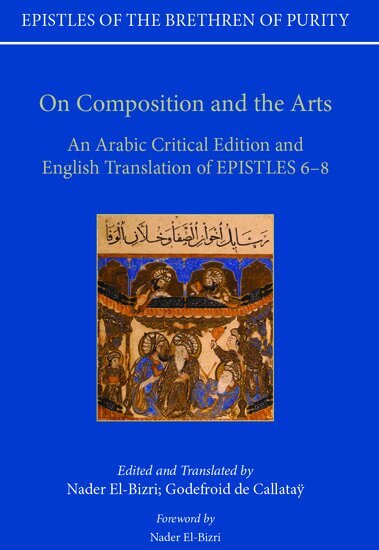
The Brethren of Purity, the anonymous adepts of a tenth-century esoteric fraternity based in Basra and Baghdad, hold an eminent position in the history of science and philosophy in Islam due to the wide reception and assimilation of their monumental encyclopaedia, the Epistles of the Brethren of Purity. This compendium contains fifty-two epistles offering synoptic accounts of the classical sciences and philosophies of the age; divided into four classificatory parts, it treats themes in mathematics, logic, natural philosophy, psychology, metaphysics, and theology, in addition to didactic fables. Epistles 6 to 8 are from the first division of the Epistles, on the propaedeutical and mathematical sciences. Epistle 6 develops ideas concerning natural numbers and their arithmetic, geometric, and harmonic ratios, marked by the influence of Nicomachus of Gerasa and of Euclid. The Brethren here emphasize practical applications of proportionality in music, medicine, and alchemy. Epistle 7 addresses theoretical scientific knowledge as directed towards the spiritual realities of souls, the goal of which is to actualize human potential; this epistle also presents a remarkable classification of sciences. Epistle 8 surveys material cultures in the Islamic mediaeval milieu, embellished by a consideration of the effects of the heavenly bodies on the predisposition of individuals to follow specific trades. These three epistles are, of course, underpinned by the Brethren's perennial tropes of the microcosm/macrocosm analogy and the emanative hierarchy of existents.
Inbunden, Engelska, 2019
1 162 kr
Skickas inom 5-8 vardagar
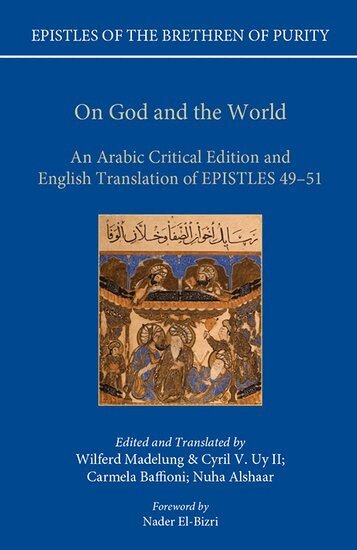
The Brethren of Purity, the anonymous adepts of a tenth-century esoteric fraternity based in Basra and Baghdad, hold an eminent position in the history of science and philosophy in Islam due to the wide reception and assimilation of their monumental encyclopaedia, the Epistles of the Brethren of Purity. This compendium contains fifty-two epistles offering synoptic accounts of the classical sciences and philosophies of the age; divided into four classificatory parts, it treats themes in mathematics, logic, natural philosophy, psychology, metaphysics, and theology, in addition to didactic fables. The texts presented here, from the section on divine and legal sciences, work towards the conclusion of the world-view of the Epistles. In Epistle 49, the Brethren of Purity utilize their usual array of sources - Islamic, Hellenic, and far beyond - in probing the entire hierarchy of existence, from the nature of God to the most basic elements. Epistle 50 describes the 'proper attitudes' towards body and soul, for the attainment of wellness in this world and the hereafter, before addressing religious and philosophical worship. Finally, in Epistle 51, the Brethren consider the arrangement of the world as a whole, restating the Pythagorean theory that all existents are analogous to numbers, knowledge of the characteristics of which is therefore necessary for understanding the world. In advance of the final epistle, on magic, the vast encyclopedic project thus comes full-circle, directing the reader back to the topic of numbers with which the corpus begins.
Inbunden, Engelska, 2019
866 kr
Skickas inom 5-8 vardagar
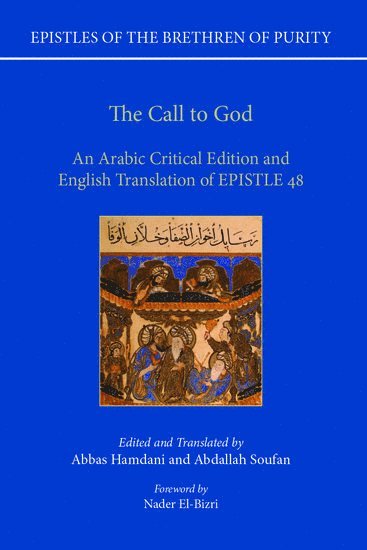
The Brethren of Purity, the anonymous adepts of a tenth-century esoteric fraternity based in Basra and Baghdad, hold an eminent position in the history of science and philosophy in Islam due to the wide reception and assimilation of their monumental encyclopaedia, the Epistles of the Brethren of Purity. This compendium contains fifty-two epistles offering synoptic accounts of the classical sciences and philosophies of the age; divided into four classificatory parts, it treats themes in mathematics, logic, natural philosophy, psychology, metaphysics, and theology, in addition to didactic fables. Epistle 48 belongs to the fourth part dealing with Divine-Legal matters. It deals specifically with methods that should be employed in advocating for the cause of the fraternity, and in calling different segments of society to join its ranks. The targeted segments include philosophers, kings, Shi'is, and administrators. Special templates for preachers engaging with these particular categories are provided throughout. It also addresses issues of governance and the ideal city, while emphasizing again the primacy of the soul over the body, and the need for followers to know themselves. The Epistle ends with a story based on the famous Bilawhar wa-Budhasaf, given as an illustration of a successful mission. Epistle 48 reveals, more than any other epistle, the political nature of the fraternity and its mission, being, as the editors argue, part of the Fatimid missionary efforts in the period preceding the establishment of the Fatimid Dynasty.
Inbunden, Engelska, 2021
794 kr
Skickas inom 5-8 vardagar
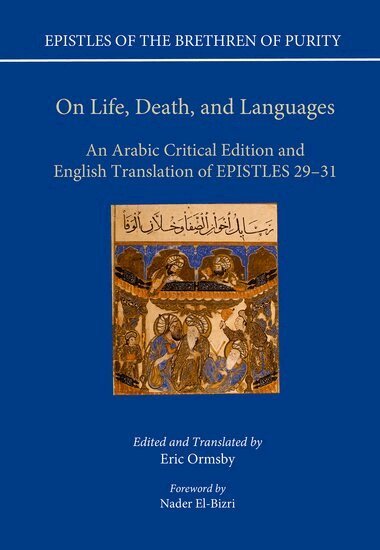
The Ikhwān al-Ṣafāʾ (Brethren of Purity), the anonymous adepts of a tenth-century esoteric fraternity based in Basra and Baghdad, hold an eminent position in the history of science and philosophy in Islam due to the wide reception and assimilation of their monumental encyclopaedia, the Rasāʾil Ikhwān al-Ṣafāʾ (Epistles of the Brethren of Purity). This compendium contains fifty-two epistles offering synoptic accounts of the classical sciences and philosophies of the age; divided into four classificatory parts, it treats themes in mathematics, logic, natural philosophy, psychology, metaphysics, and theology, in addition to didactic fables.The three epistles in this volume are among the most accessible and appealing of the Brethren of Purity's treatises. In their down-to-earth yet elegant style, they present age-old teachings on three fundamental issues: the nature of death, and what this means for body and soul; the truth about pleasure and pain, both physical and spiritual; and the multiplicity of human languages and their origins, beginning with a discussion of natural and mechanical sounds and proceeding to human speech. Rich with metaphors and illustrative parables, here we find outstanding examples of adab in the Arabic literary tradition, refined and genial philosophical discourses that reveal a high degree of sophistication and considerable literary flair.
Inbunden, Engelska, 2025
1 267 kr
Skickas inom 5-8 vardagar
The Risãla al-Jãmi'a ('The Comprehensive Epistle'), attributed to the anonymous Ikhwãn al-Safã?, is an important document in the history of philosophy, sciences, and religious thought in medieval Islamic civilization. Also known as 'The Crown of the Epistles of the Brethren of Purity', it represents the culmination of those 52 Epistles which constitute the oldest mediaeval encyclopaedia of sciences, thought to date from the 10th century. Yet, while following the main themes and four classificatory sections of the Rasã'il, the Jãmi'a distils rather than summarizes the content, delving further into esoteric topics and adopting a more distinctly Ismaili position. In support of their doctrine, the Ikhw?n marshal rational and textual evidence based on the Qur'an and scripture on the one hand and the works of Hellenic as well as Islamic philosophers on the other. The present volume consists of Chapters 1-63 of the first half of the Jãmi'a, covering mainly the first section of the Ras??il (Riyãiyya ta 'limiyya, Propaedeutical-mathematical sciences) and including also an extended discussion on good and evil. This new critical edition draws on 20 manuscripts to establish a more reliable edition of the Arabic text. Translated here for the first time into English and copiously annotated, the work is elucidated by technical and analytical introductions.
Engelska, 2008
917 kr
Skickas inom 5-8 vardagar
Ikhwan al-Safa' (The Brethren of Purity) were the anonymous adepts of a tenth-century esoteric fraternity of lettered urbanites that was principally based in Basra and Baghdad. This brotherhood occupied a prominent station in the history of science and philosophy in Islam due to the wide reception and assimilation of their monumental encyclopaedia: Rasa'il Ikhwan al-Safa' (The Epistles of the Brethren of Purity). This compendium contained fifty-two epistles that offered synoptic explications of the classical sciences and philosophies of the age. Divided into four classificatory parts, it treated themes in mathematics, logic, natural philosophy, psychology, metaphysics and theology, in addition to moral and didactic fables. The Ikhwan were learned compilers of scientific and philosophical knowledge, and their Rasa'il constituted a paradigmatic legacy in the canonization of philosophy and the sciences in mediaeval Islamic civilization.This present volume gathers studies by leading philosophers, historians and scholars of Islamic Studies, who are also the editors and translators of the first Arabic critical editions and first complete annotated English translations of the Rasa'il Ikhwan al-Safa', which will be published in the OUP Series that this present volume initiates, as well as being members of the Editorial Board.The chapters of this present volume explore the conceptual and historical aspects of the philosophical and scientific contents of the Rasa'il and their classification, as well as investigating the authorship and dating of this corpus and the impact that the Ikhwan's intellectual tradition exercised in the unfolding of the history of ideas in Islam.
Inbunden, Engelska, 2010
1 176 kr
Skickas inom 5-8 vardagar
The Ikhwan al-Safa (Brethren of Purity), the anonymous adepts of a tenth-century esoteric fraternity based in Basra and Baghdad, hold an eminent position in the history of science and philosophy in Islam due to the wide reception and assimilation of their monumental encyclopaedia, the Rasa'il Ikhwan al-Safa' (Epistles of the Brethren of Purity). This compendium contains fifty-two epistles offering synoptic accounts of the classical sciences and philosophies of the age; divided into four classificatory parts, it treats themes in mathematics, logic, natural philosophy, psychology, metaphysics, and theology, in addition to didactic fables. The Rasa'il constitutes a paradigmatic legacy in the canonization of philosophy and the sciences in mediaeval Islamic civilization, as well as having shown a permeating influence in Western culture.The present volume is the second of this definitive series, consisting of the very first critical edition of the Rasa'il in its original Arabic, complete with the first fully annotated English translation. Prepared by Professor Carmela Baffioni, Epistles 10-14 comprise the foundations of logic, which remained a fundamental component in pedagogy until the twentieth century. The Ikhwan treat the Isagoge and the larger part of the Organon, both of which were circulating through the Islamic world at that time, as they set about detailing the ten categories of existents, the five predicables, and other such commonplaces of Aristotelian logic, including his seminal method of syllogistic inference. With the claim that logic is the noblest of man's arts, and man the noblest of creatures, the Ikhwan cast Aristotelian tropes in a spiritual light.
Inbunden, Engelska, 2013
866 kr
Skickas inom 5-8 vardagar
The Ikhwan al-Safa' (Brethren of Purity), the anonymous adepts of a tenth-century esoteric fraternity based in Basra and Baghdad, hold an eminent position in the history of science and philosophy in Islam due to the wide reception and assimilation of their monumental encyclopaedia, the Rasa 'il Ikhwan al-Safa' (Epistles of the Brethren of Purity). The fifty-two epistles offer synoptic accounts of the classical sciences of the age, treating themes in mathematics, logic, natural philosophy, psychology, metaphysics, and theology, in addition to didactic fables. The Rasa 'il constitutes a paradigmatic legacy in the canonization of philosophy and the sciences in mediaeval Islamic civilization, and has also shown a permeating influence in Western culture.This volume is the fifth of the series, consisting of the first critical edition of the Rasa 'il in its original Arabic, complete with the fully annotated English translation. Prepared by Dr Nader El-Bizri, Epistles 1 and 2 (on arithmetic and geometry) present technical and epistemic analyses of mathematical concepts and their metaphysical underpinnings, in terms of investigating the properties of numbers and of geometric magnitudes, based primarily on the traditions of Nicomachus of Geresa and of Euclid as interpreted by the Ikhwãn. With a Pythagorean construal of the ultimate principles of mathematics within the symbolic order of mysticism, and inspired by their own ontological outlook on the articles of faith in Islam, the Ikhwãn view arithmetic and geometry through a monotheistic spiritual lens. This informed their treatment of mathematical knowledge, in pedagogic and heuristic terms, as part of the essential disciplines of the quadrivium, which aimed at preparing novices to study logic, then sciences of nature and the soul, before graduating to the lofty topics of theology and metaphysics. The volume also provides an overview of the mathematical sciences within the Islamic intellectual milieu, and of the tenth-century urban culture of Mesopotamian and Syrian locales.
Inbunden, Engelska, 2013
1 410 kr
Skickas inom 5-8 vardagar
This is the first critical edition of Epistles 15-21 of the Brethren of Purity, which explore the natural sciences and correspond to Aristotle's great works on philosophy of nature. Along with Epistle 22, 'On Animals', Epistles 15-21 correspond to the corpus of Aristotle's great works on the philosophy of nature: Physica, De caelo, De generatione et corruption, and Meteorologica I-III. Meteorologica IV may correspond to Epistle 19 'On Minerals' (though no such Aristotelian work has reached us), and Epistle 21 is a reminder of the works on plants written by Theophrastus, Aristotle's pupil, and onwards. Epistle 20, 'On the Quiddity of Nature', is an exposition of Aristotelian doctrines, as well as of those of Neoplatonic origin; it opens the angelologic tradition, whose main representatives in Islamic philosophy were Ibn Sina (d. 1037) and Suhrawardi (d. 1191). Besides providing the necessary references to the works by Aristotle and other Greek authors, this book deals with various doctrines of Ismaili origin echoed in the treatises, foremost of which is the hierarchical representation of the three natural kingdoms, which corresponds to the hierarchy of human beings. The basis of human salvation is here seen in the relation between divine Artisan and human artisan, both of whom accomplish their works by actualizing their knowledge. As is known, although moral behaviour is one necessary condition, salvation cannot be reached without a thorough knowledge of the sciences described in the encyclopaedia.