Ethikon Series in Comparative Ethics - Böcker
Visar alla böcker i serien Ethikon Series in Comparative Ethics. Handla med fri frakt och snabb leverans.
13 produkter
13 produkter
502 kr
Skickas inom 7-10 vardagar
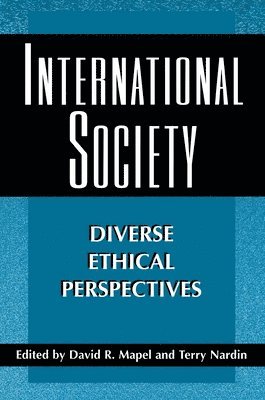
In a time of eroding sovereignty and resurgent nationalism, this collection provides a searching investigation of the moral foundations of the international order. Drawing on diverse philosophical and theological perspectives, the contributors debate the character of international society, the authority of international law and institutions, and the demands of international justice. In a series of philosophical essays, each followed by a critical commentary, the book considers the contributions of legal positivism, natural law, Kantian ethics, contractarian theory, and moral cosmopolitanism to the discussion of law and justice in international society. It also includes commentaries by experts in Jewish, Christian, and Islamic moral theology, and a concluding chapter that compares and contrasts the views presented without seeking to adjudicate their differences. Because of its comprehensive approach and the diversity of its viewpoints, the volume serves as an introduction to the topic and as a resource for scholars, journalists, policy makers, and anyone else who wants to understand better the range of moral perspectives that underlies discussion of the current international order.In addition to the editors, the contributors are Brian Barry, Chris Brown, John Charvet, Richard Friedman, Robert P. George, Sohail Hashmi, Pierre Laberge, David Miller, David Novak, Max L. Stackhouse, Fernando R. Teson, and Frederick G. Whelan.
775 kr
Skickas inom 3-6 vardagar
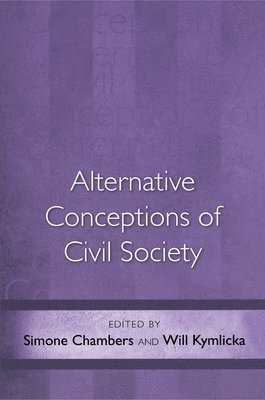
The idea of civil society has long been central to the Western liberal-democratic tradition, where it has been seen as a crucial site for the development and pursuit of basic liberal values such as individual freedom, social pluralism, and democratic citizenship. This book considers how a host of other ethical traditions define civil society. Unlike most studies of the subject, which focus on a particular region or tradition, it considers a range of ethical traditions rarely addressed in one volume: libertarianism, critical theory, feminism, liberal egalitarianism, natural law, Christianity, Islam, Judaism, and Confucianism. It considers the extent to which these traditions agree or disagree on how to define civil society's limits and how to evaluate its benefits and harms. A variety of distinguished advocates and interpreters of these traditions present in-depth explorations of how these various traditions think of ethical pluralism within societies, asking how a society should respond to diversity among its members. Together they produce a work rich with original insights on a wide range of subjects about which little has been written to date.An excellent starting point for a comparative ethics of civil society, this book concludes that while the concept of civil society originated in the liberal tradition, it is quickly becoming an important focus for a truly cross-cultural dialogue. In addition to the editors, the contributors are Michael Banner, Hasan Hanafi, Loren E. Lomasky, Richard Madsen, Michael A. Mosher, Michael Pakaluk, Anne Philips, Adam B. Seligman, Suzanne Last Stone, and Michael Walzer.
439 kr
Skickas inom 7-10 vardagar
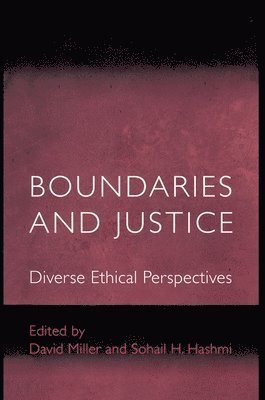
Despite the supreme political and economic significance of boundaries--and ongoing challenges to existing national boundaries--scant attention has been paid to their ethics. This volume explores how diverse ethical traditions understand the political and property rights reflected in territorial and jurisdictional boundaries. It is the first book to bring together thinkers from a range of traditions, both religious and secular, to discuss the ethics of boundaries. Each contributor represents a tradition's views on questions surrounding the use of boundaries to delimit property and political rights. What does it mean to own something? What resources should not be privately owned? What justifies the erection of political boundaries between one people and another? How "hard" should such boundaries be? What rights extend to minorities within a state? Should territorial boundaries coincide with social ones? Does national autonomy have an ethical basis, or is it an aspect of modern power politics? Should we aim for a more inclusive community than that afforded by modern nation-states?Cross-chapter dialogue and a substantive conclusion draw out similarities and differences among the traditions represented, traditions that include Christianity, classical liberalism, Confucianism, international law, Islam, Judaism, liberal egalitarianism, and natural law. In addition to the editors, the contributors are Nigel Biggar, Joseph Boyle, Joseph Chan, Russell Hardin, Will Kymlicka, Loren Lomasky, Robert McCorquodale, Richard B. Miller, David Novak, Sulayman Nyang, Michael Nylan, Raul C. Pangalangan, Daniel Philpott, Jeremy Rabkin, Hillel Steiner, M. Raquibuz Zaman, and Noam J. Zohar.
463 kr
Skickas inom 7-10 vardagar
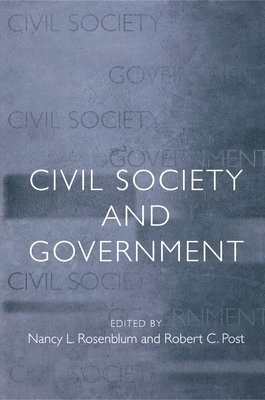
Civil Society and Government brings together an unprecedented array of political, ethical, and religious perspectives to shed light on the complex and much-debated relationship between civil society and the state. Some argue that civil society is a bulwark against government; others see it as an indispensable support for government. Civil society has been portrayed both as a independent of the state and as dependent upon it. This book reveals the extraordinary diversity of views on the subject by examining how civil society has been treated in classical liberalism, liberal egalitarianism, critical theory, feminism, natural law, Christianity, Judaism, Islam, and Confucianism. The volume draws on the work of eminent scholars to address six questions: In terms of function and consequences, does it matter where the line is drawn between civil society and the state? What is the relationship of civil society to the state? In what contexts and under what conditions should government interact with individuals directly or instead indirectly through communal associations? What are the prerogatives and duties of citizenship, and what is the role of civil society in forming good citizens?How should a society handle the conflicts that sometimes arise between the demands of citizenship and those of membership in the non-governmental associations of civil society? A theoretical introduction by the editors--political theorist Nancy Rosenblum and legal scholar Robert Post--and a conclusion by religious ethicist Richard Miller, tie the book together. In addition to Rosenblum, the contributors are Kenneth Baynes, David Biale, John Coleman, Farhad Kazemi, John Kelsay, William Galston, Will Kymlicka, Tom Palmer, Fred Miller, Susan Moller Okin, Peter Nosco, Henry Rosemont, Steven Scalet, David Schmidtz, William Sullivan, Max Stackhouse, Stephen White, and Noam Zohar.
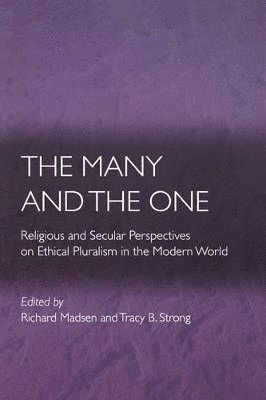
Many and the One
Religious and Secular Perspectives on Ethical Pluralism in the Modern World
Häftad, Engelska, 2003
886 kr
Skickas inom 3-6 vardagar
The war on terrorism, say America's leaders, is a war of Good versus Evil. But in the minds of the perpetrators, the September 11 attacks on New York and Washington were presumably justified as ethically good acts against American evil. Is such polarization leading to a violent "clash of civilizations" or can differences between ethical systems be reconciled through rational dialogue? This book provides an extraordinary resource for thinking clearly about the diverse ways in which humans see good and evil. In nine essays and responses, leading thinkers ask how ethical pluralism can be understood by classical liberalism, liberal-egalitarianism, critical theory, feminism, natural law, Confucianism, Islam, Judaism, and Christianity. Each essay addresses five questions: Is the ideal society ethically uniform or diverse? Should the state protect, ban, or otherwise intervene in ethically based differences? How should disagreements on the rights and duties of citizens be dealt with? Should the state regulate life-and-death decisions such as euthanasia? To what extent should conflicting views on sexual relationships be accommodated?This book shows that contentious questions can be discussed with both incisiveness and civility. The editors provide the introduction and Donald Moon, the conclusion. The contributors are Brian Barry, Joseph Boyle, Simone Chambers, Joseph Chan, Christine Di Stefano, Dale F. Eickelman, Menachem Fisch, William Galston, John Haldane, Chandran Kukathas, David Little, Muhammad Khalid Masud, Carole Pateman, William F. Scheuerman, Adam B. Seligman, James W. Skillen, James Tully, and Lee H. Yearley.
376 kr
Skickas inom 7-10 vardagar
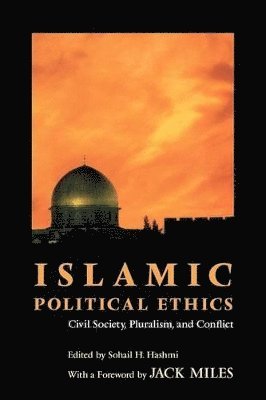
One of the most dynamic aspects of the Islamic revival during the past two centuries has been the rethinking of Islamic political thought. A broad range of actors, ideas, and ideologies characterize the debate on how Islamic ethics and law should be manifested in modern institutions. Yet this aspect of the "return to Islam" has been neglected by policymakers, the media, and even many scholars, who equate "political Islam" with merely one strand, labeled "Islamic fundamentalism." Bringing together ten essays from six volumes of the Ethikon Series in Comparative Ethics, this book gives a rounded treatment to the subject of Islamic political ethics. The authors explore the Islamic ethics of civil society, boundaries, pluralism, and war and peace. They consider questions of diversity, discussing, among other subjects, Islamic regimes' policies regarding women and religious minorities. The chapters on war and peace take up such crucial and timely issues as the Islamic ethics of jihad, examining both the legitimate conditions for the declaration of war and the proper conduct of war.In their discussions, the contributors analyze the works of classical writers as well as the full range of modern reinterpretations. But beyond these analyses of previous and contemporary thinkers, the essays also reach back to the two fundamental sources of Islamic ethics--the Qur'an and traditions of the Prophet--to develop fresh insights into how Islam and Muslims can contribute to human society in the twenty-first century. The authors are Dale F. Eickelman, Hasan Hanafi, Sohail H. Hashmi, Farhad Kazemi, John Kelsay, Muhammad Khalid Masud, Sulayman Nyang, Bassam Tibi, and M. Raquibuz Zaman. From the foreword by Jack Miles: "Western foreign ministers and secretaries of state may have to learn a little theology if the looming clash between embattled elements both in the West and in the Muslim umma is to yield to disengagement and peaceful coexistence, to say nothing of fruitful collaboration...It is, then, no idle academic exercise that the thinkers whose work is collected here have in hand. The long-term practical importance of their work can scarcely be overstated."
329 kr
Skickas inom 7-10 vardagar
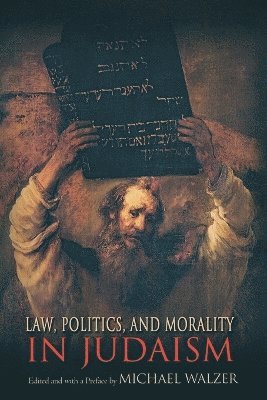
Jewish legal and political thought developed in conditions of exile, where Jews had neither a state of their own nor citizenship in any other. What use, then, can this body of thought be today to Jews living in Israel or as emancipated citizens in secular democratic states? Can a culture of exile be adapted to help Jews find ways of being at home politically today? These questions are central in Law, Politics, and Morality in Judaism, a collection of essays by contemporary political theorists, philosophers, and lawyers. How does Jewish law accommodate--or fail to accommodate--the practice of democratic citizenship? What range of religious toleration and pluralism is compatible with traditional Judaism? What forms of coexistence between Jews and non-Jews are required by shared citizenship? How should Jews operating within halakha (Jewish law) and Jewish history judge the use of force by modern states? The authors assembled here by prominent political theorist Michael Walzer come from different points on the religious-secular spectrum, and they differ greatly in their answers to such questions.But they all enact the relationship at issue since their answers, while based on critical Jewish texts, also reflect their commitments as democratic citizens. The contributors are Michael Walzer, David Biale, the late Robert M. Cover, Menachem Fisch, Geoffrey B. Levey, David Novak, Aviezer Ravitzky, Adam B. Seligman, Suzanne Last Stone, and Noam J. Zohar.
313 kr
Skickas inom 7-10 vardagar
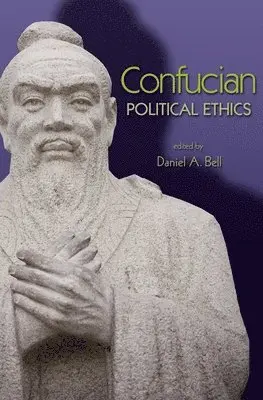
For much of the twentieth century, Confucianism was condemned by Westerners and East Asians alike as antithetical to modernity. Internationally renowned philosophers, historians, and social scientists argue otherwise in Confucian Political Ethics. They show how classical Confucian theory--with its emphasis on family ties, self-improvement, education, and the social good--is highly relevant to the most pressing dilemmas confronting us today. Drawing upon in-depth, cross-cultural dialogues, the contributors delve into the relationship of Confucian political ethics to contemporary social issues, exploring Confucian perspectives on civil society, government, territorial boundaries and boundaries of the human body and body politic, and ethical pluralism. They examine how Confucianism, often dismissed as backwardly patriarchal, can in fact find common ground with a range of contemporary feminist values and need not hinder gender equality. And they show how Confucian theories about war and peace were formulated in a context not so different from today's international system, and how they can help us achieve a more peaceful global community.This thought-provoking volume affirms the enduring relevance of Confucian moral and political thinking, and will stimulate important debate among policymakers, researchers, and students of politics, philosophy, applied ethics, and East Asian studies. The contributors are Daniel A. Bell, Joseph Chan, Sin Yee Chan, Chenyang Li, Richard Madsen, Ni Lexiong, Peter Nosco, Michael Nylan, Henry Rosemont, Jr., and Lee H. Yearley.
361 kr
Skickas inom 7-10 vardagar
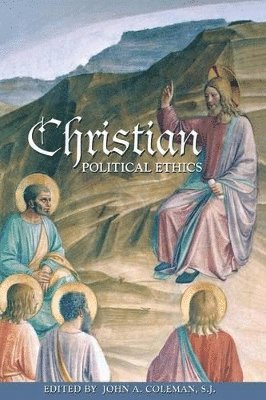
Christian Political Ethics brings together leading Christian scholars of diverse theological and ethical perspectives--Catholic, Lutheran, Calvinist, and Anabaptist--to address fundamental questions of state and civil society, international law and relations, the role of the nation, and issues of violence and its containment. Representing a unique fusion of faith-centered ethics and social science, the contributors bring into dialogue their own varying Christian understandings with a range of both secular ethical thought and other religious viewpoints from Judaism, Islam, and Confucianism. They explore divergent Christian views of state and society--and the limits of each. They grapple with the tensions that can arise within Christianity over questions of patriotism, civic duty, and loyalty to one's nation, and they examine Christian responses to pluralism and relativism, globalization, and war and peace.Revealing the striking pluralism inherent to Christianity itself, this pioneering volume recasts the meanings of Christian citizenship and civic responsibility, and raises compelling new questions about civil disobedience, global justice, and Christian justifications for waging war as well as spreading world peace. It brings Christian political ethics out of the churches and seminaries to engage with today's most vexing and complex social issues. The contributors are Michael Banner, Nigel Biggar, Joseph Boyle, Michael G. Cartwright, John A. Coleman, S.J., John Finnis, Theodore J. Koontz, David Little, Richard B. Miller, James W. Skillen, and Max L. Stackhouse.
488 kr
Skickas inom 10-15 vardagar
Examining inequality through the lenses of moral traditionsRising inequality has attracted a great deal of attention in recent years from scholars and politicians, but the moral dimensions of inequality tend to be ignored. Is inequality morally acceptable? Is it morally permissible to allow practices and systems that contribute to inequality? Is there an ethical obligation to try to alleviate inequality, and if so, who is obligated to take that action?This book addresses these and similar questions not through a single lens of morality but through a comparative study of ethical traditions, both secular and religious, Western and non-Western. The moral and political traditions considered are: liberalism, Marxism, natural law, feminism, Buddhism, Judaism, Islam, Christianity, and Confucianism. The types of inequality examined include property, natural resources, products, wealth, income, jobs, and taxation. The editors open the book with an introduction providing information on contemporary dimensions of the problem of economic inequality, and the book concludes with a summary of the perspectives represented.Economic Inequality and Morality is unusual in that it addresses similarities and differences on the questions of inequality within and across moral traditions. Authors of the individual studies answer a common set of topic-related questions, giving the reader a broad perspective on how a broad range of traditions view and respond to inequality.
742 kr
Skickas inom 10-15 vardagar
Taking the long view of conflicts between truth and political powerWhat role does truth play in government? In context of recent political discourse around the globeand especially in the United Statesit is easy to believe that truth, in the form of indisputable facts, is a matter of debate.But it's also important to remember that since ancient times, every religious and philosophical tradition has wrestled with this question. In this volume, scholars representing ten traditionsWestern and Eastern, religious and secularaddress the nature of truth and its role in government. Among the questions they address: When is deception permissible, or even a good thing? What remedies are necessary and useful when governments fail in their responsibilities to be truthful?The authors consider the relationship between truth and governance in democracies, but also in non-democratic regimes. Although democracy is distinctive in requiring truth as a fundamental basis for governing, non-democratic forms of government also cannot do without truth entirely. If ministers cannot give candid advice to rulers, the government's policies are likely to proceed on false premises and therefore fail. If rulers do not speak truthfully to their people, trust will erode.Each author in this book addresses a common set of issues: the nature of truth; the morality of truth-telling; the nature of government, which shapes each tradition's understanding of the relationship between governance and truth; the legitimacy and limits of regulating speech; and remedies when truth becomes divorced from governance.Truth and Governance will open readers' eyes to the variety of possible approaches to the relationship between truth and governance. Readers will find views they thought self-evident challenged and will come away with a greater understanding of the importance of truth and truth-telling, and of how to counter deliberate deception.
1 276 kr
Skickas inom 10-15 vardagar
Democracy is a dominant principle and practice to legitimate political power in the modern world, and yet its relationship with other moral traditions is not well understood. some but not all commitments with it (feminism, Classical and Egalitarian variants of Liberalism). Ethical theories, by their very nature, are universal theories, and tend to be suspicious of democratic legitimacy arguments – since ‘the people’ who are the source of democratic legitimacy might support some things that are contrary to justice, as described in the tradition. Yet, appeal to democracy remains one of the most powerful appeals to legitimize political power in the contemporary world. This volume is interested in the relationship between democracy and moral traditions whose origins either precede the democratic ideal of legitimacy (Buddhism, Christianity, Confucianism, Hinduism, Islam, Judaism, Natural Law) or developed in some sense along side the democratic ideal and share some of its commitments. This volume explores the relationship between these moral traditions and democracy, including the way in which the moral and religious perspectives have adapted in their encounter with democratic ideals, and have themselves modified democratic theory and practice. This is a work in comparative ethics. The contributors each an expert in one of these traditions, show how that traditions has confronted democracy – and considers different dimensions in which the traditions have engaged with the tradition. To orient the engagement between democratic principles and the moral traditions, the contributors focus on various dimensions in which the two have engaged. The contributors consider their tradition’s views of participation, including eligibility for participation and opportunities to do so, including people with quite different world-views; the scope of democracy, as conceived by the tradition, including how the democratic ‘people’ interact or ought to interact with adherents of other traditions, and whether some of the pillars of moral tradition have themselves helped to inform democratic principles and practices in communities where the ethical tradition is dominant. For example, if there are traditions of consultation and of appropriate authority in a moral tradition, does this operate as a resource for democracy itself, and if so, has it changed the way democracy is practiced in these societies? What emerges is a rich and nuanced tapestry that testifies to the interaction of moral traditions and democracy, and the various relationships between these traditions and democratic theory and practice.
675 kr
Skickas inom 10-15 vardagar
Democracy is a dominant principle and practice to legitimate political power in the modern world, and yet its relationship with other moral traditions is not well understood. some but not all commitments with it (feminism, Classical and Egalitarian variants of Liberalism). Ethical theories, by their very nature, are universal theories, and tend to be suspicious of democratic legitimacy arguments – since ‘the people’ who are the source of democratic legitimacy might support some things that are contrary to justice, as described in the tradition. Yet, appeal to democracy remains one of the most powerful appeals to legitimize political power in the contemporary world. This volume is interested in the relationship between democracy and moral traditions whose origins either precede the democratic ideal of legitimacy (Buddhism, Christianity, Confucianism, Hinduism, Islam, Judaism, Natural Law) or developed in some sense along side the democratic ideal and share some of its commitments. This volume explores the relationship between these moral traditions and democracy, including the way in which the moral and religious perspectives have adapted in their encounter with democratic ideals, and have themselves modified democratic theory and practice. This is a work in comparative ethics. The contributors each an expert in one of these traditions, show how that traditions has confronted democracy – and considers different dimensions in which the traditions have engaged with the tradition. To orient the engagement between democratic principles and the moral traditions, the contributors focus on various dimensions in which the two have engaged. The contributors consider their tradition’s views of participation, including eligibility for participation and opportunities to do so, including people with quite different world-views; the scope of democracy, as conceived by the tradition, including how the democratic ‘people’ interact or ought to interact with adherents of other traditions, and whether some of the pillars of moral tradition have themselves helped to inform democratic principles and practices in communities where the ethical tradition is dominant. For example, if there are traditions of consultation and of appropriate authority in a moral tradition, does this operate as a resource for democracy itself, and if so, has it changed the way democracy is practiced in these societies? What emerges is a rich and nuanced tapestry that testifies to the interaction of moral traditions and democracy, and the various relationships between these traditions and democratic theory and practice.