European Expansion & Global Interaction – serie
Visar alla böcker i serien European Expansion & Global Interaction. Handla med fri frakt och snabb leverans.
13 produkter
13 produkter
Del 9 - European Expansion & Global Interaction
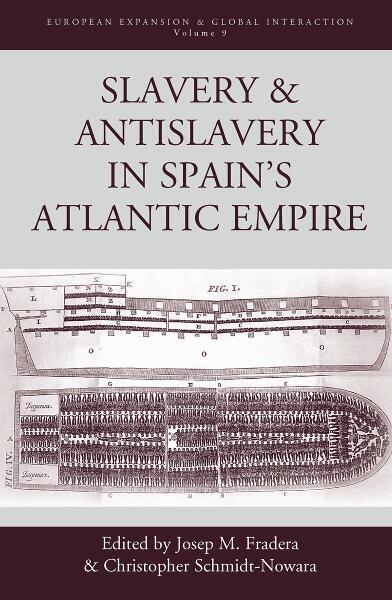
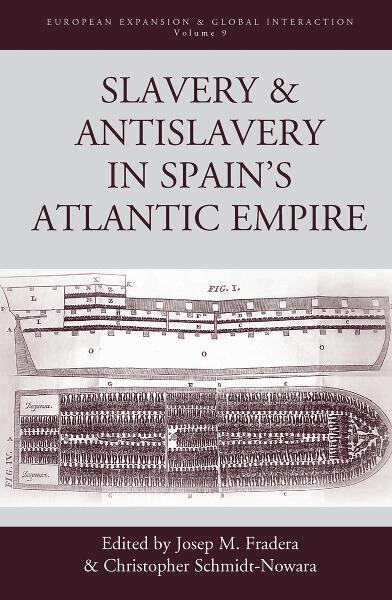
Slavery and Antislavery in Spain's Atlantic Empire
Inbunden, Engelska, 2013
1 960 kr
Skickas inom 3-6 vardagar
African slavery was pervasive in Spain's Atlantic empire yet remained in the margins of the imperial economy until the end of the eighteenth century when the plantation revolution in the Caribbean colonies put the slave traffic and the plantation at the center of colonial exploitation and conflict. The international group of scholars brought together in this volume explain Spain's role as a colonial pioneer in the Atlantic world and its latecomer status as a slave-trading, plantation-based empire. These contributors map the broad contours and transformations of slave-trafficking, the plantation, and antislavery in the Hispanic Atlantic while also delving into specific topics that include: the institutional and economic foundations of colonial slavery; the law and religion; the influences of the Haitian Revolution and British abolitionism; antislavery and proslavery movements in Spain; race and citizenship; and the business of the illegal slave trade.
Inbunden, Engelska, 2001
2 593 kr
Skickas inom 3-6 vardagar
Jews and Judaism played a significant role in the history of the expansion of Europe to the west as well as in the history of the economic, social, and religious development of the New World. They played an important role in the discovery, colonization, and eventually exploitation of the resources of the New World. Alone among the European peoples who came to the Americas in the colonial period, Jews were dispersed throughout the hemisphere; indeed, they were the only cohesive European ethnic or religious group that lived under both Catholic and Protestant regimes, which makes their study particularly fruitful from a comparative perspective. As distinguished from other religious or ethnic minorities, the Jewish struggle was not only against an overpowering and fierce nature but also against the political regimes that ruled over the various colonies of the Americas and often looked unfavorably upon the establishment and tleration of Jewish communities in their own territory. Jews managed to survive and occasionally to flourish against all odds, and their history in the Americas is one of the more fascinating chapters in the early modern history of European expansion.
Häftad, Engelska, 2001
569 kr
Skickas inom 3-6 vardagar
When Columbus arrived in the Americas there were, it is believed, as many as 2,000 distinct, mutually unintelligible tongues spoken in the western hemisphere, encompassing the entire area from the Arctic Circle to Tierra del Fuego. This astonishing fact has generally escaped the attention of historians, in part because many of these indigenous languages have since become extinct. And yet the burden of overcoming America's language barriers was perhaps the one problem faced by all peoples of the New World in the early modern era: African slaves and Native Americans in the Lower Mississippi Valley; Jesuit missionaries and Huron-speaking peoples in New France; Spanish conquistadors and the Aztec rulers. All of these groups confronted America's complex linguistic environment, and all of them had to devise ways of transcending that environment - a problem that arose often with life or death implications.For the first time, historians, anthropologists, literature specialists, and linguists have come together to reflect, in the fifteen original essays presented in this volume, on the various modes of contact and communication that took place between the Europeans and the "Natives." A particularly important aspect of this fascinating collection is the way it demonstrates the interactive nature of the encounter and how Native peoples found ways to shape and adapt imported systems of spoken and written communication to their own spiritual and material needs.
Inbunden, Engelska, 2000
1 965 kr
Skickas inom 3-6 vardagar
When Columbus arrived in the Americas there were, it is believed, as many as 2,000 distinct, mutually unintelligible tongues spoken in the western hemisphere, encompassing the entire area from the Arctic Circle to Tierra del Fuego. This astonishing fact has generally escaped the attention of historians, in part because many of these indigenous languages have since become extinct. And yet the burden of overcoming America's language barriers was perhaps the one problem faced by all peoples of the New World in the early modern era: African slaves and Native Americans in the Lower Mississippi Valley; Jesuit missionaries and Huron-speaking peoples in New France; Spanish conquistadors and the Aztec rulers. All of these groups confronted America's complex linguistic environment, and all of them had to devise ways of transcending that environment - a problem that arose often with life or death implications.For the first time, historians, anthropologists, literature specialists, and linguists have come together to reflect, in the fifteen original essays presented in this volume, on the various modes of contact and communication that took place between the Europeans and the "Natives." A particularly important aspect of this fascinating collection is the way it demonstrates the interactive nature of the encounter and how Native peoples found ways to shape and adapt imported systems of spoken and written communication to their own spiritual and material needs.
Häftad, Engelska, 2004
688 kr
Skickas inom 3-6 vardagar
Jews and Judaism played a significant role in the history of the expansion of Europe to the west as well as in the history of the economic, social, and religious development of the New World. They played an important role in the discovery, colonization, and eventually exploitation of the resources of the New World. Alone among the European peoples who came to the Americas in the colonial period, Jews were dispersed throughout the hemisphere; indeed, they were the only cohesive European ethnic or religious group that lived under both Catholic and Protestant regimes, which makes their study particularly fruitful from a comparative perspective. As distinguished from other religious or ethnic minorities, the Jewish struggle was not only against an overpowering and fierce nature but also against the political regimes that ruled over the various colonies of the Americas and often looked unfavorably upon the establishment and tleration of Jewish communities in their own territory. Jews managed to survive and occasionally to flourish against all odds, and their history in the Americas is one of the more fascinating chapters in the early modern history of European expansion.
Inbunden, Engelska, 2006
1 965 kr
Skickas inom 3-6 vardagar
Portugal was the pioneer of the transatlantic slave trade, the ruler of both Brazil and Angola — the all time champions of that trade —, and one of the last western countries to decree the abolition of slaving institutions. Paradoxically, and in spite of the overwhelming number of works devoted to the problems of slavery produced in recent decades, little was known about the way Portugal dealt with the twilight of the age of slavery and, most of all, with abolitionism. This book offers the first study of the abolition of the Portuguese slave trade, covering the period from the end of the eighteenth century to the mid-1860s, and bringing to life a dark and silenced corner in the history of the odious commerce. Based on a thorough examination of Portuguese and British historical sources — most of them never used before —, and on his awareness of the international scholarship in the field in which he writes, it investigates not only the Portuguese pro and anti-abolitionist attitudes but also the underlying ideologies, and whether and how those attitudes and ideologies changed over time and in the light of events in the political, economic and social spheres.
Inbunden, Engelska, 2006
1 903 kr
Skickas inom 3-6 vardagar
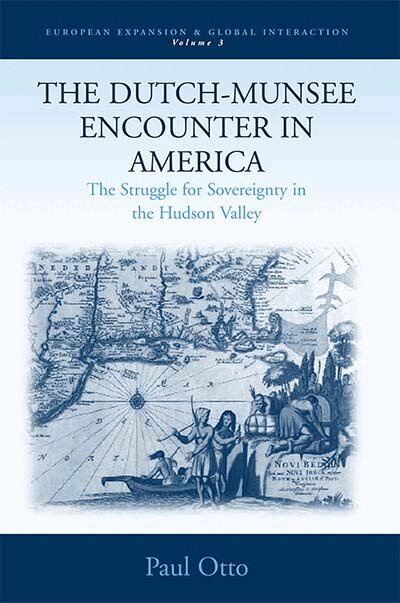
Employing a frontier framework, this book traces intercultural relations in the lower Hudson River valley of early seventeenth-century New Netherland. It explores the interaction between the Dutch and the Munsee Indians and considers how they, and individuals within each group, interacted, focusing in particular on how the changing colonial landscape affected their cultural encounter and Munsee cultural development. At each stage of European colonization - first contact, trade, and settlement - the Munsees faced evolving and changing challenges.Understanding culture in terms of worldview and societal structures, this volume identifies ways in which Munsee society changed in an effort to adjust to the new intercultural relations and looks at the ways the Munsees maintained aspects of their own culture and resisted any imposition of Dutch societal structures and sovereignty over them. In addition, the book includes a suggestive afterword in which the author applies his frontier framework to Dutch-indigenous relations in the Cape colony.
Häftad, Engelska, 2015
569 kr
Skickas inom 3-6 vardagar
African slavery was pervasive in Spain’s Atlantic empire yet remained in the margins of the imperial economy until the end of the eighteenth century when the plantation revolution in the Caribbean colonies put the slave traffic and the plantation at the center of colonial exploitation and conflict. The international group of scholars brought together in this volume explain Spain’s role as a colonial pioneer in the Atlantic world and its latecomer status as a slave-trading, plantation-based empire. These contributors map the broad contours and transformations of slave-trafficking, the plantation, and antislavery in the Hispanic Atlantic while also delving into specific topics that include: the institutional and economic foundations of colonial slavery; the law and religion; the influences of the Haitian Revolution and British abolitionism; antislavery and proslavery movements in Spain; race and citizenship; and the business of the illegal slave trade.
Inbunden, Engelska, 2016
1 960 kr
Skickas inom 3-6 vardagar
Today, a century and a half after the abolition of slavery across most of the Americas, the idea of monetary reparations for former slaves and their descendants continues to be a controversial one. Lost among these debates, however, is the fact that such payments were widespread in the nineteenth century—except the “victims” were not slaves, but the slaveholders deprived of their labor. This landmark comparative study analyzes the debates over compensation within France and Great Britain. It lays out in unprecedented detail the philosophical, legal-political, and economic factors at play, establishing a powerful new model for understanding the aftermath of slavery in the Americas.
Häftad, Engelska, 2021
569 kr
Skickas inom 3-6 vardagar
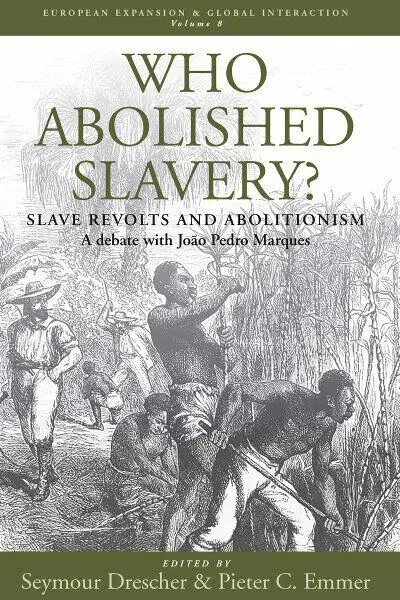
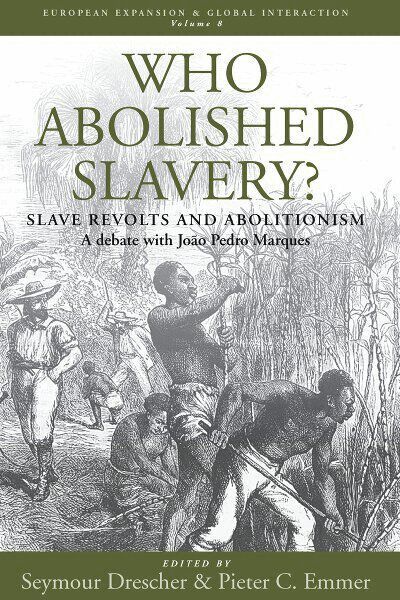
The past half-century has produced a mass of information regarding slave resistance, ranging from individual acts of disobedience to massive uprisings. Many of these acts of rebellion have been studied extensively, yet the ultimate goals of the insurgents remain open for discussion. Recently, several historians have suggested that slaves achieved their own freedom by resisting slavery, which counters the predominant argument that abolitionist pressure groups, parliamentarians, and the governmental and anti-governmental armies of the various slaveholding empires were the prime movers behind emancipation. Marques, one of the leading historians of slavery and abolition, argues that, in most cases, it is impossible to establish a direct relation between slaves’ uprisings and the emancipation laws that would be approved in the western countries. Following this presentation, his arguments are taken up by a dozen of the most outstanding historians in this field. In a concluding chapter, Marques responds briefly to their comments and evaluates the degree to which they challenge or enhance his view.
Inbunden, Engelska, 2007
1 960 kr
Skickas inom 3-6 vardagar
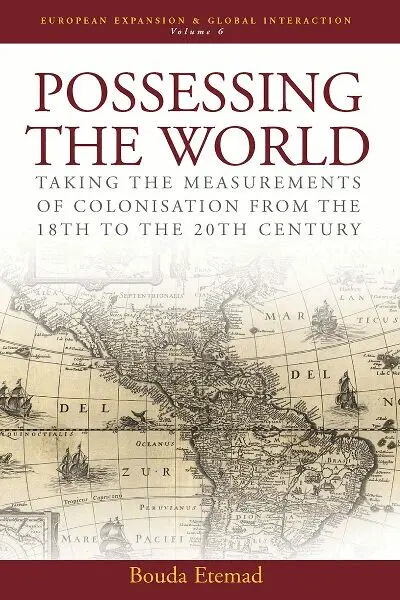
Based on an impressive body of information and data, this volume recounts the history of five continents over a long stretch of time and in a comparative approach. From the beginning of European expansion the question was posed: what were the "empire tools" that gave Europe its military superiority, even before the industrial revolution? What was it that enabled Europeans to withstand life-threatening tropical diseases and to control indigenous populations? This book gives a fresh and wide-ranging view of the construction and collapse of the modern colonial empires of Europe, the United States of America and Japan.
Inbunden, Engelska, 2007
1 960 kr
Skickas inom 3-6 vardagar
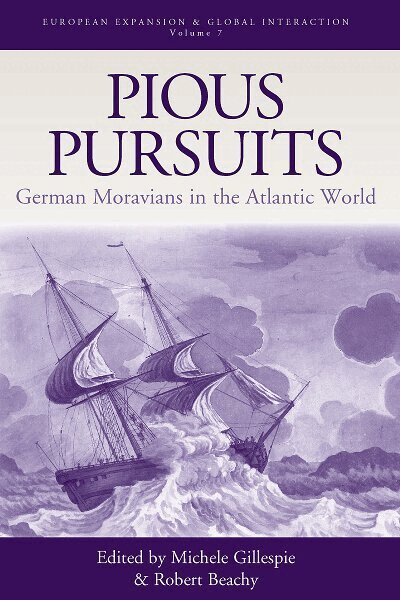
Recent work on the history of migration and the Atlantic World has underscored the importance of the political economies of Europe, Africa, and the Americas in the eighteenth century, emphasizing the impact of these exchanges on political relations and state-building, and on economic structures, commerce, and wealth. Too little of this work explores culture and identity outside the Anglo-American context, especially as reflected through religious developments of radical Pietists and other Germans, the second largest group of migrants to the American colonies in the eighteenth century.This volume offers a fresh vantage point from which to examine the Atlantic World. Quick to traverse the conventional political boundaries that divided European states and American colonies, Moravians departed their homeland to form new congregations in the most cosmopolitan European cities as well as on the North American frontier. Pious Pursuits explores the lives and beliefs of Atlantic World Moravians, as well as their communities and culture, and it provides a new framework for analysis of the Atlantic World that is comparative and transnational.
Inbunden, Engelska, 2010
1 960 kr
Skickas inom 3-6 vardagar
The past half-century has produced a mass of information regarding slave resistance, ranging from individual acts of disobedience to massive uprisings. Many of these acts of rebellion have been studied extensively, yet the ultimate goals of the insurgents remain open for discussion. Recently, several historians have suggested that slaves achieved their own freedom by resisting slavery, which counters the predominant argument that abolitionist pressure groups, parliamentarians, and the governmental and anti-governmental armies of the various slaveholding empires were the prime movers behind emancipation. Marques, one of the leading historians of slavery and abolition, argues that, in most cases, it is impossible to establish a direct relation between slaves’ uprisings and the emancipation laws that would be approved in the western countries. Following this presentation, his arguments are taken up by a dozen of the most outstanding historians in this field. In a concluding chapter, Marques responds briefly to their comments and evaluates the degree to which they challenge or enhance his view.