International Series in the Physical and Chemical Engineering Sciences - Böcker
1 200 kr
Skickas inom 5-8 vardagar
2 420 kr
Skickas inom 3-6 vardagar
1 113 kr
Skickas inom 7-10 vardagar
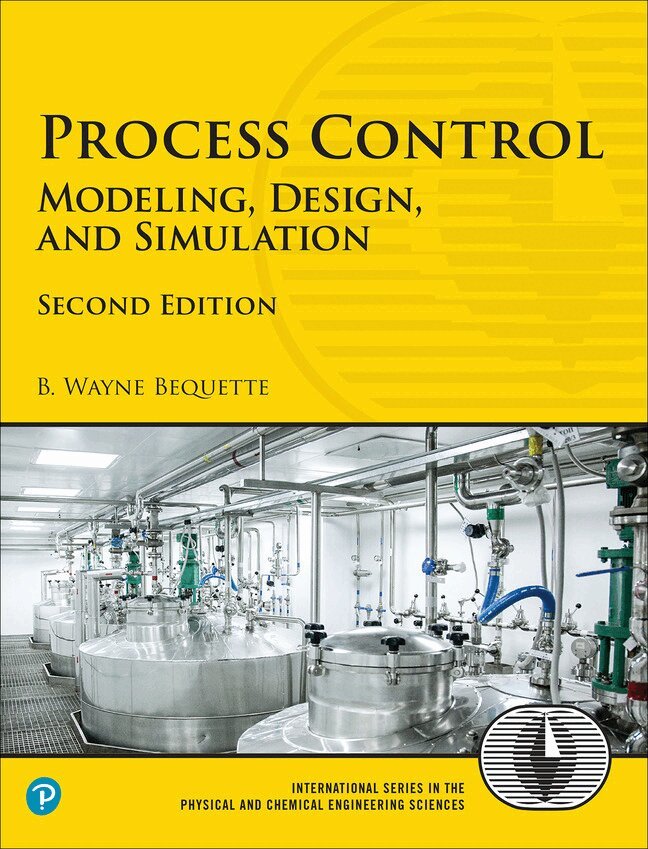
Master Process Control Hands On, through Updated Practical Examples and MATLAB® Simulations
Process Control: Modeling, Design, and Simulation, Second Edition, is a complete introduction to process control and has been fully updated, integrating current software tools to enable professionals and students to master critical techniques hands on through simulations based on modern versions of MATLAB. This revised edition teaches the field's most important techniques, behaviors, and control problems with even more practical examples and exercises. Wide-ranging enhancements include safety considerations, an expanded discussion of digital control, additional process examples, and updates throughout for newer versions of MATLAB and SIMULINK.
Fundamentals of process control and instrumentation, including objectives, variables, block diagrams, and process flowsheets Methodologies for developing dynamic models of chemical processes, including compartmental models Dynamic behavior of linear systems: state-space models, transfer function-based models (including conversion to state space), and more Empirical and discrete-time models, including relationships among types of discrete models Feedback control; proportional, integral, and derivative (PID) controllers; and closed-loop stability analysis Frequency response analysis techniques for evaluating the robustness of control systems Improving control loop performance: internal model control (IMC), automatic tuning, gain scheduling, and enhanced disturbance rejection Split-range, selective, and override strategies for switching among inputs or outputs Control loop interactions and multivariable controllers An introduction to model predictive control (MPC), with a new discrete state-space model derivation exerciseBequette walks step by step through developing control instrumentation diagrams for an entire chemical process, reviewing common control strategies for individual unit operations, then discussing strategies for integrated systems. This edition also includes 16 learning modules demonstrating how to use MATLAB and SIMULINK to solve many key control problems, including new modules on process monitoring and safety, as well as a detailed new study of artificial pancreas systems for Type 1 diabetes.
Register your book for convenient access to downloads, updates, and/or corrections as they become available. See inside book for details.
2 012 kr
Skickas inom 7-10 vardagar
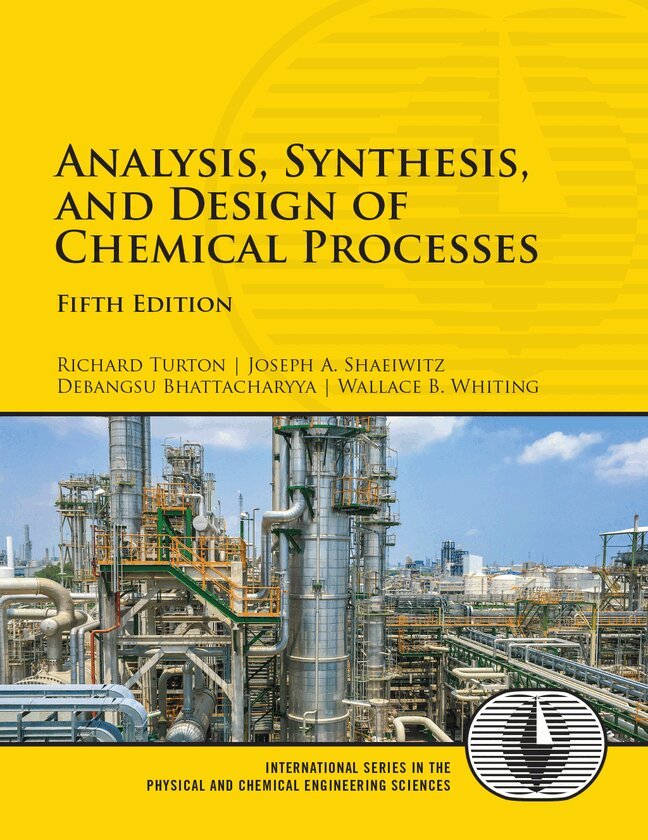
The Leading Integrated Chemical Process Design Guide: With Extensive Coverage of Equipment Design and Other Key Topics
More than ever, effective design is the focal point of sound chemical engineering. Analysis, Synthesis, and Design of Chemical Processes, Fifth Edition, presents design as a creative process that integrates the big-picture and small details, and knows which to stress when and why. Realistic from start to finish, it moves readers beyond classroom exercises into open-ended, real-world problem solving. The authors introduce up-to-date, integrated techniques ranging from finance to operations, and new plant design to existing process optimization.
The fifth edition includes updated safety and ethics resources and economic factors indices, as well as an extensive, new section focused on process equipment design and performance, covering equipment design for common unit operations, such as fluid flow, heat transfer, separations, reactors, and more.
Conceptualization and analysis: process diagrams, configurations, batch processing, product design, and analyzing existing processes Economic analysis: estimating fixed capital investment and manufacturing costs, measuring process profitability, and more Synthesis and optimization: process simulation, thermodynamic models, separation operations, heat integration, steady-state and dynamic process simulators, and process regulation Chemical equipment design and performance: a full section of expanded and revamped coverage of designing process equipment and evaluating the performance of current equipment Advanced steady-state simulation: goals, models, solution strategies, and sensitivity and optimization results Dynamic simulation: goals, development, solution methods, algorithms, and solvers Societal impacts: ethics, professionalism, health, safety, environmental issues, and green engineering Interpersonal and communication skills: working in teams, communicating effectively, and writing better reportsThis text draws on a combined 55 years of innovative instruction at West Virginia University (WVU) and the University of Nevada, Reno. It includes suggested curricula for one- and two-semester design courses, case studies, projects, equipment cost data, and extensive preliminary design information for jump-starting more detailed analyses.
1 901 kr
Skickas inom 7-10 vardagar
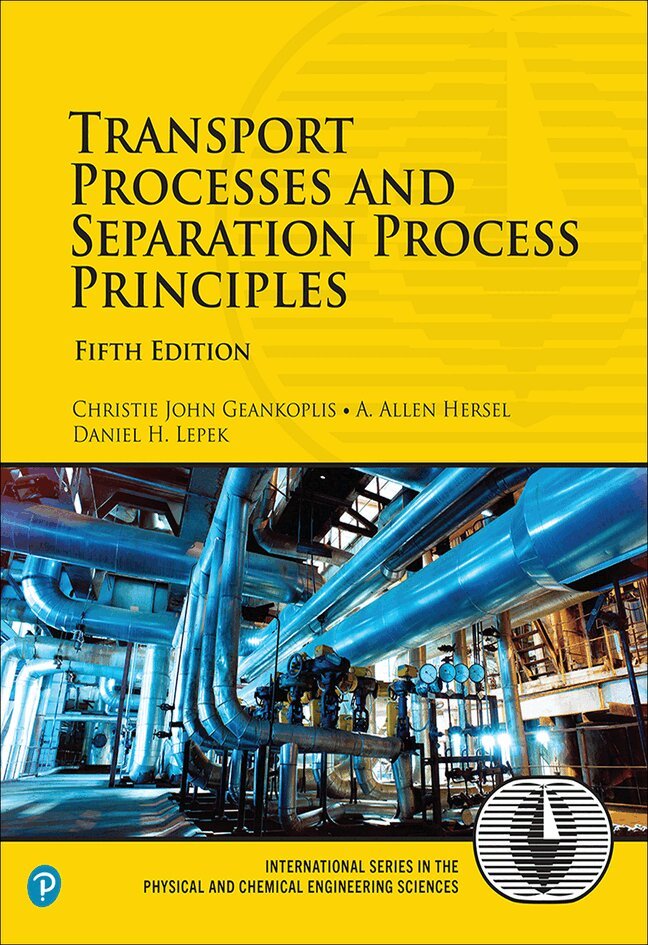
Transport Processes and Separation Process Principles, Fifth Edition, offers a unified and up-to-date treatment of momentum, heat, and mass transfer and separations processes. This edition–reorganized and modularized for better readability and to align with modern chemical engineering curricula–covers both fundamental principles and practical applications, and is a key resource for chemical engineering students and professionals alike.
This edition provides
New chapter objectives and summaries throughout Better linkages between coverage of heat and mass transfer More coverage of heat exchanger design New problems based on emerging topics such as biotechnology, nanotechnology, and green engineering New instructor resources: additional homework problems, exam questions, problem-solving videos, computational projects, and morePart 1 thoroughly covers the fundamental principles of transport phenomena, organized into three sections: fluid mechanics, heat transfer, and mass transfer.
Part 2 focuses on key separation processes, including absorption, stripping, humidification, filtration, membrane separation, gaseous membranes, distillation, liquid—liquid extraction, adsorption, ion exchange, crystallization and particle-size reduction, settling, sedimentation, centrifugation, leaching, evaporation, and drying.
The authors conclude with convenient appendices on the properties of water, compounds, foods, biological materials, pipes, tubes, and screens.
The companion website (trine.edu/transport5ed/) contains additional homework problems that incorporate today’s leading software, including Aspen/CHEMCAD, MATLAB, COMSOL, and Microsoft Excel.
1 455 kr
Skickas inom 7-10 vardagar
Today’s Definitive, Undergraduate-Level Introduction to Chemical Reaction Engineering Problem-Solving
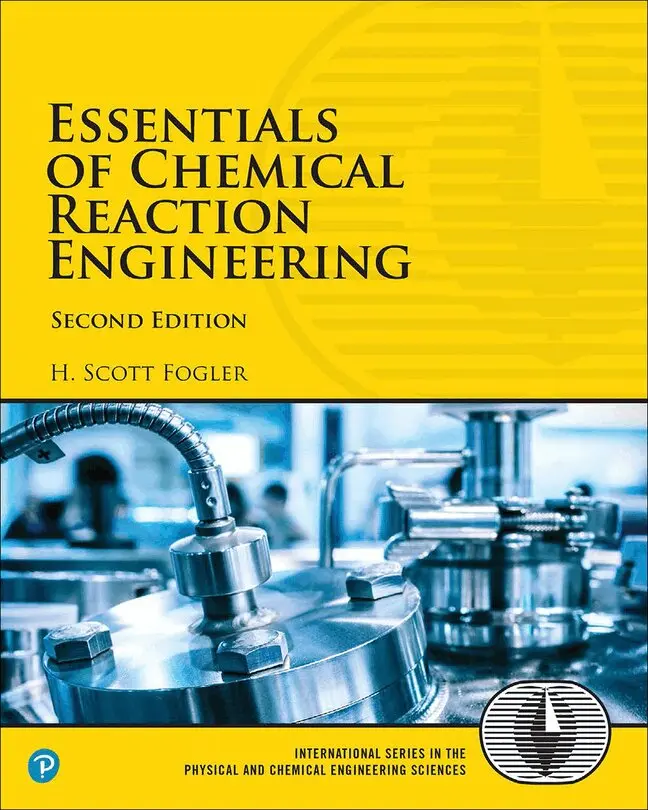
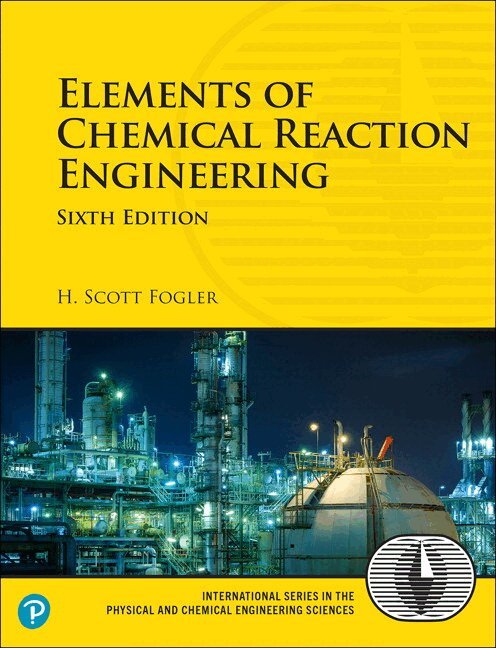
For 30 years, H. Scott Fogler’s Elements of Chemical Reaction Engineering has been the #1 selling text for courses in chemical reaction engineering worldwide. Now, in Essentials of Chemical Reaction Engineering, Second Edition, Fogler has distilled this classic into a modern, introductory-level guide specifically for undergraduates. This is the ideal resource for today’s students: learners who demand instantaneous access to information and want to enjoy learning as they deepen their critical thinking and creative problem-solving skills. Fogler successfully integrates text, visuals, and computer simulations, and links theory to practice through many relevant examples.
This updated second edition covers mole balances, conversion and reactor sizing, rate laws and stoichiometry, isothermal reactor design, rate data collection/analysis, multiple reactions, reaction mechanisms, pathways, bioreactions and bioreactors, catalysis, catalytic reactors, nonisothermal reactor designs, and more. Its multiple improvements include a new discussion of activation energy, molecular simulation, and stochastic modeling, and a significantly revamped chapter on heat effects in chemical reactors.
To promote the transfer of key skills to real-life settings, Fogler presents three styles of problems:
Straightforward problems that reinforce the principles of chemical reaction engineering Living Example Problems (LEPs) that allow students to rapidly explore the issues and look for optimal solutions Open-ended problems that encourage students to use inquiry-based learning to practice creative problem-solving skillsAbout the Web Site (umich.edu/~elements/5e/index.html)
The companion Web site offers extensive enrichment opportunities and additional content, including
Complete PowerPoint slides for lecture notes for chemical reaction engineering classes Links to additional software, including Polymath, MATLAB, Wolfram Mathematica, AspenTech, and COMSOL Multiphysics Interactive learning resources linked to each chapter, including Learning Objectives, Summary Notes, Web Modules, Interactive Computer Games, Computer Simulations and Experiments, Solved Problems, FAQs, and links to LearnChemE Living Example Problems that provide more than 75 interactive simulations, allowing students to explore the examples and ask “what-if ” questions Professional Reference Shelf, containing advanced content on reactors, weighted least squares, experimental planning, laboratory reactors, pharmacokinetics, wire gauze reactors, trickle bed reactors, fluidized bed reactors, CVD boat reactors, detailed explanations of key derivations, and more Problem-solving strategies and insights on creative and critical thinkingRegister your product at informit.com/register for convenient access to downloads, updates, and/or corrections as they become available.
Fluid Mechanics for Chemical Engineers
with Microfluidics, CFD, and COMSOL Multiphysics 5
1 790 kr
Skickas inom 7-10 vardagar
The Chemical Engineer's Practical Guide to Fluid Mechanics: Now Includes COMSOL Multiphysics 5
Since most chemical processing applications are conducted either partially or totally in the fluid phase, chemical engineers need mastery of fluid mechanics. Such knowledge is especially valuable in the biochemical, chemical, energy, fermentation, materials, mining, petroleum, pharmaceuticals, polymer, and waste-processing industries.
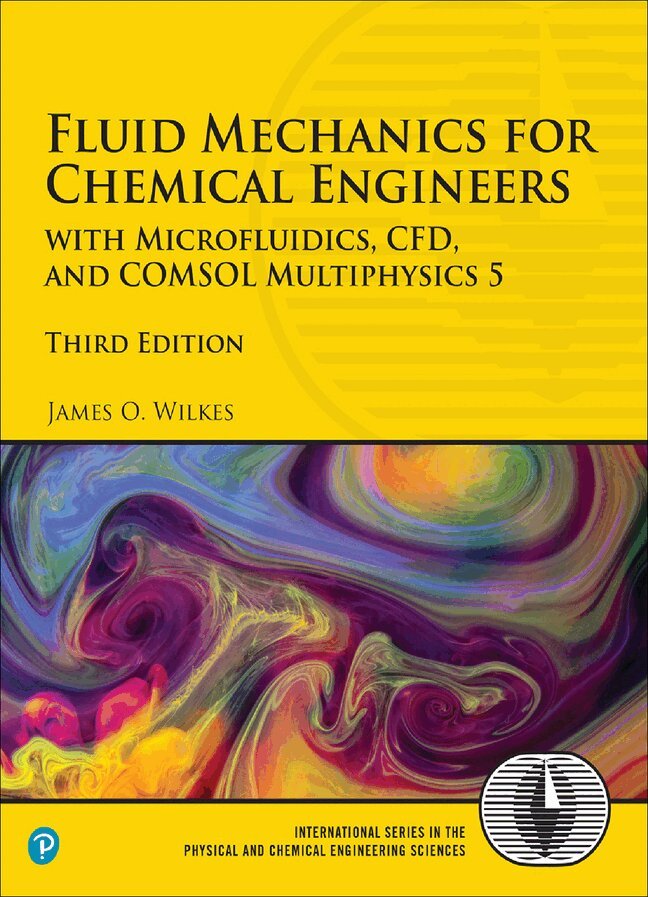
Fluid Mechanics for Chemical Engineers: with Microfluidics, CFD, and COMSOL Multiphysics 5, Third Edition, systematically introduces fluid mechanics from the perspective of the chemical engineer who must understand actual physical behavior and solve real-world problems. Building on the book that earned Choice Magazine's Outstanding Academic Title award, this edition also gives a comprehensive introduction to the popular COMSOL Multiphysics 5 software.
This third edition contains extensive coverage of both microfluidics and computational fluid dynamics, systematically demonstrating CFD through detailed examples using COMSOL Multiphysics 5 and ANSYS Fluent. The chapter on turbulence now presents valuable CFD techniques to investigate practical situations such as turbulent mixing and recirculating flows.
Part I offers a clear, succinct, easy-to-follow introduction to macroscopic fluid mechanics, including physical properties; hydrostatics; basic rate laws; and fundamental principles of flow through equipment. Part II turns to microscopic fluid mechanics:
Differential equations of fluid mechanics Viscous-flow problems, some including polymer processing Laplace's equation; irrotational and porous-media flows Nearly unidirectional flows, from boundary layers to lubrication, calendering, and thin-film applications Turbulent flows, showing how the k-ε method extends conventional mixing-length theory Bubble motion, two-phase flow, and fluidization Non-Newtonian fluids, including inelastic and viscoelastic fluids Microfluidics and electrokinetic flow effects, including electroosmosis, electrophoresis, streaming potentials, and electroosmotic switching Computational fluid mechanics with ANSYS Fluent and COMSOL MultiphysicsNearly 100 completely worked practical examples include 12 new COMSOL 5 examples: boundary layer flow, non-Newtonian flow, jet flow, die flow, lubrication, momentum diffusion, turbulent flow, and others. More than 300 end-of-chapter problems of varying complexity are presented, including several from University of Cambridge exams. The author covers all material needed for the fluid mechanics portion of the professional engineer's exam.
The author's website (fmche.engin.umich.edu) provides additional notes, problem-solving tips, and errata.
Register your book for convenient access to downloads, updates, and/or corrections as they become available. See inside book for details.
1 790 kr
Skickas inom 7-10 vardagar
1 790 kr
Skickas inom 7-10 vardagar
1 122 kr
Kommande
1 122 kr
Skickas inom 7-10 vardagar
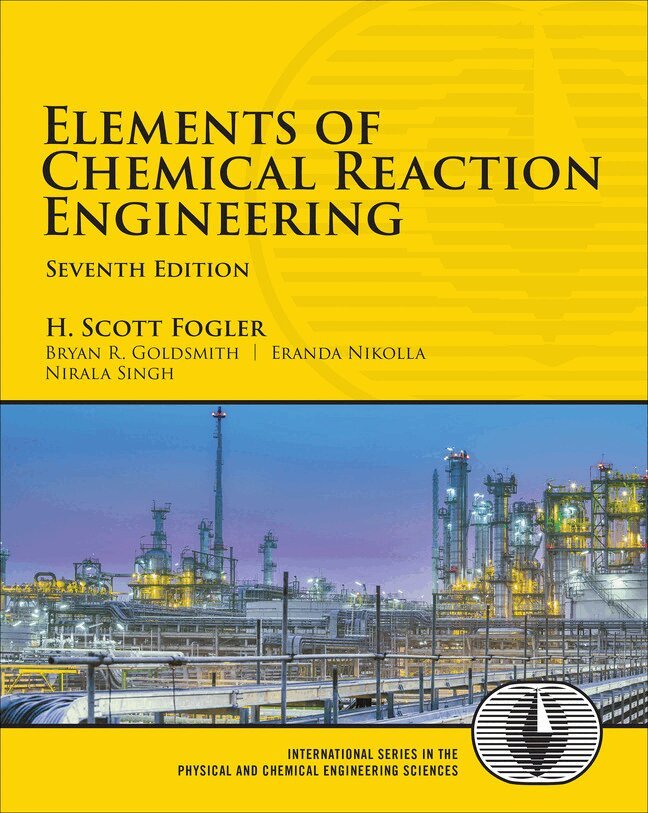
The Essential Textbook for Mastering Chemical Reaction Engineering--Now Fully Updated with Expanded Coverage of Electrochemical Reactors
H. Scott Fogler's Elements of Chemical Reaction Engineering, now in its seventh edition, continues to set the standard as the leading textbook in chemical reaction engineering. This edition, coauthored by Bryan R. Goldsmith, Eranda Nikolla, and Nirala Singh, still offers Fogler's engaging and active learning experience, with updated content and expanded coverage of electrochemical reactors.
Reflecting current theories and practices, and with a continuing emphasis on safety and sustainability, this edition includes expanded sections on molecular simulation methods, analysis of experimental reactor data, and catalytic reactions.
Leveraging the power of Wolfram, Python, POLYMATH, and MATLAB, students can explore the intricacies of reactions and reactors through realistic simulation experiments. This hands-on approach allows students to clearly understand the practical applications of theoretical concepts.
This book prepares undergraduate students to apply chemical reaction kinetics and physics to the design of chemical reactors. Advanced chapters cover graduate-level topics, including diffusion and reaction models, residence time distribution, and tools to model non-ideal reactors.
The seventh edition includes
An expanded section on molecular simulation methods and potential energy surfaces Updated examples of experimental reactor data and its analysis Detailed discussion of definitions in catalysis and examples of catalytic reactions Additional examples and an expanded section on surface reaction mechanisms and microkinetic modeling A new chapter on electrochemical reactors with example problems, reflecting the growing importance of this field in renewable energy and industrial processesAbout the Companion Web Site (umich.edu/~elements/7e/index.html)
Comprehensive PowerPoint slides for lecture notes for chemical reaction engineering classes Links to additional software, including POLYMATHTM, MATLABTM, Python, Wolfram MathematicaTM, AspenTechTM, and COMSOLTM Interactive learning resources linked to each chapter, including Learning Objectives, Summary Notes, Web Modules, Interactive Computer Games, Solved Problems, FAQs, additional homework problems, and links to LearnChemE and other resources Living Example Problems provide interactive simulations, allowing students to explore the examples and ask "what-if" questions Professional Reference Shelf, which includes advanced content on reactors, weighted least squares, experimental planning, pharmacokinetics, detailed explanations of key derivations, and more Redesigned Web site to increase accessibilityRegister your book for convenient access to downloads, updates, and/or corrections as they become available. See inside book for details.
2 417 kr
Skickas inom 3-6 vardagar
1 113 kr
Skickas inom 7-10 vardagar