New Millennium Books in International Studies - Böcker
Visar alla böcker i serien New Millennium Books in International Studies. Handla med fri frakt och snabb leverans.
21 produkter
21 produkter
1 567 kr
Skickas inom 10-15 vardagar
In the freshest new international law text in 20 years, Christopher C. Joyner offers a critical assessment of international legal rules in the early 21st century as they are applied by governments to the real world. Looking at concepts and principles, processes and critical problems, Joyner steers clear of an old-time case method approach, preferring to treat issues thematically. He shows the challenges of international law in terms of peace, security, human rights, the environment, and economic justice. Particular features of the book include engaging vignettes, clearly defined key terms, and special coverage of emerging topics including common spaces; international criminal law; rules, norms, and regimes; and trade relations and commercial exchange. Through it all, Joyner maintains an intent focus on the role of the individual in the evolving international legal order.
744 kr
Skickas inom 10-15 vardagar
In the freshest new international law text in 20 years, Christopher C. Joyner offers a critical assessment of international legal rules in the early 21st century as they are applied by governments to the real world. Looking at concepts and principles, processes and critical problems, Joyner steers clear of an old-time case method approach, preferring to treat issues thematically. He shows the challenges of international law in terms of peace, security, human rights, the environment, and economic justice. Particular features of the book include engaging vignettes, clearly defined key terms, and special coverage of emerging topics including common spaces; international criminal law; rules, norms, and regimes; and trade relations and commercial exchange. Through it all, Joyner maintains an intent focus on the role of the individual in the evolving international legal order.
808 kr
Skickas inom 10-15 vardagar
Global Backlash is the first book to move beyond the monolithic portrayal of the globalization protests that have escalated since Seattle and are not likely to abate soon. With trenchant analysis and dozens of primary documents from a variety of popular and uncommon sources, Robin Broad explores proposals and initiatives coming from the backlash to answer the question, 'But what do they want?' A range of sophisticated propositions and a vibrant debate among segments of the backlash emerge. Highly readable and analytically powerful, this book is vital to understanding the most potent protest movement of our times.
501 kr
Skickas inom 10-15 vardagar
This clear and concise text offers a comprehensive comparison of national, international, and human security concepts and policies. Laura Neack argues that security remains elusive because of a centuries-old ethic insisting that states are the primary and most important international actors, can rely ultimately only on themselves for protection, and must keep all options on the table for national security. The author compellingly demonstrates how a state-first security ethic ultimately fails to secure states, the international community and—most important—human beings. Although security as a concept can be widened to include almost any aspect of existence, Neack focuses especially on security from physical violence, beginning with efforts by states to defend themselves against violent attack. She explores such topics as the internal and external dimensions of security, terrorism, and defending the homeland; threat perception and responses; preemptive and preventive wars; and other military interventions. Next, Neack examines efforts over the past century to protect states through the construction of the United Nations international security system and how collective security, peacekeeping, and peace enforcement have been used in that system. Throughout, Neack shows that human security has only mattered in terms of servicing the state's security needs, a critique she takes up directly in the final chapters. A range of short and extended case studies are offered to illustrate the conceptual materials and policy debates over security. In this state-first world, we only can choose between degrees of insecurity; true security remains elusive.
1 476 kr
Skickas inom 10-15 vardagar
This readable and cogent book provides a much-needed overview of the information revolution in a global context. First tracing the historical evolution of communications since the development of the printing press, Elizabeth C. Hanson then explores the profound ways that new information and communication technologies are transforming international relations. More people have access to more diverse sources of information than ever before, as well as a greater capacity to influence national and international agendas. More transcontinental channels of contact are available to more people in the world at far less cost than ever before in history. Hanson illustrates how these dramatic changes have raised a set of key questions: What is the impact of the information revolution on diplomacy, foreign policymaking, and the conduct of war? How are these new technologies affecting the structure of the global economy and the distribution of the world's wealth? How and to what extent are they affecting the nation-state—its centrality in the international system, its sovereignty, and its relationship to its citizens? In answering these questions, Hanson considers the controversies over the present and future impact of a radically new information and communications environment as part of larger debates over globalization and the role of technology in historical change. Her carefully chosen case studies and judicious use of relevant research provide a firm basis for readers to evaluate competing arguments on this contentious issue.
696 kr
Skickas inom 5-8 vardagar
This readable and cogent book provides a much-needed overview of the information revolution in a global context. First tracing the historical evolution of communications since the development of the printing press, Elizabeth C. Hanson then explores the profound ways that new information and communication technologies are transforming international relations. More people have access to more diverse sources of information than ever before, as well as a greater capacity to influence national and international agendas. More transcontinental channels of contact are available to more people in the world at far less cost than ever before in history. Hanson illustrates how these dramatic changes have raised a set of key questions: What is the impact of the information revolution on diplomacy, foreign policymaking, and the conduct of war? How are these new technologies affecting the structure of the global economy and the distribution of the world's wealth? How and to what extent are they affecting the nation-state—its centrality in the international system, its sovereignty, and its relationship to its citizens? In answering these questions, Hanson considers the controversies over the present and future impact of a radically new information and communications environment as part of larger debates over globalization and the role of technology in historical change. Her carefully chosen case studies and judicious use of relevant research provide a firm basis for readers to evaluate competing arguments on this contentious issue.
665 kr
Skickas inom 5-8 vardagar
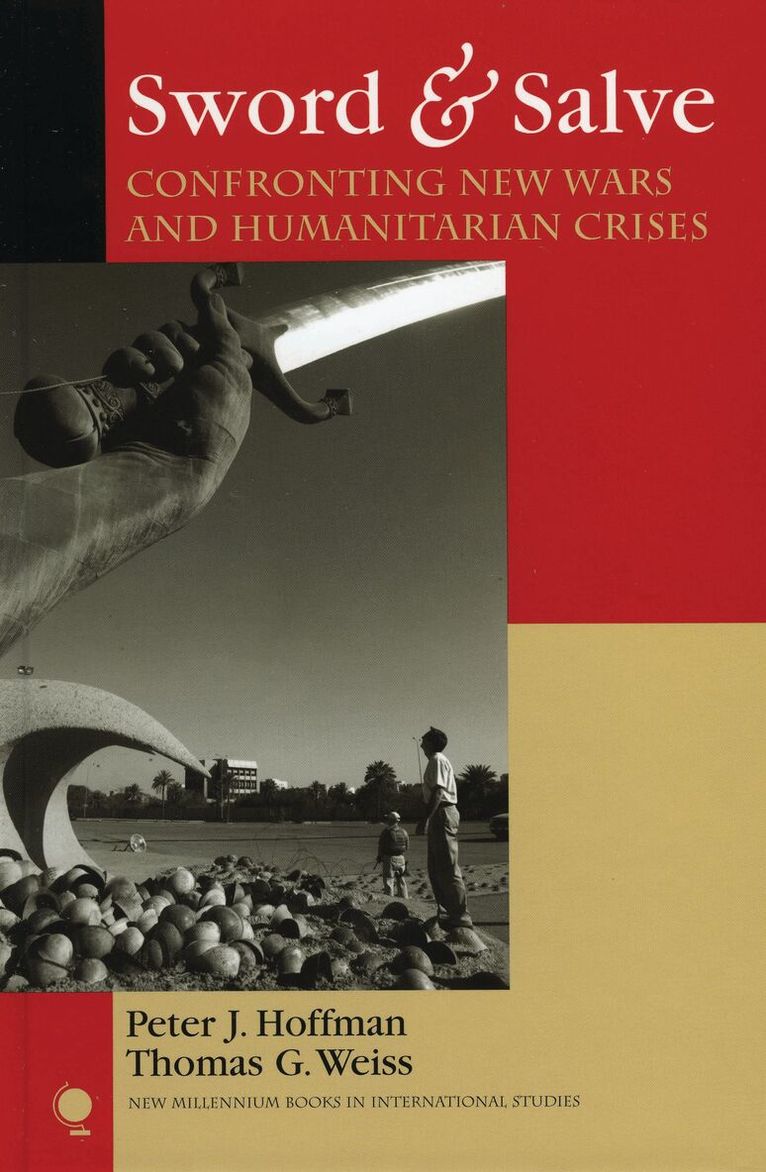
Arguing forcefully that changing times are a clarion call for new thinking, this book convincingly shows that if humanitarian organizations continue to operate as they have in the past, they will fail to help the very victims whom they try to save. Focusing especially on the emergence of "new wars," Hoffman and Weiss insist that humanitarian organizations must recognize that they live in a political world and that their actions and goals are invariably affected by military action. The brand of warfare that erupted in the 1990s-marked by civil or transnational armed conflicts featuring potent non-state actors, altered political economies, a high proportion of civilian casualties, and a globalized media-produced horrors that shocked consciences and led humanitarian agencies to question their unyielding stance of neutrality and impartiality. Indeed, in a departure from earlier norms and practices, some have reinvented their policies and tools and created "new humanitarianisms."This authoritative book traces the evolution of the international humanitarian system from its inception in the 1860s, parses the dynamics of war and emergency response from the 1980s through the current disasters in Afghanistan and Iraq, and provides a strategic roadmap for practitioners. By bringing historical perspective to bear, this volume provides an invaluable analytical framework for grasping the nature of humanitarian crises and how agencies can respond strategically rather than reactively to change. Students will find its blend of clearly presented theory and case studies a powerful tool for understanding the roles of state and non-state actors in international relations. By charting the tides of continuity and change, this book will prepare agencies to dodge both figurative and actual bullets that threaten humanitarian action at the outset of the millennium.
1 476 kr
Skickas inom 10-15 vardagar
Integrating theory and case studies, this cogent text explores the processes and factors that shape foreign policy. In her thoroughly revised and updated edition, Laura Neack considers both old and new lessons, drawing on a rich array of real foreign policy choices and outcomes. In new cases, Neack explores decision making in the Eurozone crisis, increasing nationalism in Germany and Japan and what seems to be growing bellicosity among Canadians, Obama’s grand strategy and the responses of rising powers Brazil and India, and the Egyptian youth revolution. Following a levels-of-analysis organization, the author considers all elements that influence foreign policy, including the role of leaders, bargaining, national image, political culture, public opinion, the media, and nonstate actors.
471 kr
Skickas
Integrating theory and case studies, this cogent text explores the processes and factors that shape foreign policy. In her thoroughly revised and updated edition, Laura Neack considers both old and new lessons, drawing on a rich array of real foreign policy choices and outcomes. In new cases, Neack explores decision making in the Eurozone crisis, increasing nationalism in Germany and Japan and what seems to be growing bellicosity among Canadians, Obama’s grand strategy and the responses of rising powers Brazil and India, and the Egyptian youth revolution. Following a levels-of-analysis organization, the author considers all elements that influence foreign policy, including the role of leaders, bargaining, national image, political culture, public opinion, the media, and nonstate actors.
1 476 kr
Skickas inom 10-15 vardagar
This up-to-date text offers a clear and cogent introduction to women in development. Exploring the global structures and processes that impede or support the empowerment of women, Jana Everett and Sue Ellen M. Charlton use a feminist lens to understand contemporary gender roles. Without such a lens, they argue, our understanding of globalization and development is incomplete, resulting in flawed policies that fail to improve the lives of millions of people around the globe. After a set of introductory chapters that conceptually frame the issues, the authors then investigate women’s struggles within and against globalization and development through powerful case studies of sex trafficking, water, work, and health. These chapters, by using specific examples, develop the concepts of structure and agency, levels of analysis, and feminist approaches as tools to help students understand the complexities of development and alternative strategies.Through rich interdisciplinary analysis, Everett and Charlton explore the individual and collective strategies women have used to improve their lives under globalization and weigh how effective they have been. Their book will be an essential resource in women’s studies, political science, political economy, anthropology, sociology, and development studies.
307 kr
Skickas
This up-to-date text offers a clear and cogent introduction to women in development. Exploring the global structures and processes that impede or support the empowerment of women, Jana Everett and Sue Ellen M. Charlton use a feminist lens to understand contemporary gender roles. Without such a lens, they argue, our understanding of globalization and development is incomplete, resulting in flawed policies that fail to improve the lives of millions of people around the globe. After a set of introductory chapters that conceptually frame the issues, the authors then investigate women’s struggles within and against globalization and development through powerful case studies of sex trafficking, water, work, and health. These chapters, by using specific examples, develop the concepts of structure and agency, levels of analysis, and feminist approaches as tools to help students understand the complexities of development and alternative strategies.Through rich interdisciplinary analysis, Everett and Charlton explore the individual and collective strategies women have used to improve their lives under globalization and weigh how effective they have been. Their book will be an essential resource in women’s studies, political science, political economy, anthropology, sociology, and development studies.
1 276 kr
Skickas inom 10-15 vardagar
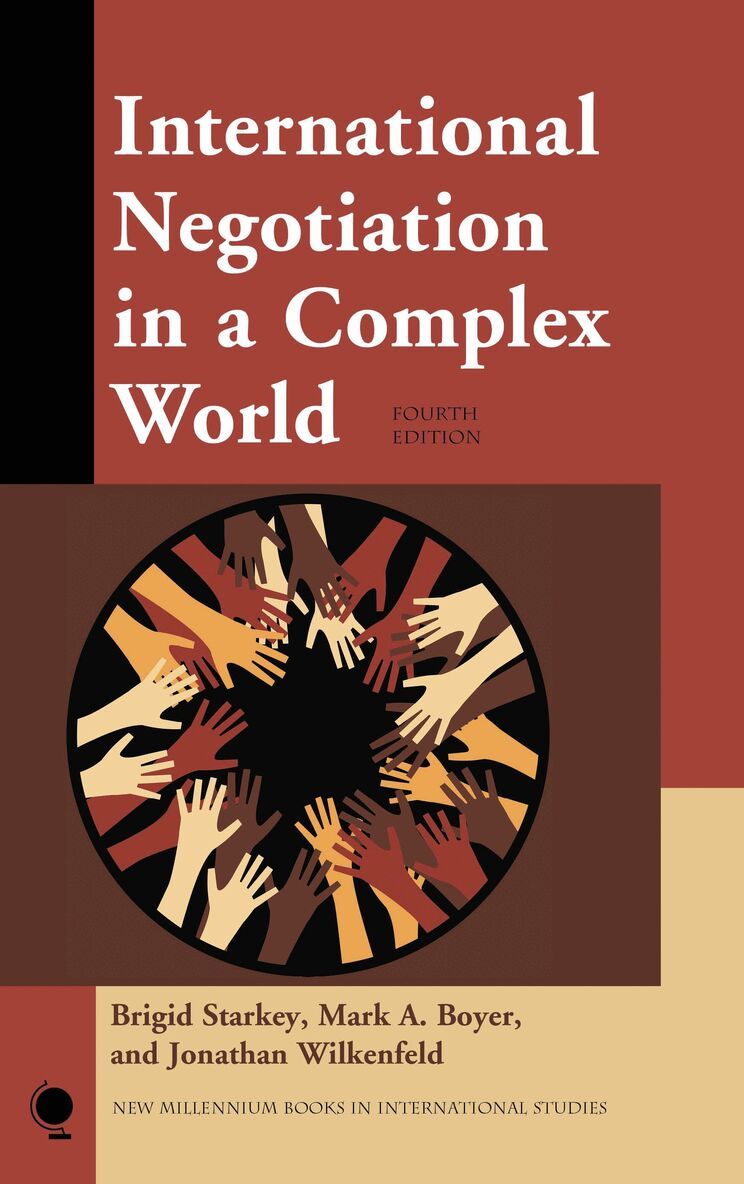
The process of negotiation, standing as it does between war and peace in many parts of the globe, has never been a more vital process to understand than in today's rapidly changing international system. Students of negotiation must first understand key IR concepts as they try to incorporate the dynamics of the many anomalous actors that regularly interact with conventional state agents in the diplomatic arena. This hands-on text provides an essential introduction to this high-stakes realm, exploring the impact of complex multilateralism on traditional negotiation concepts such as bargaining, issue salience, and strategic choice. Using an easy-to-understand board game analogy as a framework for studying negotiation episodes, the authors include a rich array of real-world cases and examples to illustrate key themes, including the intensity of crisis situations for negotiators, the role of culture in communication, and the impact of domestic-level politics on international negotiations. Providing tools for analyzing why negotiations succeed or fail, this innovative text also presents effective exercises and learning approaches that enable students to understand the complexities of negotiation by engaging in the diplomatic process themselves.
486 kr
Skickas inom 10-15 vardagar
This comprehensive text explains the relationship between the Arctic and the wider world through the lenses of international relations, international law, and political economy. It is an essential resource for any student or scholar seeking a clear and succinct account of a region of ever-growing importance to the international community. Highlights include:•Broad coverage of national and human security, Arctic economies, international political economy, human rights, the rights of indigenous people, the law of the sea, navigation, and environmental governance•A clear review of current climate-related change•Emphasis on the sources of cooperation in the Arctic through international relations theory and law•Examination of the Arctic in the broader global context, illustrating its inextricable links to global processes
1 343 kr
Skickas inom 10-15 vardagar
What is humanitarianism? This authoritative book provides a comprehensive analysis of the original idea and its evolution, exploring its triangulation with war and politics. Peter J. Hoffman and Thomas G. Weiss trace the origins of humanitarianism, its social movement, and the institutions (international humanitarian law) and organizations (providers of assistance and protection) that comprise it. They consider the international humanitarian system’s ability to regulate the conduct of war, to improve the wellbeing of its victims, and to prosecute war criminals. Probing the profound changes in the culture and capacities that underpin the sector and alter the meaning of humanitarianism, they assess the reinventions that constitute “revolutions in humanitarian affairs.” The book begins with traditions and perspectives—ranging from classic international relations approaches to “Critical Humanitarian Studies” —and reviews seminal wartime emergencies and the creation and development of humanitarian agencies in the late nineteenth and twentieth centuries. The authors then examine the rise of “new humanitarianisms” after the Cold War’s end and contemporary cases after 9/11. The authors continue by unpacking the most recent “revolutions”—the International Criminal Court and the “Responsibility to Protect”—as well as such core challenges as displacement camps, infectious diseases, eco-refugees, and marketization. They conclude by evaluating the contemporary system and the prospects for further transformations, identifying scholarly puzzles and the acute operational problems faced by practitioners.
568 kr
Skickas inom 10-15 vardagar
What is humanitarianism? This authoritative book provides a comprehensive analysis of the original idea and its evolution, exploring its triangulation with war and politics. Peter J. Hoffman and Thomas G. Weiss trace the origins of humanitarianism, its social movement, and the institutions (international humanitarian law) and organizations (providers of assistance and protection) that comprise it. They consider the international humanitarian system’s ability to regulate the conduct of war, to improve the wellbeing of its victims, and to prosecute war criminals. Probing the profound changes in the culture and capacities that underpin the sector and alter the meaning of humanitarianism, they assess the reinventions that constitute “revolutions in humanitarian affairs.” The book begins with traditions and perspectives—ranging from classic international relations approaches to “Critical Humanitarian Studies” —and reviews seminal wartime emergencies and the creation and development of humanitarian agencies in the late nineteenth and twentieth centuries. The authors then examine the rise of “new humanitarianisms” after the Cold War’s end and contemporary cases after 9/11. The authors continue by unpacking the most recent “revolutions”—the International Criminal Court and the “Responsibility to Protect”—as well as such core challenges as displacement camps, infectious diseases, eco-refugees, and marketization. They conclude by evaluating the contemporary system and the prospects for further transformations, identifying scholarly puzzles and the acute operational problems faced by practitioners.
1 142 kr
Skickas inom 10-15 vardagar
In this powerful book, William F. Felice argues that a new range of human rights duties for individuals, nation-states, and global institutions has emerged in our modern interconnected era. He investigates the compelling ideas of ethical interdependence and new global human rights duties in four case studies: mass incarceration in the United States, LGBT rights in Africa, women’s rights in Saudi Arabia, and environmental rights in China. Felice argues that in all four cases a “human rights threshold” has been surpassed, and urgent action is needed to address unacceptable levels of human suffering. Beginning with a primer on how the international community through the United Nations has codified international human rights law, Felice explores the conflicts between rights, problems of compliance, and the difficulties that emerge when cultural and religious rights are privileged over the rights of individuals and groups. He shows that a robust normative framework of global governance and global citizenship is central to the actualization of human rights protection for all.
434 kr
Skickas inom 10-15 vardagar
In this powerful book, William F. Felice argues that a new range of human rights duties for individuals, nation-states, and global institutions has emerged in our modern interconnected era. He investigates the compelling ideas of ethical interdependence and new global human rights duties in four case studies: mass incarceration in the United States, LGBT rights in Africa, women’s rights in Saudi Arabia, and environmental rights in China. Felice argues that in all four cases a “human rights threshold” has been surpassed, and urgent action is needed to address unacceptable levels of human suffering. Beginning with a primer on how the international community through the United Nations has codified international human rights law, Felice explores the conflicts between rights, problems of compliance, and the difficulties that emerge when cultural and religious rights are privileged over the rights of individuals and groups. He shows that a robust normative framework of global governance and global citizenship is central to the actualization of human rights protection for all.
452 kr
Skickas inom 10-15 vardagar
The process of negotiation, standing as it does between war and peace in many parts of the globe, has never been a more vital process to understand than in today's rapidly changing international system. Students of negotiation must first understand key IR concepts as they try to incorporate the dynamics of the many anomalous actors that regularly interact with conventional state agents in the diplomatic arena. This hands-on text provides an essential introduction to this high-stakes realm, exploring the impact of complex multilateralism on traditional negotiation concepts such as bargaining, issue salience, and strategic choice. Using an easy-to-understand board game analogy as a framework for studying negotiation episodes, the authors include a rich array of real-world cases and examples to illustrate key themes, including the intensity of crisis situations for negotiators, the role of culture in communication, and the impact of domestic-level politics on international negotiations. Providing tools for analyzing why negotiations succeed or fail, this innovative text also presents effective exercises and learning approaches that enable students to understand the complexities of negotiation by engaging in the diplomatic process themselves.
481 kr
Skickas inom 7-10 vardagar
In the decades since the September 11, 2001, terrorist attacks on the United States forces of cultural, economic, and political integration appear locked in battle with equally powerful forces of fragmentation. Globalization is facilitating unprecedented movement of goods, services, people, and ideas, while calls for building walls, erecting fences, and strengthening borders intensify. Tensions flare around claims of deeply rooted ethnic and civilizational identities—identities that are shaped and mobilized via sophisticated advances in technology. Women worldwide are achieving remarkable economic and political gains while sexual violence and gender inequalities persist and are fueled by rapid global change. This book explores the complex inter-relationship between globalization and belonging. In a hyper-modern, 21st-century world, questions and conflicts surrounding who ‘we’ are and who ‘we’ want to be predominate. This book links the politics of different forms of identification and attachment to the dynamics of an increasingly interconnected world.
1 349 kr
Skickas inom 10-15 vardagar
What is foreign policy? What do we know about why states pursue certain foreign policies and not others? What factors go into the shaping of foreign policy? Studying Foreign Policy Comparatively, Fourth Edition (formerly titled The New Foreign Policy), answers these questions, and more, by exploring how scholars analyze foreign policy and by applying this knowledge to new foreign policy cases.Benefits of the fourth edition:Every chapter is devoted to a distinct level in the levels-of-analysis approachProvides easy-to-understand explanations and demonstrations of policy models and theoriesA mixture of current and historical cases from around the world extends students’ knowledge of foreign policy and understanding of contemporary problemsNew cases include the refugee crisis in Europe, rising populism and anti-immigrant coalition governments, Russian use of media, and China’s Belt and Road Initiative
570 kr
Skickas inom 10-15 vardagar
What is foreign policy? What do we know about why states pursue certain foreign policies and not others? What factors go into the shaping of foreign policy? Studying Foreign Policy Comparatively, Fourth Edition (formerly titled The New Foreign Policy), answers these questions, and more, by exploring how scholars analyze foreign policy and by applying this knowledge to new foreign policy cases.Benefits of the fourth edition:Every chapter is devoted to a distinct level in the levels-of-analysis approachProvides easy-to-understand explanations and demonstrations of policy models and theoriesA mixture of current and historical cases from around the world extends students’ knowledge of foreign policy and understanding of contemporary problemsNew cases include the refugee crisis in Europe, rising populism and anti-immigrant coalition governments, Russian use of media, and China’s Belt and Road Initiative