Perspectives in Behavioral Economics and the Economics of Behavior – serie
The Cognitive Basis of Institutions
A Synthesis of Behavioral and Institutional Economics
1 289 kr
Skickas inom 7-10 vardagar
The Cognitive Basis of Institutions: A Synthesis of Behavioral and Institutional Economics synthesizes modern research in behavioral economics with traditional institutional economics. This work emphasizes that institution and agent are inextricably linked, and that both cognitive and institutional processes coalesce to influence human decision-making. It integrates cognition and institution through the behavioral economics theoretical lens of bounded rationality. Methodologically, it develops game-theoretical, complexity and neuroeconomic solutions to unite study of the two areas. The work concludes by proposing general implications for the economic study of decisions using the cognitive-institutional approach, also providing specific recommendations for public policy.
Reveals how institutional structures and individual actions interact and coevolve cognitively Connects individual decision-making, decision-making processes and institutional formation Unites our understanding of cooperative 'prosocial' behavior with the institutional dynamics that may create it Discusses the implications of the behavioral-institutional paradigm for paternalism and libertarianism in public policyA Fast and Frugal Finance
Bridging Contemporary Behavioral Finance and Ecological Rationality
1 000 kr
Skickas inom 7-10 vardagar
A Fast and Frugal Finance: Bridging Contemporary Behavioural Finance and Ecological Rationality adds psychological reality to classical financial reasoning. It shows how financial professionals can reach better and quicker decisions using the 'fast and frugal' framework for decision-making, adding dramatically to time and outcome efficiency, while also retaining accuracy. The book provides the reader with an adaptive toolbox of heuristic tools and classification systems to aid real-world decisions. Throughout, financial applications are presented alongside real-world examples to help readers solve established problems in finance, including stock buying and selling decisions, when faced with not only risk but fundamental uncertainty.
The book concludes by describing potential solutions to financial problems in the forefront of contemporary debates, and calls for taking psychological insights seriously.
Demonstrates how well-constructed 'fast and frugal' models can outperform standard models in time and outcome efficiency Focuses on how financial decisions are made in reality, using heuristics, rather than how such decisions should be made Discusses how cognition and the decision-making context interact in producing 'fast and frugal' choices that follow ecological rationality Explores the development of decision-making trees in finance to aid in decision-making974 kr
Skickas inom 7-10 vardagar
Market Insanity: A Brief Guide to Diagnosing the Madness in the Stock Market is an engaging and accessible primer which applies modern behavioral finance to equity markets. It helps readers understand how logical investment decisions can be betrayed by what Taillard calls "the insanity," all those behavioral quirks which cause us to achieve less than optimal utility. The book describes how limited information, habit, the rules of the game, asymmetric information and ego blend together in potentially toxic ways in market environments, thus creating bubbles, stock runs, and more prosaically, even 'normal' equity prices.
In addition, the book discusses the implications of these behaviors in-depth. In so doing, it helps the reader to not only predict the madness within equity markets, but also helps them develop solutions that address and mitigate outcomes.
Provides detailed and accurate descriptions of the most relevant behavioral anomalies for finance Entertainingly written by a veteran consultant with 15+ years experience helping companies explain anomalous finance behavior in non-economic language Shows how educated finance professionals can use behavioral insights to help build finance solutions Addresses the implications for equity markets in deviations from rationality paradigms Draws on a vast range of literature in explaining anomalous behavior, including economic psychology, economic psychology, evolutionary psychology, anthropology and animal behavior1 490 kr
Skickas inom 7-10 vardagar
How Behavioral Economics Influences Management Decision-Making: A New Paradigm�critically reexamines the management function in 21st century workplaces.�The book seeks to examine and explain the real-world behaviors of employees and acknowledge the human nature that binds us all together and how to appeal to these characteristics in order to help organizations prosper.�It explores well-observed but rarely understood features of employee cognition and irrationality, challenging the dominant discourse and offering an alternative to gain greater competitive advantage in today's complex markets.�It also provides an effective new framework on the best ways to develop relevant management skills as they pertain to hiring, performance management, change management, employee engagement, and goal setting.��As the knowledge economy continues to grow, the social bonds within companies will prove to be a key differentiation to deliver on the next big idea.
Developing productive decisions with staff in the talent-driven global economy increasingly requires the development of "intrinsic" meaning in work, a human-centered work-place culture, and human-focused working practices.�This book tackles these topics in comprehensive and efficient detail.
Provides a framework to simply and effectively apply behavioral principles in organizations of any size Focuses on agent motivations and behavior and how they directly impact talent management in the knowledge economy Highlights empirical studies, detailing the impact of heuristics on hiring, performance management, change management, employee engagement, and goal-setting decisionsBehavioral Economics for Tourism
Perspectives on Business and Policy in the Travel Industry
1 979 kr
Skickas inom 7-10 vardagar
Behavioral Economics for Tourism applies behavioral perspectives to business and policy challenges in the tourism industry. The book enables professionals and early career researchers to succeed by focusing on market and consumer trends, technological advancements, and the modern tourist. It covers the transformation of purchasing decisions, tourism hosting dynamics, digital mediation and disintermediation of tourism organizations, service design, and planning policy considerations. The volume concludes with case studies illustrating successful and unsuccessful behavioral tactics and strategies for tourism businesses and organizations.
Provides behavioral profiling of the digitally-informed, mobile, self-managed tourist Allows the tourism industry to better understand tourists, both cognitively and emotionally Supports business success, technology development and sustainability in the tourism industry Features case studies on behavioral tactics and strategies for use in tourismBelief and Rule Compliance
An Experimental Comparison of Muslim and Non-Muslim Economic Behavior
1 954 kr
Skickas inom 7-10 vardagar
Belief and Rule Compliance: An Experimental Comparison of Muslim and Non-Muslim Economic Behavior uses modern behavioral science and game theory to examine the behavior and compliance of Muslim populations to Islamic Finance laws and norms. The work identifies behaviors characterized by unexpected complexity and profound divergence, including expectations for sharing, cooperation and entrepreneurship gleaned from studies. Adopting a unique set of recent empirical observations, the work provides a reliable behavioral foundation for practitioners seeking to evaluate, create and market Islamic financial products.
Covers the economic behavior of Muslims and non-Muslims Indicates when, and if, economic behavior confirms/opposes rational self-interest assumptions Links rule compliance with risk sharing concepts in Islamic Finance Applies game theory to understand behavioral rules compliance regarding Islamic Finance laws Explores behavioral implications for creating and marketing new financial products1 490 kr
Skickas inom 7-10 vardagar
The Mind under the Axioms reviews two basic ingredients of our understanding of human decisions - conative aspects (preferences) and cognitive aspects (beliefs). These ingredients are axiomatized in modern decision theory in the view to obtain a formally and empirically tractable representation of the decision-maker. The main issue developed in this book is the connection between realistic and testable psychological features and the descriptive component of abstract axioms of rationality. It addresses three main topics for which the interaction between axiomatization and psychology leads to potential new developments in experimental decision-theory and puts strictures on the standard revealed preference methodology prevailing in that field. The possibility of a cardinal representation of preferences is discussed. Different ways of accounting for incomplete preferences, and in which sense, are analysed. Finally, the conditions of separability between preferences and beliefs, such as prescribed by axioms of state-independence, are submitted to actual and potential tests. The book offers a bridge between the disciplines of decision-theory, psychology, and neuroeconomics. It is thus relevant for those, in psychology and cognitive sciences, who are sometimes put off by the high degree of formalism and abstraction in decision-theory, that seems to lie beyond the reach of psychological realism. It also aims to convince those in decision-theory for whom psychological realism and empirical testability should not constrain the modelling enterprise that conceptual clarification can come from attempted experimentation.
Addresses open and evolving theoretical issues in decision-theory, especially from experimental perspectives Helps researchers understand the psychological and neuroscientific mechanisms for decision-making Considers how preferences shape beliefs and how beliefs shape preferences Uncovers the very formal and abstract psychological and behavioral implications that are actually made in contemporary decision-theoryThe Beginnings of Behavioral Economics
Katona, Simon, and Leibenstein's X-Efficiency Theory
1 490 kr
Skickas inom 7-10 vardagar
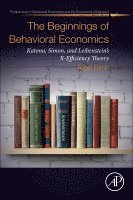
The Beginnings of Behavioral Economics: Katona, Simon, and Leibenstein's X-Efficiency Theory explores the mid-20th century roots of behavioral economics, placing the origin of this now-dominant approach to economic theory many years before the groundbreaking 1979 work on prospect theory by Daniel Kahneman and Amos Tversky. It discusses the work of Harvey Leibenstein, Herbert Simon, George Katona, and Frederick Hayek, reintroducing their contributions as founding pillars of the behavioral approach. It concentrates on the work of Leibenstein, reviewing his nuanced introduction of X-efficiency theory. Building from these foundations, the work explores the body of empirical research on market power and firm behavior - XE relationship.
This book is a tremendous resource for graduate students and early career researchers in behavioral economics, experimental economics, organizational economics, social and organizational psychology, labor market economics and public policy.
Reviews the powerful, but neglected contributions of mid-20th century scholars, like Leibenstein and Katona in building the roots of behavioral economic theory Amalgamates and reviews 50 years of empirical research and over 200 empirical papers on X-efficiency theory Establishes how X-efficiency can aid modern behavioral economics in further developing firm theory and understanding efficiency wages1 490 kr
Skickas inom 7-10 vardagar
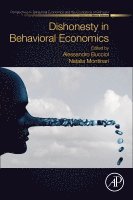
Dishonesty in Behavioral Economics provides a rigorous and comprehensive overview of dishonesty, presenting state-of-the-art research that adopts a behavioral economics perspective. Throughout the volume, contributors emphasize the effects of psychological, social, and cognitive factors on the decision-making process. In contrast to related titles, Dishonesty in Behavioral Economics emphasizes the importance of empirical research methodologies. Its contributors demonstrate how various methods applied to similar research questions can lead to different results. This characteristic is important because, of course, it is difficult to obtain reliable measures of dishonesty.
Reviews many key issues in the literature around lying, cheating, fraudulence, and deception Covers both state-of-the-art methods and data collection mechanisms (e.g., laboratory experiments, field experiments, online surveys) Discusses novel interdisciplinary research findings and from them proposes new avenues of research1 039 kr
Skickas inom 7-10 vardagar
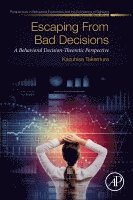
Escaping from Bad Decisions presents a modern conceptual and mathematical framework of the decision-making process. By interpreting ordinal utility theory as normative analysis examined in view of rationality, it shows how decision-making under certainty, risk, and uncertainty can be better understood. It provides a critical examination of psychological models in multi-attribute decision-making, and evaluates the constitutive elements of "good" and "bad" decisions. Multi-attribute decision-making is analysed descriptively, based on the psychological model of decision-making and computer simulations of decision strategies. Finally, prescriptive examinations of multi-attribute decision-making are performed, supporting the argument that decision-making from a pluralistic perspective creates results that can help "escape" from bad decisions.
This book will be of particular interest to graduate students and early career researchers in economics, decision-theory, behavioral economics, experimental economics, psychology, cognitive sciences, and decision neurosciences.
Provides a comprehensive background to the phenomena of bad decisions, considered in their economic, psychological and cognitive aspects Reinterprets existing theories and phenomena and proposes a new overview of decision behaviors by integrating mathematical and psychological perspectives Adapts model-based techniques, such as mathematical model based functional magnetic resonance imaging (fMRI) using mathematical models of the decision process1 213 kr
Skickas inom 7-10 vardagar
Exploring Asian-Pacific Co-operatives in Theory and Practice
Resilience and Thriving between the State and the Market
2 055 kr
Skickas inom 7-10 vardagar
Exploring Asian-Pacific Cooperatives in Theory and Practice: Resilience and Thriving between the State and the Market investigates Asian-Pacific coop models mainly through the analytical lenses of Asian-Pacific researchers. It consists of theoretical and empirical analyses on transversal themes from interdisciplinary studies and national case studies covering multiple sectors and countries. It focuses on a variety of challenging issues using different analytical approaches to cooperative challenges in the Asian-Pacific and examines the traditional dichotomy between the State and the Market.
Explores how coops in the Asian-Pacific develop as successful business models, providing a broader understanding of cooperatives in different national and cultural settingsInvestigates why coops succeed or fail in the Asian-Pacific region, helping readers to understand under what conditions coops can deliver more equitable and sustainable growthUtilizes a case study approach, with the second half of the book featuring national case studies covering numerous sectors and countries in the Asian-Pacific1 289 kr
Skickas inom 7-10 vardagar