Public Intellectuals and the Sociology of Knowledge – serie
Visar alla böcker i serien Public Intellectuals and the Sociology of Knowledge. Handla med fri frakt och snabb leverans.
16 produkter
16 produkter
Häftad, Engelska, 2018
685 kr
Skickas inom 10-15 vardagar
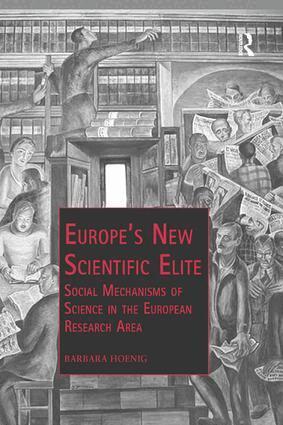
This book examines the question of whether the process of European integration in research funding has led to new forms of oligarchization and elite formation in the European Research Area. Based on a study of the European Research Council (ERC), the author investigates profound structural change in the social organization of science, as the ERC intervenes in public science systems that, until now, have largely been organized at the national level.Against the background of an emerging new science policy, Europe’s New Scientific Elite explores the social mechanisms that generate, reproduce and modify existing dynamics of stratification and oligarchization in science, shedding light on the strong normative impact of the ERC’s funding on problem-choice in science, the cultural legitimacy and future vision of science, and the building of new research councils of national, European and global scope.A comparative, theory-driven investigation of European research funding, this book will appeal to social scientists with interests in the sociology of knowledge.
Häftad, Engelska, 2019
629 kr
Skickas inom 10-15 vardagar
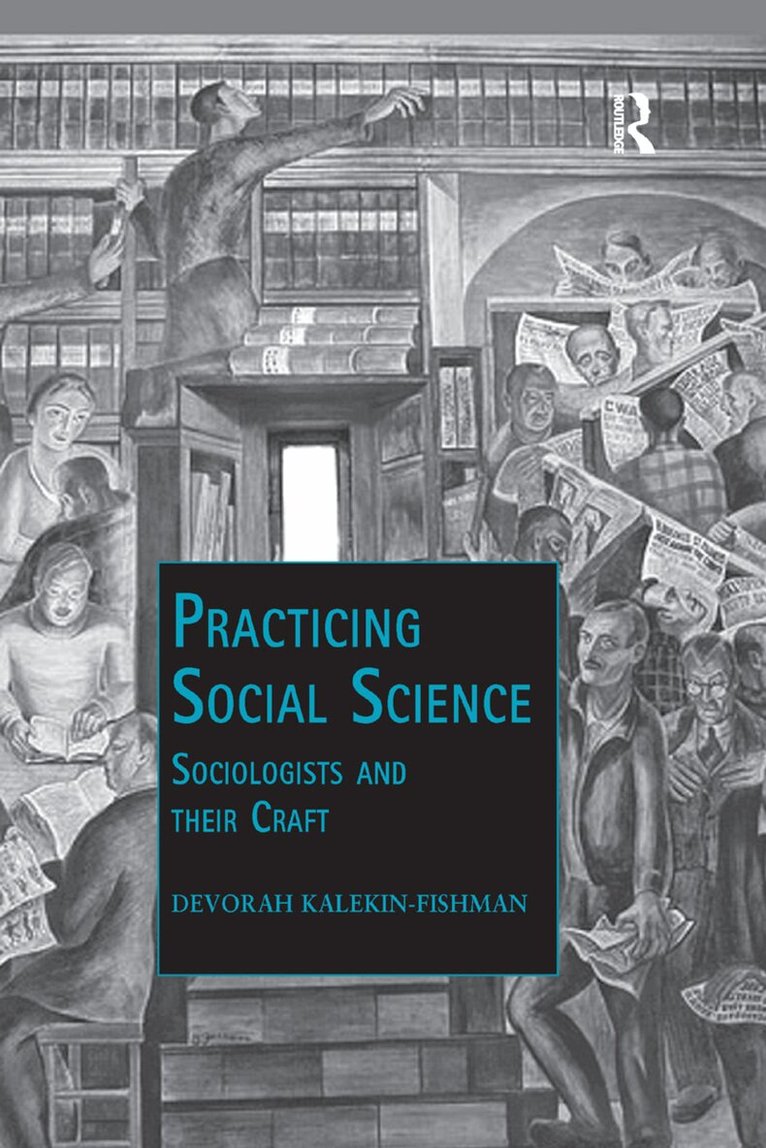
How is the process of globalization effecting changes in the structure of knowledge in sociology? This path-breaking volume looks at the human dimension of developments in the discipline by compiling a set of interviews that exemplify the life and work of a sociologist today. Their ideas and conceptualizations show to what extent a "paradigm shift" has taken root, answering questions such as whether sociology still remains a differentiated, relatively autonomous social science. The chosen interviewees are about equally divided according to gender and have been selected from among professional sociologists in different parts of the globe, with an emphasis on areas that are under-represented in English publications, such as East Asia, Latin America, and Africa. Analysis focuses on changes which are becoming clear from the on-going confrontation between "traditional" sociology which emerged as a project of modernity, and the sociology practiced by sociologists who are called upon to adapt the discipline to the upheavals of the twenty-first century.
Häftad, Engelska, 2020
724 kr
Skickas inom 10-15 vardagar
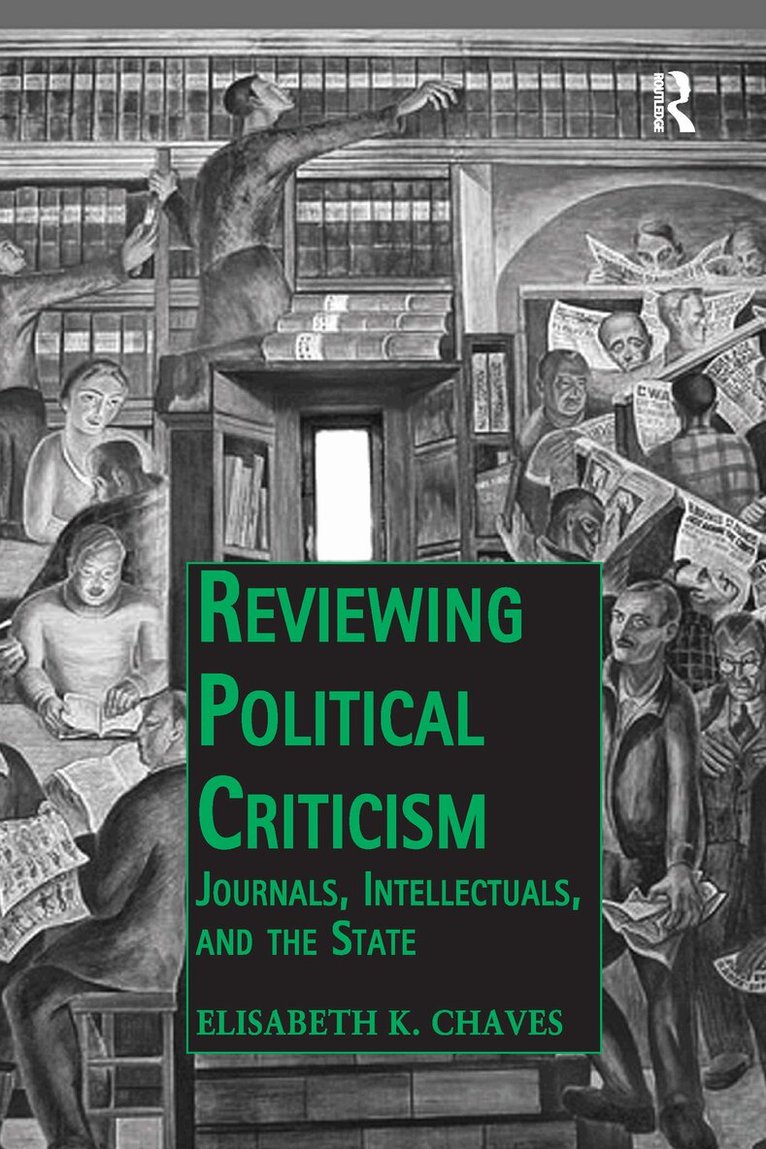
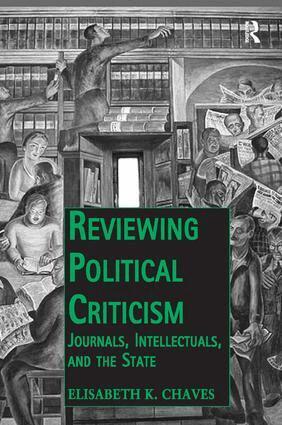
Reviewing Political Criticism examines the rise of the ’review’ form of journal publication, from the early eighteenth to the early twenty-first centuries. The review belongs to a long tradition of written political criticism that first advised, then revised, and with the increased confidence afforded to civil society by the rise of market capitalism, subsequently challenged and even transformed the state’s view on what and how it governed. Chaves investigates the crucial nexus of intellectual debate with political judgment over this time, and highlights the review’s central role in upholding this connection. Focusing upon critical moments that required the exercise of political judgment, the book explains this journal form as a means of political practice, one that essentially ’re-views’ the state’s view of how society should be ordered. To understand critical activity, one must reflect on where this activity takes place-on the institutions of criticism that sustain it. Referred to by some as the ’natural habitat’ of intellectuals, journals, as the institutionalized sites of theoretical discourse, are often overlooked. This groundbreaking book offers a concentrated critique of the review form of journal publication as a medium for political thought and action, as a decisive site for political judgment by the state’s conservers and critics.
Häftad, Engelska, 2021
657 kr
Skickas inom 10-15 vardagar
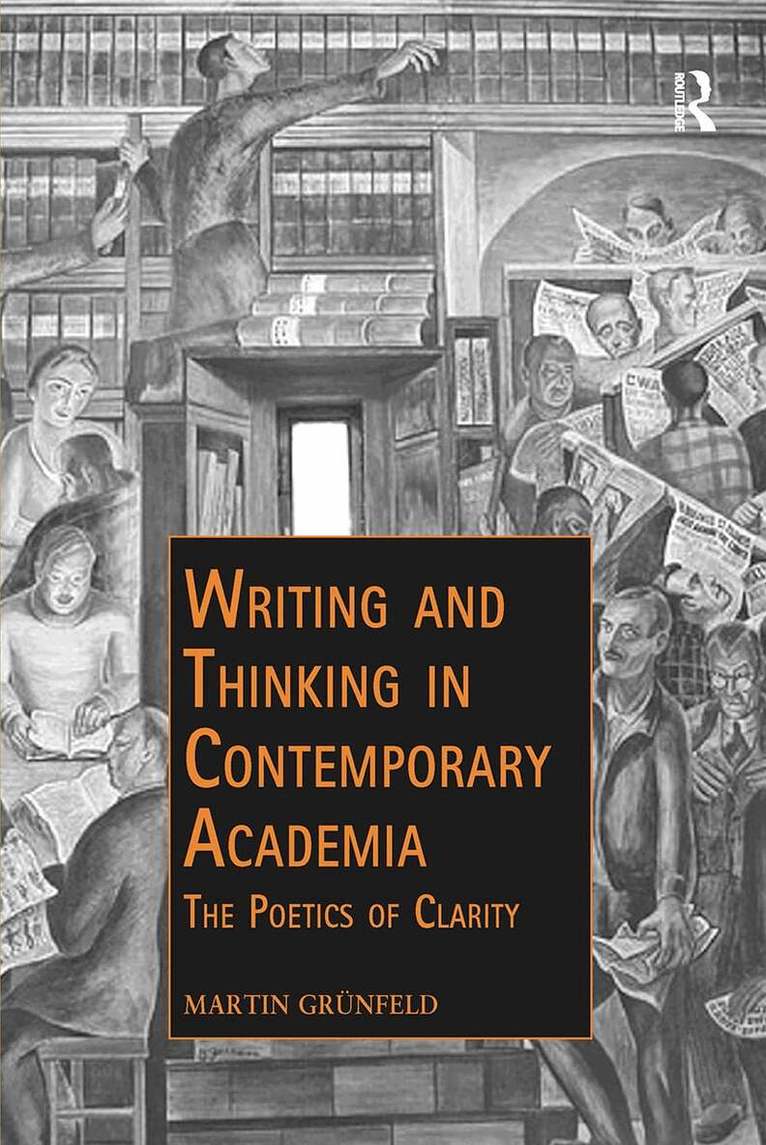
Across disciplinary borders, clarity is taken for granted as a cardinal virtue of communication in contemporary academia. But what is clarity, how is it practised in writing across disciplinary borders and how does it affect our ways of researching and thinking? This book explores such questions by scrutinising the ideal of clarity beyond its apparently self-evident value. Through a multi-methodological empirical analysis of the ideal of clarity, the author offers a sketch of what is termed ‘the poetics of clarity’, which is unfolded as a field of tension with important implications for sentence formation, authorial positioning and textual organisation. By way of a series of reflections on the possible consequences of this for thinking, this volume also explores the parts of knowledge production that may be marginalised, especially poetic language use, biases, interests and contexts, multi-dimensional arguments and errors. Revealing a positivist bias and a regime of high-speed consumption that characterise what, in certain regards, might be considered a productive space for knowledge production, Writing and Thinking in Contemporary Academia will appeal to scholars with interests in the sociology of knowledge, continental philosophy, the philosophy of science and academic writing.
Häftad, Engelska, 2024
574 kr
Skickas inom 10-15 vardagar
This ground-breaking volume is a follow-up to Intellectuals and Their Publics. In contrast to the earlier book, which was mainly concerned with the activity of intellectuals and how it relates to the public, this volume analyses what happens when sociology and sociologists engage with or serve various publics. More specifically, this problem will be studied from the following three angles: How does one become a public sociologist and prominent intellectual in the first place? (Part I) How complex and complicated are the stories of institutions and professional associations when they take on a public role or tackle a major social or political problem? (Part II) How can one investigate the relationship between individual sociologists and intellectuals and their various publics? (Part III) This book will be of interest to academics and students working in the fields of the sociology of knowledge and ideas, the history of social sciences, intellectual history, cultural sociology, and cultural studies.
Inbunden, Engelska, 2017
2 151 kr
Skickas inom 10-15 vardagar
Winner of the Harald Kaufmann Prize for Senior Researchers, 2018This book examines the question of whether the process of European integration in research funding has led to new forms of oligarchization and elite formation in the European Research Area. Based on a study of the European Research Council (ERC), the author investigates profound structural change in the social organization of science, as the ERC intervenes in public science systems that, until now, have largely been organized at the national level.Against the background of an emerging new science policy, Europe’s New Scientific Elite explores the social mechanisms that generate, reproduce and modify existing dynamics of stratification and oligarchization in science, shedding light on the strong normative impact of the ERC’s funding on problem-choice in science, the cultural legitimacy and future vision of science, and the building of new research councils of national, European and global scope.A comparative, theory-driven investigation of European research funding, this book will appeal to social scientists with interests in the sociology of knowledge.
Häftad, Engelska, 2016
712 kr
Skickas inom 10-15 vardagar
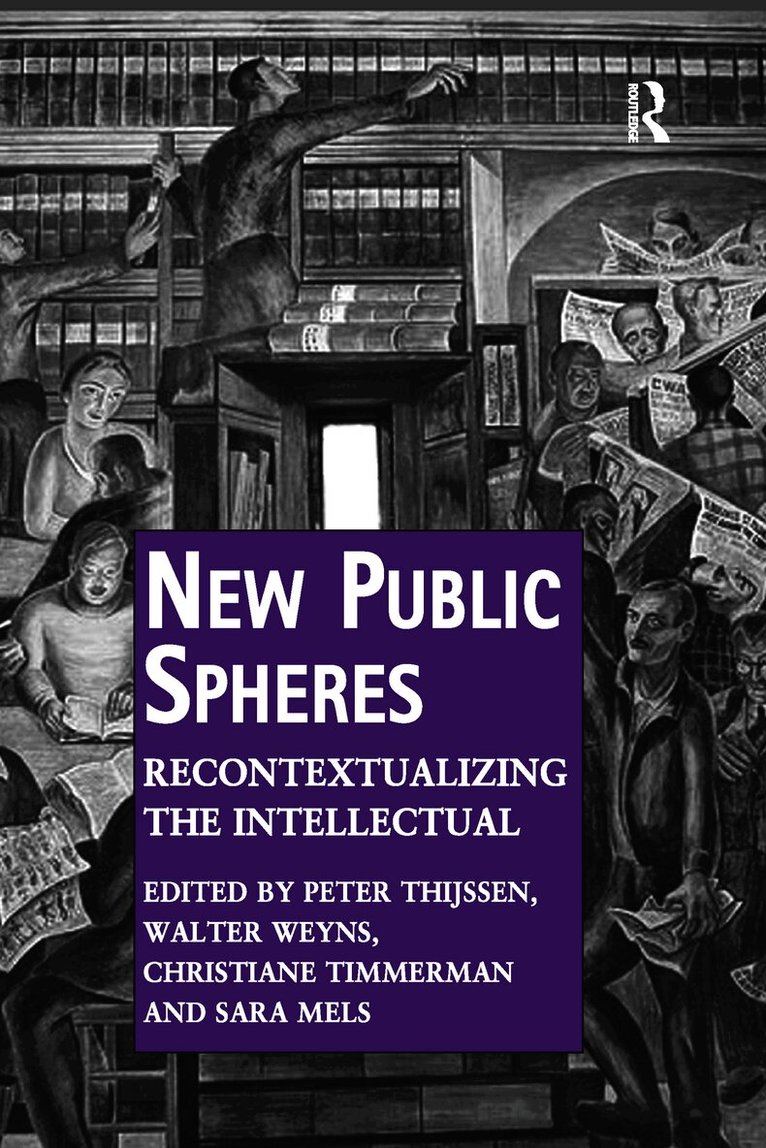
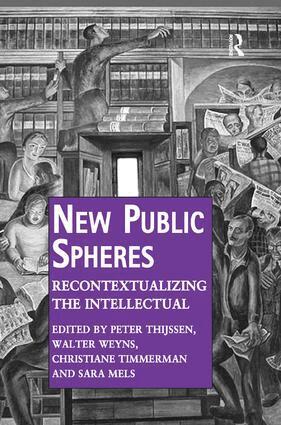
The public sphere provides a domain of social life in which public opinion is expressed by means of rational discourse and debate. Habermas linked its historical development to the coffee houses and journals in England, Parisian salons and German reading clubs. He described it as a bourgeois public sphere, where private people come together and where they turn from a politically disempowered bourgeoisie into an effective political agent - the public intellectual. With communication networks being diversified and expanded over time, the worldwide web has put pressure on traditional public spheres. These new informal and horizontal networks shaped by the internet create new contexts in which an anonymous and dispersed public may gather in political e-communities to reflect critically on societal issues. These de-centered modes of communication and influence-seeking change the role of the (traditional) public intellectual and - at first sight - seem to make their contributions less influential. What processes, therefore, influence changes within public spheres and how can intellectuals assert authority within them? Should we speak of different types of intellectuals, according to the different modes of public intellectual engagement? This ground-breaking volume gives a multi-disciplinary account of the way in which public intellectuals have constructed their role and position in the public sphere in the past, and how they try to voice public concerns and achieve authority again within those fragmented public spheres today.
Häftad, Engelska, 2016
768 kr
Skickas inom 10-15 vardagar
In this ground-breaking book, Shaun Best analyses the intellectual knowledge production of Zygmunt Bauman and his rise to academic stardom in the English speaking world by evaluating the relation between his biography, the contexts in which he found himself, and why his intellectual creativity is admired by so many people. Bauman has an interesting 'contested' biography and underwent a number of intellectual shifts from the early stages of his academic career as Marxist. Bauman moved on and for almost ten years he was associated with 'postmodernity' (from 1989-1997) but in 2000 he decided to distance himself from postmodernism and rebrand his approach to understanding the contemporary world as 'liquid modernity'. Best shows how Bauman developed his canonised status becoming an intellectual guru in the UK and in Australia despite being largely ignored by the academic community in the United States and Central Europe. Rather than investigating Bauman's academic output as a demonstration of his 'creative genius', Best argues that most academic output involves the interplay of multiple factors and this book evaluates the influences on both intellectual choices and the social factors or contexts that led Bauman to attach himself to different sets of ideas during his academic career.
Inbunden, Engelska, 2019
2 151 kr
Skickas inom 10-15 vardagar
Across disciplinary borders, clarity is taken for granted as a cardinal virtue of communication in contemporary academia. But what is clarity, how is it practised in writing across disciplinary borders and how does it affect our ways of researching and thinking? This book explores such questions by scrutinising the ideal of clarity beyond its apparently self-evident value. Through a multi-methodological empirical analysis of the ideal of clarity, the author offers a sketch of what is termed ‘the poetics of clarity’, which is unfolded as a field of tension with important implications for sentence formation, authorial positioning and textual organisation. By way of a series of reflections on the possible consequences of this for thinking, this volume also explores the parts of knowledge production that may be marginalised, especially poetic language use, biases, interests and contexts, multi-dimensional arguments and errors. Revealing a positivist bias and a regime of high-speed consumption that characterise what, in certain regards, might be considered a productive space for knowledge production, Writing and Thinking in Contemporary Academia will appeal to scholars with interests in the sociology of knowledge, continental philosophy, the philosophy of science and academic writing.
Häftad, Engelska, 2017
762 kr
Skickas inom 10-15 vardagar
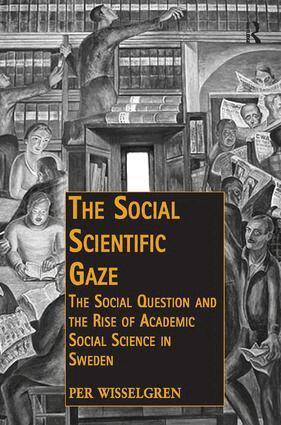
The social sciences have, ever since they were first established as academic disciplines, played a foundational role in most spheres of modern society - in policy-making, education, the media and public debate - and hence also, indirectly, for our self-understanding as social beings. The Social Scientific Gaze examines the discursive formation of academic social science in the historical context of the 'social question', that is, the protracted and wide-ranging discussions on the social problems of modernity that were being debated with increased intensity during the nineteenth century. Empirically, the study focuses on the Lorén Foundation, a combined private funding agency and early research institute, which was set up in 1885 to promote the rise of Swedish social science and to investigate the social question. Comprising an heuristic case, the close analysis of the Foundation makes it possible not only to reconstruct its basic ideas and practices, but also to situate its activities in broader historical and sociological context. The Social Scientific Gaze argues that the rise of Swedish social science may be seen not only as an 'answer' to the social 'question', but also as one attempt alongside others - including contemporary social literature, the philantropic reform movement, and the introduction of modern social policy - to conceptualize, mobilize and regulate the social sphere. In this process it is furthermore shown how an ambigious yet distinct 'social scientific gaze' was discursively articulated.
Inbunden, Engelska, 2013
2 220 kr
Skickas inom 10-15 vardagar
This ground-breaking volume is a follow-up to Intellectuals and Their Publics. In contrast to the earlier book, which was mainly concerned with the activity of intellectuals and how it relates to the public, this volume analyses what happens when sociology and sociologists engage with or serve various publics. More specifically, this problem will be studied from the following three angles: How does one become a public sociologist and prominent intellectual in the first place? (Part I) How complex and complicated are the stories of institutions and professional associations when they take on a public role or tackle a major social or political problem? (Part II) How can one investigate the relationship between individual sociologists and intellectuals and their various publics? (Part III) This book will be of interest to academics and students working in the fields of the sociology of knowledge and ideas, the history of social sciences, intellectual history, cultural sociology, and cultural studies.
Inbunden, Engelska, 2013
2 220 kr
Skickas inom 10-15 vardagar
In this ground-breaking book, Shaun Best analyses the intellectual knowledge production of Zygmunt Bauman and his rise to academic stardom in the English speaking world by evaluating the relation between his biography, the contexts in which he found himself, and why his intellectual creativity is admired by so many people. Bauman has an interesting 'contested' biography and underwent a number of intellectual shifts from the early stages of his academic career as Marxist. Bauman moved on and for almost ten years he was associated with 'postmodernity' (from 1989-1997) but in 2000 he decided to distance himself from postmodernism and rebrand his approach to understanding the contemporary world as 'liquid modernity'. Best shows how Bauman developed his canonised status becoming an intellectual guru in the UK and in Australia despite being largely ignored by the academic community in the United States and Central Europe. Rather than investigating Bauman's academic output as a demonstration of his 'creative genius', Best argues that most academic output involves the interplay of multiple factors and this book evaluates the influences on both intellectual choices and the social factors or contexts that led Bauman to attach himself to different sets of ideas during his academic career.
Inbunden, Engelska, 2013
2 220 kr
Skickas inom 10-15 vardagar
The public sphere provides a domain of social life in which public opinion is expressed by means of rational discourse and debate. Habermas linked its historical development to the coffee houses and journals in England, Parisian salons and German reading clubs. He described it as a bourgeois public sphere, where private people come together and where they turn from a politically disempowered bourgeoisie into an effective political agent - the public intellectual. With communication networks being diversified and expanded over time, the worldwide web has put pressure on traditional public spheres. These new informal and horizontal networks shaped by the internet create new contexts in which an anonymous and dispersed public may gather in political e-communities to reflect critically on societal issues. These de-centered modes of communication and influence-seeking change the role of the (traditional) public intellectual and - at first sight - seem to make their contributions less influential. What processes, therefore, influence changes within public spheres and how can intellectuals assert authority within them? Should we speak of different types of intellectuals, according to the different modes of public intellectual engagement? This ground-breaking volume gives a multi-disciplinary account of the way in which public intellectuals have constructed their role and position in the public sphere in the past, and how they try to voice public concerns and achieve authority again within those fragmented public spheres today.
Inbunden, Engelska, 2016
2 359 kr
Skickas inom 10-15 vardagar
How is the process of globalization effecting changes in the structure of knowledge in sociology? This path-breaking volume looks at the human dimension of developments in the discipline by compiling a set of interviews that exemplify the life and work of a sociologist today. Their ideas and conceptualizations show to what extent a "paradigm shift" has taken root, answering questions such as whether sociology still remains a differentiated, relatively autonomous social science. The chosen interviewees are about equally divided according to gender and have been selected from among professional sociologists in different parts of the globe, with an emphasis on areas that are under-represented in English publications, such as East Asia, Latin America, and Africa. Analysis focuses on changes which are becoming clear from the on-going confrontation between "traditional" sociology which emerged as a project of modernity, and the sociology practiced by sociologists who are called upon to adapt the discipline to the upheavals of the twenty-first century.
Inbunden, Engelska, 2015
2 151 kr
Skickas inom 10-15 vardagar
Reviewing Political Criticism examines the rise of the ’review’ form of journal publication, from the early eighteenth to the early twenty-first centuries. The review belongs to a long tradition of written political criticism that first advised, then revised, and with the increased confidence afforded to civil society by the rise of market capitalism, subsequently challenged and even transformed the state’s view on what and how it governed. Chaves investigates the crucial nexus of intellectual debate with political judgment over this time, and highlights the review’s central role in upholding this connection. Focusing upon critical moments that required the exercise of political judgment, the book explains this journal form as a means of political practice, one that essentially ’re-views’ the state’s view of how society should be ordered. To understand critical activity, one must reflect on where this activity takes place-on the institutions of criticism that sustain it. Referred to by some as the ’natural habitat’ of intellectuals, journals, as the institutionalized sites of theoretical discourse, are often overlooked. This groundbreaking book offers a concentrated critique of the review form of journal publication as a medium for political thought and action, as a decisive site for political judgment by the state’s conservers and critics.
Inbunden, Engelska, 2015
2 151 kr
Skickas inom 10-15 vardagar
The social sciences have, ever since they were first established as academic disciplines, played a foundational role in most spheres of modern society - in policy-making, education, the media and public debate - and hence also, indirectly, for our self-understanding as social beings. The Social Scientific Gaze examines the discursive formation of academic social science in the historical context of the 'social question', that is, the protracted and wide-ranging discussions on the social problems of modernity that were being debated with increased intensity during the nineteenth century. Empirically, the study focuses on the Lorén Foundation, a combined private funding agency and early research institute, which was set up in 1885 to promote the rise of Swedish social science and to investigate the social question. Comprising an heuristic case, the close analysis of the Foundation makes it possible not only to reconstruct its basic ideas and practices, but also to situate its activities in broader historical and sociological context. The Social Scientific Gaze argues that the rise of Swedish social science may be seen not only as an 'answer' to the social 'question', but also as one attempt alongside others - including contemporary social literature, the philantropic reform movement, and the introduction of modern social policy - to conceptualize, mobilize and regulate the social sphere. In this process it is furthermore shown how an ambigious yet distinct 'social scientific gaze' was discursively articulated.