Qur'anic Studies Series – serie
Visar alla böcker i serien Qur'anic Studies Series. Handla med fri frakt och snabb leverans.
19 produkter
19 produkter
Inbunden, Engelska, 2021
1 152 kr
Skickas inom 5-8 vardagar
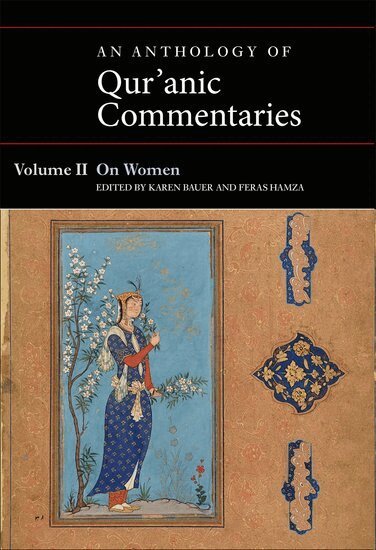
Building on the success of Anthology, Volume I: On the Nature of the Divine, this second volume in the series focuses on a critical and contentious theme: Women in the Qurʾan and traditional Qurʾanic commentaries. It comprises analysis of the female subject in the Qurʾan, annotated translations of Qurʾanic commentaries spanning twelve centuries, interviews of contemporary Muslim scholars and extensive introductory materials, which frame the work throughout and render these technically complex materials accessible to the reader. On Women begins with a critical introduction to the study of women and gender in the genre of Qurʾanic commentaries. A unique prolegomenon then follows key Qurʾanic terms in a chronological sequence, showing how the Qurʾan's world view on women developed from the earliest Meccan revelations, when women were addressed only implicitly as a part of households or in the course of anti-pagan polemic, to the period of the final revelations in Medina, when women were addressed directly as pious and social subjects. The remainder of the volume translates, critically annotates, and analyses interpretations of six select Qurʾanic verses on women. These verses, chosen because of their relevance to women's lived experience, speak of the creation of humankind beginning with a single soul (Q. 4:1); the exemplary figure of Mary, the mother of Jesus (Q. 3:35-6); women's status in marriage (Q. 4:34); women's legal testimony and hence legal capacity (Q. 2:282); and 'veiling' as it relates to Qurʾanic norms of modesty (Q. 24:31). While highlighting variation, continuity, and plurality in the genre of Qurʾanic commentaries, Volume II goes beyond medieval interpretive paradigms to include perspectives marginalised by that tradition, such as the voices of women themselves.
Inbunden, Engelska, 2008
1 152 kr
Skickas inom 5-8 vardagar
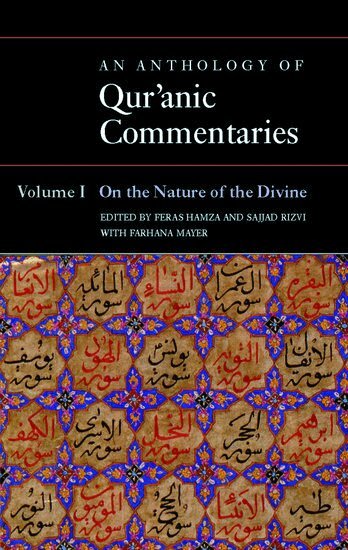
This pioneering volume, the first in a series, presents a plurality of voices, methods and concerns in Qur'anic interpretation ranging from the 8th century to the present day. No previous work has drawn on such a comprehensive range of commentaries and covered such a wide spectrum of theological approaches.On the Nature of the Divine analyses the works of twenty selected Sunni, Shi'i, Ibadi, Mu'tazili, and Sufi commentators on six Qur'anic verses, revealing varied approaches to the scripture and its meaning. In their attempts to discern God's nature, the commentators inevitably introduce their own particular theological concerns into their commentaries. Contextual introductions and annotated translations allow the reader to follow the genesis of key intellectual debates and religio-political attitudes still relevant to the lives of Muslims today. This combination of previously untranslated texts and extensive annotation provides an invaluable and innovative contribution to the field of Islamic studies.
Inbunden, Engelska, 2012
1 009 kr
Skickas inom 5-8 vardagar
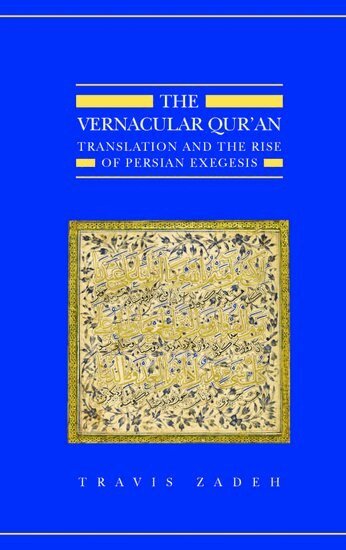
This book examines how early juridical and theological debates on the translatability of the Qur'an informed the development of Persian translations and commentaries of the Qur'an. While it is generally believed that Muslims in the eighth to twelfth centuries were disdainful of translating the Qur'an, the historical record proves to be much more nuanced. Although the philosophy of some schools of law was that the divine nature of the Qur'an could not be conveyed in a language other than Arabic, the reality was that Persian exegetical translations were considered acceptable for use by new converts to Islam. These translations preserved the Arabic text of the Qur'an and, interlinearly, wove Persian commentaries between its lines and verses, thereby preserving the sacred script while expanding on and making the text available to a wider audience. The author gives a thorough overview of the development of Persian exegetical writing, from rhyming translations to major commentaries, starting with the emergence of New Persian literature in the tenth century and continuing on until the institutionalisation of Persian as a language that rivalled Arabic in courts and educational institutions. Through a series of detailed case studies, this book offers new insight into the development of Qur'anic hermeneutics and its relationship to vernacular cultures, religious elites, institutions of education, and dynastic authority. Presented for the first time to an English readership is a broad array of archival material, spanning five centuries and drawn from across the Middle East, Central Asia and South Asia.
Inbunden, Engelska, 2012
794 kr
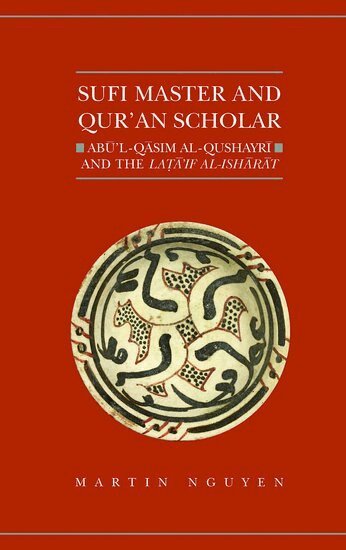
This book is the first extensive examination of the medieval Qur'an commentary known as the Latāif al-Ishārāt and the first critical biography of its author, the famous spiritual master Abū'l-Qasim al-Qushayrī. Written in 5th/11th century Nishapur, an intellectual and cultural crossroads of the Muslim world, the Latā'if al-Ishārāt has endured down through the centuries as an important work of Sufi exegesis. A mystical vision of reality is taught through its line-by-line treatment of the Qur'an as its author was writing as both a Sufi teacher and scholar. This study fully investigates al-Qushayrī's life and historical horizon and carefully analyses the structure and method of the commentary. The primary aim of the book is to draw greater attention to the other traditions of exegesis that inform the Sufi approach of the Latā'if al-Ishārāt, an understudied feature of many Sufi commentaries in general. In the case of this commentary, scholarly and pedagogical concerns for language, prophetic sayings, law and theology are interwoven into al-Qushayrī's overarching mystical exegesis. Other important aspects of the author's intellectual identity and education clearly influenced the formation of al-Qushayrī's Sufi worldview and as a consequence his interpretation of God's word. By delineating these other traditions of exegesis mentioned in al-Qushayrī's biography and embedded in his Latā'if al-Ishārāt, we can better appreciate how he and his commentary were part of a wider Sunni historical heritage in addition to the developing Sufi tradition.
Inbunden, Engelska, 2014
723 kr
Skickas inom 5-8 vardagar
Over the course of the past two centuries, the central text of Islam has undergone twin revolutions. Around the globe, Muslim communities have embraced the printing and translating of the Qur'an, transforming the scribal text into a modern book that can be read in virtually any language. What began with the sparse and often contentious publication of vernacular commentaries and translations in South Asia and the Ottoman Empire evolved, by the late twentieth century, into widespread Qur'anic translation and publishing efforts in all quarters of the Muslim world, including Arabic speaking countries such as Egypt and Saudi Arabia. This is remarkable given that at the dawn of the twentieth century many Muslims considered Qur'an translations to be impermissible and unviable. Nevertheless, printed and translated versions of the Qur'an have gained widespread acceptance by Muslim communities, and now play a central, and in some quarters, a leading role in how the Qur'an is read and understood in the modern world. Focusing on the Ottoman Empire and Turkey, and following the debates to Russia, Egypt, Indonesia, and India, this book tries to answer the question of how this revolution in Qur'anic book culture occurred, considering both intellectual history as well the processes by which the Qur'an became a modern book that could be mechanically reproduced and widely owned.
Inbunden, Engelska, 2015
1 009 kr
Skickas inom 5-8 vardagar
The basic intention of Qur'anic exegesis (tafsīr) is to understand what the text of the Qur'an means. Before attempting to understand anything of the Qur'anic worldview, its theology and ethical values, there is a need for exegetes to engage with the individual words found in the Qur'an itself. Yet, exegetes and translators, whether medieval or modern, have different theological perspectives, which influence how they do this. Many modern scholars have recognised that lexicology plays an important part in exegesis, but there are few studies of how exegetes use it to develop their interpretations of the Qur'an or that address lexicology in Qur'anic exegesis in any depth. This volume of essays addresses this gap in the scholarship.The Meaning of the Word provides an overview of the development of lexicological analysis in the tafsīr tradition, and examines how exegetes interpreted words in the Qur'an. The contributions reflect on lexicology in Qur'anic exegesis through studies of a wide range of subjects, from linguistics to literary criticism, and law and gender to mysticism; from examinations of the issue of lexicology in the Arab, Persian and Turkish worlds to its examination in the European world; and from studies of the earliest discussions of Qurâanic lexica to those made in twentieth-century Turkey and recent English translations of the Qur'an. This volume will become a subject-specific reference volume for anyone working on the interpretation of the Qurâan, but also in Islamic Studies and the wider field of Religious Studies. lexicology in the Arab, Persian, Turkish, and European worlds; and studies of the earliest discussions of Qur'anic lexica to those made in twentieth-century Turkey and recent English translations of the Qur'an.
Inbunden, Engelska, 2016
866 kr
Skickas inom 5-8 vardagar
Some eighty per cent of Muslims in the contemporary world speak languages other than Arabic, the language of the Qur'an. To respond to the needs of their communities, Muslim scholars and laypersons must increasingly explain and communicate the meanings of the Qur'an in their own languages -- including through the medium of Qur'an commentary and translation. The Qur'an and its Readers Worldwide provides an introduction to this rich and expanding field of endeavour. It brings together a selection of Qur'an commentaries and translations produced across the twentieth century to the present day, and ranging in provenance from the regions of the traditional Islamic heartlands to the new loci of global Islam. Individual chapters examine works in Arabic, Bosnian, Chinese, English, German, Malay, Persian, Swahili, Turkish and Urdu, each viewed in terms of the impact of modernity on the encounter with the Qur'an, providing an English readership with an exceptionally broad overview.Situating these works in their cultural and national settings, this volume focuses attention on the relationship between language, culture and sociopolitical environment in Qur'an commentary and translation. It highlights the linkages between the Qur'an translations and commentaries studied and the developments and debates that generated them, and to which they respond, whether associated with colonial realities, the challenges of nation building, or the search for ways to reconstruct Islamic culture in the face of new legal frameworks or societal models.Through a detailed introduction and a series of case studies this book illustrates the defining trends in Qur'an commentary worldwide, addressing evolving questions of authorship, message, intended readership and media of communication. It highlights the continued relevance of Qurâan commentary as an authoritative Islamic tradition in a period of growing direct engagement with the sacred text. It also samples debates concerning Qur'anic meaning in translation that are pertinent for many millions of Muslims today, and that look set to grow in tandem with globalisation.
Inbunden, Engelska, 2016
866 kr
Skickas inom 5-8 vardagar
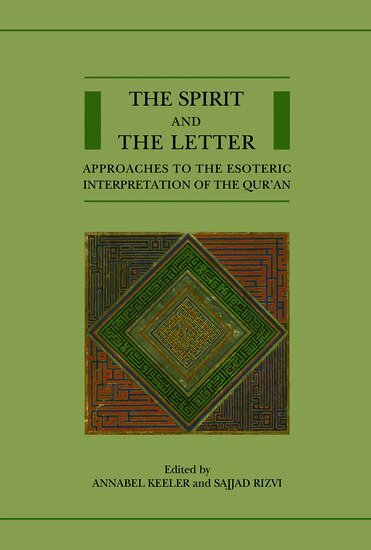
This volume is the first to focus specifically on esoteric interpretation as a phenomenon in the field of Qur'anic exegesis and to show the plurality of ways it has been manifested in different Muslim traditions. Concern with the inner, spiritual implications of the Qur'an has usually been associated with mystical and Sufi trends in Islam. However, there have also been exegetes among the Shi'a, as well as among philosophers, who sought to supplement their understanding of the Qur'an's apparent meaning by eliciting deeper significations through contemplation of the verses. The Spirit and the Letter examines the multiplicity of these esoteric approaches, covering a period that extends from the third/ninth century to the present. It includes chapters on philosophical and Shi'i exegetes, such as Ibn Sīnā (d. 428/1037) and Mullā Ṣadrā (d. 1045/1635-6), in addition to studies of a range of Sufi perspectives, from al-Sulamī (d. 412/1021) and al-Qushayrī (d. 465/1072) to Rūzbihān Baqlī (d. 606/1209), as well as representatives of the Ibn 'Arabī and Kubrāwī schools. Considered together, the range of studies in this volume enable us to see what these approaches have in common and how they differ, and how the hermeneutics and content of exegesis are affected by doctrinal and ideological perspectives of various traditions and periods. Furthermore, they deepen our understanding of what actually constitutes esoteric interpretation and the need to look beyond the letter to the spirit of the Qur'anic word.
Inbunden, Engelska, 2017
937 kr
Skickas inom 5-8 vardagar
Though there have been many studies on the Qur'an's importance in tafsĪr (Qur'anic commentary), there are comparatively few which look at the impact of the Qur'an on other forms of literature. The Qur'an and Adab: The Shaping of Literary Traditions in Classical Islam bridges the gap in the scholarship by placing the Qur'an in its broader cultural and literary contexts. It explores the Qur'an's relation to classical literary traditions (adab) from pre-Islamic times until the fifteenth century CE, focusing on the various ways in which the classical literati (udabā") engaged with the Qur'anic text, linguistically, conceptually, structurally, and aesthetically, to create works that combined the sacred with the profane, thereby blurring the boundaries between formal tafsĪr and adab.Through a detailed introduction and a series of case studies, the volume rethinks the concept of adab and the relation of scripture to humanistic traditions in classical Islam and questions the general classification of adab as belles-lettres. It examines the religious aesthetic found in different types of adab works--poetry, literary criticism, epistles, oratory traditions, anthologies, 'mirrors for princes', folklore, and mystical/Sufi literature. Featuring contributions by leading scholars, the collection investigate the intertextuality between pre-lslamic poetry and the Qur'an, and the innumerable approaches to the Qur'an by classical authors. It discusses the various citation techniques employed in the udabā"'s borrowing of Qur'anic language, concepts, and stories. The chapters explain how the choice of these techniques was determined by the literary conventions of the particular genres and contexts within which the udabā" were working, as well as by their authorial intention, theological, and ideological outlooks. They also highlight the link between the functions ascribed to Qur'anic quotations in a specific text and the need to convey a particular message to specific audiences.
Häftad, Engelska, 2017
336 kr
Skickas inom 7-10 vardagar
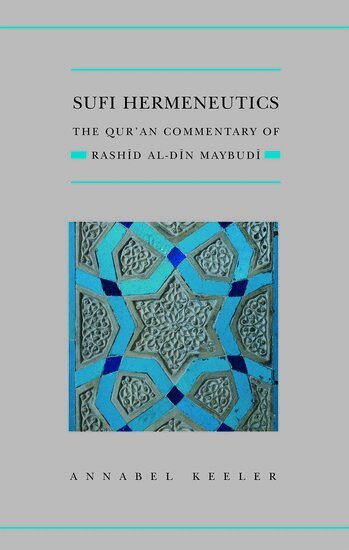
This is the first major study in a Western language of Rashid al-Din Maybudi's Persian commentary on the Qur'an Kashf al-asrar wa 'uddat al-abrar (Unveiling of Mysteries and Provision of the Righteous). Annabel Keeler explores the interplay between scriptural exegesis and mystical doctrine in a twelfth-century Sufi commentary on the Qur'an. Previously little-known outside the Persian-speaking world, it is increasingly recognized as a key work in the development of Sufi Qur'anic interpretation. This volume provides invaluable background for anyone wanting to gain a deeper understanding of Persian mystical poetry and prose, and other major works of Sufi literature.
Häftad, Engelska, 2020
365 kr
Skickas inom 7-10 vardagar
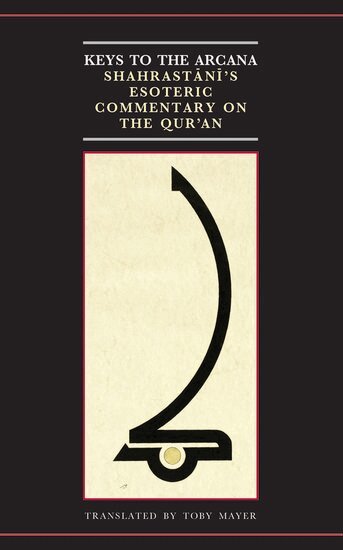
Only preserved in a single manuscript in Tehran, this remarkable twelfth-century Qur'anic commentary by Muhammad b. 'Abd al-Karim al- Shahrastani marks the achievement of a lifelong, arduous quest for knowledge. Shahrastani began writing Mafatih al-asrar or Keys to the Arcana towards the end of his life and the work reflects the brilliant radicalism of his more private religious views. The introduction and opening chapter of this virtually unknown work is presented here in a bilingual edition, which also includes an introduction and contextual notes by Toby Mayer.In Keys to the Arcana, Shahrastani breaks down the text of the Qur'an and analyses it from a linguistic point of view, with reference to the history of Qur'anic interpretation. The author's ultimate aim is to use an elaborate set of complimentary concepts - the 'keys' of the work's title - to unearth the esoteric meanings of the Qur'anic verses, which he calls the 'arcana' of the verses (asrar al-ayat). A historian of religious and philosophical doctrines, Shahrastani has generally been considered to be a spokesman for the Sunni religious establishment under the Seljuqs. The complimentary concepts in question, however, appear to derive from the Isma'ili Shi'i intellectual tradition, indicating that the author may have been secretly involved in the Isma'ili movement. Shahrastani 's unusually esoteric and highly systematic exegesis of the Qur'an provides a vivid picture of the mature state of scriptural commentary in the twelfth-century CE. Dr Mayer's meticulous translation of Shahrastani 's Introduction and Commentary on Surat al-Fatiha, supplemented by the Arabic text, allows the reader and scholar access to this intriguing Muslim intellectual work for the first time.
Inbunden, Engelska, 2019
866 kr
Skickas inom 5-8 vardagar
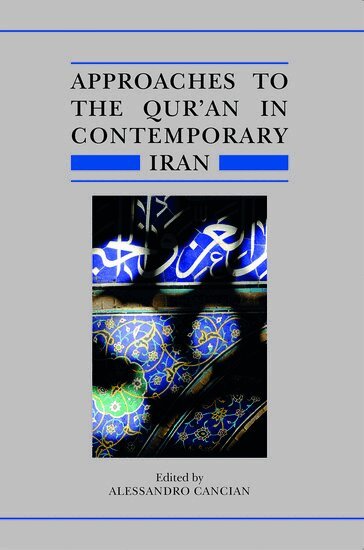
Approaches to the Qur'an in Contemporary Iran explores the importance of the Qur'an in the religious, artistic, political, and intellectual discourses in modern and contemporary Iran from the nineteenth century to the present. The chapters included in the volume have been written by some of the most authoritative specialists in the modern history of Iran. Their contributions span a wide range of subjects and themes, covering such varied ground as the examination of the trends in Qur'anic exegesis that are currently prominent in Iran, the use of Qur'anic themes in contemporary Iranian cinema, the concept of revelation as the basis of diverse political trends in the Islamic Republic of Iran, Sufi mystical interpretations of the Qur'an the use of the Qur'an in the arts, the Qur'an as a living scripture in specific intellectual and social circles, and case studies of individual intellectuals.Through this wide-ranging survey, the book aims to become a reference for anyone interested in the Qur'an's imprint on the religious, political, cultural, and anthropological history of modern and contemporary Iranian society. The maps serve to situate the reader geographically and a careful selection of photographs bring a flavour of Iranian religious culture during this period.
Inbunden, Engelska, 2019
866 kr
Skickas inom 5-8 vardagar
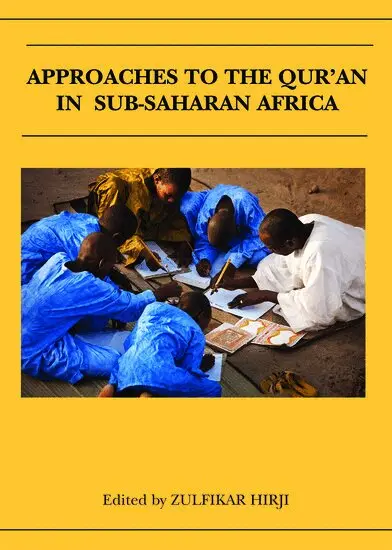
Covering a period from the eighteenth century to the early twenty-first century, this multidisciplinary volume examines Muslim engagements with the Qur'an in a variety of geographical locations in sub-Saharan Africa including Burkina Faso, Kenya, Mali, Niger, Nigeria, Senegal, and Tanzania. The volume's twelve case studies use different frameworks and methodological approaches from the academic disciplines of philology, historiography, anthropology, and art history. These studies explore a variety of media and modalities that Muslims in sub-Saharan Africa, as elsewhere, use in their engagements with the Qur'an. These include: manuscripts; commentaries; translations; recitations and invocations; music and poetry; magical squares and symbolic repertoire; medicinal and curative acts; textiles, ink, paper, and wooden boards; spaces of education, healing and prayer, as well as spaces of dreams and spirit worlds. As such, the case studies move well beyond the materiality of the Qur'an as a physical book to explore the ways in which the Qur'an is understood, felt and imagined, as well as the contestations and debates that arise from these diverse engagements.Approaches to the Qur'an in Sub-Saharan Africa opens up new discourses about Islam and Muslims in sub-Saharan Africa through the examination of how Muslims in this geographical and socio-cultural context engage with the Qur'an, and about the Qur'an through an examination of how Muslims in sub-Saharan Africa engage with it. Thus, in seeking to understand the plurality of engagements that Muslims from diverse communities of interpretation and from different parts of sub-Saharan Africa have had with Qur'an, this innovative collection adds to the scholarship on the Qur'an as well as the scholarship on Islam and Muslims in Africa.
Del 21 - Qur'anic Studies Series
The Emergence of Shi'i Sufism
Sultan 'Ali Shah Gunabadi and His Commentary on the Qur'an
Inbunden, Engelska, 2023
1 009 kr
Skickas inom 5-8 vardagar
The Bayan al-sa'ada fi maqamat al-'ibada (The Elucidation of Bliss concerning the Spiritual Stations of Worship) is a central work in the modern intellectual and religious history of Iran and Shi'i Islam. A Qur'anic commentary (tafsir) by Sultan 'Ali Shah Gunabadi (d. 1909), it represents a mature synthesis between Twelver Shi'ism and Sufism. In this first detailed study of Sultan 'Ali Shah's Bayan, Alessandro Cancian argues that this commentary represents the foundational act of modern Twelver Shi'i organised Sufism. Cancian first explores the intellectual contexts of Iranian Shi'ism and Sufism, before introducing the author and the text. The eponymous master of the largest branch of the Ni'matullahi Sufi order (the Gunabadiyya), Sultan 'Ali Shah was a religious scholar taught by some of the most authoritative Shi'i ulama of his time; a philosopher in the Akbarian/Sadrian tradition who studied with superstar Qajar philosopher Mulla Hadi Sabzawari (d. 1873); and a master of mysticism who drew from the classical tradition of Persian and Persianate Sufism. Cancian shows how these elements coalesced into the formation of a Shi'i Sufi tariqa, making a credible claim for Ni'matullahi Sufi legitimacy within the Twelver Shi'i establishment and influencing subsequent Qur'anic exegesis in Iran.Cancian then provides a thematic and genealogical analysis of the text alongside a study of its impact and legacy. A translation of Sultan 'Ali Shah's own introduction, outlining his hermeneutical approach and theological and philosophical principles, is provided in an appendix. This book will appeal to scholars in a range of disciplines within Islamic studies, including Qur'anic exegesis, Shi'i studies, Sufi studies, mysticism, and the intellectual history of Iran.
Inbunden, Engelska, 2023
1 295 kr
Skickas inom 5-8 vardagar
It is commonly understood that the Qur'an sought to transform social and religious practices in its seventh-century Arabian milieu. Yet the nature of that transformation is debated, especially as it relates to women, warfare, kinship and community. This book offers a fresh perspective by undertaking the first historical-critical study of all the Qur'an's verses on women, who were integral to this transformation, and by offering an initial overview of households and patronage — late antique social structures that took the place of formal state structures in the Qur'an's tribal milieu. The findings of this study call into question common approaches to Qur'anic theology, law, and narratives, to the nature of the early community, and to women's place in that community. Bauer and Hamza adopt a holistic method, which integrates aspects of the Qur'an that are commonly considered separately, showing, for instance, how stories act as precursors to law, with female characters acting as models for all believers. Concurrently, they highlight the Qur'an's egalitarian approach to moral agency in existing hierarchical social structures, which the Qur'an seeks to transform both by imposing a salvific frame on them, and by fashioning a community of households characterised by morality, decorum, and care of the vulnerable. This compelling and original work proposes new paradigms for understanding the Qur'an's social milieu and its salvific vision for that world.
Inbunden, Engelska, 2007
1 114 kr
Skickas inom 5-8 vardagar
This is the first major study in a Western language of Rashid al-Din Maybudi's Persian commentary on the Qur'an Kashf al-asrar wa 'uddat al-abrar (Unveiling of Mysteries and Provision of the Righteous). Annabel Keeler explores the interplay between scriptural exegesis and mystical doctrine in a twelfth-century Sufi commentary on the Qur'an. Previously little-known outside the Persian-speaking world, it is increasingly recognized as a key work in the development of Sufi Qur'anic interpretation. This volume provides invaluable background for anyone wanting to gain a deeper understanding of Persian mystical poetry and prose, and other major works of Sufi literature.
Inbunden, Engelska, 2009
966 kr
Skickas inom 7-10 vardagar
Only preserved in a single manuscript in Tehran, this remarkable twelfth-century Qur'anic commentary by Muhammad b. 'Abd al-Karim al- Shahrastānī marks the achievement of a lifelong, arduous quest for knowledge. Shahrastānī began writing Mafatih al-asrār or Keys to the Arcana towards the end of his life and the work reflects the brilliant radicalism of his more private religious views. The introduction and opening chapter of this virtually unknown work is presented here in a bilingual edition, which also includes an introduction and contextual notes by Dr Toby Mayer.In Keys to the Arcana, Shahrastānī breaks down the text of the Qur'an and analyses it from a linguistic point of view, with reference to the history of Qur'anic interpretation. The author's ultimate aim is to use an elaborate set of complementary concepts - the 'keys' of the work's title - to unearth the esoteric meanings of Qur'anic verses, which he calls the 'arcana' of the verses (asrār al-āyāt). A historian of religious and philosophical doctrines, Shahrastānī has generally been considered to be a spokesman for the Sunni religious establishment under the Seljuqs. The complementary concepts in question, however, appear to derive, in part, from the Isma'ili Shi'i intellectual tradition, indicating that the author may have been secretly involved in the Isma'ili movement. Shahrastānī 's unusually esoteric and highly systematic exegesis of the Qur'an provides a vivid picture of the mature state of scriptural commentary in the twelfth-century CE. Dr Mayer's meticulous translation of Shahrastānī 's Introduction and Commentary on Sūrat al-Fatiha, supplemented by the Arabic text, allows the reader and scholar access to this intriguing Muslim intellectual work for the first time.
Häftad, Engelska, 2010
522 kr
Skickas inom 5-8 vardagar
Muslim reverence for the Qur'an as the Word of God has manifested itself in various artistic forms throughout history and up to the present day. This innovative collection of essays explores creative expressions of the Qur'an in a wide range of media. Contributors include museum curators and leading academics in art and architectural history, palaeography and material anthropology, and their studies span four continents and cover topics from medieval coins and early illuminated copies of the Qur'an to contemporary painting. They offer a multidisciplinary approach to the questions of how, why and in what contexts the Qur'an has inspired Muslim artists and craftspeople to adorn the spaces they inhabit and the objects they cherish with its verses. The volume includes 120 colour illustrations, some published for the first time, and an extensive bibliography.
Inbunden, Engelska, 2017
707 kr
Tillfälligt slut
This volume provides a new annotated edition of the two layers of the 'Sanaa palimpsest', one of the oldest Qur'an manuscripts yet discovered, together with a critical introduction that offers new hypotheses concerning the transmission of the Qur'an during the first centuries of Islam. The palimpsest contains two superimposed Qur'anic texts within two layers of writing, on thirty-eight leaves of parchment collectively numbered MS 01-27.1 in the Dar al-Makhtutat (lit. 'the House of Manuscripts') in Sanaa, Yemen. The palimpsest's lower text, which has been dated to the first century of Islam (seventh century CE), was subsequently erased and the parchment was later reused for writing another Qur'anic text, which remains visible in natural light. This upper text is thought to date from the second century of Islam (eighth century CE). The two layers were imaged in 2007 by a French-Italian mission.Both Qur'anic texts are fragmented and present aspects of work in progress. In its lower layer, the manuscript offers the oldest witness of a reading instruction in a Qur'an text and perhaps even in any Arabic text. Such peculiarities offer rare evidence as to how the Qur'an was transmitted, taught and written down in the first centuries of Islam. In this book, Asma Hilali presents an annotated edition of the texts, together with a critical introduction. These contextualise the volume within the field of Qur'an manuscript studies, and engage with the historical and institutional contexts of transmission of the Qur'anic passages. The volume also makes systematic reference to previous studies and partial editions of the same manuscript.