Top Drawings - Böcker
Visar alla böcker i serien Top Drawings. Handla med fri frakt och snabb leverans.
31 produkter
31 produkter
257 kr
Tillfälligt slut
The Deutschland-class ships were the first heavy vessels of the German Navy after the First World War. In Germany they were classified as “Panzerschiffe”, but in other countries the term “pocket battleships” was very popular. The third and last vessel of this class was Admiral Graf Spee. She was laid down on 1 October 1932, launched on 30 June 1934 and commissioned on 6 January 1936. During the Spanish Civil War the ship patrolled coastal waters of this country. Before the outbreak of the Second World War, on 21 August 1939 the ship steamed out for the Atlantic. From 26 September she was fighting Allied shipping, sinking nine British vessels. On the morning of 13 December Graf Spee encountered a group of Allied warships (the heavy cruiser HMS Exeter and light cruisers HMS Ajax and HMNZS Achilles) near South American coast. The gun battle that ensued went to the history as the Battle of the River Plate. Both the Exeter and her German enemy were damaged during the course of the engagement. The commander of Graf Spee, Kapitän zur See Hans Langsdorff decided to break off the battle and enter the nearby port of Montevideo in Uruguay. According to the international law the German corsair could not stay in a neutral port longer than 72 hours. Convinced that massive British forces were concentrating in the vicinity and hence the escape was impossible, Langsdorf decided to save the crew and scuttle the ship. On 17 December Admiral Graf Spee steamed to the roadstead and there the explosive charges were fired. The German ship sunk in shallow waters and her commander shot himself three days later in a hotel in Buenos Aires. The wreckage was penetrated even during the war by British divers in order to recover more valuable items and obtain information about German technology. In the post-war years many single parts of the ship were recovered.
178 kr
Tillfälligt slut
301 kr
Tillfälligt slut
292 kr
Tillfälligt slut
203 kr
Tillfälligt slut
193 kr
Skickas
292 kr
Tillfälligt slut
318 kr
Tillfälligt slut
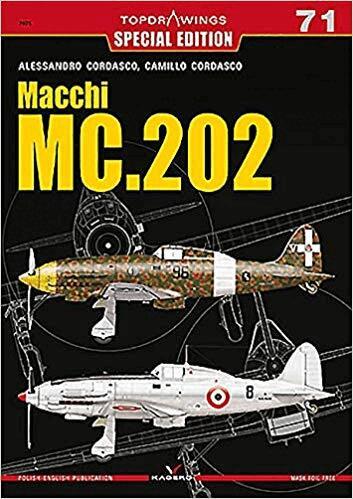
In May 1941 the men of the 17th Gruppo in force at the 1st Stormo Caccia, received the first batch of the new fighter designed by eng. Mario Castoldi: the MC.202 Folgore. Derived from the previous Macchi MC.200, but equipped with a more powerful and aerodynamic engine in-line layout (the Daimler Benz 601 A-1 initially German made, then later on produced on licence by Alfa Romeo) and a closed cockpit, was built in about 1100 units divided into 13 series by Macchi, Breda and SAI Ambrosini. The basic concept was never distorted, the approximately 100 changes reported during its four years of service, essentially concerned on the armoring to protect the pilot, the addition of two wing guns from 7.7 mm (in addition to the two standard 12.7 mm in front of the cockpit), an anti-sand equipment for the desert theater, a new tail unit and other secondary details. Intended for the main operational theaters, from North Africa to Russia, passing through the fighting on Malta, it proved a step forward in terms of performance compared to its predecessors but not yet adequate in terms of armament and equipment, radio in particular. At the end of 1943 the Folgore began to feel the weight of the years and was used as a basis for the development of the next MC.205.
205 kr
Skickas
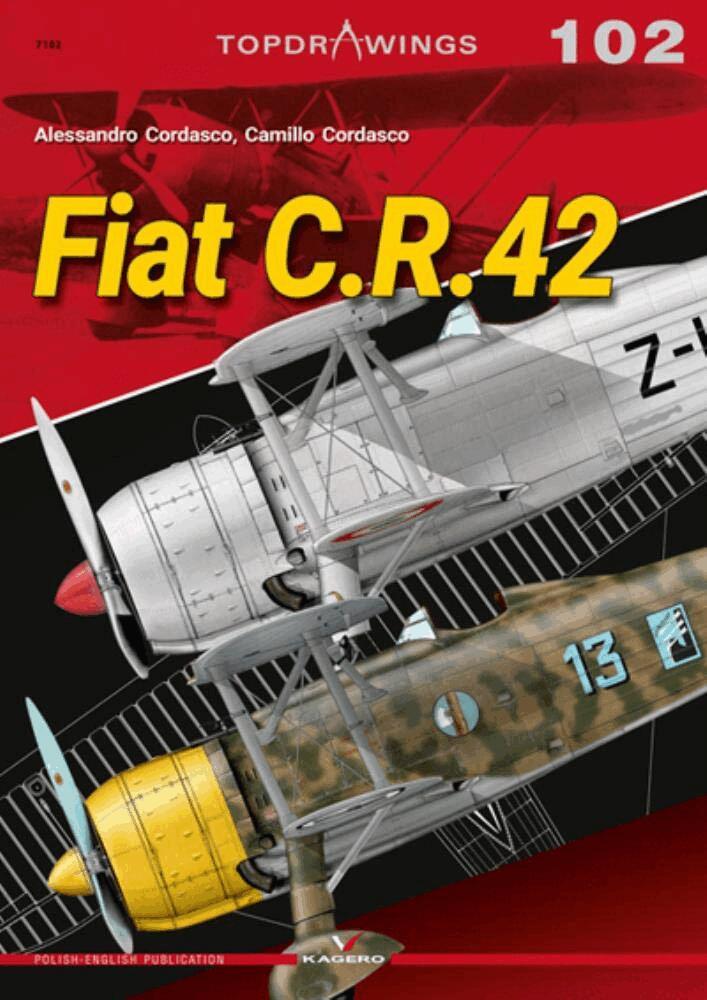
The Fiat CR 42 designed by Ing. Celestino Rosatelli, has the undoubted characteristic of being the last single-seat fighter biplane to be manufactured during the Second World War. It represents the final evolution of the aircrafts serie since Fiat CR 30 – 32 – 33 – 40 - 41, made during the 1935-1938 years in Turin. The prototype flew the first time on 23 May 1938 and about 1800 Fiat CR 42 were produced, divided into 15 construction SERIE. There were no productive variants but only small changes along the SERIE due to various operational uses. Despite he was technically overtaken and outclassed by the opposing aircrafts, he honored his duties thanks to the skill and sacrifices of the Regia Aeronautica pilots who used it in almost all fronts war. He was also successfully exported and used in Belgium (Aeronautique Militaire Belge), Hungary (Magyar Kiraly Hoved Légiéro), Germany (Luftwaffe) and Sweden (Flygvapnet). Surviving aircraft were deployed in the post-war era by the Scuola Caccia Aeronautica Militare Italiana Lecce-Galatina airfield and for secondary services in Milano-Linate airfield during the 1950s, both single-seater and two-seater version.
301 kr
Tillfälligt slut
In the ‘30s, Americans began working on a modern vehicle for cavalry reconnaissance and artillery units in freshly formed armoured and motorized units. The American command became interested in French half-track vehicle designs. On their basis the American industry proposed its own solutions. In 1938, White Motor Company created a vehicle called T-7, which was a combination of the design of the M3 scout car and the T-9 half-track transporter. Year later, a version with a more powerful engine was prepared. The new car was designated T-14 and used mainly by artillery units. In 1940, the project was renamed M2 and put into production.
178 kr
Tillfälligt slut
The Nakajima B5N prototype, designated B5N1 (in Allied reported name: Kate), was flown in January 1937. The first serial aircraft carried the designation Model 98 Model 11. The machines were tested in combat in China. In December 1939, another serial version entered the production marked as B5N2 Model 12. The aircraft was equipped with a Nakajima Sakae engine with a smaller frontal diameter and increased power. This improved plane’s performance. Initially, a hydraulic wing tip folding mechanism was used, but after a short time it was replaced with a manual one, which was more reliable.
183 kr
Tillfälligt slut
The signal of need of such kind of vehicles extension occurred when the struggle against the Soviet Union began. Another ones came from North Africa. In both cases few times turned out that hard-to-eliminate foible of the units equipped with towed guns was its mobility when the tanks and short-barreled assault guns, engaged often and often as the anti-tank artillery, revealed insufficient firepower.There were self-propelled guns called _Panzerjäger_, put into service in the turn of 1942 and 1943. Despite the fact of being armed with a valuable 75 mm or 76,2 mm main armament, their crews were not protected effectively – the armor plates’ thickness was merely up to 10 mm.
181 kr
Skickas
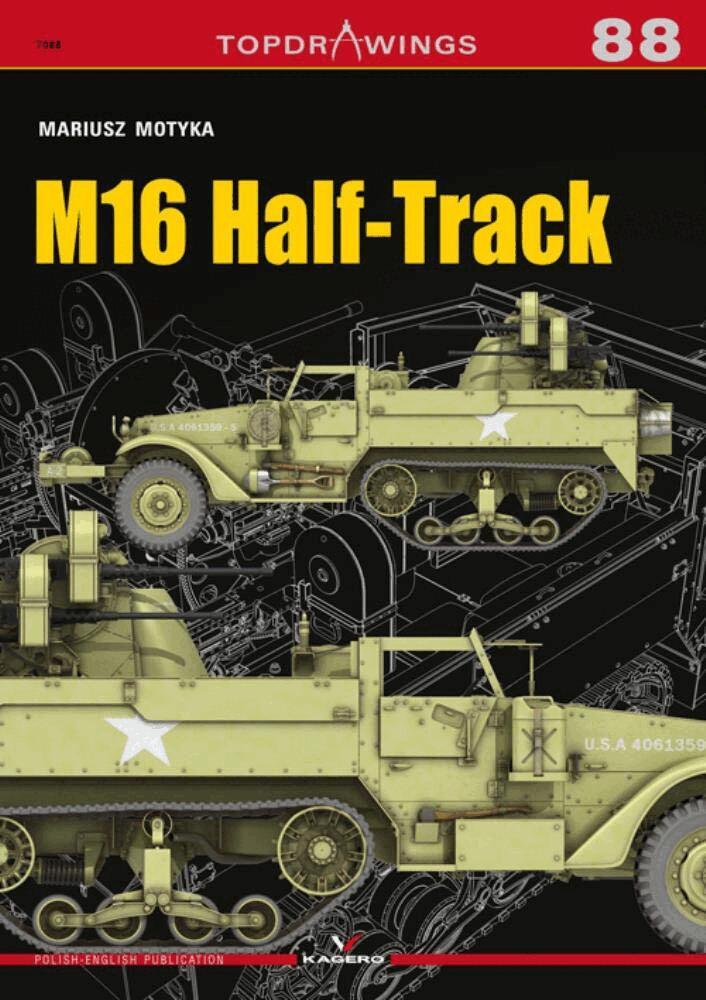
The M16 Multiple Gun Motor Carriage (M16 MGMC) also known as M16 half-track, was a US self-propelled antiaircraft gun built during World War Two. The chassis of the half-rack armored personnel carrier was used to build various variants of self-propelled guns. They were tested on training grounds. Some of them were accepted for military service, series production and then they would see combat. These mainly included self-propelled antiaircraft guns armed with large-caliber 12.7 mm machine guns. In the Autumn of 1941, the first vehicles of this type were tested. The basic requirement of their design was to combine the half-track transporter chassis with a self-propelled revolving turret, the very same as the ones mounted on the bomber aircraft.
178 kr
Skickas
Sd.Kfz. 173 Jagdpanther is a German tank destroyer developed by Krupp and Daimler-Benz. The order was placed in August 1943 and the vehicle entered service in the first months of 1944. It was armed with a very effective anti-tank tank gun. PaK 43 cal. 88 mm. The destroyer’s combat compartment was armoured with 40 to 100 mm thick (front plate) armour plates. From January 1944, 415 pieces were produced (at the MIAG, MNH and MBA factories). The vehicle was based on the chassis of the Panther Ausf. G, but it didn’t have as many technical problems as the mentioned tank. Due to the favourable power-to-weight ratio, Jagdpanther had good performance and maneuverability. Together with a powerful cannon, which was able to destroy any allied armoured vehicle that time, it made it an extremely effective and dangerous destroyer. Vehicles were used by independent tank destroyer battalions. Jagdpanthers debuted in Normandy in 1944 (within 555th and 654th Panzerjagerabteilung), achieving great successes. Also during the offensive in the Ardennes, the Allies took a toll on them. They appeared on the Eastern Front in the autumn of 1944, effectively fighting all Soviet armoured guns and heavy tanks, including IS-2.The vehicle was produced in two main variants. The early version – designated as G1 – had a smaller yoke that was welded to the hull, a modified engine compartment from the Panther Ausf. A and two driver’s visors. In the later version – G2 – the Panther Ausf. G engine compartment was used, one driver’s visor and a larger yoke which was bolted to the front plate with screws. There were also many hybrid variants combining the features of both versions. Until September 1944, Jagdpanthers were covered with Zimmerit in the form of characteristic squares, and not the more popular “snakes”. Jagdpanthers proved to be the most effective German tank destroyers, but they appeared too late and in too few numbers to significantly influence the course of the war.
178 kr
Skickas
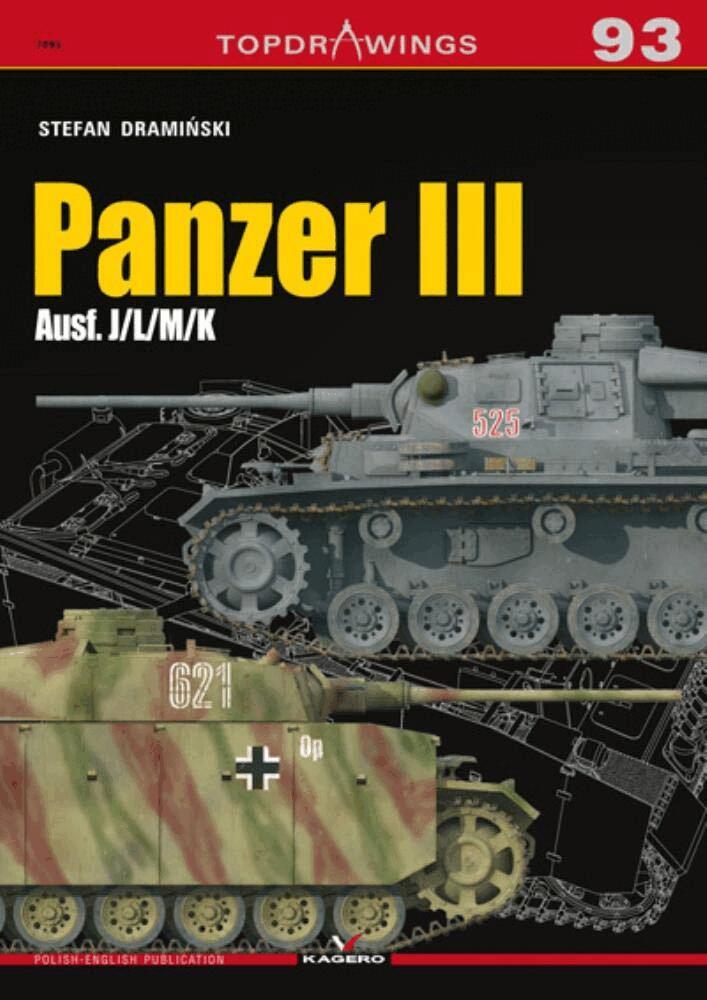
The PzKpfw III (Panzerkampfwagen III) is a German medium tank designed by Daimler-Benz AG. The first tests of the vehicle took place in 1936. The construction of the PzKpfw III consisted of four main modules: the turret, the front of the hull, the rear of the hull with the engine compartment cover and the lower hull. The first version of PzKpfw III – Ausf. A – was produced in May 1937. Soon after, the Ausf. B and C versions also entered production. Ausf. D version was introduced in January 1938. Early PzKpfw III models were prototype vehicles and were not suitable for mass production on a large scale. They were powered by Maybach HL 108 TR petrol engines with 250 HP. They were armed with 37mm guns and three MG-34 machine guns (two in the turret and one in the hull).
Del 94 - Top Drawings
Gloster Gladiator
Mk. I, I Trop, II, II Meteo, Sea Gladiator, J-8
Häftad, Engelska, 2020
172 kr
Tillfälligt slut
Gloster Gladiator is a British fighter constructed at the Gloster Aircraft Company. The prototype was created in 1934. It was powered by a 645 HP Bristol Mercury VIS engine. Gloster Gladiator Mk I had a 8382 mm long fuselage, which consisted of four numbered sections. The first of these included the engine bed. The second front fuselage, the third – the rear fuselage, and the fourth – tail. The arrangement of instrumentation and equipment inside the truss was marked with letters or numbered from one to eight fuselage partitions corresponding to the distances between the frames. Clearly straight main panels with a span of 9845 mm were built around two Hawker steel girders. The upper and lower supports of the girders were made of rolled octagonal elements, and the wavy lining provided strong points for attaching four aerodynamically profiled transverse struts. Such wing structure was finished with light alloy ribs, stringers and steel and duralumin spreader bars.
178 kr
Skickas
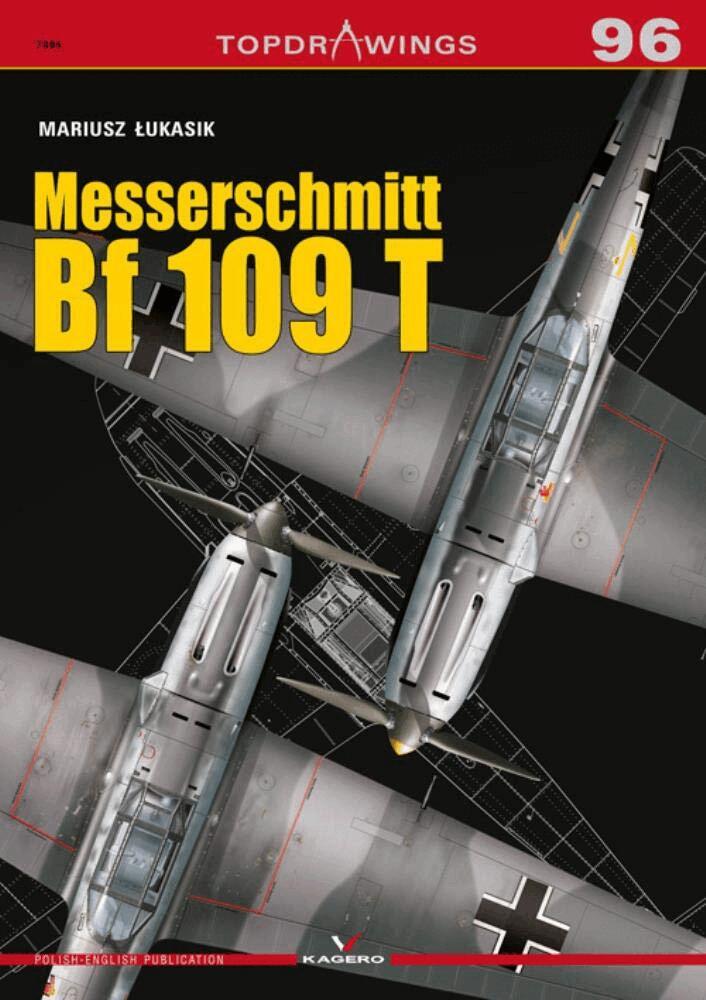
Messerschmitt Bf 109T was supposed to operate from German aircraft carrier “Graf Zeppelin”. The plane was equipped with arresting hook and had enlarged wing span up to 11,08 m. It did not have folding wings because “Graf Zeppelin’s” elevators were supposed to be enough big to fit planes with fixed wings. Anyway the wings could be detached for transport. There were versions T-1 and T-2 developed. Fighters served in JG 77 and JG 11 units.
178 kr
Skickas
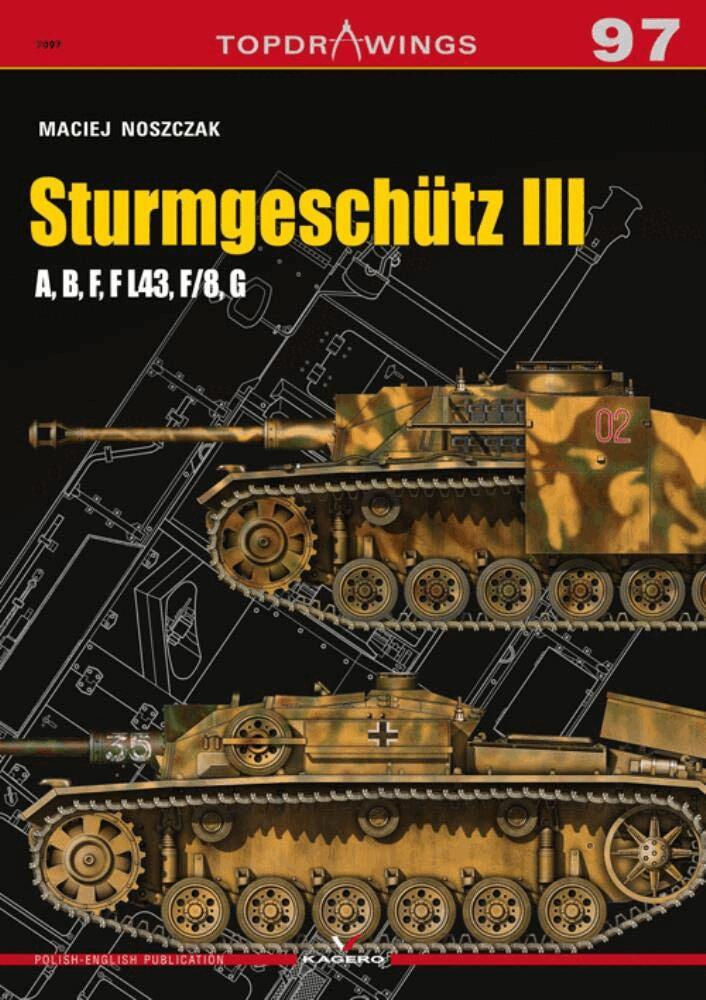
First prototypes of German tank destroyer Sturmgeschütz III (StuG III) were built in 1937 and based on PzKpfw III Ausf. B tank. Vehicles were armed with short-barelled 75mm gun. From spring, 1942, StuG IIIs were equipped with StuK 40 75mm gun. Self propelled guns StuG III served in separated assault artillery units, and later in self propelled guns brigades. They were also used in support units of armoured divisions.
178 kr
Skickas
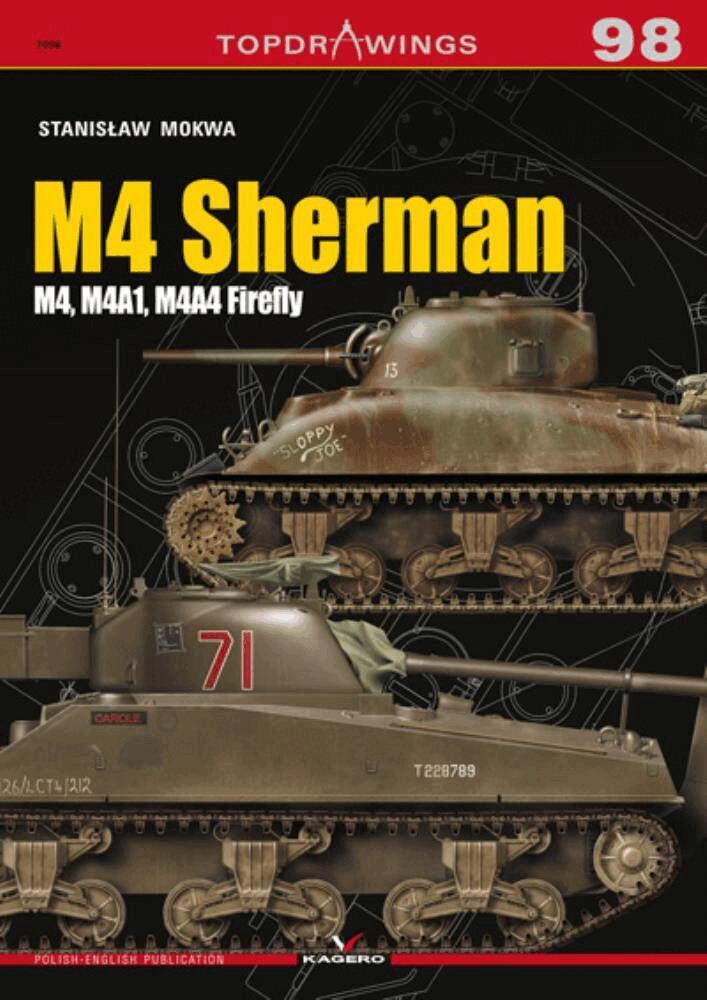
M4 Sherman was the most popular American tank of World War II. Between February, 1942, and June, 1945, a total of 49.000 units of all versions were produced. Dozens of variants of M4 tanks were created. They differed in the method of hull production (welded, riveted, casted) as well as turret, main armament and additional equipment. Several special versions were also made (especially for the needs of the Normandy landing in 1944): the floating Sherman DD (Duplex Drive), Sherman Crab (with anti-mine trawl), Sherman Dozer (with bulldozer at the front – for demining and engineering tasks), Sherman Zippo (Sherman with a flamethrower mounted instead of the main gun).
292 kr
Tillfälligt slut
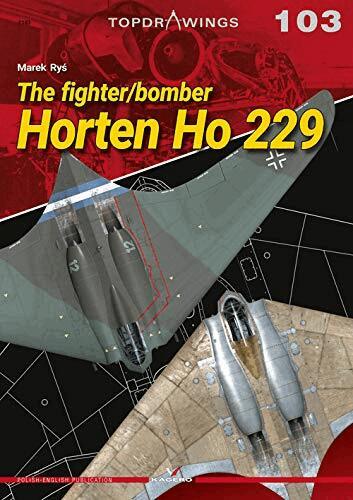
Horten Ho 229 is the first ever “flying wing” jet. The machine was built at the very end of World War II in the German Gotha factory. Today, the best-known structure of this type is the American strategic bomber Northrop B-2 Spirit, but the two planes are separated by a difference of 44 years of technological development. It was a very unusual structure, not only due to the shape of the airframe, but also the materials it was made of – it was largely plywood and wood, not only duralumin and steel. The plane was powered by two Junkers Jumo 004B jet engines. The Horten Ho 229 was flown in January 1945. It was armed with two powerful 30mm MK 108 cannons, and the performance exceeded all Allied planes at that time. Nevertheless, the Ho 229 was planned to be used as a bomber.
198 kr
Skickas
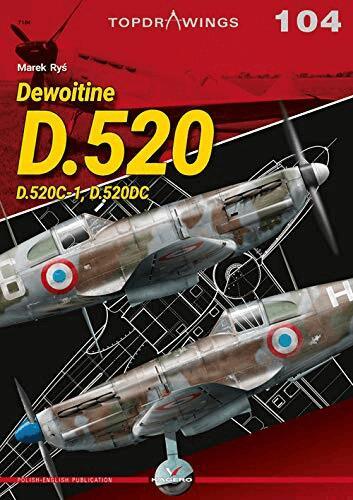
In 1936 the D-513 fighter designed by Emil Dewoitine made its first flight. It was supposed to be the successor of the slightly outdated D-500 and D-510 models, and built according to modern trends: with a closed cabin and a retractable undercarriage. Unfortunately, the tests turned out to be very disappointing. At the same time, as a result of the nationalization of the aviation industry, Dewoitine's industries were absorbed by the SNCAM. Dewoitine, however, did not give up on the project and, in cooperation with his engineers, developed a new model - the D-520.
178 kr
Tillfälligt slut
As the first functional jet engines became available, the RLM published a requirement for a reconnaissance aircraft capable of long-range patrols over Britain, all the way up to Scapa Flow. The task to build the machine was given to Arado, who put Rüdiger Kosin in charge of the design team. The initial E370 project was gradually tweaked and modified until it evolved into its final form as a single-seat aircraft powered by two jet engines in underwing pods, designated Ar 234. In order to maximize the aircraft’s range, Arado’s design team embarked on a radical weight-shedding crusade. Among the components eliminated from the design was the conventional landing gear, which was replaced with a jettisonable three-wheel trolley used for take-offs and retractable skids mounted under the fuselage for landings. These design features were incorporated into the first A series prototypes, powered by Junkers Jumo 004A engines. The B-2 was a bomber version, with a maximum bombload of 1,500 kg and the B-2/N a night fighter version. The C-3 was the multi-purpose version, armed with two 20 mm MG 151/20 cannons beneath the nose.
178 kr
Skickas
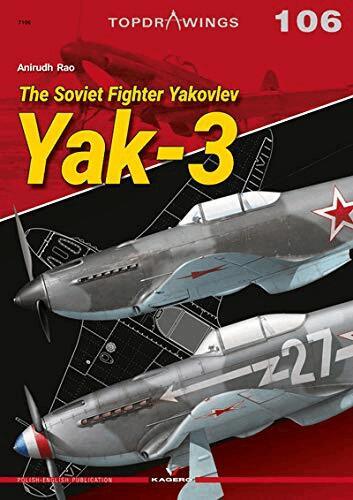
Yakovlev Yak-3 is considered one of the best World War 2 fighters, invariably praised by those who flew it in combat for its remarkable performance. The Germans also treated it with respect, which is perhaps best illustrated by Generalleutnant Walter Schwabedissen’s remark: The Yak-3 was a tough nut to crack for our pilots. It outperformed our machines in speed, maneuverability and rate of climb. The emergence of the Yak-3 was a compromise between the need to improve the Yak-1’s characteristics, and the limitations of Soviet aircraft industry with its outdated technologies. The basic design concept took those shortcomings into account, which allowed a rapid launch of mass production of this inexpensive fighter. This in turn provided frontline units with timely deliveries of new equipment to recoup combat losses. The key to Yak-3’s success was not due to the use of a new powerplant (in those days hard to come by in the USSR), but rather the superior performance of the M-105PF engine, which resulted in a five percent increase in power output. In combination with some serious weight shedding, the Yak-3 had a significantly better performance than the Yak-1. At altitudes up to 5,000m (which is where most of the air combat over Eastern Front took place), Yak-3 outperformed both the Bf-109 and Fw-190 in rate of climb and maneuverability. Unlike the Yak-1, the new fighter could also stay with the enemy in a dive.
198 kr
Skickas
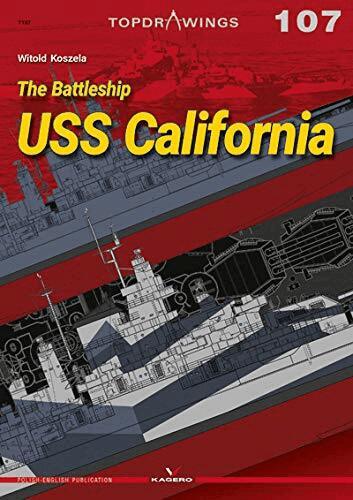
The American battleship USS “California” has almost thirty years of extraordinary history. Built in 1921, it was one of the most powerful battleships of the US Navy in the interwar period. It was characterised by an interesting and harmonious silhouette, which changed significantly several times. During the war, despite its age, the ship was still modern and heavily armed. The USS “California”, known among naval enthusiasts and often chosen by modellers, became the subject of another study by Witold Koszela, who in a series of precise drawings recreated the silhouette of this battleship from the Second World War. On 24 A4 pages and 2 folded sheets we can find a historical description, technical data and professional drawings showing the ship in the years 1944–1945, as well as drawings of superstructures, armaments and details, together with sectional views and color charts.
199 kr
Tillfälligt slut
The IJN battlecruiser Kongo was laid down on January 17, 1911 at Vickers, Sons & Co. at Barrow-in-Furness. The ship's hull was launched on May 18, 1912 and on August 16, 1913 the vessel entered service with the Imperial Japanese Navy. In the years after she had been launched the Kongo had undergone two major reconstructions, each having a deep impact on the ship's characteristics and her overall arrangement.
187 kr
Skickas
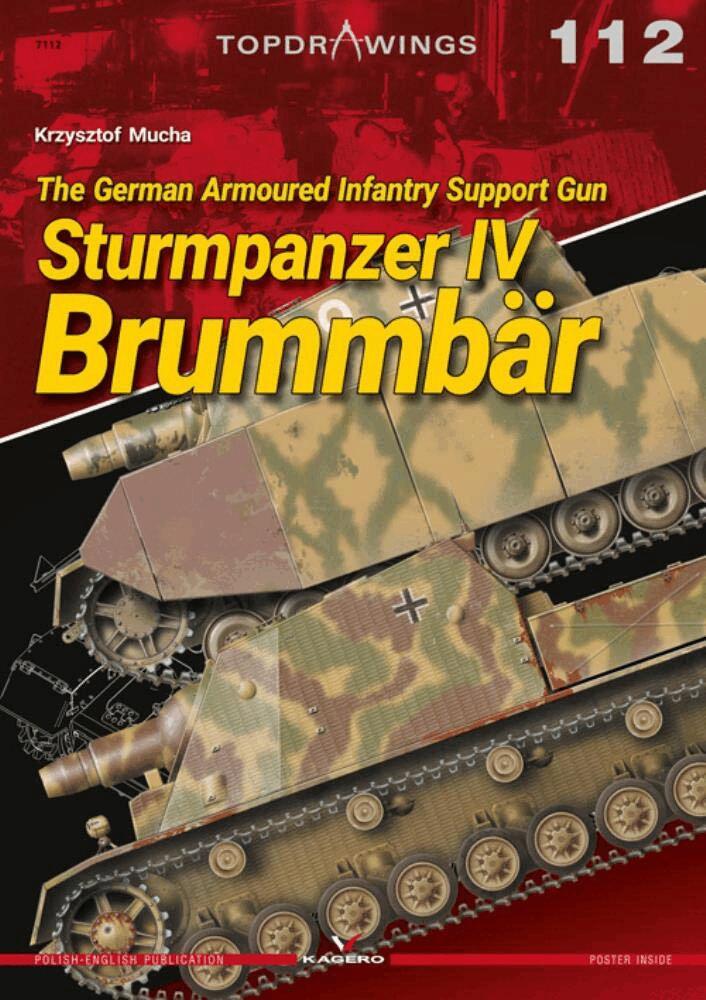
Sturmpanzer IV Brummbär (SdKfz 166, Sturmgeschütz IV für 15cm StuH 43) was a German self-propelled assault gun. Work on the design began in 1942 with a goal of creating a vehicle well suited for the demands of urban warfare. The gun was based on the PzKpfw IV Ausf. E and F and, later, Ausf. G. Initially, the vehicle carried 15 cm StuH 43 howitzer, which was later replaced by a bespoke 15 cm StuH 23/1 L/12 weapon. Brummbär went into production in 1943.
188 kr
Tillfälligt slut
Messerschmitt Me 210 - German heavy fighter. Work on the design began in late 1930s with a goal of creating a versatile aircraft, equally capable as a fighter, dive bomber or a reconnaissance platform. The machine was an all-metal, low-wing monoplane, featuring twin vertical stabilizers. Full-scale production of the Me 210 was launched in 1941. The aircraft was powered by a pair of Daimler-Benz DB 601F engines, each producing 959 kW of power. Messerschmitt Me 410 - German heavy twin-engine fighter and fast bomber, meant to be an improvement of the unsuccessful Me 210 design. The aircraft was equipped with new Daimler-Benz DB603A inverted V engines, rated at 1,750 and 1,850 hp. Powered by those engines the Me 410 was capable of speeds up to 628 km/h. The aircraft's armament consisted of two 7.92 mm MG 17 machine guns, a pair of 13 mm MG 131 machine guns and four remotely-controlled 20 mm MG 151 cannons. The Me 410 could also carry up to 1,000 kg of bombs. Thanks to its fairly long range and excellent performance characteristics, the aircraft was often employed in the bomber destroyer role.
186 kr
Skickas
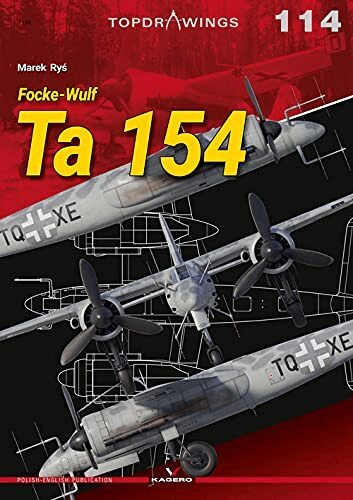
The Focke-Wulf Ta 154 Moskito was a fast twin-engined German night fighter aircraft. The German Ta 154 night fighter which supposed to be an answer to the British Mosquito.
181 kr
Tillfälligt slut
The Panavia Tornado is a twin-engine fighter jet with variable wing geometry. Three main versions of the Tornado were created: the attack version - Tornado IDS (Interdictor/Strike), the interceptor version - Tornado ADV (Air Defense Variant) and the electronic combat version - Tornado ECR (Electronic Combat/Reconaissance). The machine was produced in cooperation with Italy, Germany and Great Britain.
183 kr
Skickas
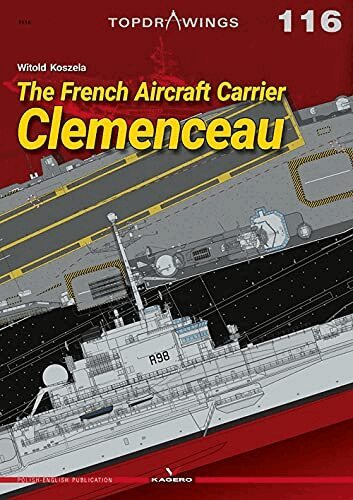
The French aircraft carrier "Clemenceau" is one of the largest and most powerful ships that served the Marine Nationale. Her keel was laid in November 1955 at the Brest Arsenal Ch. Atlantique in St. Nazaire, and she was launched two years later - on December 21st, 1957. Together with the twin "Foch", it was built on the basis of a project developed from the beginning of the 1950s, which included almost all of then novelties that were introduced in the construction of this type of ships. Therefore, she received, among others: a sloped flight deck with two lifts, mirror systems facilitating the approach to landing, means of observation enabling early detection of surface units and means of air attack, and modern catapults adapted to work with jet aircrafts with a large take-off mass. The length of the flight deck was 257 meters, the main runway was 165.5 meters long and 29.5 meters wide, with a deviation from the centre of the ship by 8 degrees. The hangar below it was 180 meters long and 22 meters wide. In more than forty years of service, which began on November 22, 1961, the "Clemenceau" performed countless tasks in both European and Pacific waters. She supported the activities of the land forces, incl. in former French colonies and during nuclear tests. Together with "Foch", she formed one of the strongest task force in the Mediterranean region and the waters of Western Europe.