• Fri frakt över 249 kr
  • •
  • Snabba leveranser
  • •
  • Billiga böcker
Kundservice

Du är på sajten för privatpersoner.

Företag, bibliotek eller offentlig verksamhet?

Du handlar på classic.bokus.com, där alla dina funktioner finns intakta.
Till classic.bokus.com
Bokus logotyp. Gå till startsidan.
  • Erbjudanden
  • Nyheter
  • Student
  • Topplistor
  • Barn & ungdom
  • Bokus Play
  • E-böcker
  • Pocketböcker
  • Spel & pussel

10% studentrabatt med kod TERM26

Sidfot

Mina sidor

    Hjälp

    • Kundservice
    • Vanliga frågor och svar
    • Frakt och leverans
    • Retur vid ångerrätt
    • Reklamera vara
    • Betalning
    • Köpvillkor
    • Allmänna villkor
    • Information om webbplatsens tillgänglighet

    Om Bokus

    • Om oss
    • Pressrum
    • För studenter
    • För företag
    • För bibliotek och offentlig verksamhet
    • För leverantörer
    • Hållbarhet

    Populärt

    • Aktuella erbjudanden
    • Presentkort
    • Studentlitteratur
    • Nya böcker
    • Topplistor
    • Signerade böcker
    • Engelska böcker

    Inspiration

    • Boktips
    • BookTok
    • Populära bokserier
    • Barnbokskaraktärer
    • Populära författare
    Logotyp för Bokus
    Följ oss på Facebook (extern länk)Följ oss på Instagram (extern länk)Följ oss på YouTube (extern länk)Följ oss på TikTok (extern länk)
    bokus @ CookiesAnpassa cookiesIntegritetspolicyKöpvillkor
    Till Citymail hemsida (extern länk)Till Budbee hemsida (extern länk)Till Postnord hemsida (extern länk)Till Schenker hemsida (extern länk)Till Early Bird hemsida (extern länk)Till Walleys hemsida (extern länk)
    1. Historia och arkeologi
    2. Arkeologi

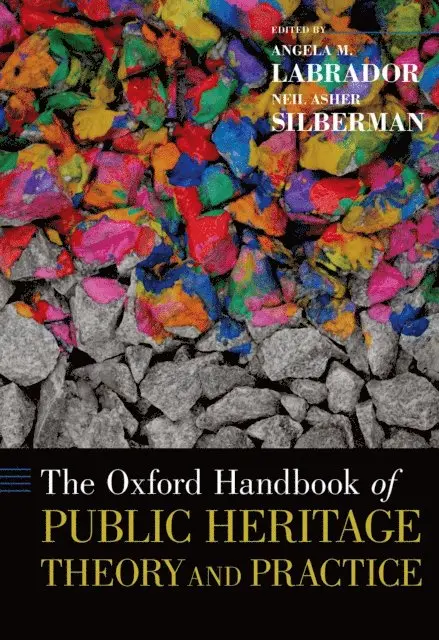
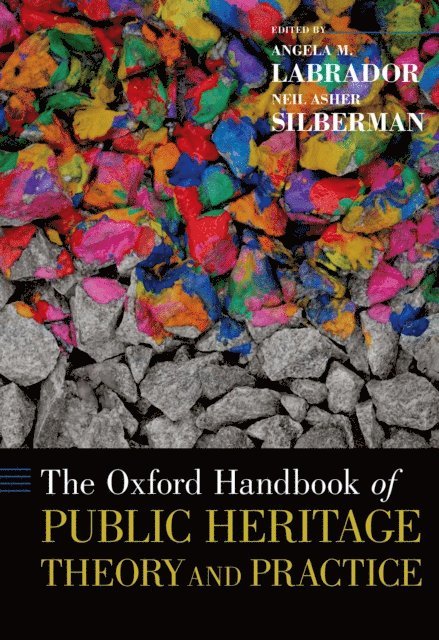
    The Oxford Handbook of Public Heritage Theory and Practice

    AvAngela M. Labrador,Neil Asher Silberman

    Inbunden, Engelska, 2018

    Del i serien Oxford Handbooks

    2 894 kr

    Beställningsvara. Skickas inom 5-8 vardagar. Fri frakt över 249 kr.

    Beskrivning

    The field of cultural heritage is no longer solely dependent on the expertise of art and architectural historians, archaeologists, conservators, curators, and site and museum administrators. It has dramatically expanded across disciplinary boundaries and social contexts, with even the basic definition of what constitutes cultural heritage being widened far beyond the traditional categories of architecture, artifacts, archives, and art. Heritage now includes vernacular architecture, intangible cultural practices, knowledge, and language, performances and rituals, as well as cultural landscapes. Heritage has also become increasingly entangled with the broader social, political, and economic contexts in which heritage is created, managed, transmitted, protected, or even destroyed. Heritage protection now encompasses a growing set of methodological approaches whose objectives are not necessarily focused upon the maintenance of material fabric, which has traditionally been cultural heritage's primary concern. The Oxford Handbook of Public Heritage Theory and Practice charts some of the major sites of convergence between the humanities and the social sciences, where new disciplinary perspectives are being brought to bear on heritage. These convergences have the potential to provide the interdisciplinary expertise needed not only to critique but also to achieve the intertwined intellectual, political, and socioeconomic goals of cultural heritage in the twenty-first century. This volume highlights the potential contributions of development studies, political science, anthropology, management studies, human geography, ecology, psychology, sociology, cognitive studies, and education to heritage studies.

    Produktinformation

    • Utgivningsdatum:2018-09-06
    • Mått:175 x 251 x 36 mm
    • Vikt:940 g
    • Format:Inbunden
    • Språk:Engelska
    • Serie:Oxford Handbooks
    • Antal sidor:472
    • Förlag:OUP USA
    • ISBN:9780190676315

    Utforska kategorier

    • Arkeologi inom Historia och arkeologi
    • Kulturvetenskap inom Samhälle och politik
    • Referensverk och tvärvetenskap inom Samhälle och politik

    Mer om författaren

    Dr. Angela M. Labrador is a cultural anthropologist who has combined her scholarly and professional interest in cultural property issues with the development of participatory action research methods for community-based heritage initiatives. Her dissertation, Shared Heritage: An Anthropological Theory and Methodology for Assessing, Enhancing, and Communicating a Future-Oriented Social Ethic of Heritage Protection, drew on real-world heritage practices in New England and the Caribbean to offer a visionary overview of the potential of an inclusive, ethical public heritage.Neil Asher Silberman is a widely published author, historian, and heritage professional, and the editor-in-chief of the three-volume Oxford Companion to Archaeology (2012). He is the author of books on the social and political impact of the past on the present spanning from Digging for God & Country (Knof, 1982) to The Bible Unearthed (Free Press, 2001). For the last fifteen years, he has served in various academic and professional capacities to help develop and promote the emerging field of Public Heritage. He served for a decade (2005-2015) as president of the ICOMOS International Scientific Committee on Interpretation and Presentation and as a member of the ICOMOS International Advisory Committee.Silberman and Labrador are colleagues at Coherit Associates, an international heritage consultancy. They are the co-authors of the forthcoming Oxford Guide to Public Heritage: Managing, Promoting, and Protecting Shared Cultural Assets.

    Innehållsförteckning

    • About the EditorsList of Contributors Introduction Public Heritage as Social PracticeAngela M. Labrador and Neil Asher Silberman Part I: Heritage, Development, and Global Relations 1.1 Creating Universal Value: The UNESCO World Heritage Convention in Its Fifth DecadeChristoph Brumann 1.2 The Suffocated Cultural Heritage of Sub-Saharan Africa's Protected AreasSusan O. Keitumetse and Arpakwa O. Sikorei 1.3 Sustainable Conservation of Urban Heritage: The Contribution of Governance-Focused StudiesEduardo Rojas 1.4 Heritage and the Politics of CooperationTim Winter 1.5 Culture, Heritage, and the Politics of BecomingJoanie Willett Part II: Heritage, Markets, and Management 2.1 Problematizing the Idea of Heritage ManagementMarina Dantas de Figueiredo 2.2 Heritage and Management, Professional Utopianism, Administrative Naiveté, and Organizational Uncertainty at the Shipwrecks of PisaLuca Zan and Daniel Shoup 2.3 Accounting for What We Treasure: Economic Valuation of Public HeritageSheila Ellwood 2.4 Cultural Heritage: Capital, Commons, and HeritagesChristian Barrère 2.5 Heritage as Remaking: Locating Heritage in the Contemporary WorldScott A. Lukas 2.6 Culturally Reflexive Stewardship: Conserving Ways of LifeRobert H. Winthrop Part III: Heritage and the Use of Power 3.1 Neoliberalism and the Equivocations of Empire Jim McGuigan 3.2 Public Heritage and the Promise of the DigitalJenny Kidd 3.3 On the Need for a Nuanced Understanding of "Community" in Heritage Policy and PracticeMartin Mulligan 3.4 "What Could Be More Reasonable?" Collaboration in Colonial ContextsMarina La Salle and Richard M. Hutchings 3.5 The Special Responsibility of Public Spaces to Dismantle White Supremacist Historical NarrativesKaren L. B. Burgard and Michael L. Boucher, Jr. 3.6 Public Heritage as Transformative Experience: The Co-occupation of Place and Decision-MakingDavid M. Schaepe Part IV: Living with Change 4.1 The Social Sciences: What Role in Conservation?Ned Kaufman 4.2 People in Place: Local Planning to Preserve Diverse CulturesJames Michael Buckley 4.3 Heritage as an Element of the ScenescapeMartha Frish Okabe, Daniel Silver, and Terry Nichols Clark 4.4 Contesting the Aesthetic Construction of Community: The New Suburban LandscapeDenise Lawrence-Zúñiga 4.5 Agricultural Heritage and Conservation Beyond the AnthropoceneDaniel Niles 4.6 Public Heritage in the SymbioceneGlenn A. Albrecht Part V: Heritage, Memory, and Well-Being 5.1 Mapping Authenticity: Cognition and Emotion in Public HeritageSteven J Mock 5.2 Understanding Well-Being: A Mechanism for Measuring the Impact of Heritage Practice on Well-BeingFaye Sayer 5.3 Effects of Conversations with Sites of Public Heritage on Collective MemoryMartin M. Fagin 5.4 Intergenerational Learning: A Tool for Building and Transforming Cultural HeritageGiulia Cortellesi, Jessica Harpley, and Margaret Kernan Index