• Fri frakt över 249 kr
  • •
  • Snabba leveranser
  • •
  • Billiga böcker
Kundservice

Du är på sajten för privatpersoner.

Företag, bibliotek eller offentlig verksamhet?

Du handlar på classic.bokus.com, där alla dina funktioner finns intakta.
Till classic.bokus.com
Bokus logotyp. Gå till startsidan.
  • Erbjudanden
  • Nyheter
  • Student
  • Topplistor
  • Barn & ungdom
  • Bokus Play
  • E-böcker
  • Pocketböcker
  • Spel & pussel

10% studentrabatt med kod TERM26

Sidfot

Mina sidor

    Hjälp

    • Kundservice
    • Vanliga frågor och svar
    • Frakt och leverans
    • Retur vid ångerrätt
    • Reklamera vara
    • Betalning
    • Köpvillkor
    • Allmänna villkor
    • Information om webbplatsens tillgänglighet

    Om Bokus

    • Om oss
    • Pressrum
    • För studenter
    • För företag
    • För bibliotek och offentlig verksamhet
    • För leverantörer
    • Hållbarhet

    Populärt

    • Aktuella erbjudanden
    • Presentkort
    • Studentlitteratur
    • Nya böcker
    • Topplistor
    • Signerade böcker
    • Engelska böcker

    Inspiration

    • Boktips
    • BookTok
    • Populära bokserier
    • Barnbokskaraktärer
    • Populära författare
    Logotyp för Bokus
    Följ oss på Facebook (extern länk)Följ oss på Instagram (extern länk)Följ oss på YouTube (extern länk)Följ oss på TikTok (extern länk)
    bokus @ CookiesAnpassa cookiesIntegritetspolicyKöpvillkor
    Till Citymail hemsida (extern länk)Till Budbee hemsida (extern länk)Till Postnord hemsida (extern länk)Till Schenker hemsida (extern länk)Till Early Bird hemsida (extern länk)Till Walleys hemsida (extern länk)
    1. Kultur
    2. Konstböcker

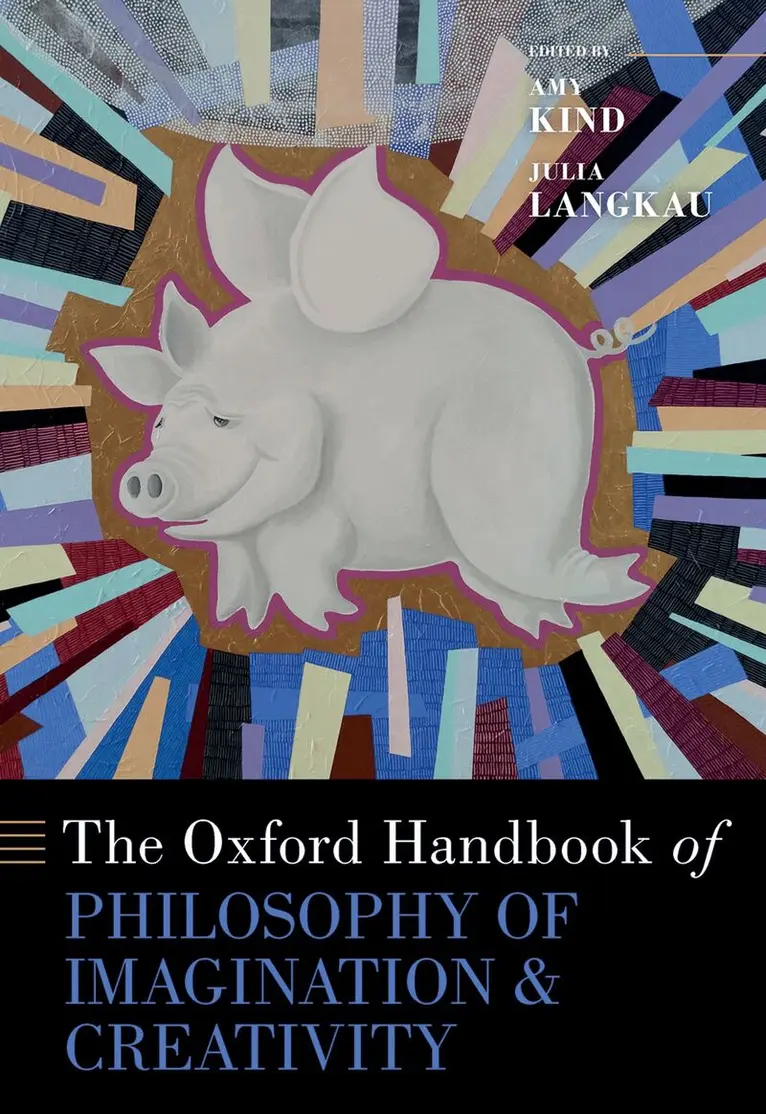
    The Oxford Handbook of Philosophy of Imagination and Creativity

    AvAmy Kind,Julia Langkau

    Inbunden, Engelska, 2026

    Del i serien Oxford Handbooks

    2 137 kr

    Beställningsvara. Skickas inom 5-8 vardagar. Fri frakt över 249 kr.

    Beskrivning

    Philosophy has long paid minimal attention to creativity, and even with the rise of research on imagination, the creative imagination has still largely been ignored. The aim of this Oxford Handbook is to correct this neglect. By bringing together research from various sub-disciplines, the contributors explore recent emerging topics and open up new avenues of research in the philosophy of imagination and creativity.The 37 chapters provide state of the art treatments of a variety of subjects at the intersection of imagination and creativity. The volume opens with a comprehensive editors' introduction providing an overview of issues covered in the volume. The chapters in Part I provides framing and historical context for the philosophical study of imagination and creativity, along with an overview of the empirical literature. The chapters in Part II explores imagination and creativity as they manifest in, and in turn shape, the individual. The chapters in Part III survey the role of imagination and creativity across a wide variety of artistic domains, and the chapters in Part IV turn to societal domains. Part V focuses on the interplay of imagination and creativity with regard to the variety and features of creative subjects.The handbook will be of great interest to scholars and students wishing to learn about imagination and creativity across a wide philosophical terrain: from the philosophy of mind and cognitive science to ethics and political philosophy, to aesthetics and philosophy of art, to epistemology and philosophy of science. The volume will be useful not only to established scholars but to those coming to these topics for the first time.

    Produktinformation

    • Utgivningsdatum:2026-05-08
    • Mått:180 x 252 x 52 mm
    • Vikt:1 039 g
    • Format:Inbunden
    • Språk:Engelska
    • Serie:Oxford Handbooks
    • Antal sidor:600
    • Förlag:OUP USA
    • ISBN:9780197694824

    Utforska kategorier

    • Konstböcker inom Kultur
    • Psykologi inom Psykologi och pedagogik
    • Filosofiska discipliner inom Filosofi och religion

    Mer om författaren

    Amy Kind is Russell K. Pitzer Professor of Philosophy at Claremont McKenna College, where she has taught since 1997. She has published extensively on philosophy of imagination, including the 2022 monograph Imagination and Creative Thinking. She has also edited and co-edited several volumes, including Knowledge Through Imagination (co-edited with Peter Kung) and Epistemic Uses of Imagination (co-edited with Christopher Badura). Julia Langkau is an Assistant Professor in Philosophy at the University of Geneva. Her PRIMA professorship is funded by the Swiss National Science Foundation (SNSF) for a project titled "Creativity, Imagination and Tradition". She was a postdoctoral researcher at the University of Zürich, a Marie Curie fellow at the University of Konstanz, an SNSF Ambitione Fellow at the University of Fribourg and a visiting fellow at the University of Miami. She is working on imagination, creativity, empathy, and fiction.

    Innehållsförteckning

    • 1: Amy Kind and Julia Langkau: Reclaiming the Creative Imagination Part I. Theories and Approaches 2: Peter Kung: Theories of Imagination 3: Julia Langkau: Theories of Creativity 4: Lucia Oliveri: Historical Treatments of Imagination in the Western Tradition 5: Elliot Samuel Paul: Historical Treatments of Creativity in the Western Tradition 6: Reza Hadisi and Jing Hu: Non-Western Treatments of Imagination 7: Nicolas B. Verger and Vlad P. Gl&aveanu: Non-Western Treatments of Creativity 8: Dustin Stokes: Empirical Treatments of Imagination and Creativity 9: Michael T. Stuart: Experimental Philosophy of Imagination and Creativity 10: Margherita Arcangeli: The Relationship Between Imagination and Creativity Part II. Imagination and Creativity in Mind and Action 11: Amy Kind: Imagination, Creativity, and Skill 12: Bence Nanay: Imagination, Creativity, and Attention 13: Caterina Moruzzi: Imagination, Creativity, and Agency 14: Julien Deonna and Fabrice Teroni: Imagination, Creativity, and Emotion 15: Adriana Clavel-Vázquez and María Jimena Clavel Vázquez: Imagination, Creativity, and Embodiment 16: Luke Roelofs: Imagination, Creativity, and Gender 17: Nicholas Whittaker: Imagination, Creativity, and Race 18: Thalia R. Goldstein, Anna Sofia Caruso, Darian Stapleton, and Lamin Fatty: Imagination, Creativity, and Child Development Part III. Imagination and Creativity in the Arts 19: Claire Anscombe: Imagination, Creativity, and the Visual Arts 20: Matteo Ravasio: Imagination, Creativity, and Music 21: Hannah H. Kim: Imagination, Creativity, and Fiction 22: David Davies and Anna Pakes: Imagination, Creativity, and Dance 23: Patrik Engisch: Imagination, Creativity, and the Culinary Arts 24: Murray Smith: Imagination, Creativity, and Film 25: Tzachi Zamir: Imagination, Creativity, and Acting 26: Laura T. Di Summa: Imagination, Creativity, and Fashion Part IV. Imagination and Creativity in Society 27: Alice Murphy: Imagination and Creativity in the Scientific Realm 28: Tim Mulgan: Imagination and Creativity in the Moral Realm 29: Avshalom M. Schwartz: Imagination and Creativity in the Political Realm 30: Maksymilian Del Mar: Imagination and Creativity in the Law 31: Neil Van Leeuwen: Imagination and Creativity in the Religious Realm 32: Eric Peterson: Imagination and Creativity in Business 33: Jennifer Fraser and Noah Stemeroff: Imagination and Creativity in Times of Crisis Part V. Emerging Issues in Imagination and Creativity Research 34: Andrea Blomkvist: Imagination, Creativity, and Aphantasia 35: Sofia Ortiz-Hinojosa: Imagination, Creativity, and Neurodivergence 36: Henry Shevlin: Imagination, Creativity, and Nonhuman Animals 37: Peter Langland-Hassan: Creativity, Imagination, and Artificial Intelligence 38: Nick Wiltsher: Collective Imagination and Collective Creativity