• Fri frakt över 249 kr
  • •
  • Snabba leveranser
  • •
  • Billiga böcker
Kundservice

Du är på sajten för privatpersoner.

Företag, bibliotek eller offentlig verksamhet?

Du handlar på classic.bokus.com, där alla dina funktioner finns intakta.
Till classic.bokus.com
Bokus logotyp. Gå till startsidan.
  • Erbjudanden
  • Nyheter
  • Student
  • Topplistor
  • Barn & ungdom
  • Bokus Play
  • E-böcker
  • Pocketböcker
  • Spel & pussel

10% rabatt på allt med kod: NYSTART10 →

Sidfot

Mina sidor

    Hjälp

    • Kundservice
    • Vanliga frågor och svar
    • Frakt och leverans
    • Retur vid ångerrätt
    • Reklamera vara
    • Betalning
    • Köpvillkor
    • Allmänna villkor
    • Information om webbplatsens tillgänglighet

    Om Bokus

    • Om oss
    • Pressrum
    • För studenter
    • För företag
    • För bibliotek och offentlig verksamhet
    • För leverantörer
    • Hållbarhet

    Populärt

    • Aktuella erbjudanden
    • Presentkort
    • Studentlitteratur
    • Nya böcker
    • Topplistor
    • Signerade böcker
    • Engelska böcker

    Inspiration

    • Boktips
    • BookTok
    • Populära bokserier
    • Barnbokskaraktärer
    • Populära författare
    Logotyp för Bokus
    Följ oss på Facebook (extern länk)Följ oss på Instagram (extern länk)Följ oss på YouTube (extern länk)Följ oss på TikTok (extern länk)
    bokus @ CookiesAnpassa cookiesIntegritetspolicyKöpvillkor
    Till Citymail hemsida (extern länk)Till Budbee hemsida (extern länk)Till Postnord hemsida (extern länk)Till Schenker hemsida (extern länk)Till Early Bird hemsida (extern länk)Till Walleys hemsida (extern länk)
    1. Naturvetenskap och teknik
    2. Matematik och naturvetenskap
    3. Biologi
    4. Biovetenskap

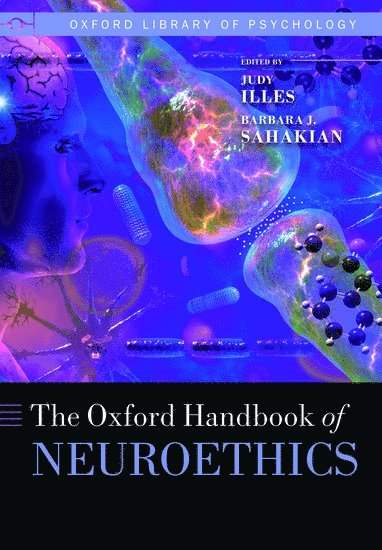
    Oxford Handbook of Neuroethics

    AvJudy Illes,Barbara J. Sahakian

    Häftad, Engelska, 2013

    Del i serien Oxford Library of Psychology

    1 245 kr

    Beställningsvara. Skickas inom 5-8 vardagar. Fri frakt över 249 kr.

    Beskrivning

    The past two decades have seen unparalleled developments in our knowledge of the brain and mind. However, these advances have forced us to confront head-on some significant ethical issues regarding our application of this information in the real world- whether using brain images to establish guilt within a court of law, or developing drugs to enhance cognition.Historically, any consideration of the ethical, legal, and social implications of emerging technologies in science and medicine has lagged behind the discovery of the technology itself. These delays have caused problems in the acceptability and potential applications of biomedical advances and posed significant problems for the scientific community and the public alike - for example in the case of genetic screening and human cloning. The field of Neuroethics aims to proactively anticipate ethical, legal and social issues at the intersection of neuroscience and ethics, raising questions about what the brain tells us about ourselves, whether the information is what people want or ought to know, and how best to communicate it.A landmark in the academic literature, the Oxford Handbook of Neuroethics presents a pioneering review of a topic central to the sciences and humanities. It presents a range of chapters considering key issues, discussion, and debate at the intersection of brain and ethics. The handbook contains more than 50 chapters by leaders from around the world and a broad range of sectors of academia and clinical practice spanning the neurosciences, medical sciences and humanities and law. The book focuses on and provides a platform for dialogue of what neuroscience can do, what we might expect neuroscience will do, and what neuroscience ought to do. The major themes include: consciousness and intention; responsibility and determinism; mind and body; neurotechnology; ageing and dementia; law and public policy; and science, society and international perspectives. Tackling some of the most significant ethical issues that face us now and will continue to do so over the coming decades, The Oxford Handbook of Neuroethics will be an essential resource for the field of neuroethics for graduate students and postdoctoral fellows, basic scientists in the neurosciences and psychology, scholars in humanities and law, as well as physicians practising in the areas of primary care in neurological medicine.

    Produktinformation

    • Utgivningsdatum:2013-02-21
    • Mått:172 x 245 x 53 mm
    • Vikt:1 730 g
    • Format:Häftad
    • Språk:Engelska
    • Serie:Oxford Library of Psychology
    • Antal sidor:976
    • Förlag:OUP OXFORD
    • ISBN:9780199680634

    Utforska kategorier

    • Biovetenskap inom Naturvetenskap och teknik
    • Biologisk psykologi och neuropsykologi inom Psykologi och pedagogik
    • Filosofiska discipliner inom Filosofi och religion

    Mer om författaren

    Dr. Illes is Professor of Neurology and Canada Research Chair in Neuroethics at the University of British Columbia. She is Director of the National Core for Neuroethics at UBC, and faculty in the Brain Research Centre at UBC and the Vancouver Coastal Health Research Institute. She also holds affiliate appointments in the School of Population and Public Health and the School of Journalism at UBC, and in the Department of Computer Science and Engineering at the University of Washington in Seattle, WA, USA. Dr. Illes' research focuses on ethical, legal, social and policy challenges specifically at the intersection of the neurosciences and biomedical ethics. This includes studies on stem cells and regenerative medicine, functional neuroimaging in basic and clinical research dementia, addiction, neurodevelopmental disorders and the commercialization of cognitive neuroscience.Barbara J Sahakian is Professor of Clinical Neuropsychology at the University of Cambridge Department of Psychiatry, and the Medical Research Council/Wellcome Trust Behavioural and Clinical Neuroscience Institute. She is also a Clinical Psychologist. She has an international reputation in the fields of cognitive psychopharmacology, neuroethics, neuropsychology, neuropsychiatry and neuroimaging. She is co-inventor of the CANTAB computerised neuropsychological tests, which are in use world-wide. She is probably best known for her research work on cognition and depression, cognitive enhancement using pharmacological treatments, neuroethics and early detection of Alzheimer's disease. She has over 300 publications covering these topics in various scientific journals. Her current programme of research, investigates the neurochemical modulation of impulsive and compulsive behaviour in neuropsychiatric disorders, such as unipolar and bipolar depression.

    Innehållsförteckning

    • CONSCIOUSNESS AND INTENTION: DECODING MENTAL STATES AND DECISION MAKING; RESPONSIBILITY AND DETERMINISM; MIND AND BODY; NEUROTECHNOLOGY; AGING AND DEMENTIA; LAW AND PUBLIC POLICY; SCIENCE, SOCIETY, AND INTERNATIONAL PERSPECTIVES