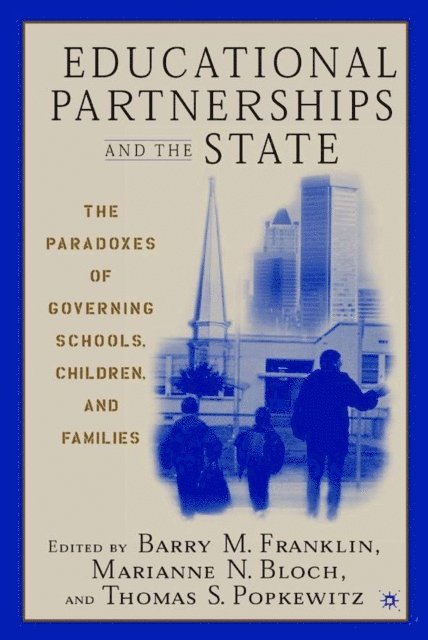
Educational Partnerships and the State: The Paradoxes of Governing Schools, Children, and Families
AvBarry M. Franklin,B. Franklin
494 kr
Beställningsvara. Skickas inom 10-15 vardagar. Fri frakt över 249 kr.
Du är på sajten för privatpersoner.
AvBarry M. Franklin,B. Franklin
494 kr
Beställningsvara. Skickas inom 10-15 vardagar. Fri frakt över 249 kr.
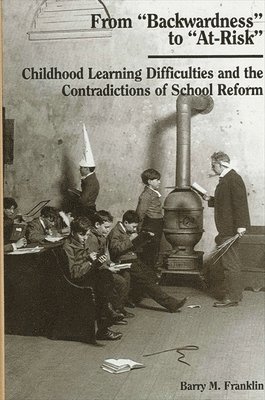
BARRY M. FRANKLIN is Professor and Chair of the Department of Secondary Education at Utah State University, USA. He is the author of such books as When Children Don't Learn: Student Failure and the Culture of Teaching and From 'Backwardness' to 'At-Risk': Childhood Learning Difficulties and the Contradictions of School Reform. He is also the co-editor, with Gary McCulloch, of our new series, Secondary Education in a Changing World. - MARIANNE BLOCH is Professor in the School of Education, Curriculum and Instruction at the University of Wisconsin, Madison. - THOMAS POPKEWITZ is Professor in the School of Education, University of Wisconsin, Madison, and is the author of the very successful Educational Knowledge, Foucault's Challenge, and Struggling for the Soul.
'Barry Franklin's Educational Partnerships and the State could not be more timely. The volume significantly increases our knowledge of the meaning, development, and operation of educational partnerships. Franklin and his colleagues powerfully connect educational partnerships to questions of citizenship development and education for a democratic society. Franklin, simply put, helps us to better understand what educational partnerships are and why genuine and effective partnerships are so crucial for the future of democracy. I enjoyed the book and learned a great deal from it.' - Ira Harkavy Associate Vice President and Director, Center for Community Partnerships, University of Pennsylvania 'This book provides rich insight into the nature of educational partnerships, which have emerged in recent years as part of a larger effort to reconcile fairness and markets by forging a 'third way' between left and right. In the name of inclusion and equity, these partnerships seek to bring about a devolution of responsibility for education from the state to the civil society and the individual. However, the studies in this book show that, as government abandons the effort to promote equality and as the discourse of democracy becomes the discourse of accountability, individuals find themselves with more responsibility for educational outcomes and less control over educational processes. The authors suggest that, in the end, educational partnerships may leave us with an overburdened citizen and an irresponsible state.' - David Labaree, author of How to Succeed in School without Really Learning and Professor, School of Education, Stanford University, USA 'Educational Partnerships and the State presents a timely and significant commentary on the complex issues raised by recent attempts by reformers, in the USA and Britain, to use partnerships to link the civil society and the state and, in so doing, to find a 'third way' in policy between excessive reliance on either the state or on markets. The editors and contributors to this book caution that, beneath the appealing rhetoric of partnerships, a number of dangers and paradoxes lurk. Beneath the language of social inclusion, new patterns of exclusion may develop; beneath attempts to expand civil society, the regulatory power of the state may increase. Partnerships to bring the poor into decision-making may ultimately engineer greater parent and community support for institutional goals set by elites. In presenting critical analysis that reveals these kinds of dangers in 'third way' reforms, this volume contributes to a more sophisticated understanding of the policy dilemmas facing reformers and educators today. Policy-makers, scholars, activists, and educators should read this book.' - William L. Boyd, Batschelet Chair Professor of Educational Administration, Pennsylvania State University 'Educational Partnerships and the State presents a timely and significant commentary on the complex issues raised by recent attempts by reformers, in the USA and Britain, to use partnerships to link the civil society and the state and, in so doing, to find a 'third way' in policy between excessive reliance on either the state or on markets. The editors and contributors to this book caution that, beneath the appealing rhetoric of partnerships, a number of dangers and paradoxes lurk. Beneath the language of social inclusion, new patterns of exclusion may develop; beneath attempts to expand civil society, the regulatory power of the state may increase. Partnerships to bring the poor into decision-making may ultimately engineer greater parent and community support for institutional goals set by elites. In presenting critical analysis that reveals these kinds of dangers in 'third way' reforms, this volume contributes to a more sophisticated understanding of the policy dilemmas facing reformers and educators today. Policy-makers, scholars, activists, and educators should read this book.' - William L. Boyd, Batschelet Chair Professor of Educational Administration, Pennsylvania State University 'Franklin, Bloch and Popkewitz's Educational Partnerships and the State could not be more timely. The volume significantly increases our knowledge of the meaning, development, and operation of educational partnerships. Franklin and his colleagues powerfully connect educational partnerships to questions of citizenship development and education for a democratic society. Franklin, Bloch, and Popkewitz, simply put, help us to better understand what educational partnerships are and why genuine and effective partnerships are so crucial for the future of democracy. I enjoyed the book and learned a great deal from it.' - Ira Harkavy, Associate Vice President, University of Pennsylvania

B. Franklin, M. Bloch, T. Popkewitz
Häftad, 2004
510 kr
T. Popkewitz, M. Bloch, B. Franklin
741 kr
M. Bloch, Thomas S. Popkewitz, K. Holmlund, I. Moqvist
Häftad, 2004
368 kr
D. Weyenberg, T. Lightfoot, D. Kennedy, M. Bloch
576 kr
I. Moqvist, K. Holmlund, Thomas S. Popkewitz, M. Bloch
527 kr
M. Bloch, D. Kennedy, T. Lightfoot, D. Weyenberg
Häftad, 2015
510 kr
Du är på sajten för privatpersoner.
AvBarry M. Franklin,B. Franklin
494 kr
Beställningsvara. Skickas inom 10-15 vardagar. Fri frakt över 249 kr.
BARRY M. FRANKLIN is Professor and Chair of the Department of Secondary Education at Utah State University, USA. He is the author of such books as When Children Don't Learn: Student Failure and the Culture of Teaching and From 'Backwardness' to 'At-Risk': Childhood Learning Difficulties and the Contradictions of School Reform. He is also the co-editor, with Gary McCulloch, of our new series, Secondary Education in a Changing World. - MARIANNE BLOCH is Professor in the School of Education, Curriculum and Instruction at the University of Wisconsin, Madison. - THOMAS POPKEWITZ is Professor in the School of Education, University of Wisconsin, Madison, and is the author of the very successful Educational Knowledge, Foucault's Challenge, and Struggling for the Soul.
'Barry Franklin's Educational Partnerships and the State could not be more timely. The volume significantly increases our knowledge of the meaning, development, and operation of educational partnerships. Franklin and his colleagues powerfully connect educational partnerships to questions of citizenship development and education for a democratic society. Franklin, simply put, helps us to better understand what educational partnerships are and why genuine and effective partnerships are so crucial for the future of democracy. I enjoyed the book and learned a great deal from it.' - Ira Harkavy Associate Vice President and Director, Center for Community Partnerships, University of Pennsylvania 'This book provides rich insight into the nature of educational partnerships, which have emerged in recent years as part of a larger effort to reconcile fairness and markets by forging a 'third way' between left and right. In the name of inclusion and equity, these partnerships seek to bring about a devolution of responsibility for education from the state to the civil society and the individual. However, the studies in this book show that, as government abandons the effort to promote equality and as the discourse of democracy becomes the discourse of accountability, individuals find themselves with more responsibility for educational outcomes and less control over educational processes. The authors suggest that, in the end, educational partnerships may leave us with an overburdened citizen and an irresponsible state.' - David Labaree, author of How to Succeed in School without Really Learning and Professor, School of Education, Stanford University, USA 'Educational Partnerships and the State presents a timely and significant commentary on the complex issues raised by recent attempts by reformers, in the USA and Britain, to use partnerships to link the civil society and the state and, in so doing, to find a 'third way' in policy between excessive reliance on either the state or on markets. The editors and contributors to this book caution that, beneath the appealing rhetoric of partnerships, a number of dangers and paradoxes lurk. Beneath the language of social inclusion, new patterns of exclusion may develop; beneath attempts to expand civil society, the regulatory power of the state may increase. Partnerships to bring the poor into decision-making may ultimately engineer greater parent and community support for institutional goals set by elites. In presenting critical analysis that reveals these kinds of dangers in 'third way' reforms, this volume contributes to a more sophisticated understanding of the policy dilemmas facing reformers and educators today. Policy-makers, scholars, activists, and educators should read this book.' - William L. Boyd, Batschelet Chair Professor of Educational Administration, Pennsylvania State University 'Educational Partnerships and the State presents a timely and significant commentary on the complex issues raised by recent attempts by reformers, in the USA and Britain, to use partnerships to link the civil society and the state and, in so doing, to find a 'third way' in policy between excessive reliance on either the state or on markets. The editors and contributors to this book caution that, beneath the appealing rhetoric of partnerships, a number of dangers and paradoxes lurk. Beneath the language of social inclusion, new patterns of exclusion may develop; beneath attempts to expand civil society, the regulatory power of the state may increase. Partnerships to bring the poor into decision-making may ultimately engineer greater parent and community support for institutional goals set by elites. In presenting critical analysis that reveals these kinds of dangers in 'third way' reforms, this volume contributes to a more sophisticated understanding of the policy dilemmas facing reformers and educators today. Policy-makers, scholars, activists, and educators should read this book.' - William L. Boyd, Batschelet Chair Professor of Educational Administration, Pennsylvania State University 'Franklin, Bloch and Popkewitz's Educational Partnerships and the State could not be more timely. The volume significantly increases our knowledge of the meaning, development, and operation of educational partnerships. Franklin and his colleagues powerfully connect educational partnerships to questions of citizenship development and education for a democratic society. Franklin, Bloch, and Popkewitz, simply put, help us to better understand what educational partnerships are and why genuine and effective partnerships are so crucial for the future of democracy. I enjoyed the book and learned a great deal from it.' - Ira Harkavy, Associate Vice President, University of Pennsylvania
B. Franklin, M. Bloch, T. Popkewitz
Häftad, 2004
510 kr
T. Popkewitz, M. Bloch, B. Franklin
741 kr
M. Bloch, Thomas S. Popkewitz, K. Holmlund, I. Moqvist
Häftad, 2004
368 kr
D. Weyenberg, T. Lightfoot, D. Kennedy, M. Bloch
576 kr
I. Moqvist, K. Holmlund, Thomas S. Popkewitz, M. Bloch
527 kr
M. Bloch, D. Kennedy, T. Lightfoot, D. Weyenberg
Häftad, 2015
510 kr
Du är på sajten för privatpersoner.
AvBarry M. Franklin,B. Franklin
494 kr
Beställningsvara. Skickas inom 10-15 vardagar. Fri frakt över 249 kr.
BARRY M. FRANKLIN is Professor and Chair of the Department of Secondary Education at Utah State University, USA. He is the author of such books as When Children Don't Learn: Student Failure and the Culture of Teaching and From 'Backwardness' to 'At-Risk': Childhood Learning Difficulties and the Contradictions of School Reform. He is also the co-editor, with Gary McCulloch, of our new series, Secondary Education in a Changing World. - MARIANNE BLOCH is Professor in the School of Education, Curriculum and Instruction at the University of Wisconsin, Madison. - THOMAS POPKEWITZ is Professor in the School of Education, University of Wisconsin, Madison, and is the author of the very successful Educational Knowledge, Foucault's Challenge, and Struggling for the Soul.
'Barry Franklin's Educational Partnerships and the State could not be more timely. The volume significantly increases our knowledge of the meaning, development, and operation of educational partnerships. Franklin and his colleagues powerfully connect educational partnerships to questions of citizenship development and education for a democratic society. Franklin, simply put, helps us to better understand what educational partnerships are and why genuine and effective partnerships are so crucial for the future of democracy. I enjoyed the book and learned a great deal from it.' - Ira Harkavy Associate Vice President and Director, Center for Community Partnerships, University of Pennsylvania 'This book provides rich insight into the nature of educational partnerships, which have emerged in recent years as part of a larger effort to reconcile fairness and markets by forging a 'third way' between left and right. In the name of inclusion and equity, these partnerships seek to bring about a devolution of responsibility for education from the state to the civil society and the individual. However, the studies in this book show that, as government abandons the effort to promote equality and as the discourse of democracy becomes the discourse of accountability, individuals find themselves with more responsibility for educational outcomes and less control over educational processes. The authors suggest that, in the end, educational partnerships may leave us with an overburdened citizen and an irresponsible state.' - David Labaree, author of How to Succeed in School without Really Learning and Professor, School of Education, Stanford University, USA 'Educational Partnerships and the State presents a timely and significant commentary on the complex issues raised by recent attempts by reformers, in the USA and Britain, to use partnerships to link the civil society and the state and, in so doing, to find a 'third way' in policy between excessive reliance on either the state or on markets. The editors and contributors to this book caution that, beneath the appealing rhetoric of partnerships, a number of dangers and paradoxes lurk. Beneath the language of social inclusion, new patterns of exclusion may develop; beneath attempts to expand civil society, the regulatory power of the state may increase. Partnerships to bring the poor into decision-making may ultimately engineer greater parent and community support for institutional goals set by elites. In presenting critical analysis that reveals these kinds of dangers in 'third way' reforms, this volume contributes to a more sophisticated understanding of the policy dilemmas facing reformers and educators today. Policy-makers, scholars, activists, and educators should read this book.' - William L. Boyd, Batschelet Chair Professor of Educational Administration, Pennsylvania State University 'Educational Partnerships and the State presents a timely and significant commentary on the complex issues raised by recent attempts by reformers, in the USA and Britain, to use partnerships to link the civil society and the state and, in so doing, to find a 'third way' in policy between excessive reliance on either the state or on markets. The editors and contributors to this book caution that, beneath the appealing rhetoric of partnerships, a number of dangers and paradoxes lurk. Beneath the language of social inclusion, new patterns of exclusion may develop; beneath attempts to expand civil society, the regulatory power of the state may increase. Partnerships to bring the poor into decision-making may ultimately engineer greater parent and community support for institutional goals set by elites. In presenting critical analysis that reveals these kinds of dangers in 'third way' reforms, this volume contributes to a more sophisticated understanding of the policy dilemmas facing reformers and educators today. Policy-makers, scholars, activists, and educators should read this book.' - William L. Boyd, Batschelet Chair Professor of Educational Administration, Pennsylvania State University 'Franklin, Bloch and Popkewitz's Educational Partnerships and the State could not be more timely. The volume significantly increases our knowledge of the meaning, development, and operation of educational partnerships. Franklin and his colleagues powerfully connect educational partnerships to questions of citizenship development and education for a democratic society. Franklin, Bloch, and Popkewitz, simply put, help us to better understand what educational partnerships are and why genuine and effective partnerships are so crucial for the future of democracy. I enjoyed the book and learned a great deal from it.' - Ira Harkavy, Associate Vice President, University of Pennsylvania

B. Franklin, M. Bloch, T. Popkewitz
Häftad, 2004
510 kr
T. Popkewitz, M. Bloch, B. Franklin
741 kr
M. Bloch, Thomas S. Popkewitz, K. Holmlund, I. Moqvist
Häftad, 2004
368 kr
D. Weyenberg, T. Lightfoot, D. Kennedy, M. Bloch
576 kr
I. Moqvist, K. Holmlund, Thomas S. Popkewitz, M. Bloch
527 kr
M. Bloch, D. Kennedy, T. Lightfoot, D. Weyenberg
Häftad, 2015
510 kr