• Fri frakt över 249 kr
  • •
  • Snabba leveranser
  • •
  • Billiga böcker
Kundservice

Du är på sajten för privatpersoner.

Företag, bibliotek eller offentlig verksamhet?

Du handlar på classic.bokus.com, där alla dina funktioner finns intakta.
Till classic.bokus.com
Bokus logotyp. Gå till startsidan.
  • Erbjudanden
  • Nyheter
  • Student
  • Topplistor
  • Barn & ungdom
  • Bokus Play
  • E-böcker
  • Pocketböcker
  • Spel & pussel

10% rabatt på allt med kod NYSTART10 →

Sidfot

Mina sidor

    Hjälp

    • Kundservice
    • Vanliga frågor och svar
    • Frakt och leverans
    • Retur vid ångerrätt
    • Reklamera vara
    • Betalning
    • Köpvillkor
    • Allmänna villkor
    • Information om webbplatsens tillgänglighet

    Om Bokus

    • Om oss
    • Pressrum
    • För studenter
    • För företag
    • För bibliotek och offentlig verksamhet
    • För leverantörer
    • Hållbarhet

    Populärt

    • Aktuella erbjudanden
    • Presentkort
    • Studentlitteratur
    • Nya böcker
    • Topplistor
    • Signerade böcker
    • Engelska böcker

    Inspiration

    • Boktips
    • BookTok
    • Populära bokserier
    • Barnbokskaraktärer
    • Populära författare
    Logotyp för Bokus
    Följ oss på Facebook (extern länk)Följ oss på Instagram (extern länk)Följ oss på YouTube (extern länk)Följ oss på TikTok (extern länk)
    bokus @ CookiesAnpassa cookiesIntegritetspolicyKöpvillkor
    Till Citymail hemsida (extern länk)Till Budbee hemsida (extern länk)Till Postnord hemsida (extern länk)Till Schenker hemsida (extern länk)Till Early Bird hemsida (extern länk)Till Walleys hemsida (extern länk)
    1. Naturvetenskap och teknik
    2. Matematik och naturvetenskap
    3. Naturvetenskap:allmänt
    4. Naturvetenskaplig forskning

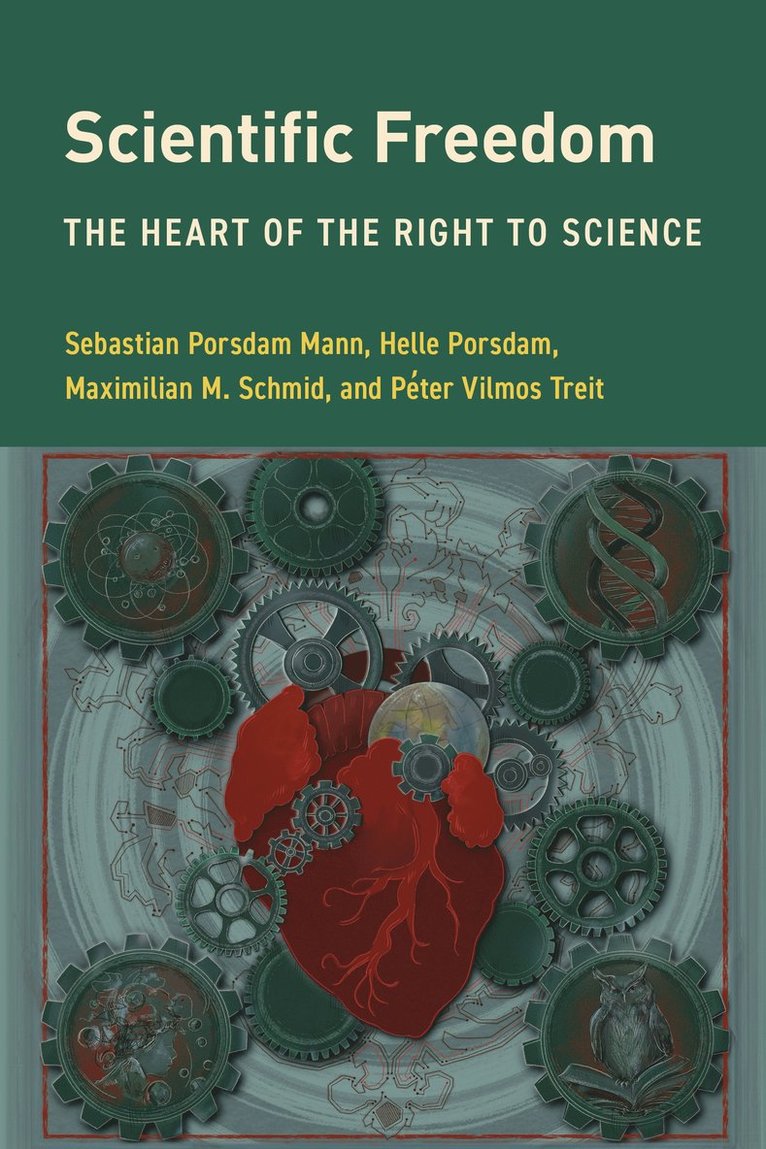
    Scientific Freedom

    The Heart of the Right to Science

    AvSebastian Porsdam Mann,Helle Porsdam

    Inbunden, Engelska, 2024

    Del i serien Global Epistemics

    1 048 kr

    Beställningsvara. Skickas inom 10-15 vardagar. Fri frakt över 249 kr.

    Fler format och utgåvor

    E-bok

    1 132 kr

    Beskrivning

    Scientists are supposed to have freedom to choose and conduct their experiments and exchange their ideas. Known as scientific freedom, this idea has been implicated in both wonderful and terrible scientific discoveries. Although it is not new, it has great relevance to contemporary society. In a time of genetic editing, global warming, and a worldwide pandemic, the question of how freely science is and should be conducted is one that has significant practical consequences. Drawing on rigorous interdisciplinary methods, this book defines the concept of scientific freedom, tells its story, and asks on what basis scientific freedom is best justified. Based on international human rights law and philosophy, the authors develop a model of scientific freedom as a constitutive element of the human right to enjoy the benefits of the progress of science and its applications. To illustrate its usefulness, they then test and apply this model to a real-life and real-time case study, as well as to two highly important international human rights instruments.

    Produktinformation

    • Utgivningsdatum:2024-01-16
    • Mått:159 x 236 x 23 mm
    • Vikt:517 g
    • Format:Inbunden
    • Språk:Engelska
    • Serie:Global Epistemics
    • Antal sidor:220
    • Förlag:Bloomsbury Publishing Plc
    • ISBN:9781538178379

    Utforska kategorier

    • Naturvetenskaplig forskning inom Naturvetenskap och teknik
    • Offentlig förvaltning inom Juridik
    • Filosofiska discipliner inom Filosofi och religion

    Mer om författaren

    Sebastian Porsdam Mann is research fellow at the Faculty of Law, Oxford, and a researcher at UEHIRO Centre of Ethics, University of Oxford. He is Chief Academic Officer at A&BC Consulting and Postdoc fellow at Harvard Medical School Center for Bioethics.Helle Porsdam is professor of Law and Humanities and UNESCO Chair in Cultural Rights at the University of Copenhagen. She has headed research projects and published widely on the interface of cultural rights, copyright, creativity and cultural heritage institutions. In 2021 she was awarded a Leverhulme Visiting Professor at the Centre for Research in the Arts, Humanities and Social Sciences University of Cambridge.Maximilian M. Schmid studied international business at Munich Business School and carried out graduate work in management at IE Business School in Madrid. After a year of international experience working for Cosana in Tokyo, MMS and SPM founded and is the CEO of A&BC Consulting. Since 2019 MMS has been the managing director of Cosana Europe.Péter Vilmos Treit is research fellow at the Max Plank Institute of Biochemistry. He studied biomedical sciences at Queen Mary University in London, before embarking on graduate work in biochemistry at Ludwig-Maximillian-University in Munich. He has worked as a research assistant and laboratory scientist in the Department of Proteomics and Signal Transduction at the Max Planck Institute of Biochemistry.

    Recensioner i media

    Although scientific freedom is clearly at the heart of the right to science as a human right, it is less clear what this freedom entails and how it interacts with other rights and freedoms. This book is the first to provide a very comprehensive and accessible analysis of the historical, theoretical and practical dimensions of scientific freedom. A must-read for professionals and policymakers in this field!

    Innehållsförteckning

    • Opening Vignette: Artificial Intelligence and IntroductionPART ONE: Setting the Scene and Providing the Necessary Historical BackgroundChapter 1: Historical Background and Key Concepts And DefinitionsChapter 2: A Systematic Review of The Scholarly Literature On Scientific Freedom: Methods And ResultsChapter 3: Taking Human Right to the Next Level: The Right to Science, History and ContentChapter 4: Scientific Freedom: How Does It Relate to Scientific Dissemination and International Co-Operation?PART TWO: SAFIRES: A Conceptual Model of Scientific Freedom Obligations under International Human Rights LawChapter 5: The SAFIRES (Scientific and Academic Freedom as Integral elements of the Right to Enjoy the benefits of Science) ModelChapter 6: The Scope of ’Science’ and ‘Scientific Freedom’ in Three Human Rights Instruments PART THREE: Working with Scientific Freedom And The Right To Science In PracticeChapter 7: On Drafting the General Comment on Science (2013-2020): A Personal Account, Mikel MancisidorChapter 8: Litigating the Right to Science before the CESCR: the View from the Trenches, Cesare P.R. RomanoChapter 9: Defending Science, Knowledge and Facts: The UN And Scientific Freedom Of Expression, Malene Nielsen and Carsten StaurAppendicesIndex