• Fri frakt över 249 kr
  • •
  • Snabba leveranser
  • •
  • Billiga böcker
Kundservice

Du är på sajten för privatpersoner.

Företag, bibliotek eller offentlig verksamhet?

Du handlar på classic.bokus.com, där alla dina funktioner finns intakta.
Till classic.bokus.com
Bokus logotyp. Gå till startsidan.
  • Erbjudanden
  • Nyheter
  • Student
  • Topplistor
  • Barn & ungdom
  • Bokus Play
  • E-böcker
  • Pocketböcker
  • Spel & pussel

10% rabatt på allt med kod NYSTART10 →

Sidfot

Mina sidor

    Hjälp

    • Kundservice
    • Vanliga frågor och svar
    • Frakt och leverans
    • Retur vid ångerrätt
    • Reklamera vara
    • Betalning
    • Köpvillkor
    • Allmänna villkor
    • Information om webbplatsens tillgänglighet

    Om Bokus

    • Om oss
    • Pressrum
    • För studenter
    • För företag
    • För bibliotek och offentlig verksamhet
    • För leverantörer
    • Hållbarhet

    Populärt

    • Aktuella erbjudanden
    • Presentkort
    • Studentlitteratur
    • Nya böcker
    • Topplistor
    • Signerade böcker
    • Engelska böcker

    Inspiration

    • Boktips
    • BookTok
    • Populära bokserier
    • Barnbokskaraktärer
    • Populära författare
    Logotyp för Bokus
    Följ oss på Facebook (extern länk)Följ oss på Instagram (extern länk)Följ oss på YouTube (extern länk)Följ oss på TikTok (extern länk)
    bokus @ CookiesAnpassa cookiesIntegritetspolicyKöpvillkor
    Till Citymail hemsida (extern länk)Till Budbee hemsida (extern länk)Till Postnord hemsida (extern länk)Till Schenker hemsida (extern länk)Till Early Bird hemsida (extern länk)Till Walleys hemsida (extern länk)
    1. Psykologi och pedagogik
    2. Pedagogik
    3. Högskola och universitet
    4. Lärarutbildning

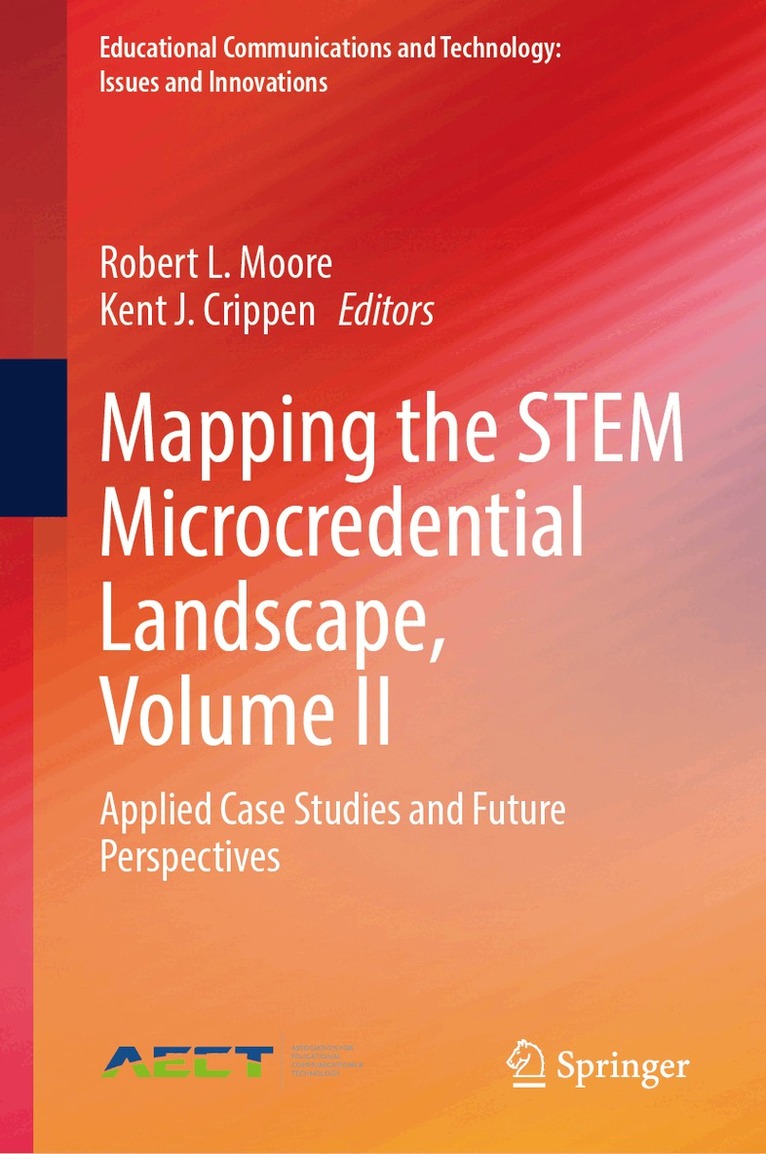
    Mapping the STEM Microcredential Landscape, Volume II

    Applied Case Studies and Future Perspectives

    AvRobert L. Moore,Kent J. Crippen

    Inbunden, Engelska, 2026

    Del i serien Educational Communications and Technology: Issues and Innovations

    1 839 kr

    Beställningsvara. Skickas inom 10-15 vardagar. Fri frakt över 249 kr.

    Beskrivning

    This edited volume builds on the foundational insights from Volume I, delving into specific case studies that highlight the practical implementation of STEM microcredentials across various contexts. With sections focused on educators and non-educators, this volume offers an in-depth look at real-world applications. Readers will gain practical insights and strategies illustrating how microcredentials can be effectively developed, implemented, and recognized. This volume equips readers with the knowledge and tools to navigate the world of microcredentials, supporting their educational and career aspirations. By connecting theory with practice, Volume II enhances the understanding of the potential and challenges of STEM microcredentials, offering a complete resource for navigating the evolving landscape of targeted, competency-based education.

    Produktinformation

    • Utgivningsdatum:2026-02-18
    • Mått:155 x 235 x 33 mm
    • Vikt:914 g
    • Format:Inbunden
    • Språk:Engelska
    • Serie:Educational Communications and Technology: Issues and Innovations
    • Antal sidor:2
    • Förlag:Springer Nature Switzerland AG
    • ISBN:9783032068422

    Utforska kategorier

    • Lärarutbildning inom Psykologi och pedagogik
    • Undervisning i specifika ämnen inom Psykologi och pedagogik
    • Material och digital teknik i undervisningen inom Psykologi och pedagogik

    Mer om författaren

    Rob Moore is an Assistant Professor of Educational Technology in the School of Teaching and Learning at the University of Florida, USA and the director of the Investigating Digital Ecologies to Advance Transformative Education (IDEATE) Research Lab in the Institute for Advanced Learning Technologies, University of Florida, USA. His research focuses on how processes and structures affect learner experiences in digital environments, with a particular interest in microcredentials as transformative pathways for education and careers. He investigates the impact of technology integration on learner experiences and outcomes. Kent Crippen is a Professor of STEM Education in the School of Teaching and Learning at the University of Florida, USA. His research program embraces the grand challenge of providing an inclusive and robust science, technology, engineering, and mathematics (STEM) workforce through designing and evaluating learning environments that offer authentic experiences through networked learning technologies. He is a Fellow of the American Association for the Advancement of Science (AAAS) and Editor-in-Chief of the Journal of Science Education and Technology.

    Innehållsförteckning

    • Part 4. Educator-focused Case Studies.- 18. Integrating Micro-credentials into STEM Professional Development for K-12 School Principals (Hengtao Tang).- 19. Empowering Educators Through Teacher-Directed Professional Learning in STEM: A Case Study of Micro-credential Implementation (Erin West).- 20. Project ACCLaIM: A Case Study on Developing and Implementing Microcredentials as a Pathway to Teacher Professional Learning (Leanna Archambault).- Part 5. Institution-focused Case Studies of Non-Educators.- 21. A Customer Value-Based Approach to Building Trust and Clarity in Micro-Credentials (Lora Bucsis).-22. Evaluating the Role of STEM Microcredentials in Enhancing Public Workforce Development Outcomes (Ani Meliksetyan).- 23. Advancing Workforce Development through Micro-Credentials: Insights from South Korea’s STEM Education Ecosystem (Hyewon  Jang).- 24. Sustainability as a Core Component of Micro-credentials in Open, Flexible, and Distance Education in Mauritius (Chitisha Gunnoo).- Part 6. Discipline-focused Case Studies of Non-Educators.- 25. Microcredentials in AI and Data Literacy Education: Insights from Germany (Marc Egloffstein).- 26. The Power of and through Micro-credentials (Kristen Vanselow).- 27. A Case Study on Collaboration Between Academia and Industry in STEM Education to Create Industry-aligned Biotechnology Microcredentials (Cynthia LaBrake).- Part 7. Program- and Course-focused Case Studies of Non-Educators.- 28. iTEACH: A Case Study in Health Sciences Microcredentials for Competency-Based Nurse Educator Workforce Development (John  McKenzie).- 29. AI Fundamentals: Building AI Literacy through High-Impact Microcredentials (Aleshia Hayes).- 30. Harnessing Communities of Practice and Open Recognition Systems for Workforce Development and Digital Equity (Krystal Rawls).- 31. Attainable, Applicable, Actuating Education in STEM Through Engineering Microcredentials: A Program Planning Approach (Amanda Major).-32. Enhancing the STEM Ready Pathway Program with Microcredentials: Empowering Diverse Learners through Industry-Aligned Credentials (Collin Sullivan).- 33. Nurturing Critical Thinkers: A Freshman Seminar Microcredential for STEM Exploration (Stacy Ybarra).- Part 8. Credential-focused Case Studies of Non-Educators.-34. Building Trust in Digital STEM Microcredentials: Technological Innovations and Future Directions (Kerri Lemoie).- 35. Building the STEM Workforce: Beyond Technical Skills (Naomi Boyer).- Part 9. Visions of the Future.- 36. Advancing Microcredentials through Higher Education-Industry Partnerships – A Vision for the Future (Michelle Head).- 37. The Role Of Micro-Credentials in Future STEM Professional Learning and Development (Paula Marcelle).