Alfred Kobsa – författare
Visar alla böcker från författaren Alfred Kobsa. Handla med fri frakt och snabb leverans.
20 produkter
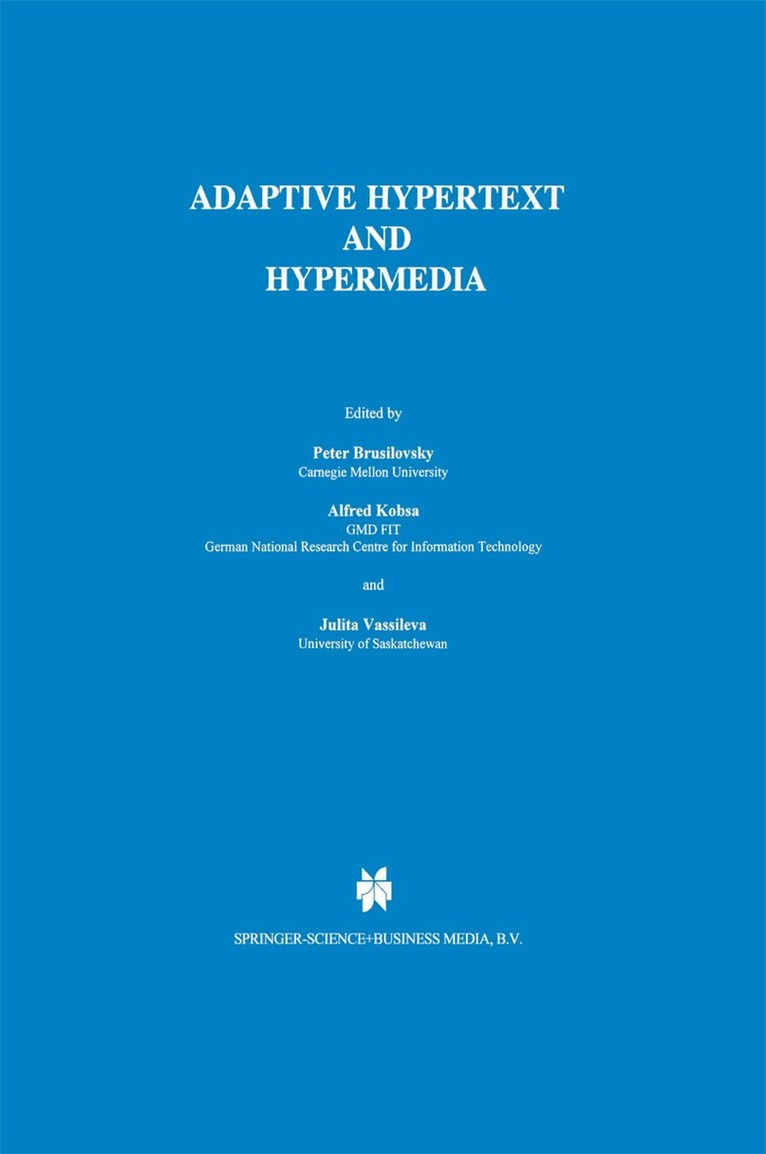
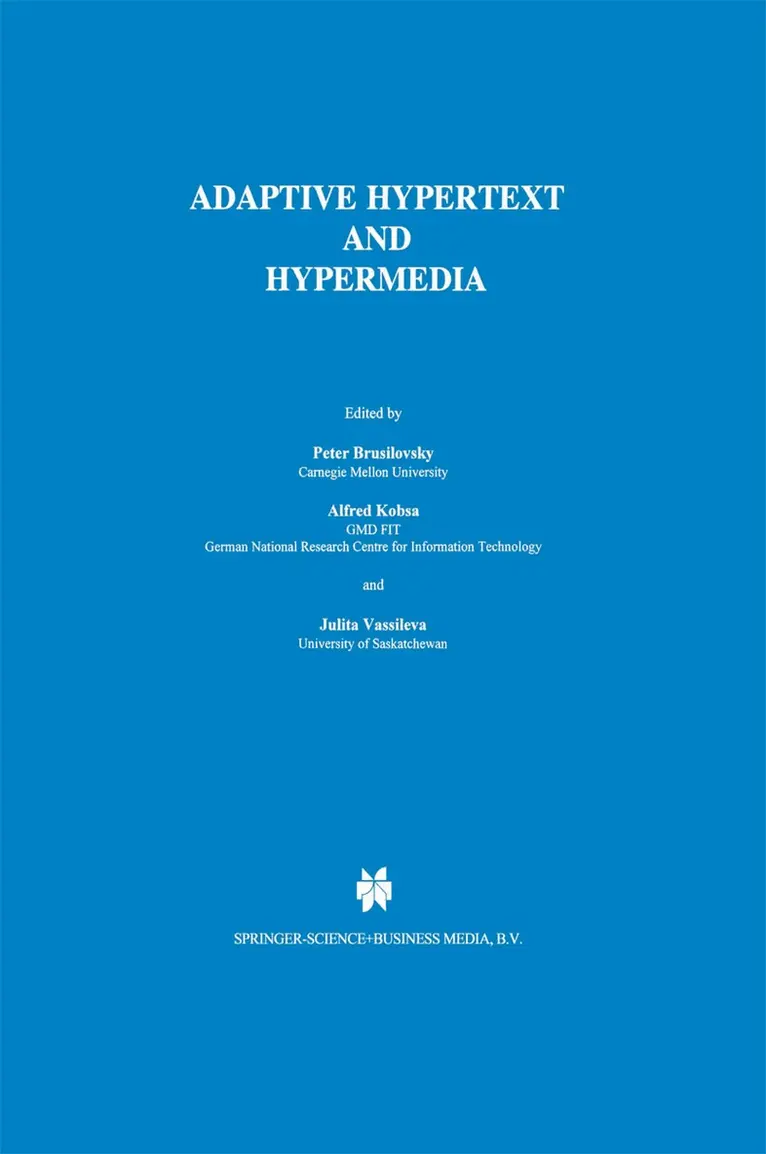
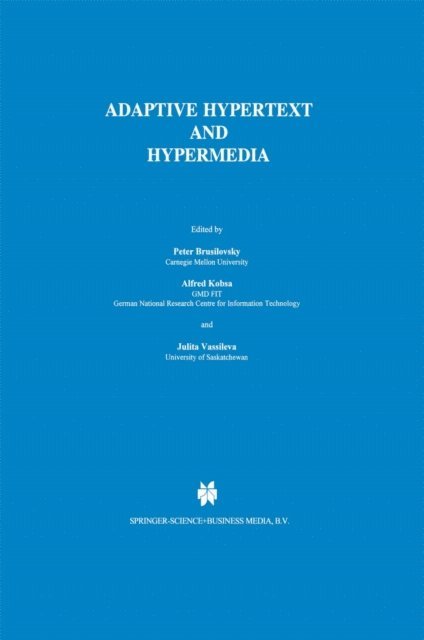
Adaptive Hypertext and Hypermedia
Av Peter Brusilovsky, Alfred Kobsa m. fl.
Inbunden, 1998
1129 kr
Lägg i varukorg
Hypertext/hypermedia systems and user-model-based adaptive systems in the areas of learning and information retrieval have for a long time been considered as two mutually exclusive approaches to information access. Adaptive systems tailor information to the user and may guide the user in the …
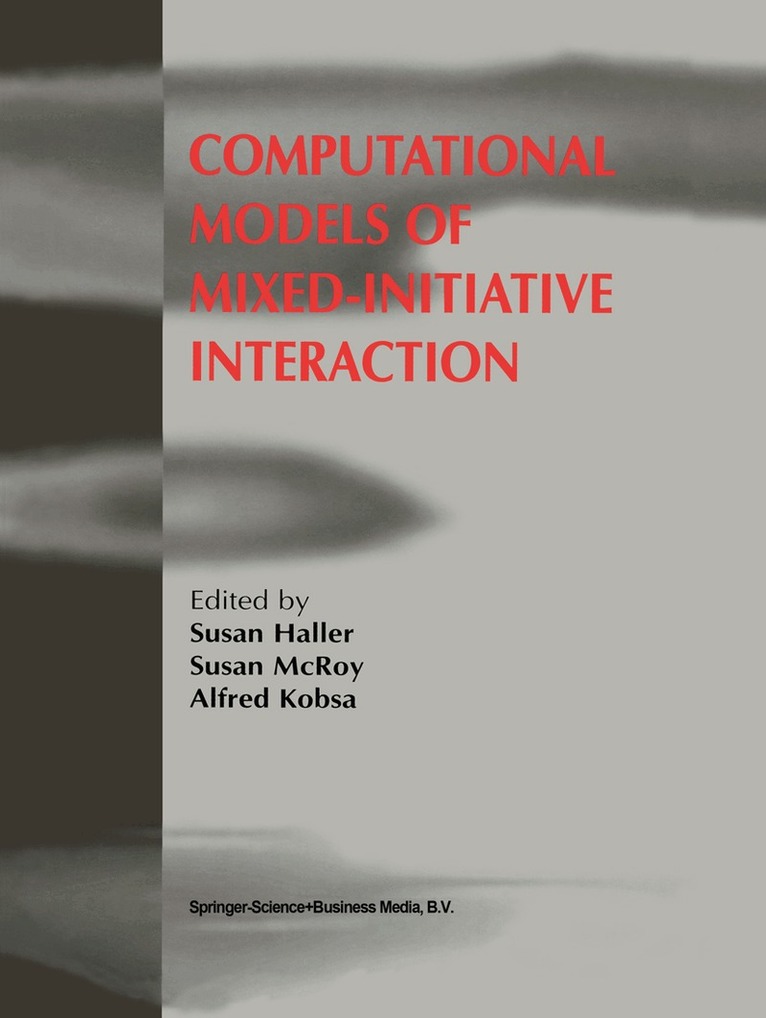
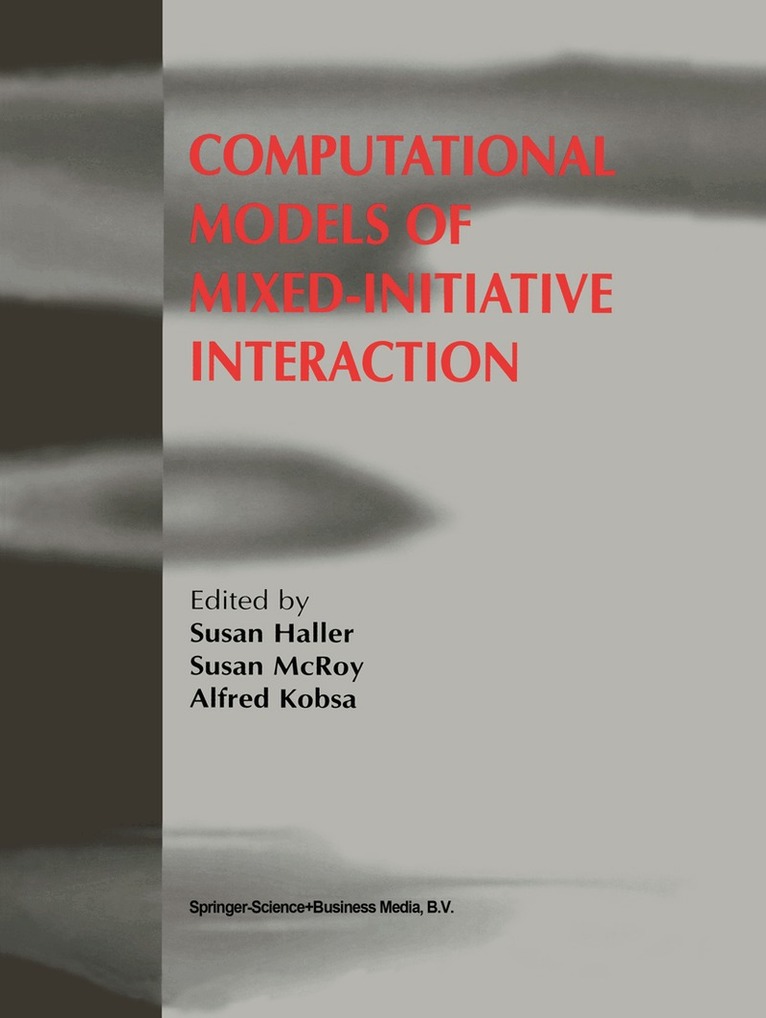
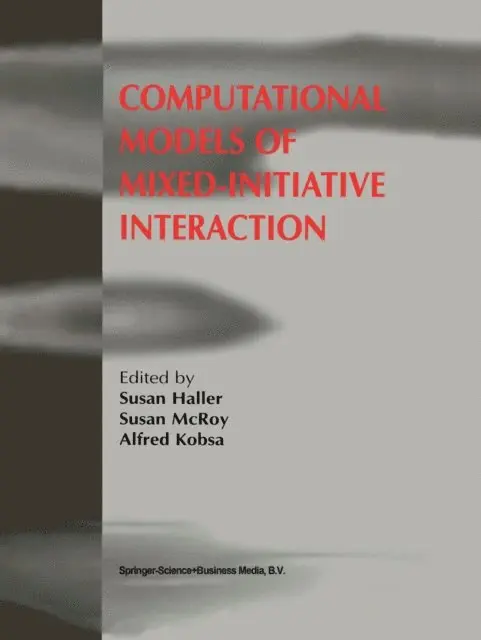
Computational Models of Mixed-Initiative Interaction
Av Susan Haller, Susan McRoy m. fl.
Inbunden, 1999
1690 kr
Lägg i varukorg
"Computational Models of Mixed-Initiative Interaction" brings together research that spans several disciplines related to artificial intelligence, including natural language processing, information retrieval, machine learning, planning, and computer-aided instruction, to account for the role that …
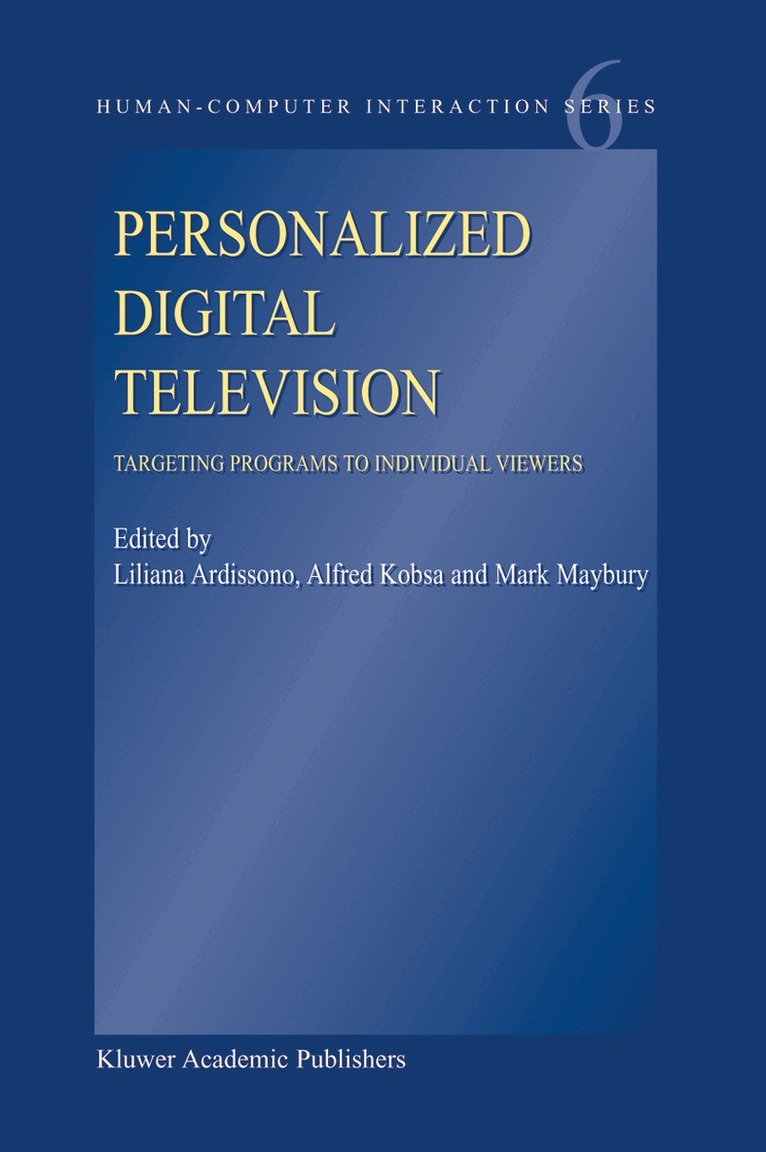
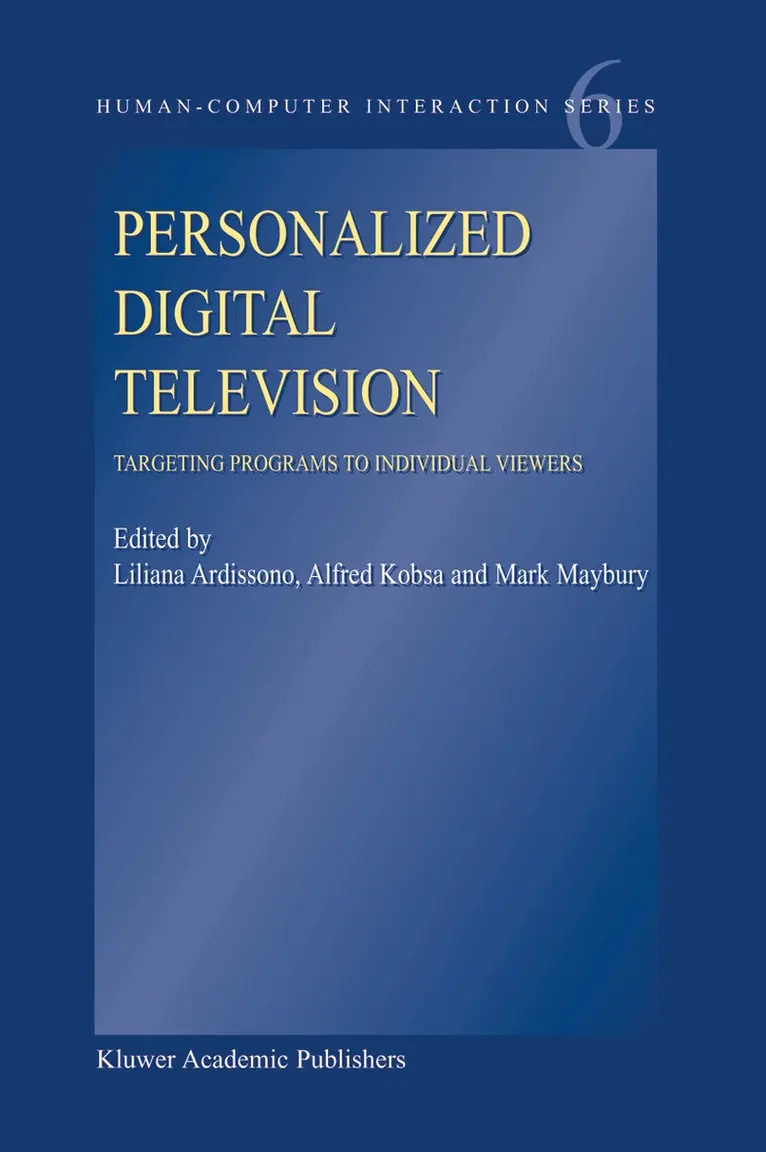
Personalized Digital Television
Targeting Programs to Individual Viewers
Av Liliana Ardissono, Alfred Kobsa m. fl.
Inbunden, 2004
1630 kr
Lägg i varukorg
TV viewers today are exposed to overwhelming amounts of information, and challenged by the plethora of interactive functionality provided by current set-top boxes. To ensure broad adoption of this technology by consumers, future Digital Television will have to take usability issues thoroughly into …
Personalized Digital Television
Targeting Programs to Individual Viewers
Av Mark T. Maybury, Alfred Kobsa m. fl.
E-bok, 2006
2127 kr
Lägg i varukorg
TV viewers today are exposed to overwhelming amounts of information, and challenged by the plethora of interactive functionality provided by current set-top boxes. To ensure broad adoption of this technology by consumers, future Digital Television will have to take usability issues thoroughly into …
Artificial Intelligence — Eine Einführung
Av Harald Trost, Robert Trappl m. fl.
E-bok, 2019
462 kr
Lägg i varukorg
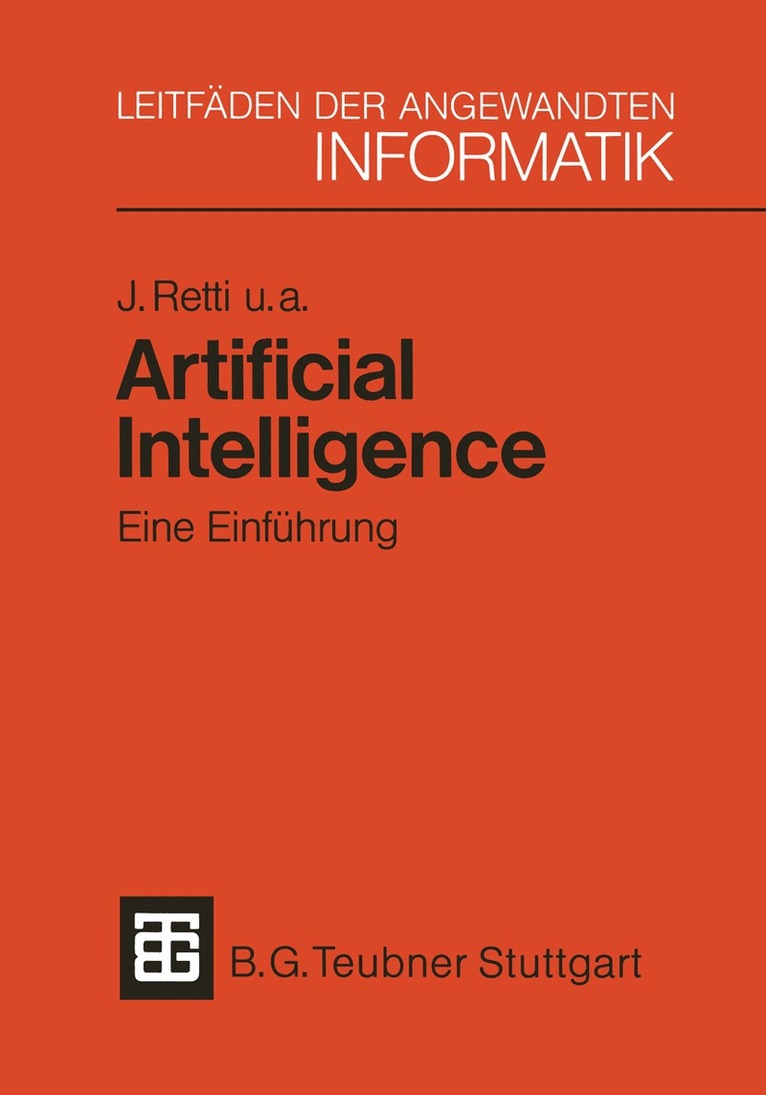
Artificial Intelligence — Eine Einführung
Av Johannes Retti, Wolfgang Bibel m. fl.
Häftad, 1986
513 kr
Lägg i varukorg
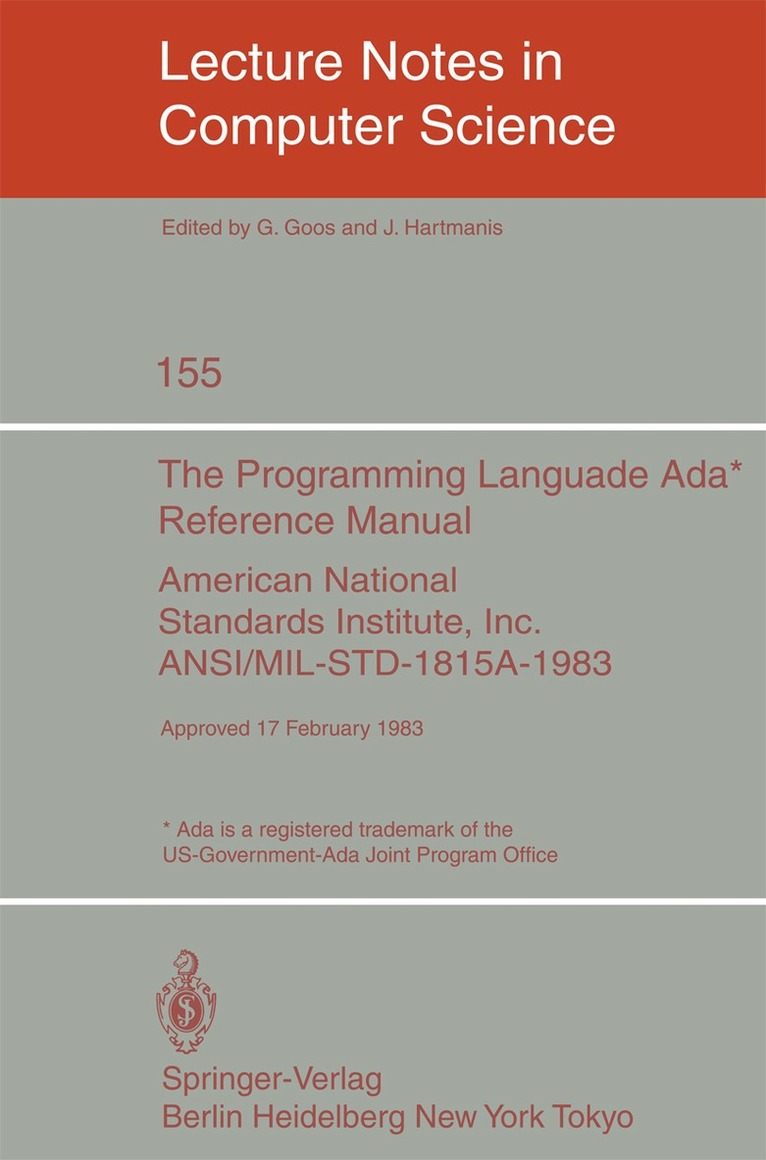
Programming Language Ada. Reference Manual
American National Standards Institute, Inc. ANSI/MIL-STD-1815A-1983. Approved 17 February 1983
Av David Hutchison, Takeo Kanade m. fl.
Häftad, 1983
899 kr
Lägg i varukorg
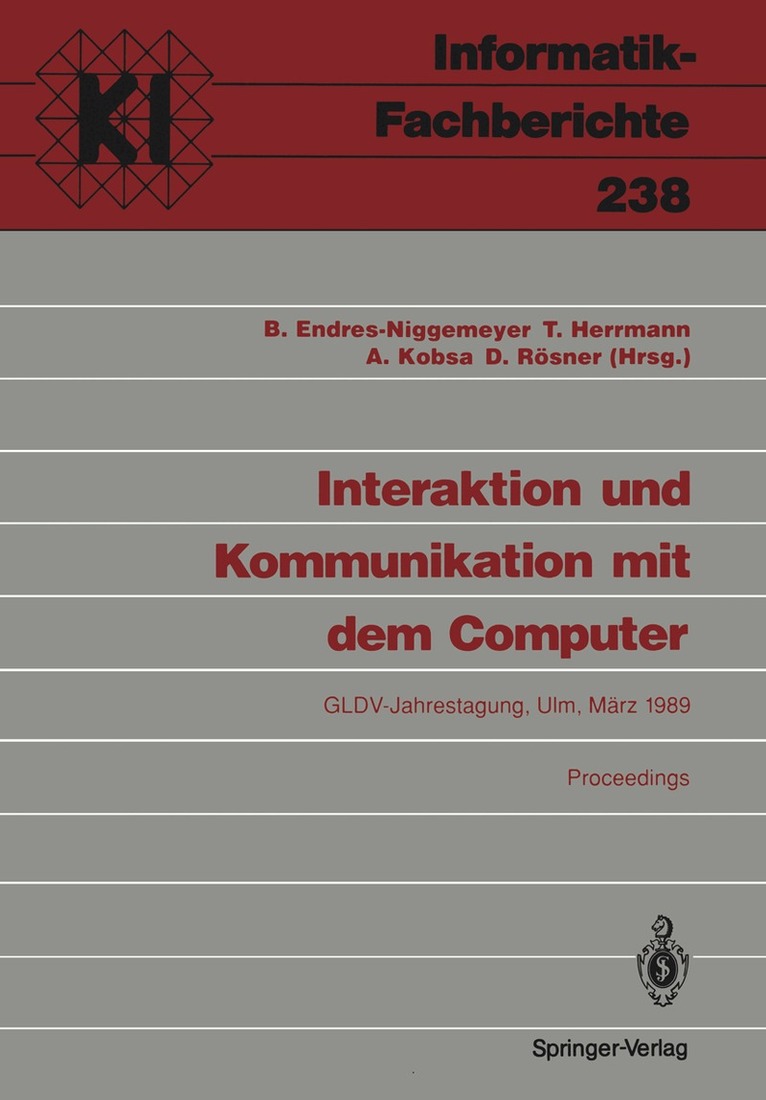
Interaktion und Kommunikation mit dem Computer
Jahrestagung der Gesellschaft für Linguistische Datenverarbeitung (GLDV). Ulm, 8.-10. März 1989 Proceedings
Av Brigitte Endres-Niggemeyer, Thomas Herrmann m. fl.
Häftad, 1990
565 kr
Lägg i varukorg
Die Beiträge dieses Tagungsbands befassen sich aus der Sicht der Linguistischen Datenverarbeitung und ihrer benachbarten Disziplinen mit den Interaktionsmöglichkeiten zwischen Mensch und Computer. Zu diesen Disziplinen gehören z. B. Informatik, insbesondere Software-Engineering und Künstliche …
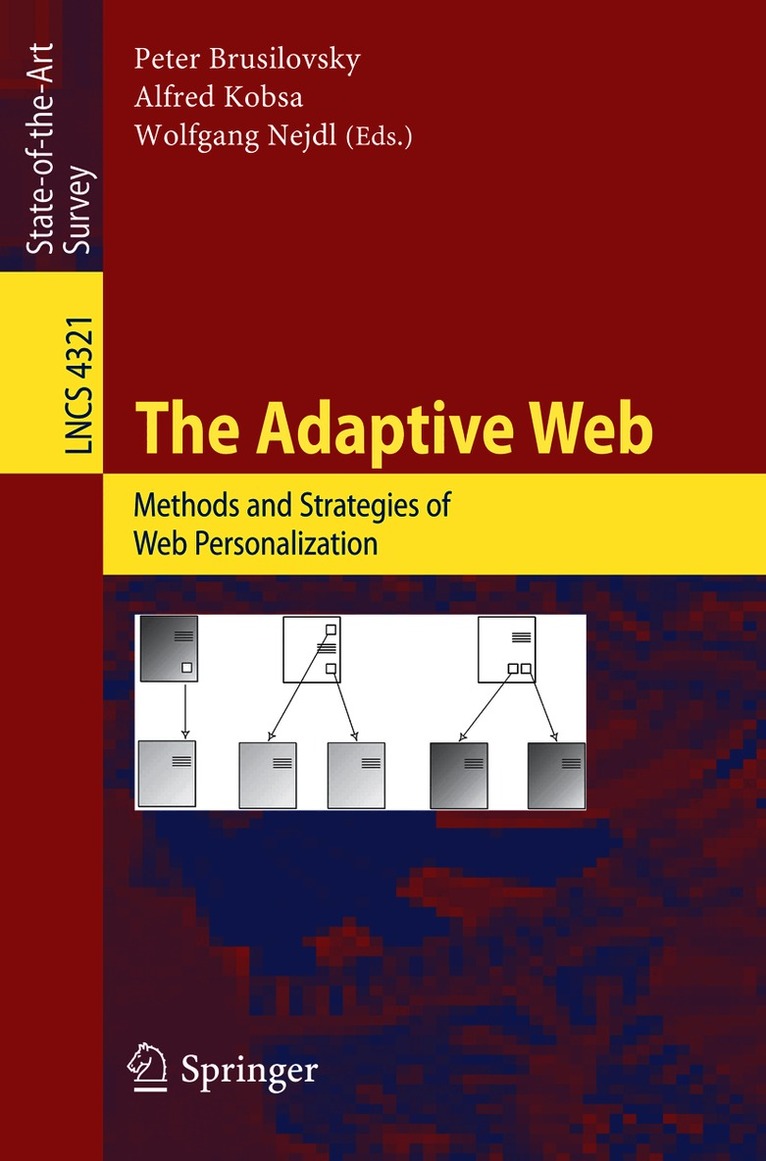
Adaptive Web
Methods and Strategies of Web Personalization
Av Peter Brusilovsky, Alfred Kobsa m. fl.
Häftad, 2007
564 kr
Lägg i varukorg
Following the increase in of the information available on the Web, the diversity of its users and the complexity of Web applications, researchers started developing adaptive Web systems that tailored their appearance and behavior to each individual user or user group. Adaptive systems were designed …
Adaptive Web
Methods and Strategies of Web Personalization
Av Wolfgang Nejdl, Alfred Kobsa m. fl.
E-bok, 2007
755 kr
Lägg i varukorg
Following the increase in of the information available on the Web, the diversity of its users and the complexity of Web applications, researchers started developing adaptive Web systems that tailored their appearance and behavior to each individual user or user group. Adaptive systems were designed …
User Modeling, Adaptation, and Personalization
18th International Conference, UMAP 2010, Big Island, HI, USA, June 20-24, 2010, Proceedings
Av Paul De Bra, Alfred Kobsa m. fl.
Häftad, 2010
564 kr
Lägg i varukorg
The 18th InternationalConference on User Modeling, Adaptation and Person- ization(UMAP 2010)took placeon BigIsland, HawaiiduringJune 20-24,2010. It was the second conference after UMAP 2009 in Trento, Italy, which merged the successful biannual User Modeling (UM) and Adaptive Hypermedia (AH) …
User Modeling, Adaptation, and Personalization
18th International Conference, UMAP 2010, Big Island, HI, USA, June 20-24, 2010, Proceedings
Av David Chin, Alfred Kobsa m. fl.
E-bok, 2010
755 kr
Lägg i varukorg
Interaktion und Kommunikation mit dem Computer
Jahrestagung der Gesellschaft für Linguistische Datenverarbeitung (GLDV). Ulm, 8.-10. März 1989 Proceedings
Av Dietmar Rosner, Alfred Kobsa m. fl.
E-bok, 2013
603 kr
Lägg i varukorg
Die Beiträge dieses Tagungsbands befassen sich aus der Sicht der Linguistischen Datenverarbeitung und ihrer benachbarten Disziplinen mit den Interaktionsmöglichkeiten zwischen Mensch und Computer. Zu diesen Disziplinen gehören z. B. Informatik, insbesondere Software-Engineering und Künstliche …
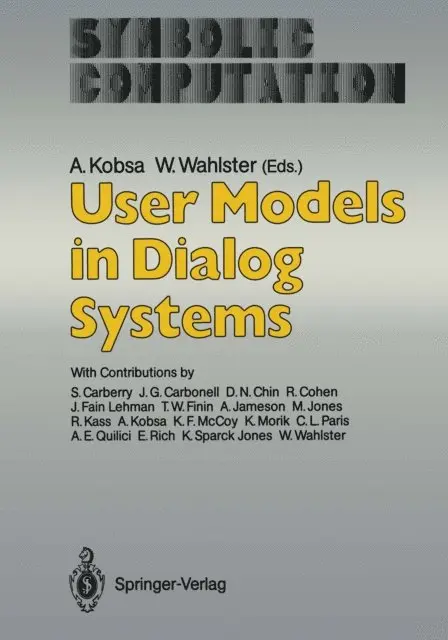
User Models in Dialog Systems
Av Wolfgang Wahlster, Alfred Kobsa
E-bok, 2012
1459 kr
Lägg i varukorg
User models have recently attracted much research interest in the field of artificial intelligence dialog systems. It has become evident that flexible user-oriented dialog behavior of such systems can be achieved only if the system has access to a model of the user containing assumptions about …
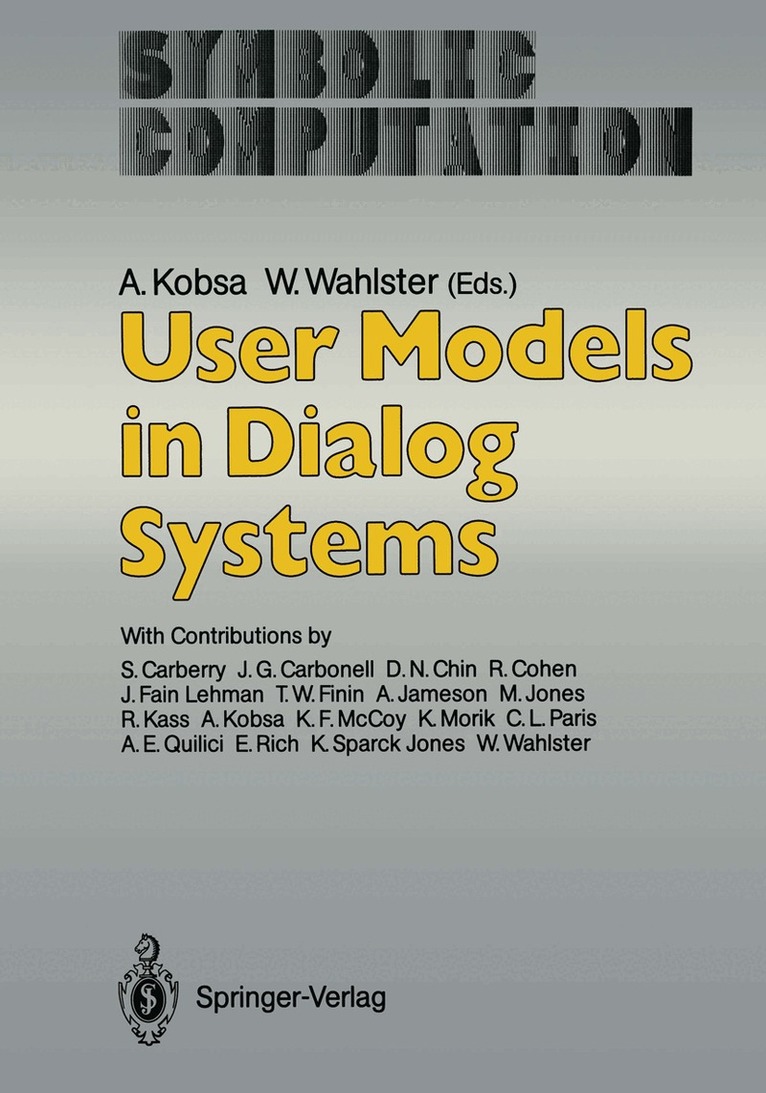
User Models in Dialog Systems
Av Alfred Kobsa, Wolfgang Wahlster
Häftad, 2011
1093 kr
Lägg i varukorg
User models have recently attracted much research interest in the field of artificial intelligence dialog systems. It has become evident that flexible user-oriented dialog behavior of such systems can be achieved only if the system has access to a model of the user containing assumptions about …
Adaptive Hypertext and Hypermedia
Av Peter Brusilovsky, Alfred Kobsa m. fl.
Häftad, 2010
1126 kr
Lägg i varukorg
Hypertext/hypermedia systems and user-model-based adaptive systems in the areas of learning and information retrieval have for a long time been considered as two mutually exclusive approaches to information access. Adaptive systems tailor information to the user and may guide the user in the …
Computational Models of Mixed-Initiative Interaction
Av Susan Haller, Susan McRoy m. fl.
Häftad, 2010
1685 kr
Lägg i varukorg
Computational Models of Mixed-Initiative Interaction brings together research that spans several disciplines related to artificial intelligence, including natural language processing, information retrieval, machine learning, planning, and computer-aided instruction, to account for the role that …
Personalized Digital Television
Targeting Programs to Individual Viewers
Av Liliana Ardissono, Alfred Kobsa m. fl.
Häftad, 2010
1685 kr
Lägg i varukorg
TV viewers today are exposed to overwhelming amounts of information, and challenged by the plethora of interactive functionality provided by current set-top boxes. To ensure broad adoption of this technology by consumers, future Digital Television will have to take usability issues thoroughly into …
Adaptive Hypertext and Hypermedia
Av Julita Vassileva, Alfred Kobsa m. fl.
E-bok, 2013
1455 kr
Lägg i varukorg
Hypertext/hypermedia systems and user-model-based adaptive systems in the areas of learning and information retrieval have for a long time been considered as two mutually exclusive approaches to information access. Adaptive systems tailor information to the user and may guide the user in the …
Computational Models of Mixed-Initiative Interaction
Av Alfred Kobsa, Susan McRoy m. fl.
E-bok, 2013
2174 kr
Lägg i varukorg
Computational Models of Mixed-Initiative Interaction brings together research that spans several disciplines related to artificial intelligence, including natural language processing, information retrieval, machine learning, planning, and computer-aided instruction, to account for the role that …