Anna Santangelo – författare
Visar alla böcker från författaren Anna Santangelo. Handla med fri frakt och snabb leverans.
4 produkter
4 produkter
Häftad, Engelska, 2019
561 kr
Skickas inom 10-15 vardagar
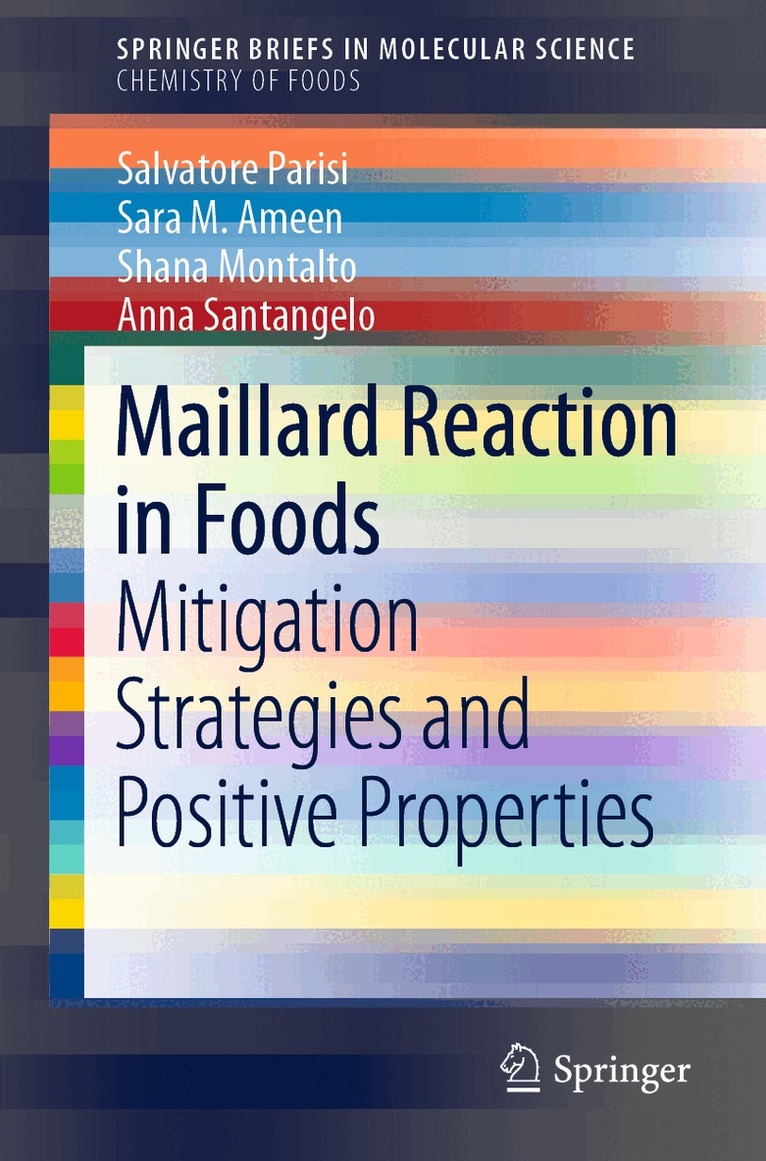
This book provides an overview of mitigation strategies and positive health effects of Maillard Reaction products in the contexts of food processing and storage. The effects of Maillard Reactions can vary considerably: while on the one hand certain sensorial alterations and influences on color, flavor and odor may be desirable, Maillard Reactions can also result in potentially harmful and toxic products (e.g. furfurals, furosines, or acrylamide). This book discusses possible mitigation strategies for the reduction of toxic reaction products, including the addition of enzymes or antioxidants, reducing sugars, and encapsulation approaches, as well as new processing strategies, such as high-pressure, radio-frequency, ultrahigh-temperature, or Ohmic heating methods. The book also illustrates that certain Maillard products can even produce positive health effects, e.g. antimicrobial or anticarcinogenic effects. The methods described here can serve as a blueprint for promoting the formationof beneficial compounds and reducing / avoiding toxic substances, offering essential strategies and methods.
E-bok
Engelska, 2019708 kr
Läs direkt efter köp
This book provides an overview of mitigation strategies and positive health effects of Maillard Reaction products in the contexts of food processing and storage. The effects of Maillard Reactions can vary considerably: while on the one hand certain sensorial alterations and influences on color, flavor and odor may be desirable, Maillard Reactions can also result in potentially harmful and toxic products (e.g. furfurals, furosines, or acrylamide). This book discusses possible mitigation strategies for the reduction of toxic reaction products, including the addition of enzymes or antioxidants, reducing sugars, and encapsulation approaches, as well as new processing strategies, such as high-pressure, radio-frequency, ultrahigh-temperature, or Ohmic heating methods. The book also illustrates that certain Maillard products can even produce positive health effects, e.g. antimicrobial or anticarcinogenic effects. The methods described here can serve as a blueprint for promoting the formationof beneficial compounds and reducing / avoiding toxic substances, offering essential strategies and methods.
Häftad, Engelska, 2018
544 kr
Skickas inom 10-15 vardagar
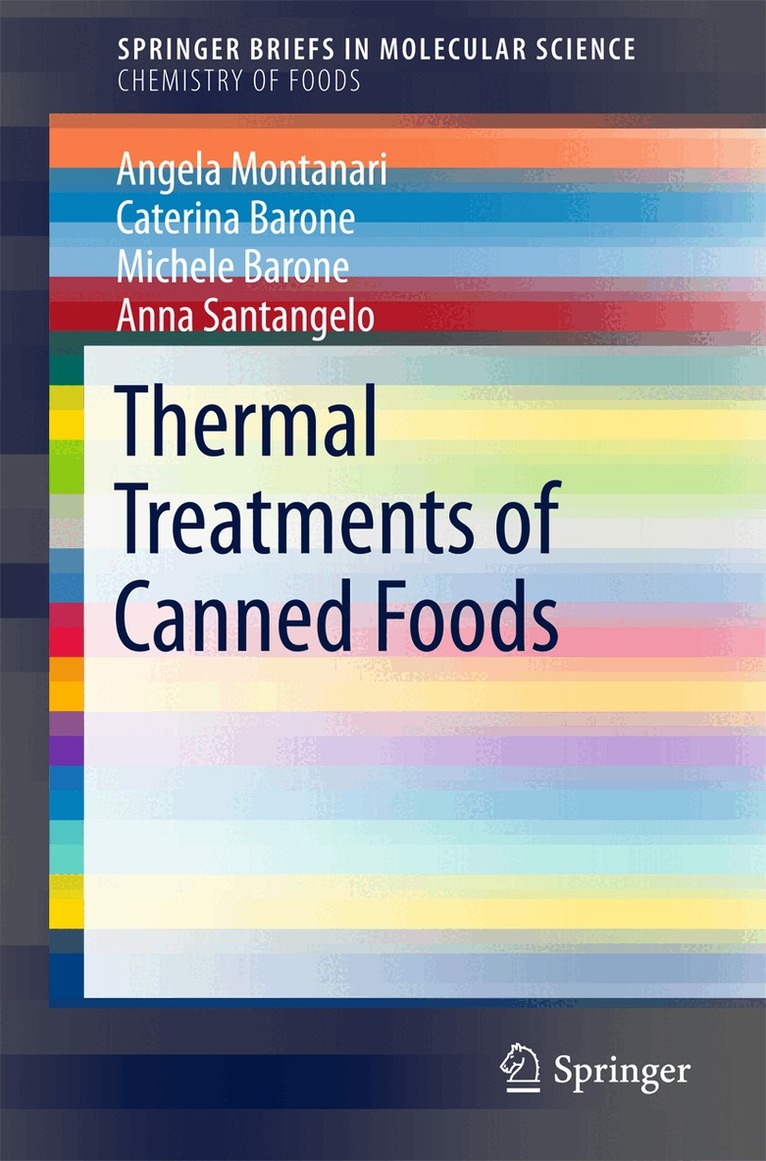
This Brief describes the chemical features of canned food products and gives background information on the technology of canning foods. It explains how canned foods are different from other packaged foods, and illustrates and discusses their unique properties, including risks and failures. Canned foods are usually considered to offer a particularly long shelf-life and durability. An understanding of their properties and influences on their durability is therefore of great importance in the industrial production, and this Brief offers a compact introduction to this topic.The authors focus on thermally-preserved foods. They explain that the right choice of thermal treatment method (e.g. pasteurisation, sterilisation) as well as process parameters (e.g. time, temperature) is additionally influenced by criteria such as pH, water content, the presence and concentration of fatty molecules, of calcium, etc. So-called ‘survival curves’ can help in determining themethodology of choice, and the Brief introduces the reader to this concept. The authors also address defects and failures. They introduce selected indicators, which can help identifying failures of the entire food/packaging system, and demonstrate how image and visual analysis can be applied in quality controls. The explanations and industrial production of canned foods are exemplified with the case of canned tomato sauces and beans.
E-bok
Engelska, 2018708 kr
Läs direkt efter köp
This Brief describes the chemical features of canned food products and gives background information on the technology of canning foods. It explains how canned foods are different from other packaged foods, and illustrates and discusses their unique properties, including risks and failures. Canned foods are usually considered to offer a particularly long shelf-life and durability. An understanding of their properties and influences on their durability is therefore of great importance in the industrial production, and this Brief offers a compact introduction to this topic.The authors focus on thermally-preserved foods. They explain that the right choice of thermal treatment method (e.g. pasteurisation, sterilisation) as well as process parameters (e.g. time, temperature) is additionally influenced by criteria such as pH, water content, the presence and concentration of fatty molecules, of calcium, etc. So-called ‘survival curves’ can help in determining themethodology of choice, and the Brief introduces the reader to this concept. The authors also address defects and failures. They introduce selected indicators, which can help identifying failures of the entire food/packaging system, and demonstrate how image and visual analysis can be applied in quality controls. The explanations and industrial production of canned foods are exemplified with the case of canned tomato sauces and beans.