Board on Human-Systems Integration – författare
656 kr
Skickas inom 3-6 vardagar
819 kr
Läs direkt efter köp
Estimated costs associated with lost days and compensation claims related to musculoskeletal disorders—including back pains and repetitive motion injuries—range from $13 billion to $20 billion annually. This is a serious national problem that has spurred considerable debate about the causal links between such disorders and risk factors in the workplace.
This book presents a preliminary assessment of what is known about the relationship between musculoskeletal disorders and what may cause them. It includes papers and a workshop summary of findings from orthopedic surgery, public health, occupational medicine, epidemiology, risk analysis, ergonomics, and human factors. Topics covered include the biological responses of tissues to stress, the biomechanics of work stressors, the epidemiology of physical work factors, and the contributions of individual, recreational, and social factors to such disorders. The book also considers the relative success of various workplace interventions for prevention and rehabilitation.
617 kr
Läs direkt efter köp
In May 1998 the National Institutes of Health asked the National Academy of Sciences/National Research Council to assemble a group of experts to examine the scientific literature relevant to work-related musculoskeletal disorders of the lower back, neck, and upper extremities. A steering committee was convened to design a workshop, to identify leading researchers on the topic to participate, and to prepare a report based on the workshop discussions and their own expertise. In addition, the steering committee was asked to address, to the extent possible, a set of seven questions posed by Congressman Robert Livingston on the topic of work-related musculoskeletal disorders. The steering committee includes experts in orthopedic surgery, occupational medicine, epidemiology, ergonomics, human factors, statistics, and risk analysis.
This document is based on the evidence presented and discussed at the two-day Workshop on Work-Related Musculoskeletal Injuries: Examining the Research Base, which was held on August 21 and 22, 1998, and on follow-up deliberations of the steering committee, reflecting its own expertise.
1 460 kr
Läs direkt efter köp
Simulations are widely used in the military for training personnel, analyzing proposed equipment, and rehearsing missions, and these simulations need realistic models of human behavior. This book draws together a wide variety of theoretical and applied research in human behavior modeling that can be considered for use in those simulations. It covers behavior at the individual, unit, and command level. At the individual soldier level, the topics covered include attention, learning, memory, decisionmaking, perception, situation awareness, and planning. At the unit level, the focus is on command and control. The book provides short-, medium-, and long-term goals for research and development of more realistic models of human behavior.
1 136 kr
Läs direkt efter köp
Automation in air traffic control may increase efficiency, but it also raises questions about adequate human control over automated systems. Following on the panel''s first volume on air traffic control automation, Flight to the Future (NRC, 1997), this book focuses on the interaction of pilots and air traffic controllers, with a growing network of automated functions in the airspace system.
The panel offers recommendations for development of human-centered automation, addressing key areas such as providing levels of automation that are appropriate to levels of risk, examining procedures for recovery from emergencies, free flight versus ground-based authority, and more.
The book explores ways in which technology can build on human strengths and compensate for human vulnerabilities, minimizing both mistrust of automation and complacency about its abilities. The panel presents an overview of emerging technologies and trends toward automation within the national airspace system—in areas such as global positioning and other aspects of surveillance, flight information provided to pilots an controllers, collision avoidance, strategic long-term planning, and systems for training and maintenance.
The book examines how to achieve better integration of research and development, including the importance of user involvement in air traffic control. It also discusses how to harmonize the wide range of functions in the national airspace system, with a detailed review of the free flight initiative.
1 379 kr
Läs direkt efter köp
Despite the strong safety record of the national airspace system, serious disruptions occasionally occur, often as a result of outdated or failed equipment. Under these circumstances, safety relies on the skills of the controllers and pilots and on reducing the number of aircraft in the air. The current and growing pressures to increase the capacity to handle a greater number of flights has led to a call for faster and more powerful equipment and for equipment that can take over some of the tasks now being performed by humans. Increasing the role of automation in air traffic control may provide a more efficient system, but will human controllers be able to effectively take over when problems occur? This comprehensive volume provides a baseline of knowledge about the capabilities and limitations of humans relative to the variety of functions performed in air traffic control. It focuses on balancing safety with the expeditious flow of air traffic, identifying lessons from past air accidents. The book discusses:
The function of the national airspace system and the procedures for hiring, training, and evaluating controllers. Decisionmaking, memory, alertness, vigilance, sleep patterns during shift work, communication, and other factors in controllers'' performance. Research on automation and human factors in air traffic control and incorporation of findings into the system. The Federal Aviation Administration''s management of the air traffic control system and its dual mandate to promote safety and the development of air commerce.This book also offers recommendations for evaluation the human role in automated air traffic control systems and for managing the introduction of automation into current facilities and operations. It will be of interest to anyone concerned about air safety—policymakers, regulators, air traffic managers and controllers, airline officials, and passenger advocates.
892 kr
Läs direkt efter köp
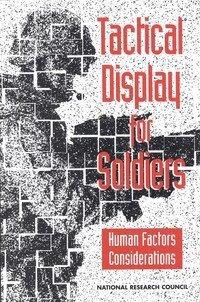
This book examines the human factors issues associated with the development, testing, and implementation of helmet-mounted display technology in the 21st Century Land Warrior System.
Because the framework of analysis is soldier performance with the system in the full range of environments and missions, the book discusses both the military context and the characteristics of the infantry soldiers who will use the system. The major issues covered include the positive and negative effects of such a display on the local and global situation awareness of the individual soldier, an analysis of the visual and psychomotor factors associated with each design feature, design considerations for auditory displays, and physical sources of stress and the implications of the display for affecting the soldier''s workload. The book proposes an innovative approach to research and testing based on a three-stage strategy that begins in the laboratory, moves to controlled field studies, and culminates in operational testing.
769 kr
Läs direkt efter köp
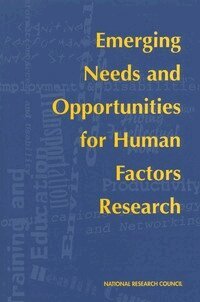
This book identifies areas that represent new needs and opportunities for human factors research in the coming decades. It is forward-looking, problem oriented, and selectively focused on national or global problems, including productivity in organizations, education and training, employment and disabilities, health care, and environmental change; technology issues, including communications technology and telenetworking, information access and usability, emerging technologies, automation, and flexible manufacturing, and advanced transportation systems; and human performance, including cognitive performance under stress and aiding intellectual work.
390 kr
Läs direkt efter köp
Sociocultural Data to Accomplish Department of Defense Missions: Toward a Unified Social Framework summarizes presentations and discussions that took place on August 16-17, 2010, at a National Research Council public workshop sponsored by the Office of Naval Research. The workshop addressed the variables and complex interaction of social and cultural factors that influence human behavior, focusing on potential applications to the full spectrum of military operations.
The workshop''s keynote address by Major General Michael T. Flynn, U.S. Army, provided critical context about the cultural situation and needs of the military operating in Afghanistan. Additional presentations were divided into four panels to address the diverse missions encountered by the U.S. military worldwide. The workshop concluded with a final panel to discuss the strengths and weaknesses of different methods of acquiring and using relevant data and knowledge to accomplish these missions. The panel topics and presenters are listed below:
Conflict Is Local: Mapping the Sociocultural Terrain David Kennedy, Hsinchun Chen, and Kerry Patton Bridging Sociocultural Gaps in Cooperative Relationships Robert Rubinstein, Alan Fiske, and Donal Carbaugh Building Partner Capacity with Sociocultural Awareness Jeffrey Sanchez-Burks and Shinobu Kitayama The Art of Sociocultural Persuasion Jeanne Brett, James Dillard, and Brant R. Burleson Tools, Methods, Frameworks, and Models Mark Bevir, Laura A. McNamara, Robert G. Sargent, and Jessica Glicken Turnley349 kr
Skickas inom 3-6 vardagar
187 kr
Läs direkt efter köp
The potential for fatigue to negatively affect human performance is well established. Concern about this potential in the aviation context extends back decades, with both airlines and pilots agreeing that fatigue is a safety concern. A more recent consideration is whether and how pilot commuting, conducted in a pilot''s off-duty time, may affect fatigue. The National Academy of Sciences was asked to review available information related to the prevalence and characteristics of pilot commuting; sleep, fatigue, and circadian rhythms; airline and regulatory oversight policies; and pilot and airline practices. This interim report summarizes the committee''s review to date of the available information. The final report will present a final review, along with the committee''s conclusions and recommendations based on the information available during its deliberations.
552 kr
Läs direkt efter köp
Sociocultural Data to Accomplish Department of Defense Missions: Toward a Unified Social Framework summarizes presentations and discussions that took place on August 16-17, 2010, at a National Research Council public workshop sponsored by the Office of Naval Research. The workshop addressed the variables and complex interaction of social and cultural factors that influence human behavior, focusing on potential applications to the full spectrum of military operations.
The workshop''s keynote address by Major General Michael T. Flynn, U.S. Army, provided critical context about the cultural situation and needs of the military operating in Afghanistan. Additional presentations were divided into four panels to address the diverse missions encountered by the U.S. military worldwide. The workshop concluded with a final panel to discuss the strengths and weaknesses of different methods of acquiring and using relevant data and knowledge to accomplish these missions. The panel topics and presenters are listed below:
Conflict Is Local: Mapping the Sociocultural Terrain David Kennedy, Hsinchun Chen, and Kerry Patton Bridging Sociocultural Gaps in Cooperative Relationships Robert Rubinstein, Alan Fiske, and Donal Carbaugh Building Partner Capacity with Sociocultural Awareness Jeffrey Sanchez-Burks and Shinobu Kitayama The Art of Sociocultural Persuasion Jeanne Brett, James Dillard, and Brant R. Burleson Tools, Methods, Frameworks, and Models Mark Bevir, Laura A. McNamara, Robert G. Sargent, and Jessica Glicken Turnley438 kr
Läs direkt efter köp
In the United States, health care devices, technologies, and practices are rapidly moving into the home. The factors driving this migration include the costs of health care, the growing numbers of older adults, the increasing prevalence of chronic conditions and diseases and improved survival rates for people with those conditions and diseases, and a wide range of technological innovations. The health care that results varies considerably in its safety, effectiveness, and efficiency, as well as in its quality and cost.
Health Care Comes Home reviews the state of current knowledge and practice about many aspects of health care in residential settings and explores the short- and long-term effects of emerging trends and technologies. By evaluating existing systems, the book identifies design problems and imbalances between technological system demands and the capabilities of users. Health Care Comes Home recommends critical steps to improve health care in the home. The book''s recommendations cover the regulation of health care technologies, proper training and preparation for people who provide in-home care, and how existing housing can be modified and new accessible housing can be better designed for residential health care. The book also identifies knowledge gaps in the field and how these can be addressed through research and development initiatives.
Health Care Comes Home lays the foundation for the integration of human health factors with the design and implementation of home health care devices, technologies, and practices. The book describes ways in which the Agency for Healthcare Research and Quality (AHRQ), the U.S. Food and Drug Administration (FDA), and federal housing agencies can collaborate to improve the quality of health care at home. It is also a valuable resource for residential health care providers and caregivers.
454 kr
Läs direkt efter köp
In the United States, health care devices, technologies, and practices are rapidly moving into the home. The factors driving this migration include the costs of health care, the growing numbers of older adults, the increasing prevalence of chronic conditions and diseases and improved survival rates for people with those conditions and diseases, and a wide range of technological innovations. The health care that results varies considerably in its safety, effectiveness, and efficiency, as well as in its quality and cost.
Health Care Comes Home reviews the state of current knowledge and practice about many aspects of health care in residential settings and explores the short- and long-term effects of emerging trends and technologies. By evaluating existing systems, the book identifies design problems and imbalances between technological system demands and the capabilities of users. Health Care Comes Home recommends critical steps to improve health care in the home. The book''s recommendations cover the regulation of health care technologies, proper training and preparation for people who provide in-home care, and how existing housing can be modified and new accessible housing can be better designed for residential health care. The book also identifies knowledge gaps in the field and how these can be addressed through research and development initiatives.
Health Care Comes Home lays the foundation for the integration of human health factors with the design and implementation of home health care devices, technologies, and practices. The book describes ways in which the Agency for Healthcare Research and Quality (AHRQ), the U.S. Food and Drug Administration (FDA), and federal housing agencies can collaborate to improve the quality of health care at home. It is also a valuable resource for residential health care providers and caregivers.
601 kr
Läs direkt efter köp
Nearly everyone experiences fatigue, but some professions—such as aviation, medicine and the military—demand alert, precise, rapid, and well-informed decision making and communication with little margin for error. The potential for fatigue to negatively affect human performance is well established. Concern about this potential in the aviation context extends back decades, with both airlines and pilots agreeing that fatigue is a safety concern. A more recent consideration is whether and how pilot commuting, conducted in a pilot''s off-duty time, may affect fatigue during flight duty. In summer 2010 the U.S. Congress directed the Federal Aviation Administration (FAA) to update the federal regulations that govern pilot flight and duty time, taking into account recent research related to sleep and fatigue. As part of their directive, Congress also instructed FAA to have the National Academy of Sciences conduct a study on the effects of commuting on pilot fatigue. The Effects of Commuting on Pilot Fatigue reviews research and other information related to the prevalence and characteristics of commuting; to the science of sleep, fatigue, and circadian rhythms; to airline and regulatory oversight policies; and to pilot and airline practices.
The Effects of Commuting on Pilot Fatigue discusses the policy, economic, and regulatory issues that affect pilot commuting, and outlines potential next steps, including recommendations for regulatory or administrative actions, or further research by the FAA.
649 kr
Läs direkt efter köp
Nearly everyone experiences fatigue, but some professions—such as aviation, medicine and the military—demand alert, precise, rapid, and well-informed decision making and communication with little margin for error. The potential for fatigue to negatively affect human performance is well established. Concern about this potential in the aviation context extends back decades, with both airlines and pilots agreeing that fatigue is a safety concern. A more recent consideration is whether and how pilot commuting, conducted in a pilot''s off-duty time, may affect fatigue during flight duty. In summer 2010 the U.S. Congress directed the Federal Aviation Administration (FAA) to update the federal regulations that govern pilot flight and duty time, taking into account recent research related to sleep and fatigue. As part of their directive, Congress also instructed FAA to have the National Academy of Sciences conduct a study on the effects of commuting on pilot fatigue. The Effects of Commuting on Pilot Fatigue reviews research and other information related to the prevalence and characteristics of commuting; to the science of sleep, fatigue, and circadian rhythms; to airline and regulatory oversight policies; and to pilot and airline practices.
The Effects of Commuting on Pilot Fatigue discusses the policy, economic, and regulatory issues that affect pilot commuting, and outlines potential next steps, including recommendations for regulatory or administrative actions, or further research by the FAA.
893 kr
Läs direkt efter köp
The National Institute on Disability and Rehabilitation Research (NIDRR) is the principal federal agency supporting applied research, training, and development to improve the lives of individuals with disabilities. NIDRR''s mission is to generate new knowledge and promote its effective use in improving the ability of persons with disabilities to perform activities of their choice in the community, as well as to expand society''s capacity to provide full opportunities and accommodations for its citizens with disabilities.
NIDRR prides itself on being proactive in establishing program performance measures and developing accountability data systems to track the progress of its grantees. An electronic annual reporting system is used to collect data from grantees on many aspects of grant operation and outputs. Various formative and summative evaluation approaches have been used to assess the quality of the performance and results of the agency''s research portfolio and its grantees. Prompted by the need to provide more data on its program results, in 2009 NIDRR requested that the National Research Council (NRC) conduct an external evaluation of some of the agency''s key processes and assess the quality of outputs produced by NIDRR grantees (National Institute on Disability and Rehabilitation Research, 2009a). Review of Disability and Rehabilitation Research presents the results of that evaluation.
406 kr
Läs direkt efter köp
Although artificial intelligence (AI) has many potential benefits, it has also been shown to suffer from a number of challenges for successful performance in complex real-world environments such as military operations, including brittleness, perceptual limitations, hidden biases, and lack of a model of causation important for understanding and predicting future events. These limitations mean that AI will remain inadequate for operating on its own in many complex and novel situations for the foreseeable future, and that AI will need to be carefully managed by humans to achieve their desired utility.
Human-AI Teaming: State-of-the-Art and Research Needs examines the factors that are relevant to the design and implementation of AI systems with respect to human operations. This report provides an overview of the state of research on human-AI teaming to determine gaps and future research priorities and explores critical human-systems integration issues for achieving optimal performance.
244 kr
Läs direkt efter köp
Misinformation about outbreaks, epidemics, and pandemics is a decades-old problem that has been exacerbated by the rise of the internet and the widespread use of social media. Some false claims may be addressed through sound scientific analysis, suggesting that scientists can help counter misinformation by providing evidence-based, scientifically defensible information that may discredit or refute these claims. This report explains how scientists can work collaboratively across scientific disciplines and sectors to identify and address inaccuracies that could fuel mis- and disinformation. Although the study focused on a scientific network primarily in Southeast Asia, it is relevant to scientists in other parts of the world. A companion "how-to-guide", available in print and in digital form, outlines practical steps that scientists can take to assess mis- or disinformation, determine whether and how they should address it, and effectively communicate the corrective information they develop.
584 kr
Läs direkt efter köp
Coal mine disasters in the United States are relatively rare events; many of the roughly 50,000 miners underground will never have to evacuate a mine in an emergency during their careers. However, for those that do, the consequences have the potential to be devastating. U.S. mine safety practices have received increased attention in recent years because of the highly publicized coal mine disasters in 2006 and 2010. Investigations have centered on understanding both how to prevent or mitigate emergencies and what capabilities are needed by miners to self-escape to a place of safety successfully. This report focuses on the latter - the preparations for self-escape.
In the wake of 2006 disasters, the U.S. Congress passed the Mine Improvementand New Emergency Response Act of 2006 (MINER Act), which was designed to strengthen existing mine safety regulations and set forth new measures aimed at improving accident preparedness and emergency response in underground coal mines. Since that time, the efforts of the National Institute of Occupational Safety and Health (NIOSH) and the Mine Safety and Health Administration (MSHA) have contributed to safety improvements in the mining industry. However, the Upper Big Branch mine explosion in 2010 served as a reminder to remain ever vigilant on improving the prevention of mine disasters and preparations to help miners survive in the event of emergencies.
This study was set in the context of human-systems integration (HSI), a systems approach that examines the interaction of people, tasks, and equipment and technology in the pursuit of a goal. It recognizes this interaction occurs within, and is influenced by, the broader environmental context. A key premise of human-systems integration is that much important information is lost when the various tasks within a system are considered individually or in isolation rather than in interaction with the whole system. Improving Self-Escape from Underground Coal Mines, the task of self-escape is part of the mine safety system.
617 kr
Läs direkt efter köp
Within the Federal Aviation Administration (FAA), the Airway Transportation System Specialists ATSS) maintain and certify the equipment in the National Airspace System (NAS).In fiscal year 2012, Technical Operations had a budget of $1.7B. Thus, Technical Operations includes approximately 19 percent of the total FAA employees and less than 12 percent of the $15.9 billion total FAA budget. Technical Operations comprises ATSS workers at five different types of Air Traffic Control (ATC) facilities: (1) Air Route Traffic Control Centers, also known as En Route Centers, track aircraft once they travel beyond the terminal airspace and reach cruising altitude; they include Service Operations Centers that coordinate work and monitor equipment. (2) Terminal Radar Approach Control (TRACON) facilities control air traffic as aircraft ascend from and descend to airports, generally covering a radius of about 40 miles around the primary airport; a TRACON facility also includes a Service Operations Center. (3) Core Airports, also called Operational Evolution Partnership airports, are the nation''s busiest airports. (4) The General National Airspace System (GNAS) includes the facilities located outside the larger airport locations, including rural airports and equipment not based at any airport. (5) Operations Control Centers are the facilities that coordinate maintenance work and monitor equipment for a Service Area in the United States.
At each facility, the ATSS execute both tasks that are scheduled and predictable and tasks that are stochastic and unpredictable in. These tasks are common across the five ATSS disciplines: (1) Communications, maintaining the systems that allow air traffic controllers and pilots to be in contact throughout the flight; (2) Surveillance and Radar, maintaining the systems that allow air traffic controllers to see the specific locations of all the aircraft in the airspace they are monitoring; (3) Automation, maintaining the systems that allow air traffic controllers to track each aircraft''s current and future position, speed, and altitude; (4) Navigation, maintaining the systems that allow pilots to take off, maintain their course, approach, and land their aircraft; and (5) Environmental, maintaining the power, lighting, and heating/air conditioning systems at the ATC facilities. Because the NAS needs to be available and reliable all the time, each of the different equipment systems includes redundancy so an outage can be fixed without disrupting the NAS.
Assessment of Staffing Needs of Systems Specialists in Aviation reviews the available information on: (A) the duties of employees in job series 2101 (Airways Transportation Systems Specialist) in the Technical Operations service unit; (B) the Professional Aviation Safety Specialists (PASS) union of the AFL-CIO; (C) the present-day staffing models employed by the FAA; (D) any materials already produced by the FAA including a recent gap analysis on staffing requirements; (E) current research on best staffing models for safety; and (F) non-US staffing standards for employees in similar roles.
600 kr
Läs direkt efter köp
Recent serious and sometimes fatal accidents in chemical research laboratories at United States universities have driven government agencies, professional societies, industries, and universities themselves to examine the culture of safety in research laboratories. These incidents have triggered a broader discussion of how serious incidents can be prevented in the future and how best to train researchers and emergency personnel to respond appropriately when incidents do occur. As the priority placed on safety increases, many institutions have expressed a desire to go beyond simple compliance with regulations to work toward fostering a strong, positive safety culture: affirming a constant commitment to safety throughout their institutions, while integrating safety as an essential element in the daily work of laboratory researchers.
Safe Science takes on this challenge. This report examines the culture of safety in research institutions and makes recommendations for university leadership, laboratory researchers, and environmental health and safety professionals to support safety as a core value of their institutions. The report discusses ways to fulfill that commitment through prioritizing funding for safety equipment and training, as well as making safety an ongoing operational priority.
A strong, positive safety culture arises not because of a set of rules but because of a constant commitment to safety throughout an organization. Such a culture supports the free exchange of safety information, emphasizes learning and improvement, and assigns greater importance to solving problems than to placing blame. High importance is assigned to safety at all times, not just when it is convenient or does not threaten personal or institutional productivity goals. Safe Science will be a guide to make the changes needed at all levels to protect students, researchers, and staff.
276 kr
Läs direkt efter köp
The potential for fatigue to negatively affect human performance is well established. Concern about this potential in the aviation context extends back decades, with both airlines and pilots agreeing that fatigue is a safety concern. A more recent consideration is whether and how pilot commuting, conducted in a pilot''s off-duty time, may affect fatigue. The National Academy of Sciences was asked to review available information related to the prevalence and characteristics of pilot commuting; sleep, fatigue, and circadian rhythms; airline and regulatory oversight policies; and pilot and airline practices. This interim report summarizes the committee''s review to date of the available information. The final report will present a final review, along with the committee''s conclusions and recommendations based on the information available during its deliberations.
351 kr
Läs direkt efter köp
The Federal Aviation Administration (FAA) has overseen significant upgrades to the technology used to manage aviation operations to increase the safety and efficiency of the National Airspace System (NAS). Though necessary to regular operations, these modern computing and communications systems provide a greater attack surface for criminals, terrorists, or nation-states to exploit and thereby increase the potential for cybersecurity threats to the NAS and its constituents.
The future safety and security of air travel will rely in part on the ability of the FAA to build a workforce capable of addressing the evolving cybersecurity threat landscape. Securing the computers, networks, and data that underpin modern aviation depends in part on the FAA having enough cybersecurity professionals (capacity) with the right knowledge, skills, and abilities (capability)). It also depends on the FAA''s workforce having sufficient diversity of backgrounds and experience. Such diversity is critical in analyzing cybersecurity problems and widely understood to be a "functional imperative" for effective cybersecurity programs.
At the request of Congress, the publication examines the FAA''s cybersecurity workforce challenges, reviews the current strategy for meeting those challenges, and recommends ways to strengthen the FAA''s cybersecurity workforce.
802 kr
Läs direkt efter köp
There are approximately 4,000 fatalities in crashes involving trucks and buses in the United States each year. Though estimates are wide-ranging, possibly 10 to 20 percent of these crashes might have involved fatigued drivers. The stresses associated with their particular jobs (irregular schedules, etc.) and the lifestyle that many truck and bus drivers lead, puts them at substantial risk for insufficient sleep and for developing short- and long-term health problems.
Commercial Motor Vehicle Driver Fatigue, Long-Term Health and Highway Safety assesses the state of knowledge about the relationship of such factors as hours of driving, hours on duty, and periods of rest to the fatigue experienced by truck and bus drivers while driving and the implications for the safe operation of their vehicles. This report evaluates the relationship of these factors to drivers'' health over the longer term, and identifies improvements in data and research methods that can lead to better understanding in both areas.
592 kr
Skickas inom 3-6 vardagar
536 kr
Läs direkt efter köp
In July 2016 The National Academies of Sciences, Engineering, and Medicine convened a workshop with the goal of bringing together industrial and organizational (I-O) psychologists, experts on personnel selection and testing, forensic scientists, and other researchers whose work has a nexus with workforce needs in the forensic science field with a focus on pattern evidence. Participants reviewed the current status of selection and training of forensic scientists who specialize in pattern evidence and discussed how tools used in I-O psychology to understand elements of a task and measure aptitude and performance could address challenges in the pattern evidence domain of the forensic sciences. This publication summarizes the presentations and discussions from the workshop.
795 kr
Läs direkt efter köp
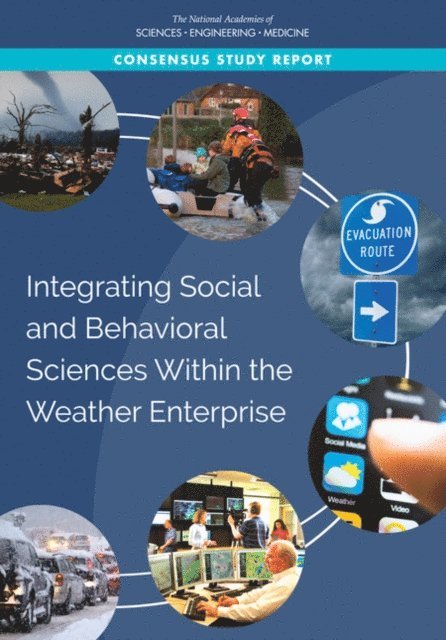
Our ability to observe and forecast severe weather events has improved markedly over the past few decades. Forecasts of snow and ice storms, hurricanes and storm surge, extreme heat, and other severe weather events are made with greater accuracy, geographic specificity, and lead time to allow people and communities to take appropriate protective measures. Yet hazardous weather continues to cause loss of life and result in other preventable social costs.
There is growing recognition that a host of social and behavioral factors affect how we prepare for, observe, predict, respond to, and are impacted by weather hazards. For example, an individual''s response to a severe weather event may depend on their understanding of the forecast, prior experience with severe weather, concerns about their other family members or property, their capacity to take the recommended protective actions, and numerous other factors. Indeed, it is these factors that can determine whether or not a potential hazard becomes an actual disaster. Thus, it is essential to bring to bear expertise in the social and behavioral sciences (SBS)—including disciplines such as anthropology, communication, demography, economics, geography, political science, psychology, and sociology—to understand how people''s knowledge, experiences, perceptions, and attitudes shape their responses to weather risks and to understand how human cognitive and social dynamics affect the forecast process itself.
Integrating Social and Behavioral Sciences Within the Weather Enterprise explores and provides guidance on the challenges of integrating social and behavioral sciences within the weather enterprise. It assesses current SBS activities, describes the potential value of improved integration of SBS and barriers that impede this integration, develops a research agenda, and identifies infrastructural and institutional arrangements for successfully pursuing SBS-weather research and the transfer of relevant findings to operational settings.
974 kr
Läs direkt efter köp
Prior to 2012, unmanned aircraft systems (UAS) technology had been primarily used by the military and hobbyists, but it has more recently transitioned to broader application, including commercial and scientific applications, as well as to expanded military use. These new uses encroach on existing structures for managing the nation''s airspace andpresent significant challenges to ensure that UASs are coordinated safely and suitably with existing manned aircraft and air traffic management systems, particularly with the National Airspace System (NAS). Of particular concern is the interaction between human pilots, operators, or controllers and increasingly automated systems. Enhanced understanding ofthese interactions is essential to avoid unintended consequences, especially as new technologies emerge. In order to explore these issues, the National Academies of Sciences, Engineering, and Medicine organized a 2-day workshop in January 2018. This publication summarizes the presentations and discussions from the workshop.
763 kr
Läs direkt efter köp
Since the 2010 Deepwater Horizon blowout and oil spill, efforts to improve safety in the offshore oil industry have resulted in the adoption of new technological controls, increased promotion of safety culture, and the adoption of new data collection systems to improve both safety and performance. As an essential element of a positive safety culture, operators and regulators are increasingly integrating strategies that empower workers to participate in process safety decisions that reduce hazards and improve safety.
While the human factors of personal safety have been widely studied and widely adopted in many high-risk industries, process safety – the application of engineering, design, and operative practices to address major hazard concerns – is less well understood from a human factors perspective, particularly in the offshore oil industry. The National Academies of Sciences, Engineering, and Medicine organized a workshop in January 2018 to explore best practices and lessons learned from other high-risk, high-reliability industries for the benefit of the research community and of citizens, industry practitioners, decision makers, and officials addressing safety in the offshore oil industry. This publication summarizes the presentations and discussions from the workshop.