John I. Pitt – författare
Visar alla böcker från författaren John I. Pitt. Handla med fri frakt och snabb leverans.
13 produkter
13 produkter
Del 185 - NATO Science Series A:
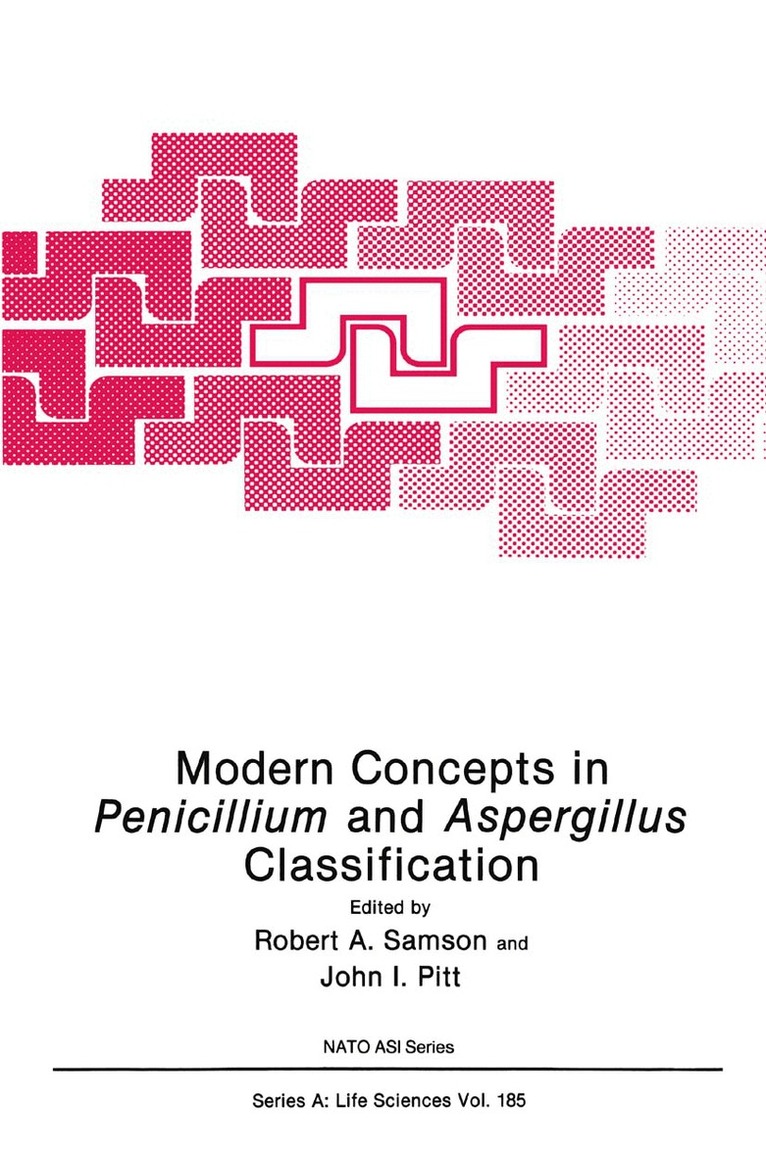
Modern Concepts in Penicillium and Aspergillus Classification
Inbunden, Engelska, 1990
2 171 kr
Skickas inom 10-15 vardagar
In our view, the First International Penicillium and Aspergillus Workshop held in Baarn and Amsterdam in May, 1985, was a great success. The assembly in one place of so many specialists in these two genera produced both interesting viewpoints and lively discussions. But more particularly, a remarkable cohesion of ideas emerged, borne primarily of the realisation that taxonomy has passed from the hands of the solitary morphologist. The future of taxonomy lay in collaborative and multidisciplinary studies embracing morphology, physiology and newer methodologies. Penicillium and Aspergillus Workshop was borne logically The Second International from the first, and was held in Baarn on May 8-12, 1989. It was attended by 38 scientists from 16 countries. At this Workshop we have attempted to move further into new methods, especially by bringing together molecular biologists, medical and food mycologists and biochemists as well as more traditional taxonomists. We feel that the meeting contributed greatly to dialogue between taxonomists, and also fundamental and applied mycologists. At the meeting, we became aware that the approach to taxonomy of these genera is now becoming more pragmatic, with an increasing emphasis on consensus, and on stability of names. This is a noteworthy development, which we, as editors, welcome. So many species in Penicillium and Aspergillus are economically important in biotechnology, foods and medicine, and practical, stable taxonomy is of vital importance. These Proceedings comprise 40 papers divided into 9 chapters.
Inbunden, Engelska, 2005
2 171 kr
Skickas inom 10-15 vardagar
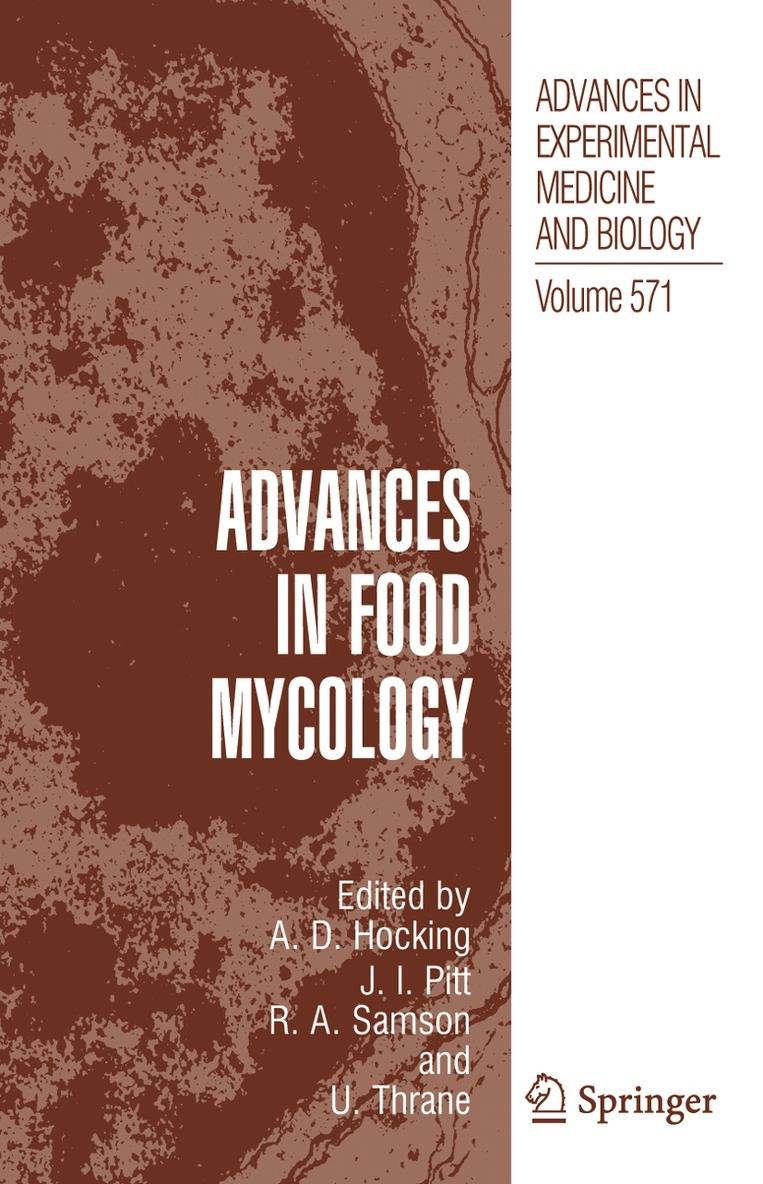
This book represents the Proceedings of the Fifth International Workshop on Food Mycology, which was held on the Danish island of Samsø from 15-19 October, 2003. This series of Workshops c- menced in Boston, USA, in July 1984, from which the proceedings were published as Methods for Mycological Examination of Food (edited by A. D. King et al. , published by Plenum Press, New York, 1986). The second Workshop was held in Baarn, the Netherlands, in August 1990, and the proceedings were published as Modern Methods in Food Mycology (edited by R. A. Samson et al. , and published by Elsevier, Amsterdam, 1992). The Third Workshop was held in Copenhagen, Denmark, in 1994 and the Fourth near Uppsala, Sweden, in 1998. The proceedings of those two workshops were p- lished as scientific papers in the International Journal of Food Microbiology. International Workshops on Food Mycology are held under the auspices of the International Commission on Food Mycology, a Commission under the Mycology Division of the International Union of Microbiological Societies. Details of this Commission are given in the final chapter of this book. This Fifth Workshop was organised by Ulf Thrane, Jens Frisvad, Per V. Nielsen and Birgitte Andersen from the Center for Microbial Biotechnology, Technical University of Denmark, Kgs. Lyngby, v vi Foreword Denmark.
E-bok
PDF, Engelska, 20062 741 kr
Läs direkt efter köp
This book represents the Proceedings of the Fifth International Workshop on Food Mycology, which was held on the Danish island of Samsø from 15-19 October, 2003. This series of Workshops c- menced in Boston, USA, in July 1984, from which the proceedings were published as Methods for Mycological Examination of Food (edited by A. D. King et al. , published by Plenum Press, New York, 1986). The second Workshop was held in Baarn, the Netherlands, in August 1990, and the proceedings were published as Modern Methods in Food Mycology (edited by R. A. Samson et al. , and published by Elsevier, Amsterdam, 1992). The Third Workshop was held in Copenhagen, Denmark, in 1994 and the Fourth near Uppsala, Sweden, in 1998. The proceedings of those two workshops were p- lished as scientific papers in the International Journal of Food Microbiology. International Workshops on Food Mycology are held under the auspices of the International Commission on Food Mycology, a Commission under the Mycology Division of the International Union of Microbiological Societies. Details of this Commission are given in the final chapter of this book. This Fifth Workshop was organised by Ulf Thrane, Jens Frisvad, Per V. Nielsen and Birgitte Andersen from the Center for Microbial Biotechnology, Technical University of Denmark, Kgs. Lyngby, v vi Foreword Denmark.
E-bok
PDF, Engelska, 20091 825 kr
Läs direkt efter köp
In contrast to the second edition, the third edition of ‘‘Fungi and Food Spoilage’’ is evolutionary rather than revolutionary. The second edition was intended to cover almost all of the species likely to be encountered in mainstream food supplies, and only a few additional species have been included in this new edition. The third edition represents primarily an updating – of taxonomy, physiology, mycotoxin production and ecology. Changes in taxonomy reflect the impact that molecular methods have had on our understanding of classification but, it must be said, have not radically altered the overall picture. The improvements in the understanding of the physiology of food spoilage fungi have been relatively small, reflecting perhaps the lack of emphasis on physiology in modern mic- biological science. Much remains to be understood about the specificity of particular fungi for particular substrates, of the influence of water activity on the growth of many of the species treated, and even on such basic parameters as cardinal temperatures for growth and the influence of pH and preservatives. Since 1997, a great deal has been learnt about the specificity of mycotoxin production and in which commodities and products-specific mycotoxins are likely to occur. Changes in our understanding of the ecology of the included species are also in most cases evolutionary. A great number of papers have been published on the ecology of foodborne fungi in the past few years, but with few exceptions the basic ecology of the included species remains.
Häftad, Engelska, 2010
2 171 kr
Skickas inom 10-15 vardagar
This is the proceeding of the 5th International Workshop on Food Mycology sponsored by the International Commission on Food Mycology. The workshop took place October 16-18, 2003 in Samso, Denmark. The Fifth Workshop was attended by some 35 participants, drawn from among food mycology and related disciplines around the world. The workshop was highly successful, with papers devoted to media and methods development in food mycology, as is usual with these workshops. Particular emphasis was placed on the fungi which produce mycotoxins, especially their ecology, and through ecology, potential control measures. Sessions were also devoted to yeasts and the inactivation of fungal spores by the use of heat and high pressure. Nearly 40 scientific papers were presented over three days of the workshop, and these papers are the major contributions in these Proceedings.
E-bok
PDF, Engelska, 20121 100 kr
Läs direkt efter köp
This book is designed as a laboratory guide for the food microbiologist, to assist in the isolation and identification of common food-borne fungi. We emphasise the fungi which cause food spoilage, but also devote space to the fungi commonly encountered in foods at harvest, and in the food factory. As far as possible, we have kept the text simple, although the need for clarity in the descriptions has necessitated the use of some specialised mycological terms. The identification keys have been designed for use by microbiologists with little or no prior knowledge of mycology. For identification to genus level, they are based primarily on the cultural and physiological characteristics of fungi grown under a standardised set of conditions. The microscopic features of the various fungi become more important when identifying isolates at the species level. Nearly all of the species treated have been illustrated with colony photographs, together with photomicrographs or line drawings. The photomicrographs were taken using a Zeiss WL microscope fitted with Nomarski interference contrast optics. We are indebted to Mr W. Rushton and Ms L. Burton, who printed the many hundreds of photographs used to make up the figures in this book. We also wish to express out appreciation to Dr D.L. Hawksworth, Dr A.H.S.
E-bok
PDF, Engelska, 2013687 kr
Läs direkt efter köp
The desirability, indeed the necessity, for standardization of methods for the examination of foods for contaminant and spoilage mycoflora has been apparent for some time. The concept of a specialist workshop to address this problem was borne during conversations at the Gordon Research Conference on "Hicrobiological Safety of Foods" in Plymouth, New Hampshire, in July 1982. Discussions at that time resulted in an Organizing Committee of four, who became the Editors, and a unique format: all attendees would be expected to contribute and, in most cases, more than once; and papers in nearly all sessions would be presented as a set of data on a single topic, not as a complete research paper. Each session would be followed by general discussion, and then a panel would formulate recommendations for approval by a final plenary session. The idea for this format was derived from the famous "Kananaskis I" workshop on Hyphomycete taxonomy and terminology organized by Bryce Kendrick of the University of Waterloo, Ontario in 1969. Attendance would necessarily be limited to a small group of specialists in food mycology. The scope of the workshop developed from answers to questionnaires circulated to prospective participants. To generate new data which would allow valid comparisons to be drawn, intending participants were given a variety of topics as assignments and asked to bring information obtained to the workshop.
Del 122 - NATO Science Series A:
Methods for the Mycological Examination of Food
Häftad, Engelska, 2012
548 kr
Skickas inom 10-15 vardagar
The desirability, indeed the necessity, for standardization of methods for the examination of foods for contaminant and spoilage mycoflora has been apparent for some time. The concept of a specialist workshop to address this problem was borne during conversations at the Gordon Research Conference on "Hicrobiological Safety of Foods" in Plymouth, New Hampshire, in July 1982. Discussions at that time resulted in an Organizing Committee of four, who became the Editors, and a unique format: all attendees would be expected to contribute and, in most cases, more than once; and papers in nearly all sessions would be presented as a set of data on a single topic, not as a complete research paper. Each session would be followed by general discussion, and then a panel would formulate recommendations for approval by a final plenary session. The idea for this format was derived from the famous "Kananaskis I" workshop on Hyphomycete taxonomy and terminology organized by Bryce Kendrick of the University of Waterloo, Ontario in 1969. Attendance would necessarily be limited to a small group of specialists in food mycology. The scope of the workshop developed from answers to questionnaires circulated to prospective participants. To generate new data which would allow valid comparisons to be drawn, intending participants were given a variety of topics as assignments and asked to bring information obtained to the workshop.
E-bok
PDF, Engelska, 20132 741 kr
Läs direkt efter köp
In our view, the First International Penicillium and Aspergillus Workshop held in Baarn and Amsterdam in May, 1985, was a great success. The assembly in one place of so many specialists in these two genera produced both interesting viewpoints and lively discussions. But more particularly, a remarkable cohesion of ideas emerged, borne primarily of the realisation that taxonomy has passed from the hands of the solitary morphologist. The future of taxonomy lay in collaborative and multidisciplinary studies embracing morphology, physiology and newer methodologies. Penicillium and Aspergillus Workshop was borne logically The Second International from the first, and was held in Baarn on May 8-12, 1989. It was attended by 38 scientists from 16 countries. At this Workshop we have attempted to move further into new methods, especially by bringing together molecular biologists, medical and food mycologists and biochemists as well as more traditional taxonomists. We feel that the meeting contributed greatly to dialogue between taxonomists, and also fundamental and applied mycologists. At the meeting, we became aware that the approach to taxonomy of these genera is now becoming more pragmatic, with an increasing emphasis on consensus, and on stability of names. This is a noteworthy development, which we, as editors, welcome. So many species in Penicillium and Aspergillus are economically important in biotechnology, foods and medicine, and practical, stable taxonomy is of vital importance. These Proceedings comprise 40 papers divided into 9 chapters.
Häftad, Engelska, 2013
2 171 kr
Skickas inom 10-15 vardagar
In our view, the First International Penicillium and Aspergillus Workshop held in Baarn and Amsterdam in May, 1985, was a great success. The assembly in one place of so many specialists in these two genera produced both interesting viewpoints and lively discussions. But more particularly, a remarkable cohesion of ideas emerged, borne primarily of the realisation that taxonomy has passed from the hands of the solitary morphologist. The future of taxonomy lay in collaborative and multidisciplinary studies embracing morphology, physiology and newer methodologies. Penicillium and Aspergillus Workshop was borne logically The Second International from the first, and was held in Baarn on May 8-12, 1989. It was attended by 38 scientists from 16 countries. At this Workshop we have attempted to move further into new methods, especially by bringing together molecular biologists, medical and food mycologists and biochemists as well as more traditional taxonomists. We feel that the meeting contributed greatly to dialogue between taxonomists, and also fundamental and applied mycologists. At the meeting, we became aware that the approach to taxonomy of these genera is now becoming more pragmatic, with an increasing emphasis on consensus, and on stability of names. This is a noteworthy development, which we, as editors, welcome. So many species in Penicillium and Aspergillus are economically important in biotechnology, foods and medicine, and practical, stable taxonomy is of vital importance. These Proceedings comprise 40 papers divided into 9 chapters.
Häftad, Engelska, 2014
1 512 kr
Skickas inom 10-15 vardagar
In contrast to the second edition, the third edition of ‘‘Fungi and Food Spoilage’’ is evolutionary rather than revolutionary. The second edition was intended to cover almost all of the species likely to be encountered in mainstream food supplies, and only a few additional species have been included in this new edition.
Inbunden, Engelska, 2022
1 790 kr
Skickas inom 10-15 vardagar
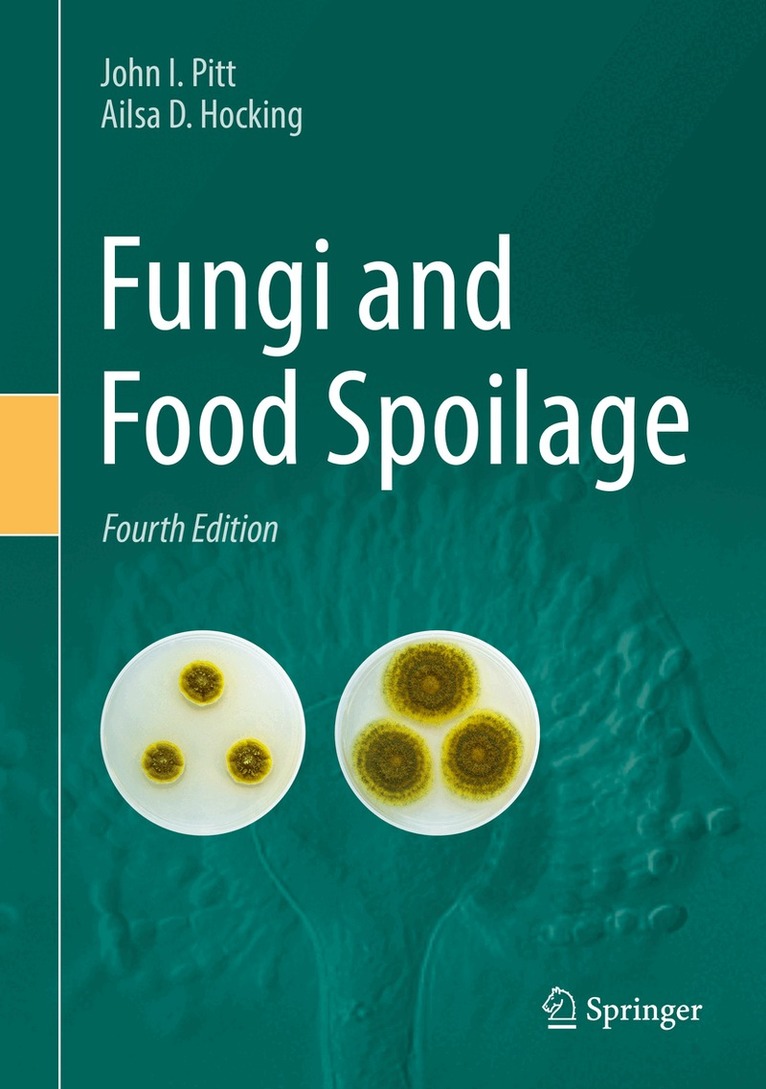
The first three editions of Fungi and Food Spoilage established, then consolidated, a reputation as the leading book on foodborne fungi. It details media and methods for isolation and identification, descriptions of species, and information on their physiology, ecology and mycotoxin formation. It is an invaluable reference for food microbiologists investigating fungal food spoilage problems, both in field crops and processed foods, and the likelihood of mycotoxin production in either.The Fourth Edition incorporates major differences from the Third: multiple changes in nomenclature due to changes in the International Code of Nomenclature for algae, fungi and plants; many taxonomic changes due to improvements in, and more widespread application of, molecular methods in taxonomy; the introduction of colour colony photographs where appropriate; and a new chapter on mycotoxins.The introductory chapters of the book deal with the ecology of food spoilage, and provide an overview of how food processing, packaging and storage parameters influence fungal growth. A subsequent chapter overviews the fundamentals of naming and classifying fungi. Morphological methods and media suitable for low cost and effective isolation, enumeration and identification of foodborne fungi are provided, together with many more specialised media and techniques. The major part of the book provides keys, descriptions and illustrations of all yeasts and filamentous fungi commonly encountered in foods. Other known characteristics of the species, including physiology and ecology are included. Chapters on the types and species of fungi likely to be found in fresh, harvested and variously processed foods are followed by a new chapter on mycotoxins, both major and minor, their sources, both fungal and food, and their implications for human health.The broad and practical nature of the coverage will appeal to microbiologists, mycologists and biotechnologists in the food industry, as well scientists in academic, research and public health institutions.Drs Pitt and Hocking worked for CSIRO Food for more than 100 years combined. Both are now retired from CSIRO: Dr Pitt continues to work part time with Microbial Screening Technologies, a biodiscovery company.
E-bok
Engelska, 20222 194 kr
Läs direkt efter köp
The first three editions of Fungi and Food Spoilage established, then consolidated, a reputation as the leading book on foodborne fungi. It details media and methods for isolation and identification, descriptions of species, and information on their physiology, ecology and mycotoxin formation. It is an invaluable reference for food microbiologists investigating fungal food spoilage problems, both in field crops and processed foods, and the likelihood of mycotoxin production in either.The Fourth Edition incorporates major differences from the Third: multiple changes in nomenclature due to changes in the International Code of Nomenclature for algae, fungi and plants; many taxonomic changes due to improvements in, and more widespread application of, molecular methods in taxonomy; the introduction of colour colony photographs where appropriate; and a new chapter on mycotoxins.The introductory chapters of the book deal with the ecology of food spoilage, and provide an overview of how food processing, packaging and storage parameters influence fungal growth. A subsequent chapter overviews the fundamentals of naming and classifying fungi. Morphological methods and media suitable for low cost and effective isolation, enumeration and identification of foodborne fungi are provided, together with many more specialised media and techniques. The major part of the book provides keys, descriptions and illustrations of all yeasts and filamentous fungi commonly encountered in foods. Other known characteristics of the species, including physiology and ecology are included. Chapters on the types and species of fungi likely to be found in fresh, harvested and variously processed foods are followed by a new chapter on mycotoxins, both major and minor, their sources, both fungal and food, and their implications for human health.The broad and practical nature of the coverage will appeal to microbiologists, mycologists and biotechnologists in the food industry, as well scientists in academic, research and public health institutions.Drs Pitt and Hocking worked for CSIRO Food for more than 100 years combined. Both are now retired from CSIRO: Dr Pitt continues to work part time with Microbial Screening Technologies, a biodiscovery company.