Klaus Günter Grunert - Böcker
Visar alla böcker från författaren Klaus Günter Grunert. Handla med fri frakt och snabb leverans.
10 produkter
10 produkter
1 640 kr
Skickas inom 10-15 vardagar
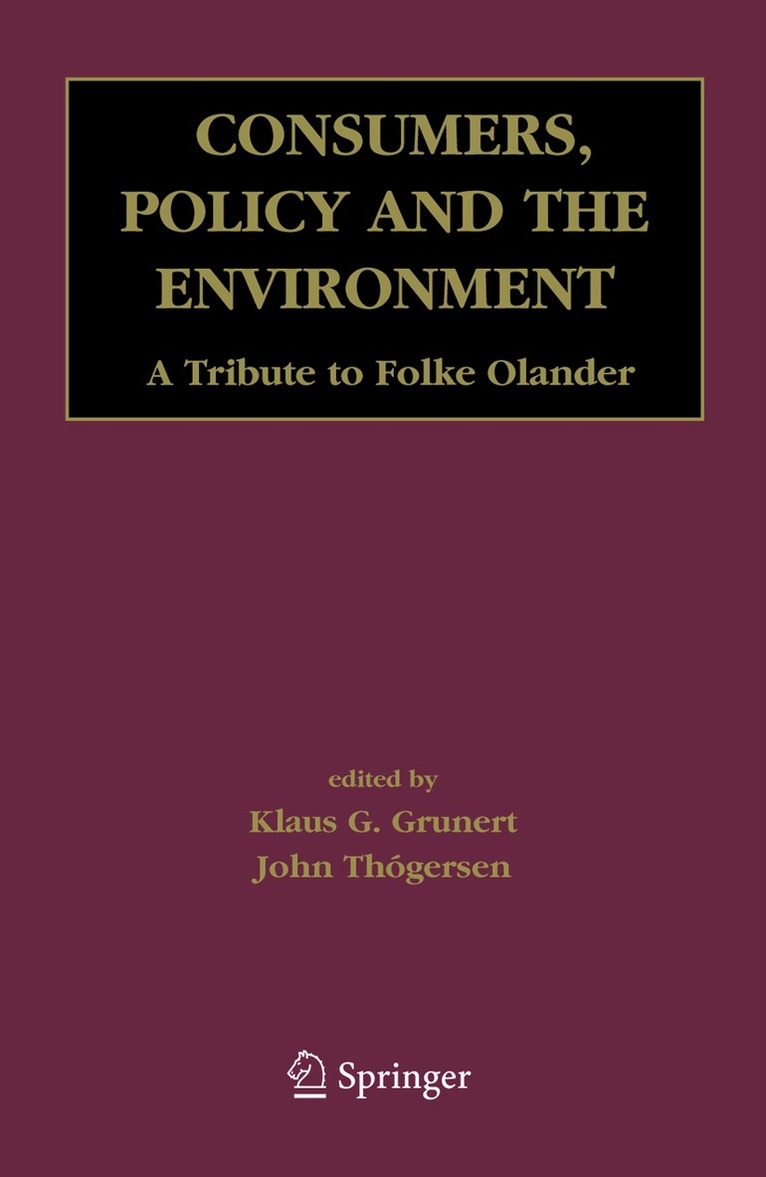
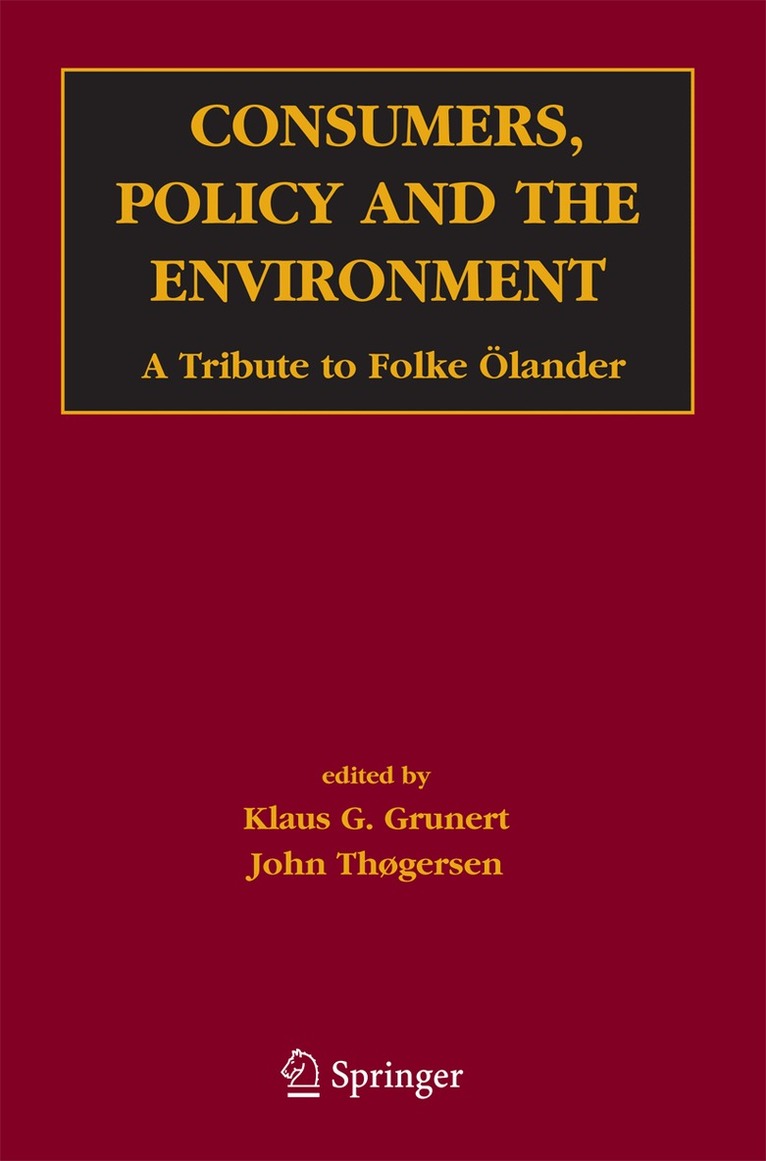
Professor Folke 0lander celebrates his 70th birthday the 21st of July 2005. With this "Festschrift", Folke 01ander7s colleagues and collaborators over the years want to honour him and to express their appreciation of his life-long contribution to - search, especially research within the themes reflected in the title of this volume: Consumers, Policy and the Environment. Having established close collaboration with European economic psychology's grand old man, Karl-Erik Warneryd, already during his PhD study, Folke 0lander became an active contributor to the development of economic psychology as a - search field in Europe. When the International Association for Research in E- nomic Psychology (IAREP) was founded in 1982, Folke Olander was present, and he was president of IAREP in 1989- 199 1. Folke 0lander has played an equally - fluential role in European and international consumer policy research. Together with Gerhard Scherhorn and Norbert Reich, he was a founding editor of the Journal of Consumer Policy in 1977, a position he has held until 2005. Folke 0lander has also been very active in Nordic consumer policy and in Nordic consumer research since the 70s.He played a crucial part in the Nordic workshop "Consumer and - ciety" in 1978 and organized the workshop on "Road to consumer influence" in Helsinki in 1986. He has been a member of the Nordic Consumer Committee under the Nordic Council of Ministers since 1994.
1 593 kr
Skickas inom 10-15 vardagar
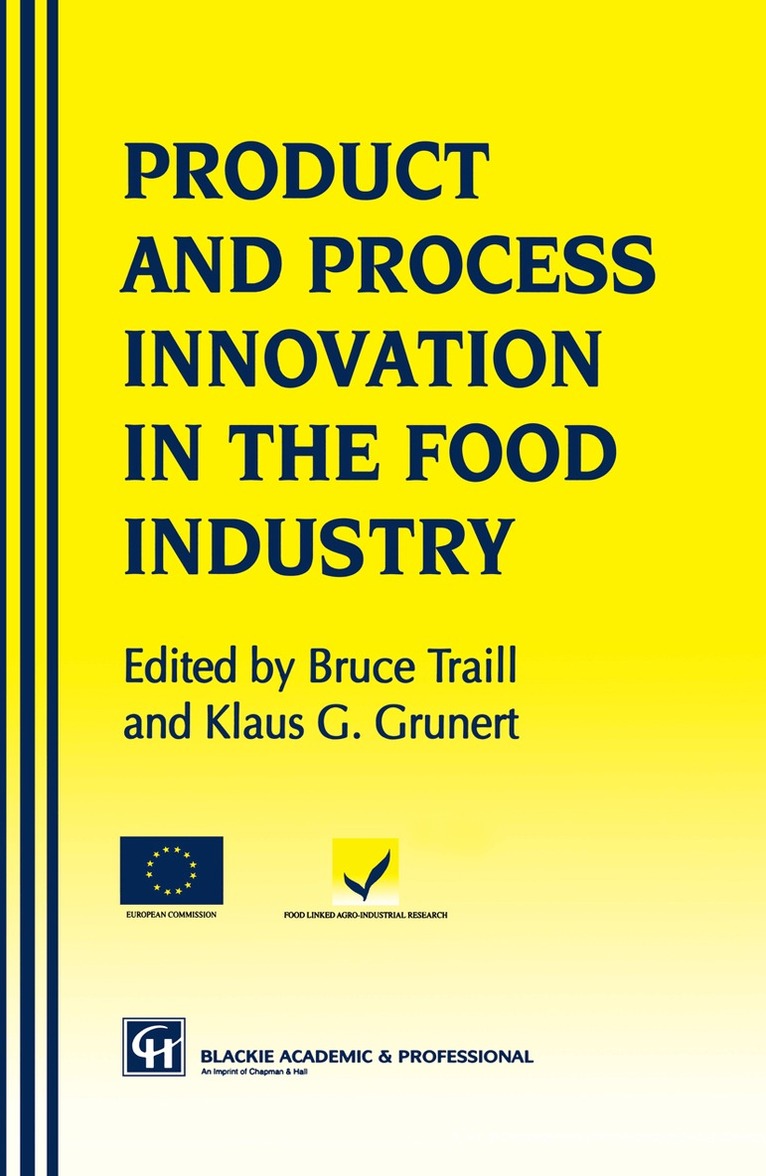
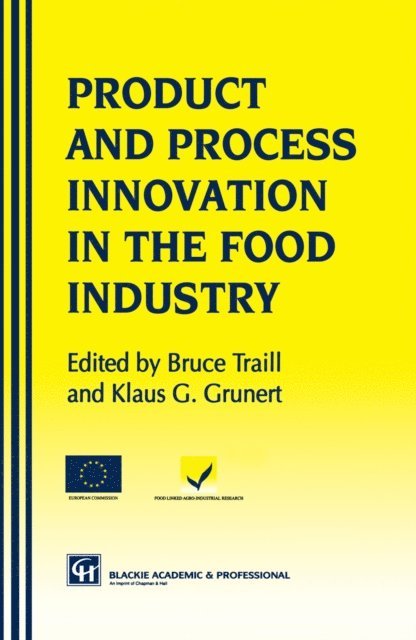
Food manufacturers of all sizes need to innovate in order to survive in today's competitive food market, yet more than 90 percent of new products in the food and drinks industries are reputed to fail in their first year. Understanding the process of successful innovation is vital for all types of food and drinks manufacturers. This work takes existing hypotheses regarding innovation and examines them in relation to the food and drinks industries. This is achieved through case studies of 12 diverse companies based in six food manufacturing countries of the European Union. These accounts examine the relationship between research and development, market orientation and external networks and vertical linkages in achieving successful food product and process innovation; the aim of such an examination is to allow a more complete and industry specific hypothesis to be formulated. In addition, this book seeks to provide examples and insights to industrialists involved in commercial and new product development aspects of food manufacturing. It attempts to highlight new theories to academic researchers and offer discursive case studies for use by marketing management students.
1 640 kr
Skickas inom 10-15 vardagar
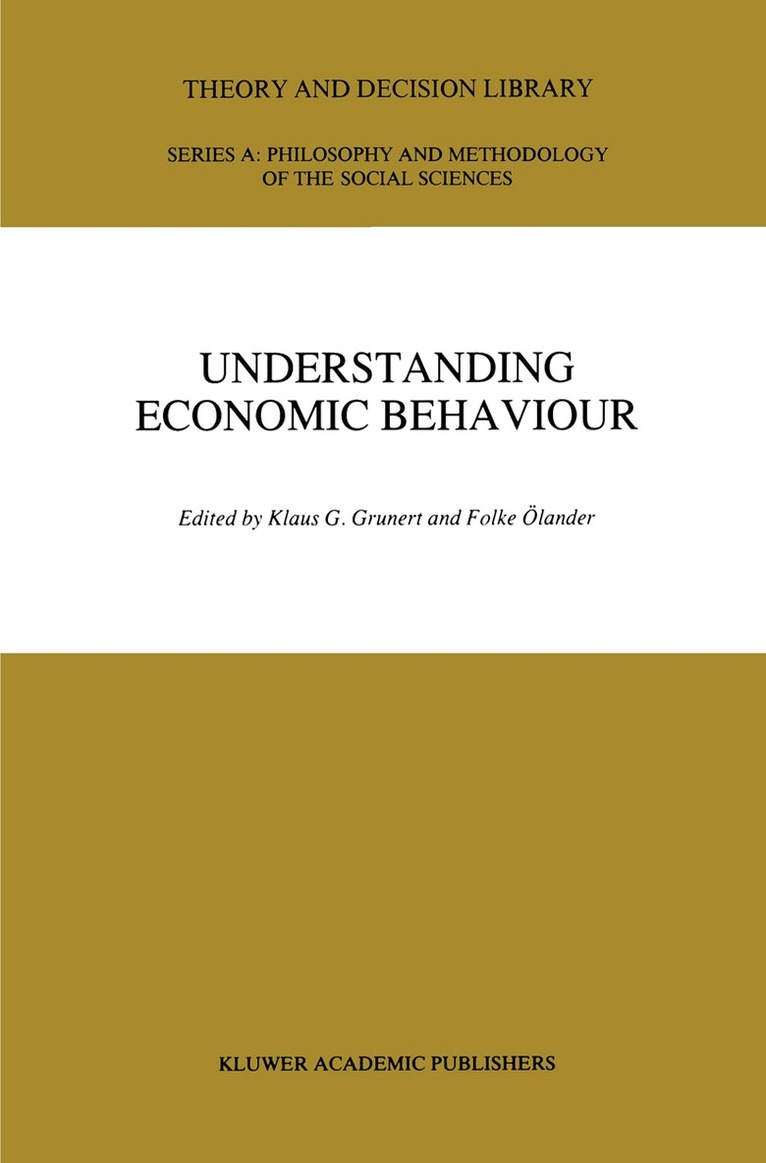
may be related to another basic assumption in economic psychology: that the human capacity to process information from the environment is limited, and that the kind of optimal use of that information postulated in many economic theories is therefore not possible. The research methods used are mainly geared towards empirical research, and there mostly towards survey research and experimentation. Experimentation involves most often simulated behaviour in a laboratory, which allows the experimental manipulation of possible causes of behaviour which would not be possible in real life. Survey research is the most widely used instrument for investigating real-world behaviour, with all its caveats about establishing causal explanations. Several introductory books (e. g. , Fumham & Lewis, 1986; Lea, Tarpy, & Webley, 1987; van Raaij, van Veldhoven, & Wlimeryd, 1988) and articles (e. g. , van Raaij, 1979; Wiswede, 1988) have appeared recently, which try to give an overview of the field of economic psychology, and which, in varying degrees, demonstrate the three foundations of economic psychology just mentioned. Others have concentrated on certain subtopics, such as the psychology of the labour market (e. g. , Baxter, 1988; Pelzmann, 1986).
1 593 kr
Skickas inom 10-15 vardagar
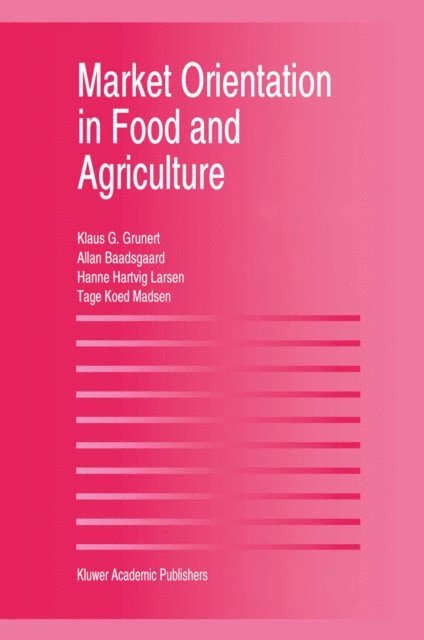
What is market orientation in the food sector, and how can food companies become more market-oriented? This book investigates these questions through an empirical study of selected Danish food companies and their activities in three important export markets: France, Germany, and the United Kingdom. The book is divided into three sections. The first explores the concept of market orientation and how it relates to developing competitive advantage. The second discusses in detail how market knowledge can be gained, and the final section focuses on how this knowledge, once generated, can be put to use in a food company during process and product development.
1 640 kr
Skickas inom 10-15 vardagar
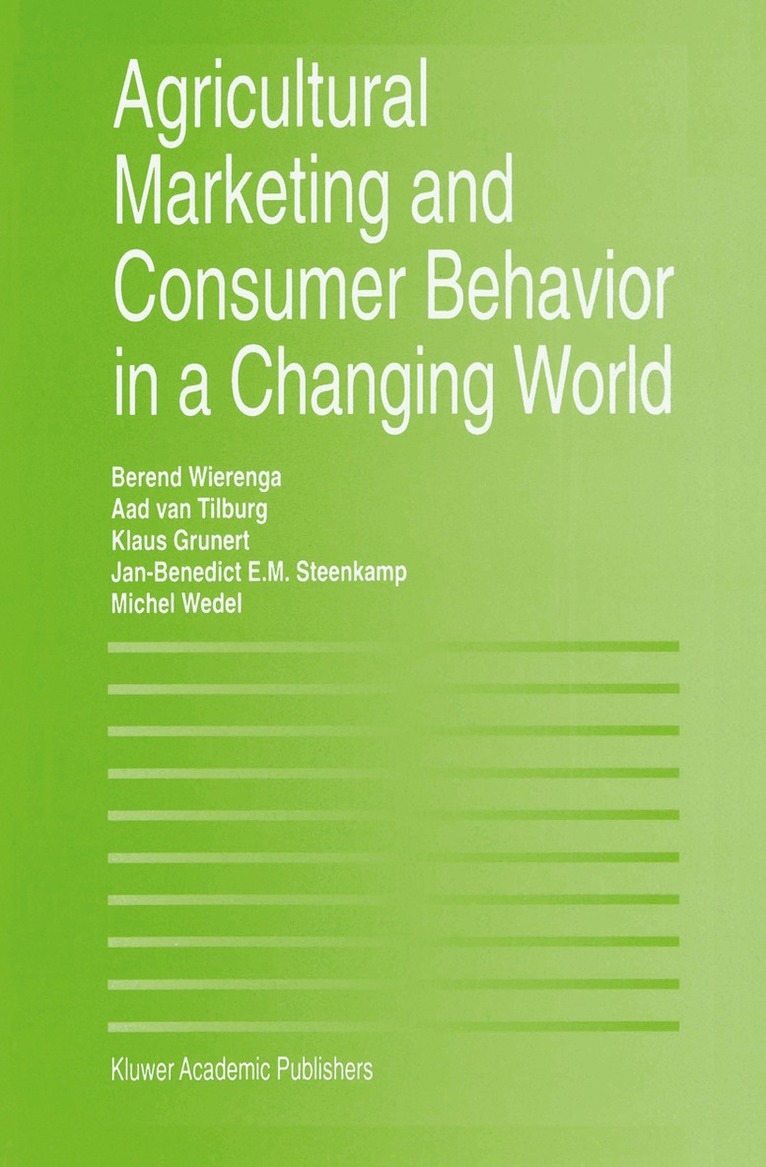
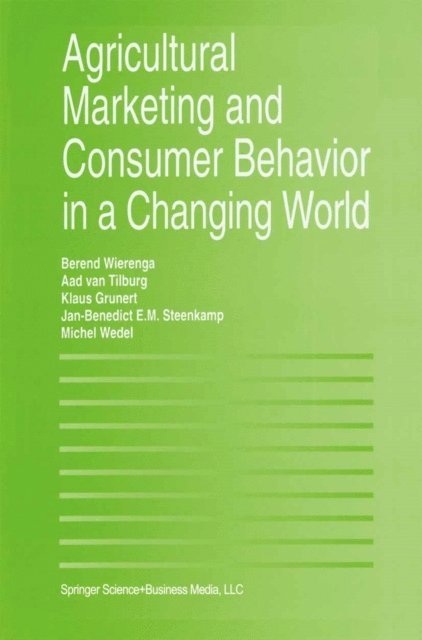
As in many other sectors, in agribusiness major changes are taking place. On the demand side, consumers are changing lifestyles, eating and shopping habits, and increasingly are demanding more accommodation of these needs in the supermarket. With regard to the supply: the traditional distribution channel dominators - manufacturers of branded consumer products - are trying hard to defend their positions against retailers, who gather and use information about the consumer to streamline their enterprises and strengthen their ties with the consumer. The agricultural producers, meanwhile, face increased regulations with regard to food additives, pesticides, and herbicides. Pressures rise as their business becomes more specialized and capital-intensive than that of their predecessors. Finally, the larger political climate is not so favorable to agriculture, which now has to compete in the global market without significant government support. This volume describes and interprets changes in the domain of agriculture and food.The contributors develop the theme of taking an interdisciplinary approach to coping with these changes, using concepts and methods developed in general marketing, which are adapted so as to apply to the particular characteristics of the food and agriculture sector.
1 593 kr
Skickas inom 10-15 vardagar
Innovation in new product development is a key factor in determining the success of a food company yet the area is fraught with risk, with failure rates in excess of 90% being common. Using a series of 12 European cases studies, this book examines the innovation process from agriculture through to retailer. Each example highlights a different aspect of innovation, and the lessons that can be learned from experience. It considers the important role that marketing as well as technical aspects play in the process.
1 593 kr
Skickas inom 10-15 vardagar
In the fall of 1990, the Danish government started a comprehensive research pro gramme to improve the competitiveness of the Danish food sector: The Research and Development Programme in the Danish Food Sector (Det F!Ildevareteknologiske Forsk nings- og Udviklingsprogram, F0TEK). The programme was based on a combination of basic research to be carried out by universities and other research institutions, and a series of collaboration projects between researchers and food companies. The programme was originally designed as a technological research programme. However, in the planning phases of the research programme, the view that the development of new technologies and products may not be sufficient to improve competitiveness made some ground. A small comer of the overall research effort was therefore set aside for market-oriented research. This comer was filled by the research programme Market-based process and product innovation in the food sector (MAPP). MAPP was a joint research programme in which researchers from several Danish universities and business schools participated; it was coordinated by the Aarhus School of Business. MAPP set out to achieve a difficult task: to conduct high quality research on various aspects of the marketing of food products, to do so in cooperation with food companies, and to win under standing and recognition from the colleagues in the food technology departments.
1 593 kr
Skickas inom 10-15 vardagar
As in many other sectors, in agribusiness major changes are taking place. On the demand side, consumers are changing lifestyles, eating and shopping habits, and increasingly are demanding more accommodation of these needs in the supermarket. With regard to the supply: the traditional distribution channel dominators - manufacturers of branded consumer products - are trying hard to defend their positions against retailers, who gather and use information about the consumer to streamline their enterprises and strengthen their ties with the consumer. The agricultural producers, meanwhile, face increased regulations with regard to food additives, pesticides, and herbicides. Pressures rise as their business becomes more specialized and capital-intensive than that of their predecessors. Finally, the larger political climate is not so favorable to agriculture, which now has to compete in the global market without significant government support. This title describes and interprets changes in the domain of agriculture and food. The contributors develop the theme of taking an interdisciplinary approach to coping with these changes, using concepts and methods developed in general marketing, which are adapted so as to apply to the particular characteristics of the food and agriculture sector. This book is published to honor the distinguished career of Professor Mathew T.G. Meulenberg from Wageningen Agricultural University, on the occasion of his retirement in September 1996. As a scientist, teacher, and advisor to the agribusiness and the government, Professor Meulenberg has made an important contribution to the development of marketing, inside and outside the domain of agriculture.
1 465 kr
Skickas inom 10-15 vardagar
Professor Folke 0lander celebrates his 70th birthday the 21st of July 2005. With this "Festschrift", Folke 01ander7s colleagues and collaborators over the years want to honour him and to express their appreciation of his life-long contribution to - search, especially research within the themes reflected in the title of this volume: Consumers, Policy and the Environment. Having established close collaboration with European economic psychology's grand old man, Karl-Erik Warneryd, already during his PhD study, Folke 0lander became an active contributor to the development of economic psychology as a - search field in Europe. When the International Association for Research in E- nomic Psychology (IAREP) was founded in 1982, Folke Olander was present, and he was president of IAREP in 1989- 199 1. Folke 0lander has played an equally - fluential role in European and international consumer policy research. Together with Gerhard Scherhorn and Norbert Reich, he was a founding editor of the Journal of Consumer Policy in 1977, a position he has held until 2005. Folke 0lander has also been very active in Nordic consumer policy and in Nordic consumer research since the 70s.He played a crucial part in the Nordic workshop "Consumer and - ciety" in 1978 and organized the workshop on "Road to consumer influence" in Helsinki in 1986. He has been a member of the Nordic Consumer Committee under the Nordic Council of Ministers since 1994.
1 640 kr
Skickas inom 10-15 vardagar
may be related to another basic assumption in economic psychology: that the human capacity to process information from the environment is limited, and that the kind of optimal use of that information postulated in many economic theories is therefore not possible. The research methods used are mainly geared towards empirical research, and there mostly towards survey research and experimentation. Experimentation involves most often simulated behaviour in a laboratory, which allows the experimental manipulation of possible causes of behaviour which would not be possible in real life. Survey research is the most widely used instrument for investigating real-world behaviour, with all its caveats about establishing causal explanations. Several introductory books (e. g. , Fumham & Lewis, 1986; Lea, Tarpy, & Webley, 1987; van Raaij, van Veldhoven, & Wlimeryd, 1988) and articles (e. g. , van Raaij, 1979; Wiswede, 1988) have appeared recently, which try to give an overview of the field of economic psychology, and which, in varying degrees, demonstrate the three foundations of economic psychology just mentioned. Others have concentrated on certain subtopics, such as the psychology of the labour market (e. g. , Baxter, 1988; Pelzmann, 1986).