Sneh Punia – författare
1 938 kr
Skickas inom 10-15 vardagar
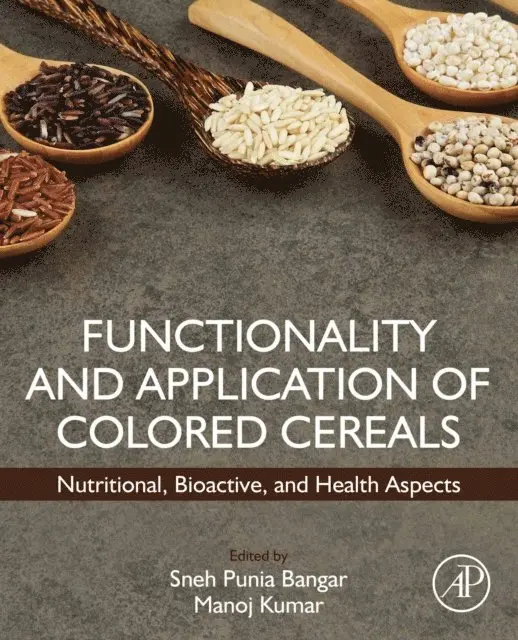
Functionality and Application of Colored Cereals: Nutritional, Bioactive and Health Aspects focuses on exploiting the full and functional possibilities of these grains. From their physical chemistry to their health benefits, this book highlights cereals with potential for enhanced products. Plant-based food colorants play an important role in conferring colors to food to increase attractiveness for consumers, improve appetite, minimize synthetic colorants, and conform to food culture. Over the last decades, the presence of anthocyanin and other bioactive compounds in colored cereal grains (maize, rice, wheat, barley, sorghum, millet, and rye) have attracted the attention of various food processors and researchers.
Colored cereals are imperative for food processing industries as high-value pigments present in the bran layer can easily be extracted and utilized as functional foods and natural colorants. The extracted pigments such as anthocyanin can replace synthetic dyes currently used in foods, drugs and cosmetics. Additionally, natural additives improve the nutritional value, appearance, texture, flavor and storage properties of food products.
Reviews colored cereal grains morphology, composition and the diversity of the different uses of cereal grains Includes content on the functionality and therapeutic significance of functional components of colored cereal grains Contains global coverage of the latest research on the bioactive potential, food applications and health benefits of colored cereals2 759 kr
Läs direkt efter köp
2 957 kr
Skickas inom 10-15 vardagar
1 742 kr
Skickas inom 10-15 vardagar
2 674 kr
Skickas inom 10-15 vardagar
1 032 kr
Skickas inom 10-15 vardagar
2 674 kr
Skickas inom 10-15 vardagar
2 816 kr
Skickas inom 10-15 vardagar
970 kr
Läs direkt efter köp
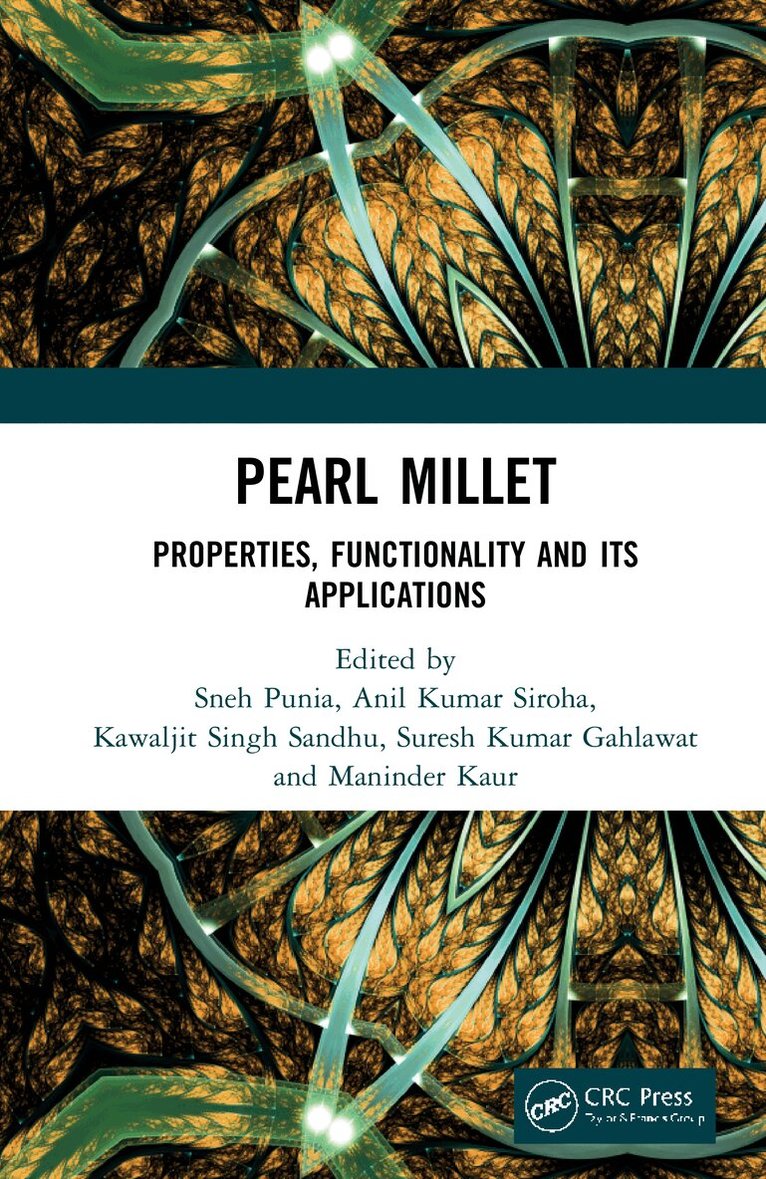
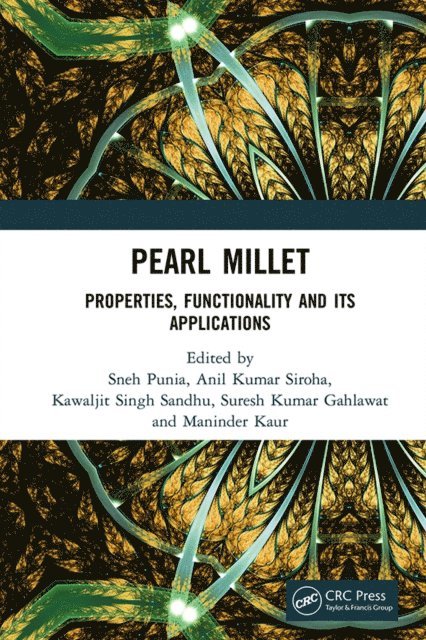
Pearl millet is mainly used for animal and poultry feed. It is the principal source of energy, protein, vitamins, minerals and contains many phenolic compounds, which are a good source of natural antioxidants. Pearl millet is a rich source of bioactive compounds and contains phytates and polyphenols. Owing to high nutritional and phytochemical properties, it has gained considerable attention as a botanical dietary supplement in many functional foods. Pearl Millet: Properties, Functionality and Its Applications provides comprehensive knowledge on nutritional and non-nutritional aspects of pearl millet. It covers recent research on pearl millet and provides information to improve the property and shelf life of flour, as well as the starch, and their uses in various food products.
Features:
Reviews structure, functional and antioxidant properties in pearl millet flour
Deals with the latest developments in modification of native starch
Provides information in enhancing shelf life and its utilization in phytochemical-rich product development
Covers updated information for grain science professionals and food technologists
970 kr
Läs direkt efter köp
Pearl millet is mainly used for animal and poultry feed. It is the principal source of energy, protein, vitamins, minerals and contains many phenolic compounds, which are a good source of natural antioxidants. Pearl millet is a rich source of bioactive compounds and contains phytates and polyphenols. Owing to high nutritional and phytochemical properties, it has gained considerable attention as a botanical dietary supplement in many functional foods. Pearl Millet: Properties, Functionality and Its Applications provides comprehensive knowledge on nutritional and non-nutritional aspects of pearl millet. It covers recent research on pearl millet and provides information to improve the property and shelf life of flour, as well as the starch, and their uses in various food products.
Features:
Reviews structure, functional and antioxidant properties in pearl millet flour
Deals with the latest developments in modification of native starch
Provides information in enhancing shelf life and its utilization in phytochemical-rich product development
Covers updated information for grain science professionals and food technologists
3 244 kr
Läs direkt efter köp
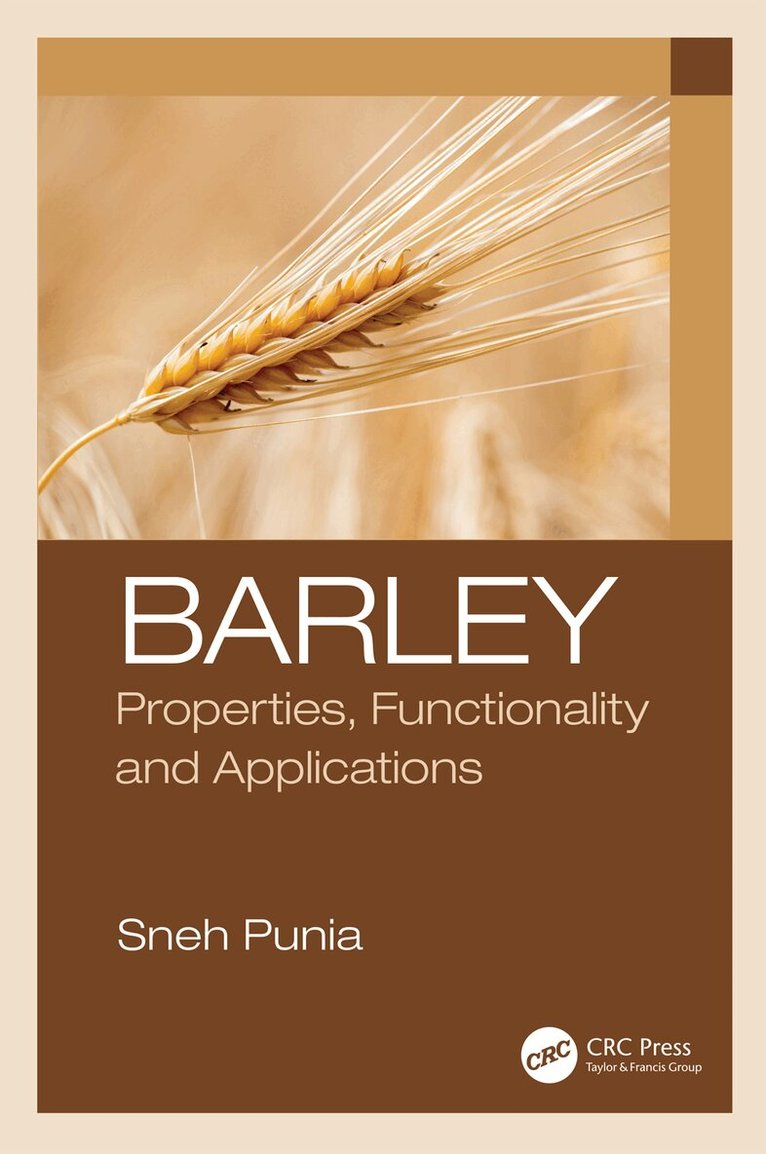
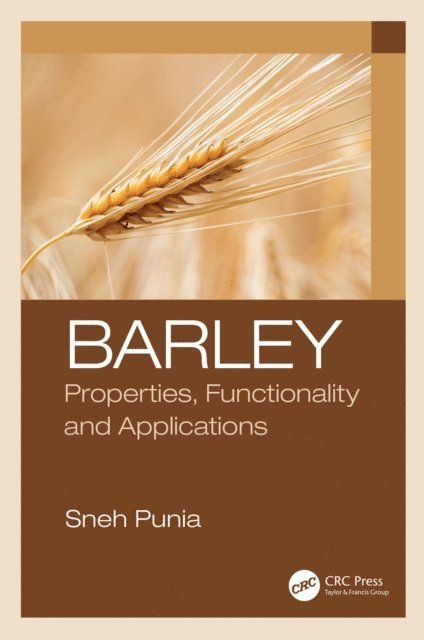
Barley: Properties, Functionality and Applications provides a systematic introduction and a comprehensive examination of barley science. Recent research has raised the importance of barley finding that barley is a rich source of phenolic compounds, dietary fiber, vitamins, and minerals. Studying the properties of barley provides a basis for better utilizing it, in addition to further development of barley as a sustainable crop.
This book will explore knowledge about barley production, grain structure, chemistry and nutritional aspects, primary processing technologies, product formulations and the future prospects of barley.
The book also discusses how the limitations of using barley in food products may be overcome by processing of barley grains. Thermal and food preparation methods applied to cereals improves their texture, palatability and nutritive value by gelatinization of starch, denaturation of proteins, increased nutrient availability, inactivation of heat labile toxic compounds and other enzyme inhibitors
Key Features:
Contains information on the physical, functional and antioxidant properties in barley flour
Deals with the latest development in physical, chemical and enzymatic modification of native barley starch
Explores the utilization of malt and malt products in brewing and additionally in distilling, vinegar production and commercially as a food ingredients
Provides information in enhancing shelf life and its utilization in phytochemical rich product development.
With comprehensive knowledge on nutritional and non-nutritional aspects of barley, this book provides the latest information for grain science professionals and food technologists alike. It will be a useful supplementary text for classes teaching cereal technology, cereal science, cereal chemistry, food science, food chemistry, and nutritional properties of cereals.
3 362 kr
Läs direkt efter köp
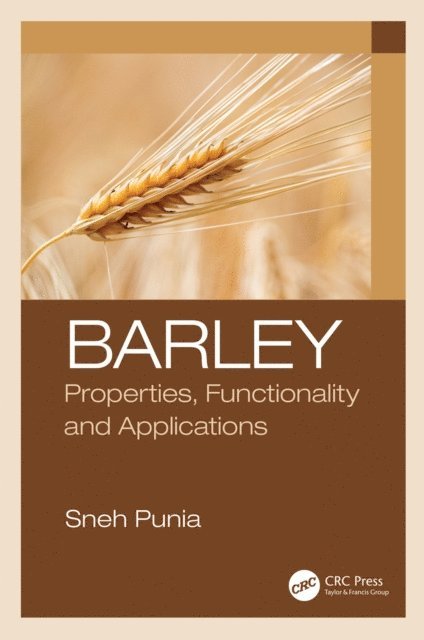
Barley: Properties, Functionality and Applications provides a systematic introduction and a comprehensive examination of barley science. Recent research has raised the importance of barley finding that barley is a rich source of phenolic compounds, dietary fiber, vitamins, and minerals. Studying the properties of barley provides a basis for better utilizing it, in addition to further development of barley as a sustainable crop.
This book will explore knowledge about barley production, grain structure, chemistry and nutritional aspects, primary processing technologies, product formulations and the future prospects of barley.
The book also discusses how the limitations of using barley in food products may be overcome by processing of barley grains. Thermal and food preparation methods applied to cereals improves their texture, palatability and nutritive value by gelatinization of starch, denaturation of proteins, increased nutrient availability, inactivation of heat labile toxic compounds and other enzyme inhibitors
Key Features:
Contains information on the physical, functional and antioxidant properties in barley flour
Deals with the latest development in physical, chemical and enzymatic modification of native barley starch
Explores the utilization of malt and malt products in brewing and additionally in distilling, vinegar production and commercially as a food ingredients
Provides information in enhancing shelf life and its utilization in phytochemical rich product development.
With comprehensive knowledge on nutritional and non-nutritional aspects of barley, this book provides the latest information for grain science professionals and food technologists alike. It will be a useful supplementary text for classes teaching cereal technology, cereal science, cereal chemistry, food science, food chemistry, and nutritional properties of cereals.
1 264 kr
Läs direkt efter köp
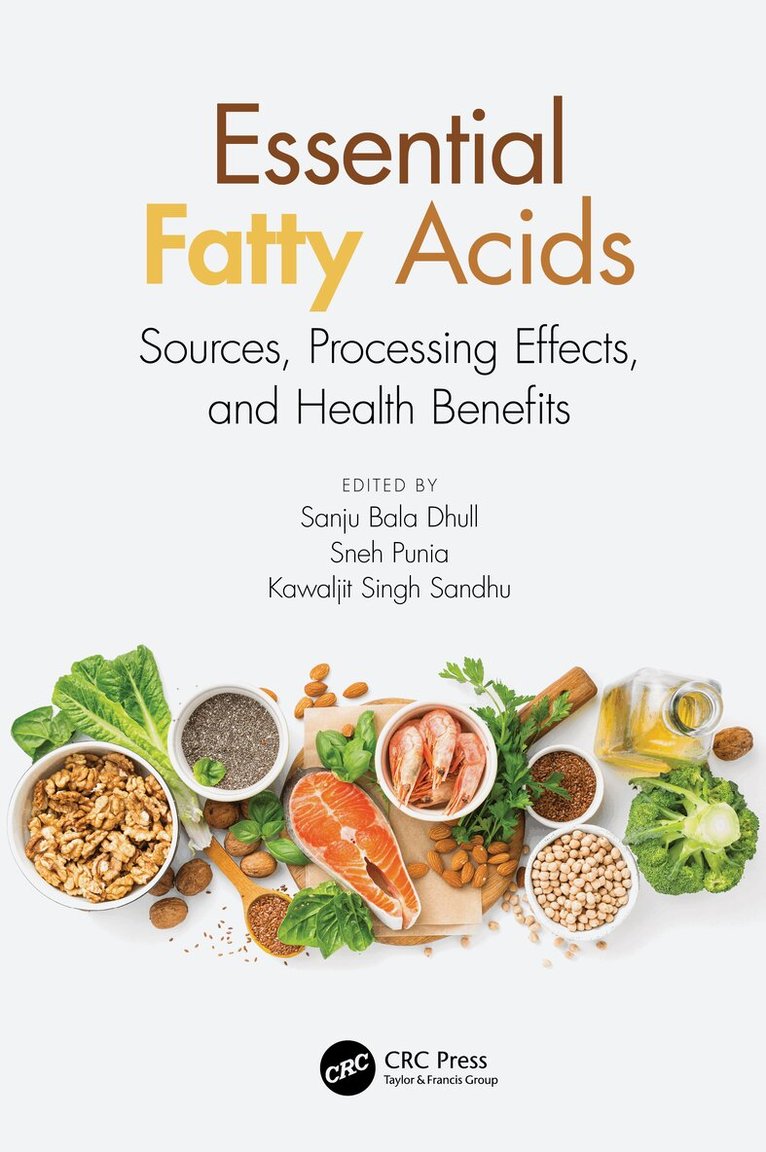
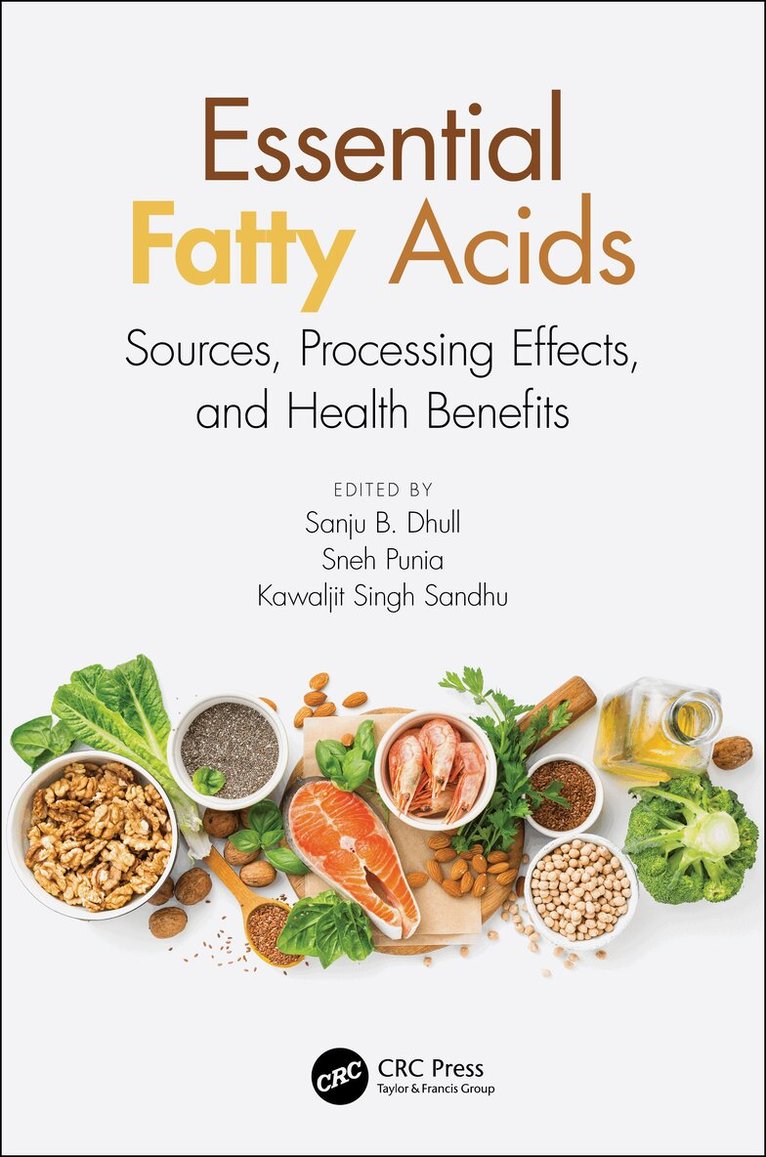
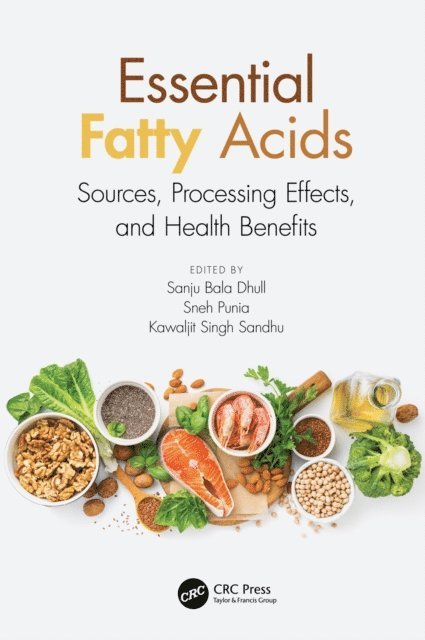
Essential fatty acids are fatty acids that humans must ingest because the body requires them for good health, but it cannot synthesize itself. Therefore, such nutrients need to be supplied from either diet or dietary supplements. Recent studies raised scientific and medical interest in the beneficial effects of these fatty acids on brain and retina function, as well as reducing ill health effects, such as cardio-metabolic diseases. Thus, there is an interest in developing requirements and dietary recommendations.
Essential Fatty Acids: Sources, Processing Effects, and Health Benefits provides a systematic introduction and comprehensive information about the essentiality of diets rich in omega fatty acids for successful human growth, development and disease prevention. This book presents detailed knowledge about essential fatty acids, their different food sources, biochemistry, and metabolism. It provides a comprehensive assessment of current knowledge about the effects of various processing and storage conditions on essential fatty acids, their bioavailability and supplementation in foods and diet. Chapters highlight the contribution of essential fatty acids in prevention and improvement of various conditions such as heart problems, arthritis, cancer, brain and bone health, especially in developing fetuses and children.
Key Features:
Presents comprehensive information on nutritional and health aspects of fats and essential fatty acids
Contains a wealth of information on the structure, sources, biochemistry and nutritional properties of essential fatty acids
Provides the latest information about the changes in essential fatty acids during various processing and storage conditions
Highlights the bioavailability, supplementation and dietary requirements of these fatty acids
By bringing together diverse areas of biochemistry, storage, as well as processing behavior and dietary requirements, this book lays the groundwork for striking expansion in our understanding of these important biochemicals and their role in health and disease prevention. Essential Fatty Acids will be of interest to a large and varied audience of researchers in academia, industry, nutrition, dietetics, food science, agriculture, and regulators.
1 264 kr
Läs direkt efter köp
Essential fatty acids are fatty acids that humans must ingest because the body requires them for good health, but it cannot synthesize itself. Therefore, such nutrients need to be supplied from either diet or dietary supplements. Recent studies raised scientific and medical interest in the beneficial effects of these fatty acids on brain and retina function, as well as reducing ill health effects, such as cardio-metabolic diseases. Thus, there is an interest in developing requirements and dietary recommendations.
Essential Fatty Acids: Sources, Processing Effects, and Health Benefits provides a systematic introduction and comprehensive information about the essentiality of diets rich in omega fatty acids for successful human growth, development and disease prevention. This book presents detailed knowledge about essential fatty acids, their different food sources, biochemistry, and metabolism. It provides a comprehensive assessment of current knowledge about the effects of various processing and storage conditions on essential fatty acids, their bioavailability and supplementation in foods and diet. Chapters highlight the contribution of essential fatty acids in prevention and improvement of various conditions such as heart problems, arthritis, cancer, brain and bone health, especially in developing fetuses and children.
Key Features:
Presents comprehensive information on nutritional and health aspects of fats and essential fatty acids
Contains a wealth of information on the structure, sources, biochemistry and nutritional properties of essential fatty acids
Provides the latest information about the changes in essential fatty acids during various processing and storage conditions
Highlights the bioavailability, supplementation and dietary requirements of these fatty acids
By bringing together diverse areas of biochemistry, storage, as well as processing behavior and dietary requirements, this book lays the groundwork for striking expansion in our understanding of these important biochemicals and their role in health and disease prevention. Essential Fatty Acids will be of interest to a large and varied audience of researchers in academia, industry, nutrition, dietetics, food science, agriculture, and regulators.
942 kr
Läs direkt efter köp
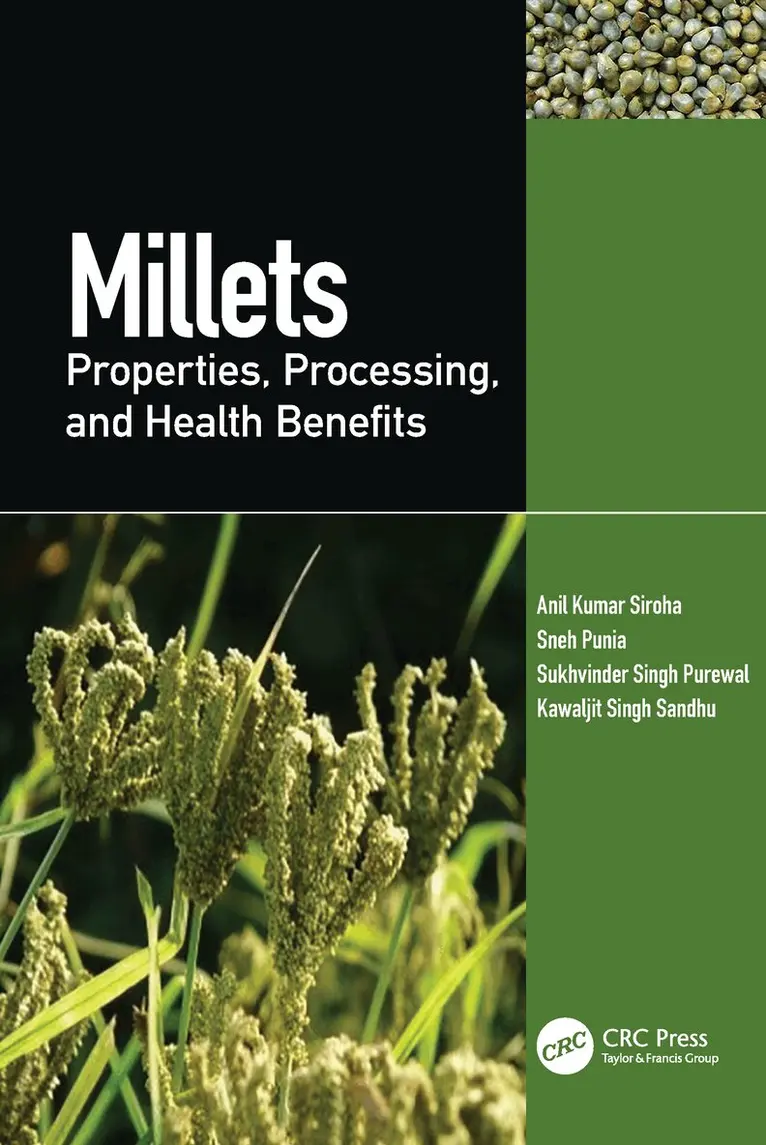
Millets are low cost cereal grains and widely used in the food industry and animal husbandry as an important source of food and feed. As a rich source of starch, protein, minerals, vitamins, and specific bioactive compounds that contain beneficial antioxidant properties, they have gained considerable attention as a botanical dietary supplement and various functional foods.
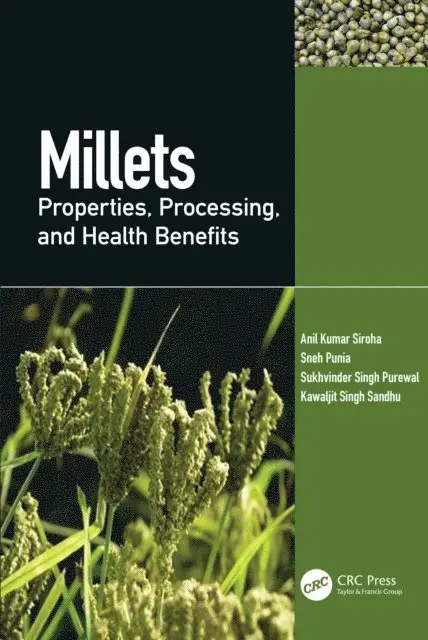
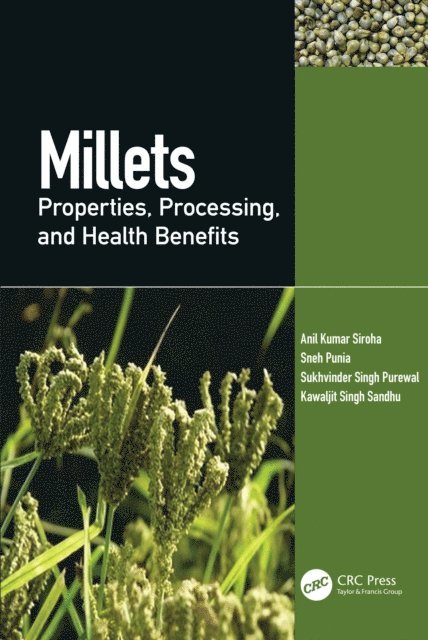
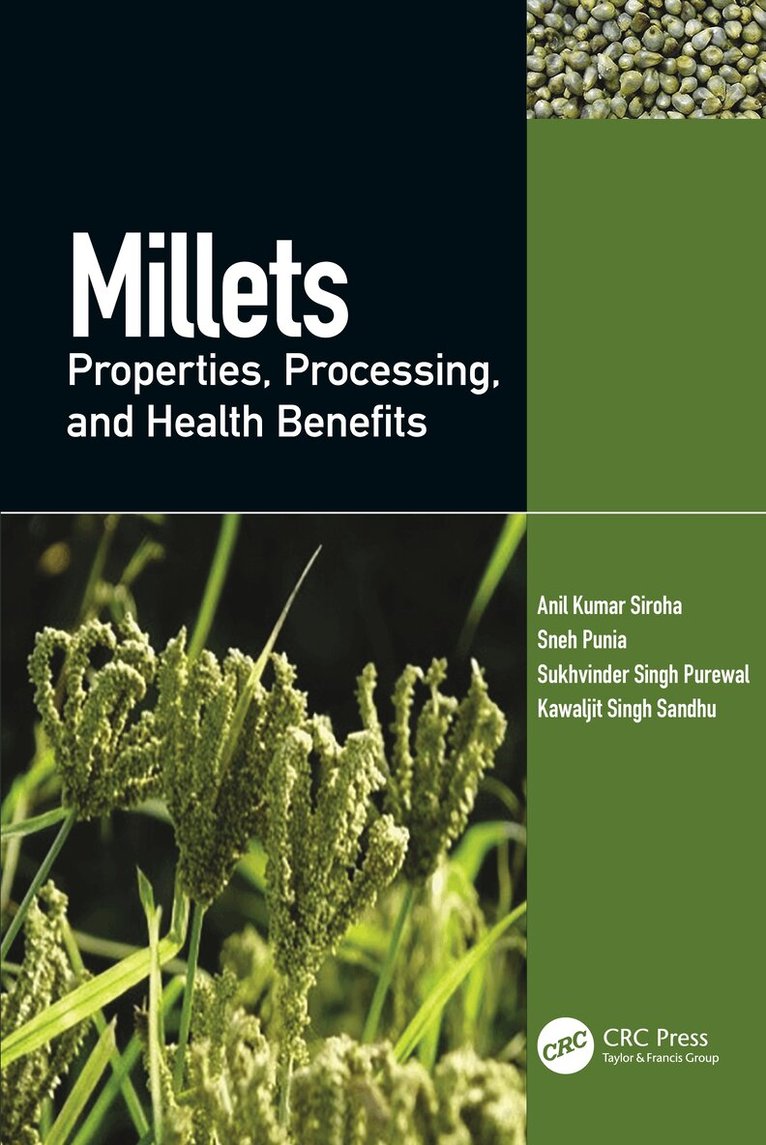
Millets: Properties, Processing, and Health Benefits explores millet production, chemistry and nutritional aspects, processing technologies, product formulations, and more. Understanding the properties of millets provides a basis for better utilizing millet crops, in addition to further development of millets as an important industrial crop.
Key Features:
Provides millet taxonomy, history, nutritional aspects, and health benefits
Discusses the physical and functional properties of millets
Explores various millet-based products
Deals with starch composition, structure, properties, and applications
Touches on postharvest management of millets
This book combines information on the composition, functional properties and processing along with information on the health properties of millets. With its unique presentation on millets flour and starch, it will be suitable for those wanting to use millets in various food products, including food technologists, nutritionists, research scientists, and agriculture professionals.
942 kr
Läs direkt efter köp
Millets are low cost cereal grains and widely used in the food industry and animal husbandry as an important source of food and feed. As a rich source of starch, protein, minerals, vitamins, and specific bioactive compounds that contain beneficial antioxidant properties, they have gained considerable attention as a botanical dietary supplement and various functional foods.
Millets: Properties, Processing, and Health Benefits explores millet production, chemistry and nutritional aspects, processing technologies, product formulations, and more. Understanding the properties of millets provides a basis for better utilizing millet crops, in addition to further development of millets as an important industrial crop.
Key Features:
Provides millet taxonomy, history, nutritional aspects, and health benefits
Discusses the physical and functional properties of millets
Explores various millet-based products
Deals with starch composition, structure, properties, and applications
Touches on postharvest management of millets
This book combines information on the composition, functional properties and processing along with information on the health properties of millets. With its unique presentation on millets flour and starch, it will be suitable for those wanting to use millets in various food products, including food technologists, nutritionists, research scientists, and agriculture professionals.
980 kr
Skickas inom 10-15 vardagar